Tag Archives: vacation

Kgalagadi Transfrontier Park – History and Tourism

Wedged into a remote corner of South Africa’s Northern Cape, between Namibia and Botswana, lies a very special piece of the Kalahari Desert. Here a wilderness of dunes, pans and dry, sandy river beds is a safe refuge to a rich variety of natural life, and one of the last fully functional ecosystems remaining on earth. The beds of the Auob and Nossob Rivers very rarely boast flowing water – the Auob perhaps once in ten years, the Nossob only once or twice in a century.

When the First World War broke out over a 100 years ago, the British Colonial government of the Union of South Africa and British Bechuanaland considered the beds of the Auob and Nossob Rivers a strategic access into German South West Africa and started sinking boreholes in the rivers to supply advancing troops. After the war, the area was divided into farms by a Scotsman, Roger Jackson, explaining how many of the waterholes today carry very Scottish-sounding names. The newly settled farmers however found it tough going – the fascinating museum at Auchterlonie providing a glimpse into this hard life – and had to turn their rifles on the herds of game moving through the area in order to make a living.

With the game population falling drastically, and shortly after South Africa’s first national park was proclaimed (the Kruger in the then Transvaal) two influential men from the region invited then Minister of Lands, Piet Grobler, on a “hunting trip” in the Kalahari and deliberately took him to an area denuded of wildlife. So disturbed was the minister by the lack of game that he immediately set about the process of proclaiming the area between the Auob and Nossob Rivers South Africa’s second national park – the Kalahari Gemsbok National Park coming into official existence on 31 July 1931. Soon more land to the southwest of the Auob and its confluence with the Nossob were added, bringing the size of the Park to 9,600km². Then, in 1938 the government in neighbouring Bechuanaland (today Botswana) proclaimed an even bigger piece of land on the other side of the Nossob (the unfenced international boundary between the two countries) the Gemsbok National Park. Informally the two conservation areas were managed as a single unit ever since, but it wasn’t until 1999 when the leaders of the two countries signed a treaty to formalise the arrangement. The Kgalagadi Transfrontier Park, covering over 34,500km², was officially opened on 12 May 2000 and is one of the biggest, and most unspoiled, conservation areas on the planet.

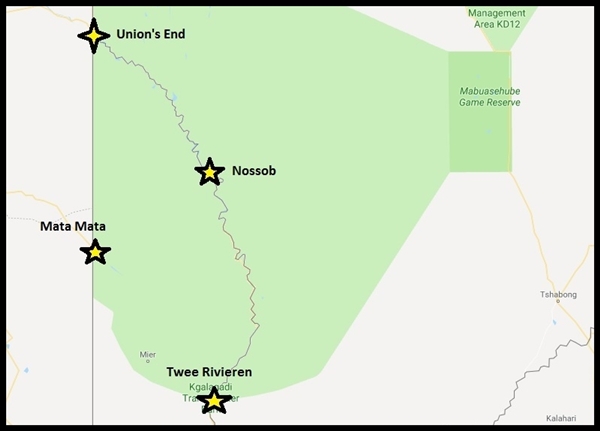
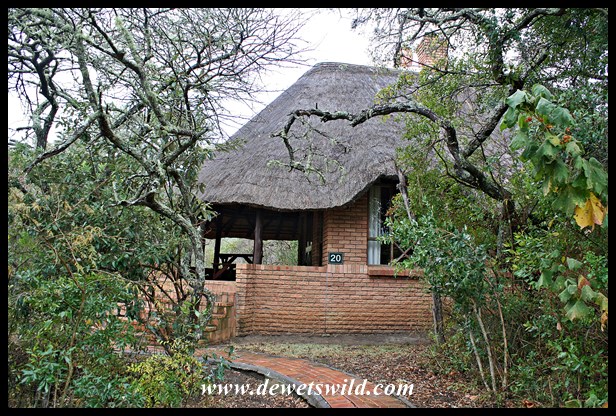
On the South African side of the Kgalagadi Transfrontier Park guests have a choice of three “traditional” rest camps offering basic amenities like accommodation, camping, a shop, fuel station, swimming pools, and guided walks and drives. Twee Rivieren is the main entrance, biggest camp and administrative centre of the Park (it also has a restaurant and border control) and offered the first tourist accommodation in the Park in 1940, while Mata Mata (on the Auob River, opened 1955) and Nossob (on the Nossob River, opened 1966) lie deeper into the Park, about 120m and 160km away from Twee Rivieren respectively. Union’s End marks the point where the borders of South Africa, Botswana and Namibia meet and is one of 6 rustic picnic sites available on the South African side of the Park. Six smaller Wilderness Camps are also spread throughout the Park – these offer only accommodation to overnight visitors. Between Twee Rivieren and Mata Mata lie the Kalahari Tent Camp, Urikaruus and Kieliekrankie, between Nossob and Mata Mata is located Bitterpan while Gharagab and Grootkolk is located north of Nossob on the way to Union’s End. While there’s around 500km of prepared roads (very sandy and corrugated in places, not recommended for sedans) to explore the Park in relative comfort, there is also a selection of guided and self-guided 4×4 trails available.

Relative locations of Twee Rivieren, Mata Mata, Nossob and Union’s End in the Kgalagadi Transfrontier Park

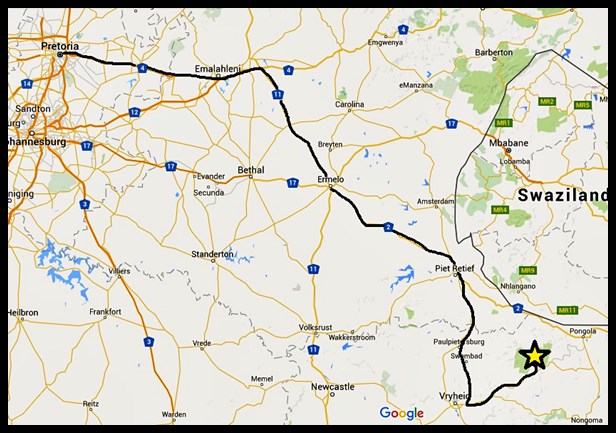
The Kgalagadi Transfrontier Park must be one of South Africa’s most out-of-the-way tourist attractions, lying about 1060km from Pretoria and 1040km from Cape Town. The nearest major airport with daily flights is at Upington, about 250km away from Twee Rivieren.

The location of the Kgalagadi Transfrontier Park

In the next installment, we’ll be showing you the marvelous wildlife spectacle the Kgalagadi Transfrontier Park has to offer.


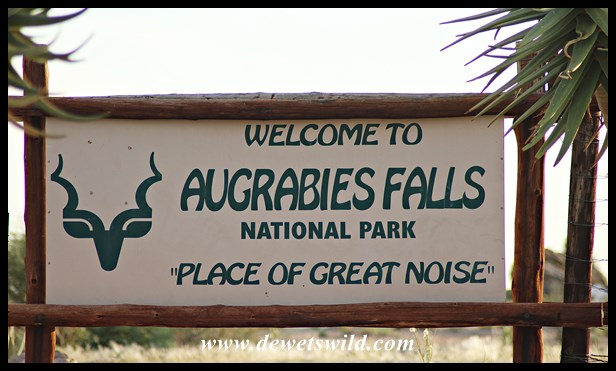
Augrabies Falls National Park

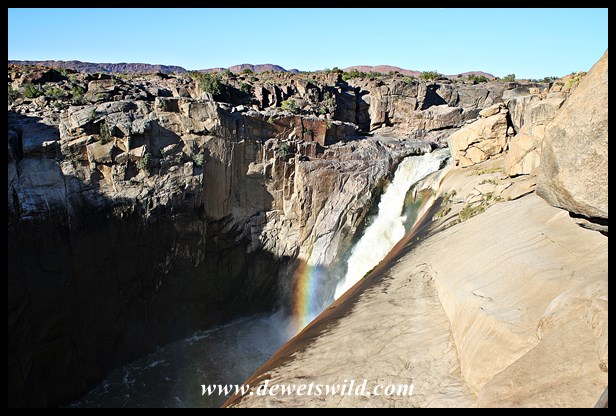
The Orange River, South Africa’s biggest and longest (running 2,200km from its source in Lesotho to its mouth at the Atlantic Ocean) is, for the most part, a lazy, slow-flowing waterway. That changes however when it is forced through a narrow granitic channel in the arid Northern Cape, plunges 56m over the impressive Augrabies Falls and continues through a dramatic gorge for another 18km before again returning to its more placid ways.

After years of political wrangling, a small 5,400 hectare area around the Falls was proclaimed the Augrabies Falls National Park in August 1966. Subsequently surrounding areas have been incorporated, and today the Park covers over 51,000 hectares.

Visitors can enjoy the best views of the Falls from several vantage points connected by easily negotiated boardwalks.

Consider that these photos taken during our visit in June 2018 saw the river flowing at a below average 38 cubic meters per second, and then imagine what it must look like when a flood of approximately 7,800 cumec, as happened in 1988, thunders down the Falls, to understand exactly why the Khoi named this place “Aukoerebis“, meaning “the place of great noise“!

Although the Falls is a worthy focal point of the National Park, there’s still lots more to see further afield when exploring this arid rocky desert landscape (the Park receives only about 120mm of rain annually). Places like Oranjekom, Ararat, Echo Corner and the Moon Rock are well worth the visit for spectacular views and fascinating geology. Quiver Trees and Namaqua Porkbush, both of which we’ll feature in more detail soon, are conspicuous plants and brilliantly adapted to life in this harsh environment. Rocky hills and arid plains where animals and birds abound add to the attraction.

Among the fauna finding protection in the Augrabies Falls National Park counts 49 species of mammal, 181 recorded bird species, around 50 species of reptile, 6 kinds of frog and 12 species of indigenous fish.

Guests can be accommodated overnight in the rest camp’s chalets or the very neat camping area, all within easy walking distance from the Falls (illuminated until 10pm each evening). At the camp there’s four swimming pools (including one for day visitors), a shop, restaurant, fuel station and a little bird-watching hide. The Oranjekom Gorge Cottage is located about 10km from the main camp, and offers privacy and magnificent views over the ravine and river. Provision is also made for day visitors with picnic sites in the camp and along the game viewing loop. Visitors are welcome to explore the Park’s roads in their own vehicle (some roads are only accessible to 4×4 vehicles) or on mountain bikes, and there’s several hiking trails to choose from ranging in length from 2 to 33km (the latter being the Klipspringer Trail which includes two overnight stops). Guided drives (both day and night) in open vehicles can be booked at reception.

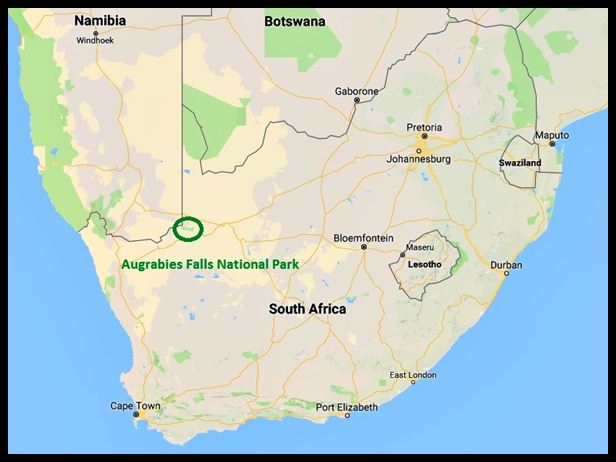
The Augrabies Falls National Park is in one of the remotest corners of South Africa’s Northern Cape Province; roughly 930km from Pretoria and 870km from Cape Town. The nearest major airport with daily flights is at Upington, about 125km away. We enjoyed a wonderful two-night visit to Augrabies at the end of June 2018, during which all these photos were taken.

Location of Augrabies Falls National Park

Back from the Kalahari

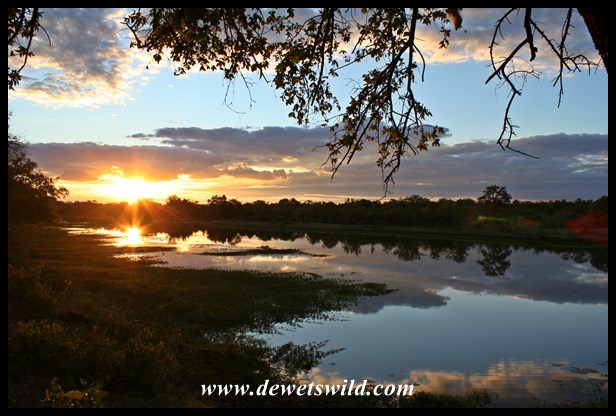
We’ve just arrived home after a little more than a week spent exploring two of South Africa’s most remote national parks – the Augrabies Falls National Park and the Kgalagadi Transfrontier Park. Here’s a little selection of the thousands of pictures we came back home with for you to enjoy while we work at answering all the comments you left for us on the scheduled posts that published during our absence. Of course there’ll be many more pictures from these two magnificent destinations in the weeks to come!

Wrapping up the “Dads Trip to Mopani”

Middle-May presented an opportunity to visit one of my favourite corners of the Kruger National Park with three very good friends. We set off early on the Friday morning and returned the following Monday, having had a thoroughly enjoyable time exploring the wilds around Mopani Rest Camp. I’ve already shared with you some of what we saw – the exhilarating waterbuck fight, a towering elephant bull owning the road and the love of a mother hyena for her cubs – but of course in a paradise like Kruger there’s still much more to be seen, and shared!

When going to northern Kruger, apart from Impalas, there are three things you just KNOW you are going to see: Elephants, Buffaloes and Hippos!

Among all the beautiful elephants we saw, our most prized sightings were of Masasana and Ndlovane, two of the big tuskers that call the Kruger National Park home.

Early on the Saturday morning we thought we were going to be extremely lucky and see a pride of Lions take down a Blue Wildebeest at Tinhongonyeni waterhole. A passing rain shower however dampened the lions’ appetites and they went off to search for a drier spot among the dense mopane trees close-by.

Apart from the lions there were several predators in evidence around Mopani on this visit, with Black-backed Jackals and Spotted Hyenas being especially common.

And of course all those hungry meat-eater mouths rely on a steady supply of herbivores, which Mopani has no shortage of, especially around Tinhongonyeni and Mooiplaas Waterholes and in the marshland along the course of the Nshawu stream.

Kruger is always a paradise to birdwatchers, even now that most of the summer migrants have departed for warmer climes.

We always try to pay special attention to the interesting world of smaller creatures so often overlooked in a wild place like Kruger.

And then on the other side of the scale is the Park’s magnificent scenery!

The Kruger National Park is such a special place, and what a wonderful experience it was to share a piece of it with good friends!


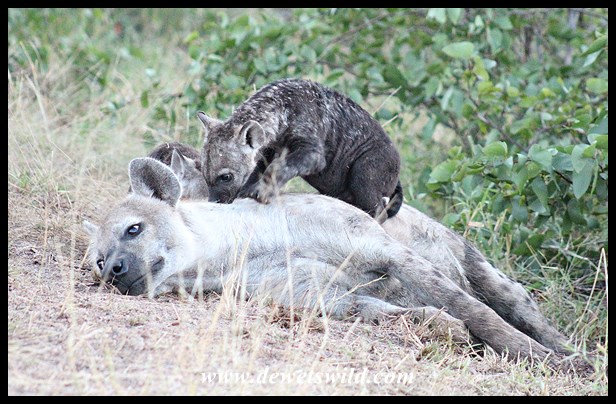
Even hyenas need a loving family

These tender moments shared by a Spotted Hyena female and her two small cubs, seen on a recent weekend visit to the Mopani region of the Kruger National Park, is another one of the reasons why we keep going back to the Park as often as we can. It also made the four dads in the car really miss their own “cubs” back home…

Elephants have right of way. Are you going to argue?

Just after sunrise last Sunday, while driving in the Mopani area of the Kruger National Park, we encountered this enormous Elephant bull in musth staking his claim to the narrow road. He was on his way to Mooiplaas waterhole and did not have any intention of letting four humans in a tiny (by his standards) metal cocoon derail his plans. In the end he made us reverse for over a kilometer before veering off towards the water.

Waterbuck Duel at Dusk

While visiting the Mopani area of the Kruger National Park this past weekend, we (myself and three very good friends) came across these waterbuck bulls involved in a massive fight about a patch of the Nshawu Vlei (marsh) and the eligible cows that inhabit it. As is the case with several antelope species in the Park, their rutting season will be coming to an end soon and these bulls are quite desperate to sire their share of the calves that will be born towards the end of the year.

Back from the bush, again

Fresh back from a self-made long weekend in the Kruger National Park again. Lots more photos coming your way in the days to follow!

Mokala Scenery

We’ve already shown you so many of the animals and birds that call Mokala home that you must by now be convinced of the fact that this National Park is one of South Africa’s conservation gems. That sensational faunal diversity however would not have existed had it not been for the wide range of vegetation, habitats and landscapes that Mokala comprises, and now in this final post about our April 2018 visit it is fitting that we showcase that aspect.

One of our highlights from this trip was having a front row seat to one of the most awe-inspiring experiences one could hope to have in Africa: a powerful thunderstorm rolling over the parched plains, smelling the red dust rise into the air as big drops of cool rainwater smacks into the dry soil. Soul stirring stuff.

And finally a few shots of our favourite place to stay while visiting Mokala: the rustic Haak-en-Steek Cottage.

If you’d like to learn more about Mokala National Park, why not have a read through the detailed post we did about the Park in 2016.

A rich assortment of animals at Mokala

Just as with the birds we showed you 2 days ago, Mokala National Park has an incredible variety of four and six legged creatures on show.

The large mammals are the easiest to see and photograph. During our 4 day visit in April 2018 we recorded over 750 different sightings of 30 different kinds of mammals!

The white rhino is the biggest of the animals in Mokala. Here they are shy and elusive and we were very happy to see a few of these endangered creatures.

Remember those mud-loving buffaloes we showed you a few days ago? Well that wasn’t our only encounter with Mokala’s growing population of African buffalo and we were very fortunate to come across several more herds and a few loners while exploring the Park.

Mokala’s giraffes are shown off to great effect in the open landscape dotted with their favourite Camel Thorn and Umbrella Thorn trees.

Mokala is certainly one of the reserves with the greatest variety of antelope in South Africa, many of which are rare in other national parks. Amongst others we managed to see black and blue wildebeest, blesbok, eland, gemsbok, grey duikerimpala, kudu, mountain reedbuckred hartebeest, steenbokwaterbuck, tsessebe, sable and roan antelope.

Not forgetting that we’ve already shown you loads of photos of Mokala’s springbok and plains zebras.

Mokala also has a wide variety of smaller mammals that are easier to overlook; Baboons and vervet monkeys, ground squirrels, warthogs, meerkats and yellow mongooses all crossed our path from time to time.

Mokala’s insects, amphibians and reptiles make you work harder for sightings of them, but for those who go to the effort there’s an astonishing variety of less conspicuous creatures waiting to entertain and enthrall!

If you’d like to learn more about Mokala National Park, why not have a read through the detailed post we did about the Park in 2016.