Tag Archives: vacation

Bird Watching at Mokala

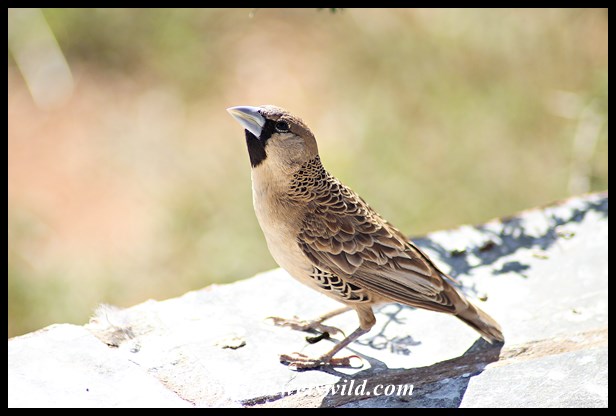
Mokala National Park owes its diversity of bird species both to its location at the transition between South Africa’s arid west and wetter eastern regions, as well as the diversity of habitats protected within its borders. To date, more than 200 species of birds have been recorded within this relatively new Park and we, not considering ourselves very proficient birders (yet) managed to tick a respectable 70 of those. These are just a few of the feathered friends we made at Mokala during our visit in April 2018.

If you’d like to learn more about Mokala National Park, why not have a read through the detailed post we did about the Park in 2016.

Mokala’s Pale Zebras

When the last Quagga mare died in Amsterdam Zoo in 1883, it was thought that this uniquely South African species of zebra was hunted into extinction, never to be seen again. Where once thousands of Quaggas, with their striped forequarters and brown backs and buttocks roamed the Karoo their distinct “kwa-ha-ha” calls would never be heard again. Over a century later however it was realised, through DNA analysis, that the Quagga was a localised race of the still extant Plains Zebra, and the Quagga Project came into being to try and bring them back through selective breeding. With each subsequent generation showing more and more Quagga-like characteristics, one day we may again see true-to-form Quaggas roaming their native country in vast numbers.

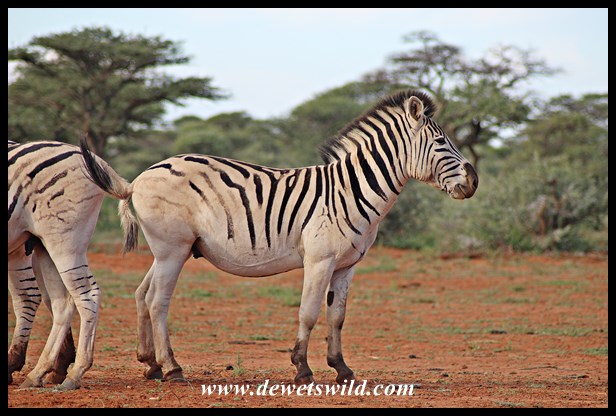
The area in which Mokala National Park is located would have been populated by zebras that were intermediate in appearance between the Quaggas and more “traditionally” patterned Plains Zebras, and thus when the Park was proclaimed it was decided to specifically stock it with zebras that had a lesser degree of striping, especially on their backs and haunches. These pale-rumped zebras are certainly an endearing feature of the Park.

If you’d like to learn more about Mokala National Park, why not have a read through the detailed post we did about the Park in 2016.


How Vulture W428 is helping to conserve its species

On arriving at Haak-en-Steek Cottage at Mokala National Park on the 27th of April 2018, we found this young White-backed Vulture waiting to welcome us. Thanks to the tag fitted conspicuously on the wing it was easy to identify him / her as “Vulture W428”, and of course we wanted to find out more about this bird.

Mokala’s Park Manager put us in contact with Angus Anthony of the EWT’s Vulture Monitoring Project, thanks to whom we learned that Vulture W428 is one of 56 chicks that were tagged on their nests on Dronfield, a farm just north of the city of Kimberley in South Africa’s Northern Cape Province, in October 2017. Once they become independent, these juvenile White-backed Vultures may roam very widely – even as far afield as Angola! Obviously Vulture W428 is a little less adventurous and likes staying closer to home. This may be because there’s a vulture feeding station on Dronfield, where there’s presently a growing population of about 100 breeding pairs of White-backed Vultures.

Research projects like these are invaluable in protecting South Africa’s dwindling vulture populations. Reporting sightings of tagged birds allow researchers to follow their movement and breeding patterns, glean information about their behaviour (do they mate for life, do pairs return to the same nest annually, etc) and calculate their life expectancy. Thanks to the tags it could be established for instance that young vultures return from their explorations to breed at Dronfield when they’re 4 to 5 years old, but then the question is whether the same holds true for other breeding colonies? This is vital information, considering that the IUCN recently reclassified the White-backed Vulture as Critically Endangered due to a rapid and enormous decline in their populations.

If you are lucky to see one of these tagged vultures while travelling through South Africa (or one of our neighbouring countries), please do share that information with the EWT – what may seem like a little piece of information may be vital to their continued survival. The kind of information the researchers are hoping for include the location (gps co-ordinates would be handy), date and time of the sighting, the colour and code of the tag, comments about the bird’s behaviour at the time (feeding, roosting, nesting, flying, solitary or with other vultures, etc), if possible the species and whether it is an adult or juvenile, and of course your own contact details in case they have follow-up questions.

This is a fantastic way to contribute to the protection of our natural heritage!

If you’d like to learn more about Mokala National Park, why not have a read through the detailed post we did about the Park in 2016.


Mokala’s multitude of Springbok

The Springbok is by far the most commonly encountered large mammal in Mokala National Park – during our four day stay in April 2018 we had over 200 springbok sightings ranging from solitary rams to enormous herds. Thankfully they are such beautiful animals that one could never tire of them, and the sprinkling of black and copper coated individuals made for fascinating comparisons with the more standard liveried animals.

Our most exhilarating encounter with Mokala’s Springbok was with these two mature rams contesting for ownership of a prime territory right in the middle of the road!

If you’d like to learn more about Mokala National Park, why not have a read through the detailed post we did about the Park in 2016.

Muddy fun at Dries se Gat

“Dries se Gat” is one of our favourite waterholes in Mokala National Park, not only because I share a name with it but also because there always seem to be something interesting happening there.

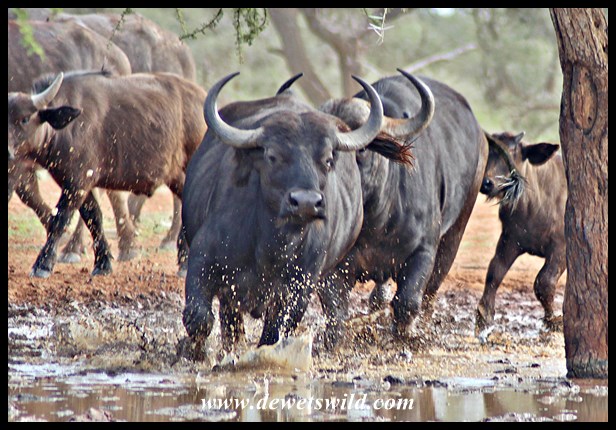
During our latest visit to Mokala we arrived at the waterhole just as a big herd of 100+ buffaloes were making their way to the water, and could spend quite a bit of time watching the animals interact with each other while slaking their thirst and enjoying a mud bath.

If you’d like to learn more about Mokala National Park, why not have a read through the detailed post we did about the Park in 2016.

Back from another taste of Mokala Magic

We’ve just returned home after spending a four-night weekend at beautiful Mokala National Park in the Northern Cape. We had a lovely time and of course we have lots to share with you in the coming days – Here’s just a little teaser!

If you’d like to learn more about Mokala National Park, why not have a read through the detailed post we did about the Park in 2016.

Easter in Kruger

The Easter break afforded us the opportunity to visit South Africa’s flagship National Park, and one of our favourite destinations, again, spending first three nights at Skukuza Rest Camp in the south of the Kruger National Park, and then four nights around Mopani Rest Camp in the north. After a summer of apparently good rainfall, the Park’s vegetation is lush and green, with water in ample supply. These conditions make searching for wildlife a bit trickier, but it is wonderful to see the Park transformed from the harrowing effects of the recent drought that is still so fresh in our minds.

The Kruger National Park is renowned for its Big-5 sightings. There isn’t very many other places where one can so easily find completely wild lions, leopards, elephants, buffaloes and rhinos from the comfort of your own vehicle, at your own pace and according to your own schedule. And then there’s always a chance that you may cross paths with a magnificent big tusker!

On the other side of the scale are those less frequently noticed smaller critters (“creepy crawlies” or “goggas” as we call them), that fairly seldom feature on any of the Kruger visitors’ sightings wish-lists. They may be small and unobtrusive, but they are certainly no less fascinating than the glamorous Big-5. We already shared with your the exciting scenes of a Western Stripe-bellied Sand Snake catching and swallowing a skink in Shingwedzi, but there’s plenty more to see if you bend your knees!

The Mopani area is well-known for prized sightings of the rarer antelope species, and we weren’t disappointed on that score either, ticking bushbucknyalaeland, tsessebe, reedbuck and roan antelope on our list.

The lush vegetation made it very challenging to see the smaller antelope species. We managed to photograph steenbok, grey duiker and klipspringer, but unfortunately the grysbok just weren’t willing to pose for a picture this time around.

There’s quite a few herbivore species that you are virtually guaranteed to see when visiting the Kruger National Park. Among these are baboons and vervet monkeys, blue wildebeest, plains zebra, impala, kudu, waterbuck, giraffe, warthog and hippo.

Of course, with such a menu there are many predators in attendance. Apart from lions and leopards, on our latest visit we also encountered spotted hyena, side-striped and black-backed jackal, crocodile and large-spotted genet.

The Kruger National Park is regarded as a paradise for bird-watchers, and that is not without reason. During the warmer months especially, when many summer migrants from northern latitudes enjoy our warm weather, the variety and numbers of bird species to be seen is absolutely prolific, but even in winter feathered life abounds in the Lowveld.

The Kruger National Park is an addictive place. You only need to visit once for it to get under your skin, and stay there. The more you experience of Kruger’s wonders, the more you pine for it. We’ll be back again and again, no question about it.

 

Easter Encounters with Tuskers

One of our greatest joys when visiting the Kruger National Park is being treated to an encounter with a real “Tusker”; a majestic elephant bull carrying massive ivory. There are only a handful of these enigmatic animals on the continent, and they are living monuments to those who protect our wild places for generations to come. Owing to their special status, they are given names by the Park authorities, often according to specific areas they roam or in remembrance of rangers or other members of staff that dedicated their lives to the Park.

During our Easter visit to Kruger, we were lucky to have seen no less than three of these awesome animals. Each one of them has some unique features – scars on the ears, marks on the trunk, characteristic tusk shape, etc. that aids in the identification. We’ve submitted our photographs to the Kruger’s Emerging Tuskers Project and will update this post once we hear the names of these tuskers.

This is Xidudla, the name being in reference to his large size:

This big bull is known as “Hahlwa“, which is Tsonga for “twin” because he looks so similar to Masasana, another big tusker roaming the Kruger Park.

This last bull has not been named yet, but the project team will be keeping a close watch on him until he too receives his well-deserved moniker.

For some more pictures of tuskers we’ve seen in Kruger in years past have a look at this post.

Western Stripe-bellied Sand Snake

Psammophis subtaeniatus

One of the most exciting and memorable sightings of our Easter trip to the Kruger National Park took place right in front of the reception office at Shingwedzi Rest Camp. We watched as a Western Stripe-bellied Sand Snake (aka Western Yellow-bellied Sand Snake) stalked, caught, killed and swallowed a skink – the whole episode playing out within perhaps ten minutes at the most.

This was a fairly large specimen of this slender species, which grows to around a metre in length. Western Stripe-bellied Sand Snakes are strictly diurnal, equally at home on the ground or in low trees and shrubs, and extremely fast moving. Aside from lizards they will also prey on frogs, small birds and rodents, which they dispatch with a dose of mild venom (not lethal to humans though).

Females lay between 4 and 10 eggs in summer, and probably lives for between 5 and 10 years in the wild.

The Western Stripe-bellied Sand Snake is described as widespread and common by the IUCN, which considers it to be of least concern. It is distributed from southern Angola and northern Namibia through to Swaziland and South Africa (North West, Limpopo, Gauteng, Mpumalanga and possibly northern Kwazulu-Natal), occurring in a variety of savanna types and being especially closely associated with mopane veld (such as which occurs around Shingwedzi).

While visiting Marakele National Park over Easter in 2019, we encountered another Western Stripe-bellied Sand Snake at the Thutong Environmental Education Centre, and watched as it searched, this time unsuccessfully, for a lizard to catch.

This Western Stripe-bellied Sand Snake visited our tent at Tlopi in the Marakale National Park during a visit in February 2021:

Western Stripe-bellied Sand Snake at our tent

While staying at Shingwedzi Rest Camp in the Kruger National Park in June 2019, a Western Stripe-bellied Sand Snake came to visit us at our campsite – seems Shingwedzi is a really good place to go looking for this species!

We were parked at a Leopard sighting while visiting the Kruger National Park in December 2021 when Marilize noticed this Western Stripe-bellied Sand Snake in a bush next to our car.

Western Stripe-bellied Sand Snake (photo by Joubert)

In July 2022 we visited Marakele National park and Tlopi Tented Camp again, and were delighted to find another Western Stripe-belllied Sand Snake guarding our tent again.


Back from our Easter Bush Breakaway

We’re fresh back from our Easter break around Skukuza and Mopani in the Kruger National Park, and of course well be sharing lots and lots more photos from this beautiful place with you soon! (as well as replying to all the comments you left us over the last few days).