Tag Archives: vacation

What a welcome at Mpila

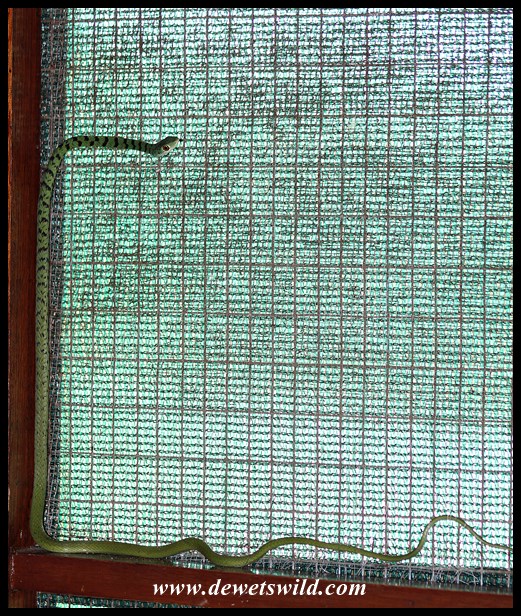
We had only just arrived at Mpila Camp in the Hluhluwe-Imfolozi Park this afternoon, when we were welcomed by this Spotted Bush Snake on the mosquito screen of our kitchen door – What a welcome!


Umlalazi Airshow

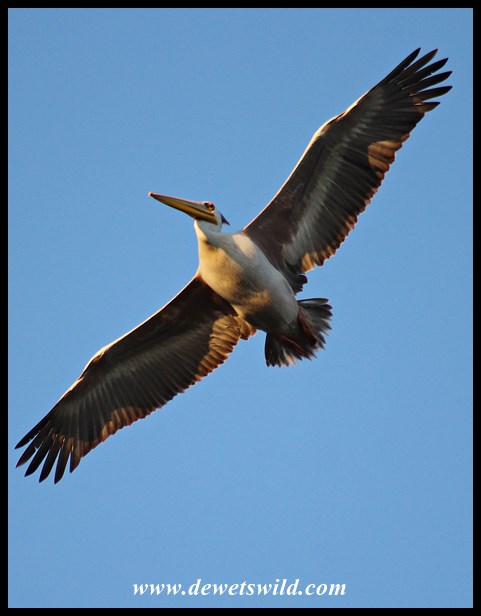
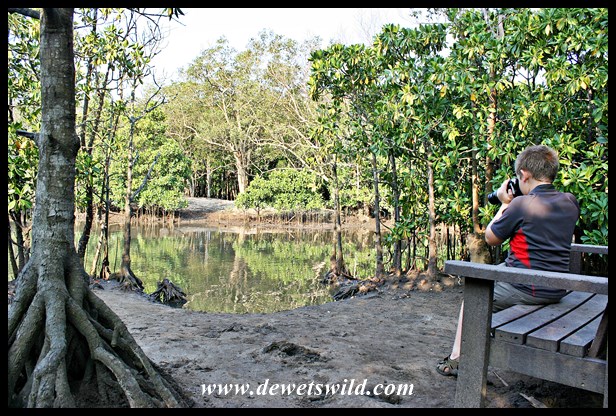
While exploring the mangrove swamps here at Umlalazi Nature Reserve this morning, this Pink-backed Pelican treated us to a low-level flypast.

Today was our last day here at Umlalazi. Tomorrow, we head for the Hluhluwe-Imfolozi Park. If we have a good enough connection well try to post a daily update from there as well.


Early to rise…

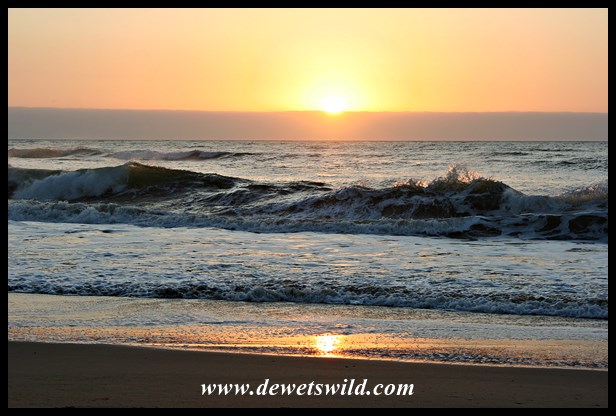
We were out the door at 04:20 this morning to take in this spectacular sunrise over the Indian Ocean. We then spent a couple of hours playing on the beach before going back to our cabin for a delicious brunch. Wish every day could start this way…


A morning in the Dlinza Forest

We spent the morning exploring the beautiful Dlinza Forest Nature Reserve in the town of Eshowe. This panoramic view awaits you at the top of the aerial boardwalk at Dlinza – an excellent way to experience the middle and upper stories of the forest that one doesn’t normally have access to – click on the image for a larger view. Of course we’ll share more about Dlinza when we’re back from holiday!

View from the Dlinza Reserve’s Aerial Boardwalk


In a forest of giants

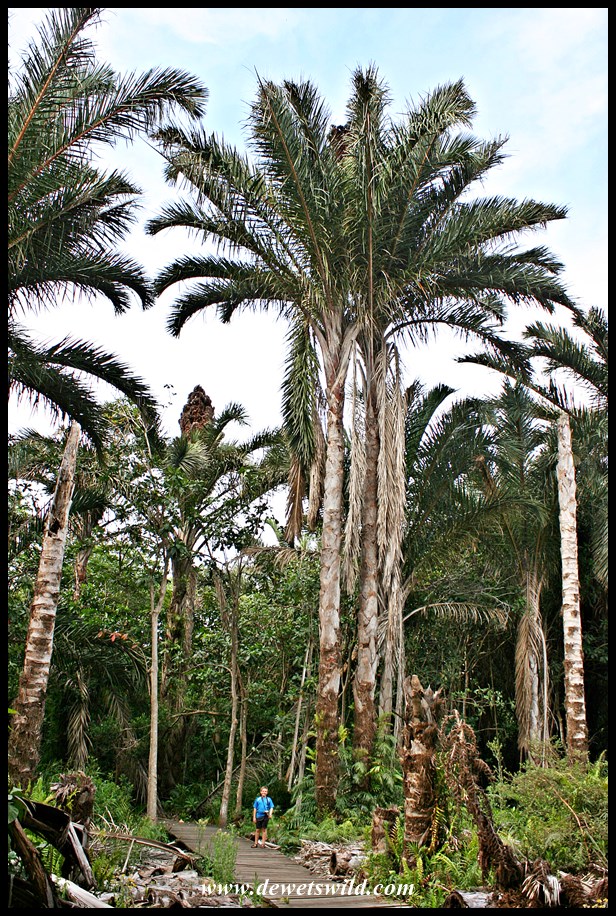
Today we spent some time exploring the Raphia Palm National Monument, quite literally one of the biggest attractions here at Umlalazi Nature Reserve. See if you can make out Joubert standing next to two of the towering giants.


Vacation Time!

The time for our December holidays have finally arrived, and we kick of our summer vacation at beautiful Umlalazi Nature Reserve on the north coast of Kwazulu-Natal Province!


Boys Weekend in the Pilanesberg

Early on this past Saturday morning Joubert and I headed for the Pilanesberg National Park’s Kwa Maritane Gate. Our plan was to spend all of Saturday, most of Sunday morning and the night between in one of South Africa’s most easily accessible wildlife destinations, enjoying a bit of father-son company and shared hobbies in the beautiful surroundings far from the city’s distractions. When the Gate opened at 05:30 we set off, enjoying some thrilling encounters with the Park’s wildlife right from the start.

While we were enjoying the Pilanesberg’s sights and sounds from the coolness of the photographic hide at Makorwane Dam, Joubert suggested that we head for Bakgatla Resort to go setup camp before the day got any hotter.

With our tent pitched and our camping chairs unpacked, we could enjoy our lunch, a few glasses of cold drink and an ice-cream treat surrounded by a selection of Bakgatla’s permanent residents of the feathered variety.

The first stop on our afternoon drive was Rathlogo Hide, just a few kilometers from Bakgatla.

At Tilodi Dam we laughed at the antics of a male African Black Duck that was most impressed with himself for having chased off a White-faced Whistling Duck from “his” shoreline.

There was much more wildlife to be seen as we traveled through the southeastern portions of the Park.

At Lengau Dam a group of baboon youngsters were having great fun roughhousing in a dead tree and occasionally dropping into the water below – no doubt enjoying great relief from the oppressive heat but I was surprised that they weren’t more afraid of the crocodiles!

With the sun setting it was time to head towards Bakgatla.

On Sunday morning we packed up our camp and headed for the Lenong Viewpoint to enjoy our morning tea and rusks from a beautiful vantage point high on top of one of Pilanesberg’s mountains. The rest of the morning we spent visiting more of our favourite spots in the Park, until the day started getting really hot again. We enjoyed a quick lunch at Fish Eagle Picnic Spot and then headed for Kwa Maritane Gate and home…

Pilanesberg National Park is an easy 160km drive from our home in Pretoria.

A thousand posts on de Wets Wild!

Today we celebrate a major milestone for us here at de Wets Wild – our 1,000th post!

A huge word of thanks must go to our all our friends and followers for their support and encouragement over the course of the past 6 years! Thank you for sharing our love and passion for South Africa’s wild places and the creatures that find a home there with us – we hope you’ll continue to do so for many years to come!

Seems fitting now to have a look at some of the most popular posts and other highlights we enjoyed on this journey. (Clicking on the links provided should open the posts in a new window without closing this post).

Perhaps unsurprisingly, our “About” page (home page) is by far the most visited.

But how and why the post about South African Hornbills come in second place, I have no explanation!? That they’re fascinating birds we won’t argue about.

South Africa’s vultures are getting some well-deserved attention as well.

Another post about a bird that got a lot of attention is that about the black heron and its fascinating hunting technique.
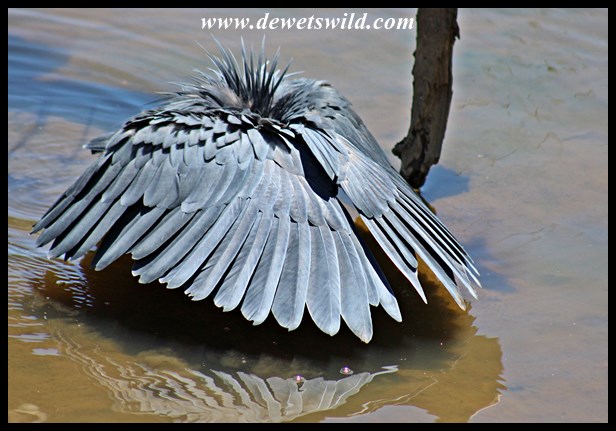
Black Heron “canopy feeding”

Early into our blogging “career” we took part in a few photo challenges – the image we posted of dew droplets caught in a spider’s web was the best received of those.

The post we did on the Kruger National Park’s Selati Line, with thanks to my sister for the use of her photos, has been a perennial favourite.
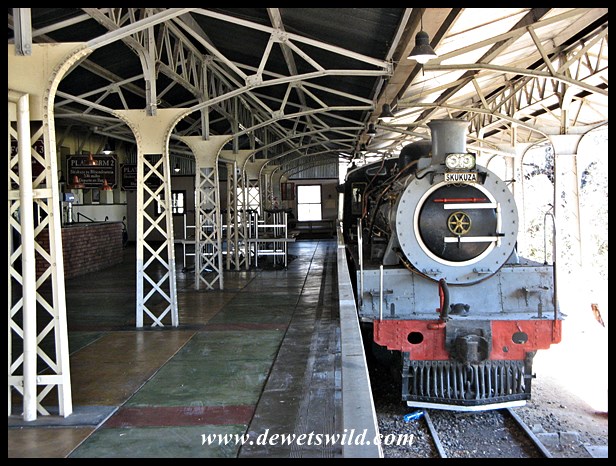
Steam engine at Skukuza "station"

Steam engine at Skukuza “station”

The features we did on Pafuri Border Camp (in Kruger) and Nyathi Rest Camp (in Addo) when they opened are still very popular – people are obviously very eager to explore new destinations and we’re glad that de Wets Wild could help so many of them plan their visits!

But it is not only the new destinations that people are interested in, as the posts about familiar favourites like Skukuza in the Kruger Park, Loskop Dam and Golden Gate Highlands National Park prove.

Plains Zebras seem to be the most popular mammal featured here at de Wets Wild, as a few posts about these beautiful animals feature at the top of the charts!

But the world’s cutest bouncing baby rhino will not be outdone!
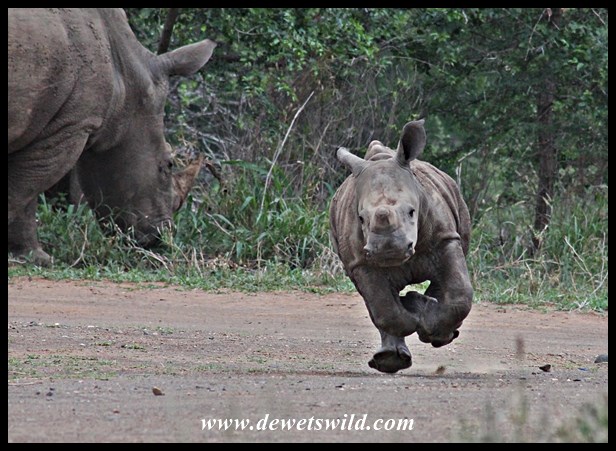
You’ll never catch me!

Of course we cannot talk about highlights and forget how your support helped us feature in the honours at the SA Blog Awards – from finishing as runners up in both the Best Travel Blog and Best Environmental Blog Categories in 2014, 2015 and 2016 to finally winning in both in 2017!



High time we went back to Ithala!

This past Women’s Day long weekend afforded us the opportunity to make a long overdue return visit to one of our favourite South African wild places – the Ithala Game Reserve in northern Kwazulu-Natal. We’ve been singing the praises of this little known yet exceptionally scenic reserve for as long as this blog’s been running and if you’d like to see all our posts about Ithala and learn more about it please follow this link.

While the weekend’s weather ranged from cold, wet and blustery to glorious sunshine, that didn’t curtail our explorations in the least. How could it, when the majestic scenery is so rewarding!?

And, when the sun came out, so did the butterflies and various kinds of reptiles!

Ithala has a rich variety of bird species and many of them are easily seen and photographed in Ntshondwe, the reserve’s main camp.

And of course, what would a “game reserve” be without a rich assortment of large animals? Ithala never disappoints in its variety of mammals, and especially the giraffes (Ithala’s emblem) were out in force!

We spent three nights at Ithala, staying in comfort in Ntshondwe’s chalet #20. Ithala’s a relaxed 6 hour drive on good tarred roads from our home in Pretoria.

Ntshondwe Chalet #20, Ithala Game Reserve, August 2018

Pretoria to Ithala
(drawn with Google Maps)

Kgalagadi Transfrontier Park – Wildlife

For such an arid area – average rainfall measures around 200mm per annum – the Kgalagadi Transfrontier Park is home to an astonishing variety of wildlife. Apart from a wide variety of desert-adapted plants and invertebrates, the Park’s lists boast 62 kinds of mammals, 274 species of bird (of which 78 are resident throughout the year), 48 sorts of reptiles (including 17 snake species) and seven kinds of frogs.

There’s three kinds of plants that really are characteristic of the Kalahari. The first is the Camel Thorns – huge trees growing in the beds of the Auob and Nossob River and about which we’ll be sharing more soon. Then, there’s the Gemsbok Cucumbers and Tsamma Melons; the fruits of which are made up of around 90%+ of water and both an invaluable source of moisture to all kinds of wildlife (including some carnivores).

At the one end of the scale there’s a multitude of invertebrates and small reptiles and mammals taking up their respective positions in the food pyramid. The Kgalagadi Transfrontier Park allows a glimpse into their natural cycles and behaviours uniquely adapted to their arid environs.

The Kalahari might best be known for the grand variety of raptors that soar its airways, but birdwatchers will not be disappointed by the variety of other, less fearsome but equally fascinating, feathered fauna that find a home here.

The Rest Camps of the Kgalagadi Transfrontier Park are excellent places to look for owls, by day or night!

Predators, both large and small, abound in the Kalahari. Africa’s three species of big cat are often seen (though the leopard eluded us when we visited in June 2018), and is one of the main reasons people undertake the long journey to visit here.

The Gemsbok is so iconic of the Kalahari that both parks that today make up the Kgalagadi Transfrontier Park (Botswana’s Gemsbok National Park and South Africa’s Kalahari Gemsbok National Park) was named after it. These beautiful animals are of the most commonly encountered large mammals in the Park.

And while there may not be as great diversity among the large herbivores in the Kgalagadi Transfrontier Park as in some of Africa’s other great conservation areas, the antelope, giraffe and warthogs occur in such numbers that it belies the harshness of their environment.

We’ll dedicate the next few posts on our blog to discover some of the Kalahari’s residents in more detail.