Tag Archives: travel

Kruger National Park, September 2013.

Yes, we’ve been to the Kruger National Park again…

Our Heritage Day long weekend in Kruger started early, on the morning of Friday the 20th of September, waiting at Phalaborwa for the gate to open. Formalities completed, our chosen route took us along some of the less traveled gravel roads in the area to Letaba Rest Camp, where we’d spend our first night in the Park.

We spent the afternoon traversing the roads around the camp, soaking in the peaceful atmosphere and spending some time with our favourite Letaba resident, the big tusker Masthulele, and Hlahleni, one of the pretenders to the throne.

Come Saturday morning, we were on our way to Punda Maria, Kruger’s northern-most rest camp. A cold front was heading for the lowveld, and strong gusts of wind accompanied us all the way. Good sightings of elephants and some of Kruger’s rare antelope species, and a variety of other animals and birds, kept us entertained on the long drive northwards, and we arrived at “Punda”, where we were joined by Marilize’s parents and would be staying for the next three nights, just in time for the 2PM check-in time.

(We’ll dedicate a special post to Punda Maria soon – the camp and the area around it has a rich and fascinating history and plenty to offer nature lovers)

No visit to the north of the Kruger National Park would be complete without a pilgrimage to magical Pafuri. And so, despite the cold front having Kruger now firmly in its cold and wet grasp, this is where we headed on Sunday. Pafuri is a lush tropical paradise next to the Luvuvhu River, a bird watcher’s heaven, with regal nyala antelope around seemingly every corner.

That evening, a herd of elephant spent a lazy hour or two at the floodlit waterhole next to the camp fence. You’ll understand why I blame the waterhole and the hide that overlooks it for losing quite a bit of sleep this weekend – who can sleep when there’s this much action right on your doorstep!
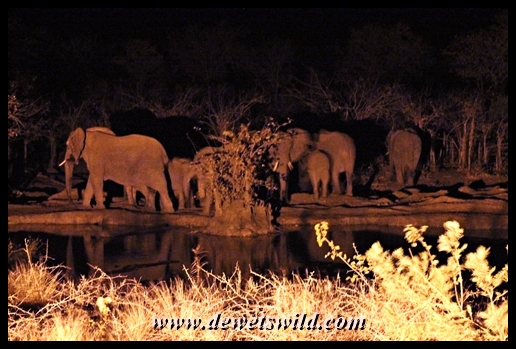
Elephant herd at Punda Maria's waterhole

Elephant herd at Punda Maria’s waterhole

We decided to visit recently re-opened Shingwedzi on our last full day in the Park. Shingwedzi Rest Camp and its immediate surroundings was hard-hit by the January 2013 floods, and we were curious to have a look at how our favourite Kruger camp has bounced back (some photos in our “Shingwedzi after the flood” post). Along the way an extremely aggressive elephant bull showed two buses and several SUV’s exactly who is in charge of this piece of wild Africa!
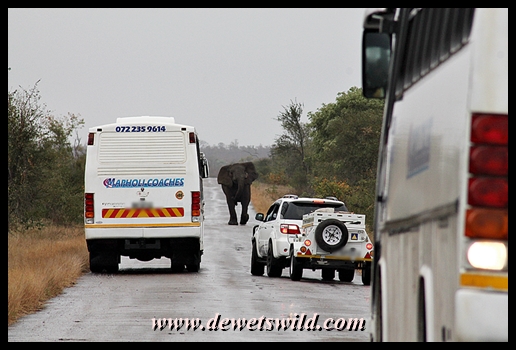
Elephant roadblock on the way to Shingwedzi

Elephant roadblock on the way to Shingwedzi

The Shingwedzi area is teeming with game at the moment. We had our first ever sighting of an albino impala, and a massive eland bull spending some time in the almost dry Mphongolo River was a welcome surprise, as these large but skittish antelope are rarely seen by visitors to the Kruger Park.

Almost back at Punda Maria that evening we had a thrilling encounter with a young lion walking past a herd of elephant on the Dzundwini Loop (photo here).

See the lion?

See the lion?

Dinner was followed by some more time spent photographing Punda Maria’s nightlife instead of sleeping…

Genet, Punda Maria
Genet, Punda Maria

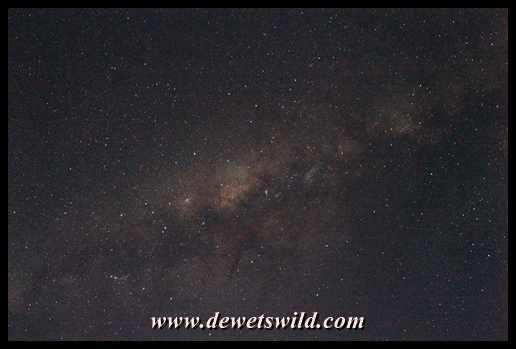
Milky Way

Milky Way above Punda Maria

But all good things come to an end and Kruger said goodbye with a magic sunrise on our way to Punda Maria Gate and back to Pretoria. Wouldn’t a scene like this also just convince that you need to get back here as soon as possible? Yes, we are already planning our next visit to Kruger National Park…
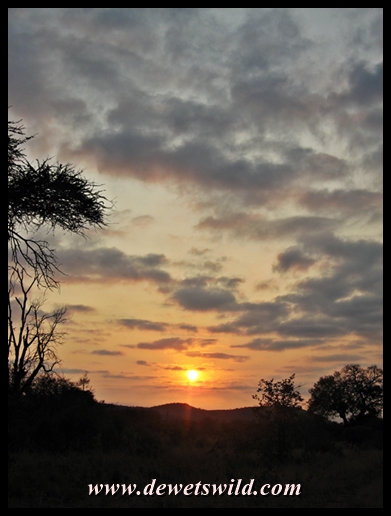
Punda Maria sunrise

Punda Maria sunrise

Infinite

The hills of Ithala Game Reserve rolling to the distant horizon…

Infinite

The theme for this week’s photo challenge is “Infinite”

Golden Gate Highlands National Park, September 2013

We spent the weekend of the 13th to the 15th of September at our much loved Golden Gate Highlands National Park, in celebration of the fiftieth anniversary of its proclamation. Here’s a gallery of photographs we took during that trip, and if you’d like to know more about this magnificent piece of South Africa, have a look at our special “Celebrating Fifty Years of the Golden Gate Highlands National Park!” post.

(click on any of the pictures to view them in a carousel gallery)

Good morning! Again!

Oh, what a beautiful morning!

Sunrise over the Allemanskraal Dam, in the Willem Pretorius Nature Reserve.

Allemanskraal sunrise

Allemanskraal sunrise

The theme for this week’s photo challenge is “Good Morning!

Good morning!

Waiting with great excitement for the gates of the game reserve to open is, for most people, an unconventional start to the morning, but it’s a regular routine for us de Wets…

Good Morning_2455

The theme for this week’s photo challenge is “Good Morning!

Midmar Dam Nature Reserve

Near the town of Howick in the Natal Midlands, and conveniently close to the N3-freeway, you will find one of Kwazulu-Natal Province’s most popular playgrounds, the Midmar Dam Nature Reserve.

Midmar Dam

Midmar Dam

Most of the visitor activity is centred on the large Midmar Dam. Being the venue for the world’s biggest open-water swimming event, the Midmar Mile, held annually in February, the public resort with its well-kept lawns is especially geared to the enjoyment of a wide variety of water sports. Along the 15km of developed shoreline are zones set aside for picnics, fishing, powerboating and yachting, and a restaurant is located near the entrance. Accommodation options ranges from camping sites to fully equipped chalets.

At full capacity the Midmar Dam covers over 1,800ha, with the land area of the reserve covering an additional 2,844ha. A section of the reserve is set aside as a game park hosting a selection of non-dangerous mammals, including the rare oribi antelope, and a wide variety of birds, including the majestic fish eagle, in natural surroundings where visitors are allowed to walk, cycle or drive around in their own vehicles.

We found Midmar an excellent base from which to explore some other wild places in the area, particularly the Queen Elizabeth Park Nature Reserve, Karkloof Conservancy and Umgeni Valley Nature Reserve, as well as the many country stalls, farms, art galleries and eateries that make up the “Midlands Meander”.

Saturated

Heavy thunderclouds hanging threateningly above an already overflowing Pioneer Dam, at Mopani Rest Camp in the Kruger National Park

Saturated

Saturated” is this week’s photo challenge from WordPress

Shingwedzi after the flood

Our September 2013 trip to the north of the Kruger National Park afforded us the opportunity of visiting our favourite Shingwedzi Rest Camp for the first time following the devastating floods in January 2013.

Most of Shingwedzi has re-opened for visitors, with only some facilities, including the restaurant, remaining out-of-service – a sterling effort getting the camp up-and-running again so soon!

Revamped Shingwedzi shop

Revamped Shingwedzi shop

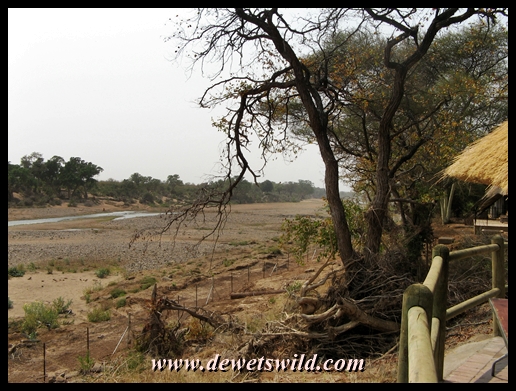
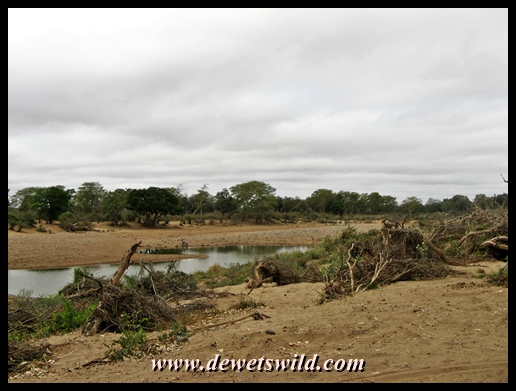
The view downstream from camp, to where the causeway is now buried beneath a thick layer of sand

The view downstream from camp, to where the causeway is now buried beneath a thick layer of sand

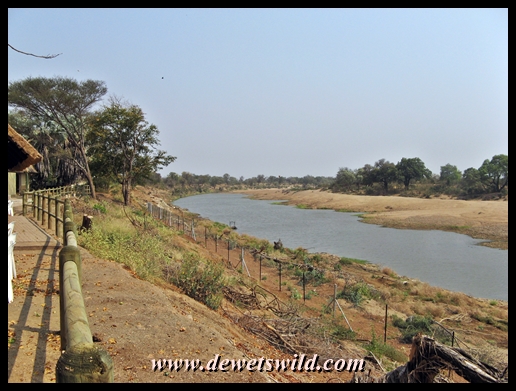
View upstream from camp, where a huge pool of water now houses hippos and crocodiles where previously there would have been nothing but sand in the dry season

View upstream from camp – a huge pool of water now houses hippos and crocodiles where previously there would have been nothing but sand in the dry season

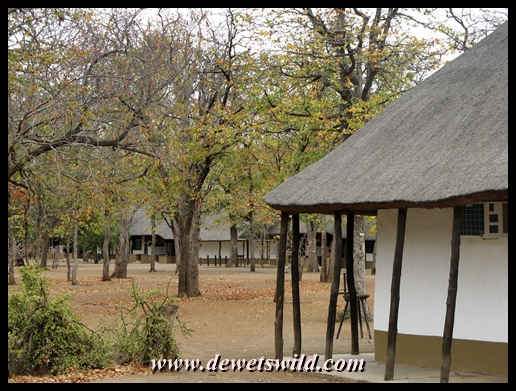
Shingwedzi accommodation

Shingwedzi accommodation

Shingwedzi camping site

Shingwedzi camping site

Shingwedzi accommodation

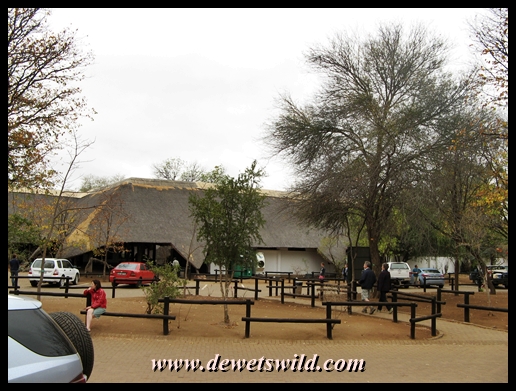
Shingwedzi main building – reception, shop and restaurant

Shingwedzi accommodation

Shingwedzi accommodation

Shingwedzi camping site

Shingwedzi camping site

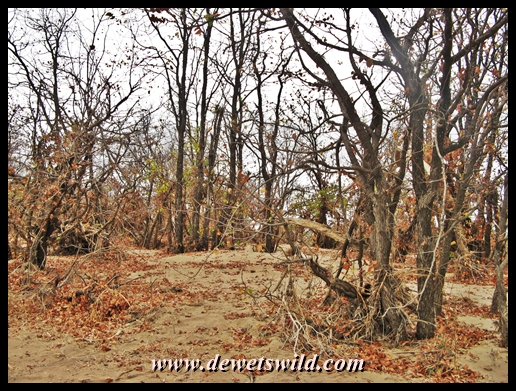
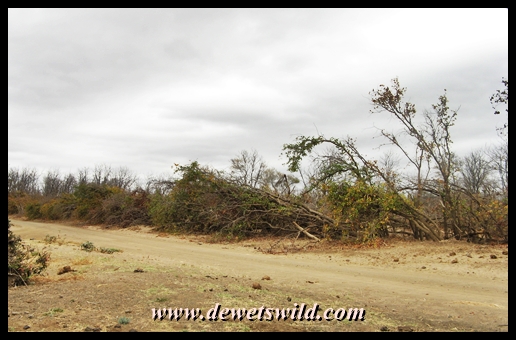
Driving around the area, the impact on man-made infrastructure and the natural environment was still clearly evident eight months after the flood waters of the Mphongolo and Shingwedzi Rivers swept through here in the dark of night.

Elephant at a pool in the Shingwedzi River

Elephant at a pool in the Shingwedzi River

Deep sediment deposits where the Shingwedzi burst its banks

Deep sediment deposits where the Shingwedzi burst its banks

Bent trees and shrubs along the Shingwedzi river

Bent trees and shrubs along the Shingwedzi river

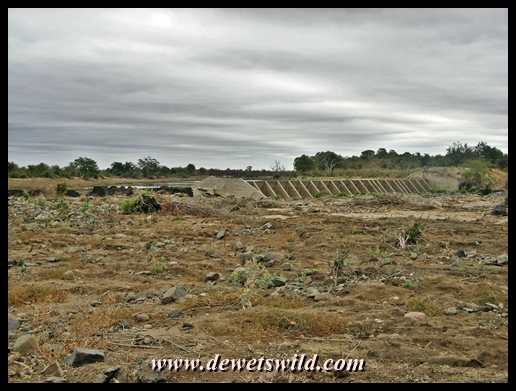
What's left of the Kanniedood Dam wall. Not a single tree remain standing in the immediate area below the broken wall!

What’s left of the Kanniedood Dam wall. Not a single tree remain standing in the immediate area below the broken dam – before the flood you could not even see the wall due to the dense plantlife!

Debris, deep sand and newly formed pools of water along the course of the Shingwedzi River

Debris, deep sand and newly formed pools of water along the course of the Shingwedzi River

Nature is resilient and we have no doubt that the Shingwedzi area will remain a firm favourite for many of the Kruger faithful, the de Wets included! Have a look here to find out why we love Shingwedzi so much!

Lines and Patterns

The blotches, and the lines between them, on a giraffe’s hide are as unique as human fingerprints. These photographs were taken during our recent trip to the North of the Kruger National Park.

L&P_3

L&P_5

L&P_4

From lines to patterns” is this week’s photo challenge theme


Just another day in the Kruger: 23 September 2013

Never a day passes in the Kruger National Park that is not full of surprises.

We will be heading back home to Pretoria tomorrow, but today we had great sightings of huge elephant and buffalo herds, jackals, a massive eland bull, several grysbok and even an albino impala.

The highlight of the day was seeing a young male lion walking casually past a mixed herd of elephant and buffalo on the Dzundwini loop-road near Punda Maria – that’s three of the “Big-5” in the same spot! Unfortunately I could only manage a shot of the lion and elephant in the same frame.

Lion and elephants 20130923