After spending 5 wonderful nights in Skukuza, Marilize unfortunately had to get back to Pretoria. Joubert and I safely delivered her back to the big city and, after we had a couple of hours of rest, it was time to head back to the Kruger again, this time accompanied by my younger brother Niel. Our destination: Satara Rest Camp, in the central plains of the Park.
There’s a reason Satara’s such a popular destination in the Kruger National Park, and we experienced it again during our August visit to the area. It’s the cats!
We made our way to Satara after entering at Malelane Gate, stopping at Skukuza and Tshokwane en-route. Though we enjoyed sightings of a myriad of animals and birds, not to mention the gorgeous natural scenery, the mating pair of lions we found at Olifantsdrinkgat, the lion pride with their giraffe kill just north of Tshokwane, and the young giraffe with a curious black blotch on its neck, were highlights of the drive northwards.

Kudu youngster

Steenbok

Old buffalo bull, just outside Skukuza

Buffalo herd, near Mantimahle Dam

Lions, seen at Olifantsdrinkgat

Lions on giraffe kill, very close to Tshokwane

Giraffe with unique markings, close to Tshokwane

Hippos at Mazithi Dam

Elephant bull in relaxed mood
After pitching our tent and setting up camp next to the fence, there could only be one route to take in the afternoon, and Satara’s famous S100 did not disappoint. Apart from abundant plains game like zebra, waterbuck and giraffe, we found a big herd of buffalo. To end the day on the perfect note, in the fading light of dusk, we had a far-off glimpse of a leopard being dive-bombed by a pair of martial eagles. The light and distance was against us taking good enough photographs, but the memory will remain for a long time and the sighting meant that we had seen every member of the “Big-5” on our first day at Satara. That night, we enjoyed a simple dinner while a hungry hyena lay mere meters away from us on the other side of the fence, hoping that we’d toss it a few scraps. We firmly believe that you should not feed wild animals, and so the hyena had to lope away disappointed when we turned in for the night.

Our (spartan) campsite at Satara

Waterbuck on the S100

Buffalo on the S100

“Our pet” hyena 🙂
Our route for the 10th of August took us along the S100 to Nwanedzi Picnic Spot and the Sweni Hide, then along the Trichardt Road and past the spot where ranger Wolhuter had his infamous encounter with a hungry lion to Tshokwane, on to Nhlangulene and Muzandzeni Picnic Spots on the S36, and then back to Satara with a quick detour to Girivana waterhole. As we left camp in the morning, Niel joked that he would do nothing but search every tree that day to spot a leopard. By 14:45 that afternoon, his wish was granted. Another “Big-5” day completed, “our” hyena brought a friend to supper, but again had to get up from the table with an empty tummy.

Early morning lion on the S100

Bushbuck in the Nwanetsi River

Crossing the Nwanetsi Spruit

Sharpe’s Grysbok near Nwanetsi

Jacana at Sweni Hide

Egyptian Goose at Sweni Hide

Black crakes at Sweni Hide

Plains zebra on the Trichardt Road

Hiding in the long grass

Elephant at the foot of N’wamuriwa Hill

We saw the black-necked giraffe again, about 3km away from where it was the previous day

Yellow-billed hornbill at Tshokwane Picnic Spot

Cape Glossy Starling at Tshokwane Picnic Spot

The lions were still feeding on their giraffe the next day

Buffalo with malformed horns

Much more handsome buffalo specimen

Leopard in tree, at Ximangwaneni Dam (Kruger Park)

Vultures at Ximangwaneni Dam

Zebra at Muzandzeni Picnic Spot

Elephant walking to Girivana waterhole

Slender mongoose at Girivana waterhole

Yellow-billed hornbill

Hippo antics at Nsemani Dam

Hippo antics at Nsemani Dam

Hippo antics at Nsemani Dam

Hippo antics at Nsemani Dam

Hippo antics at Nsemani Dam

Hippo antics at Nsemani Dam

Waiting for confirmation of this big guy’s name

Our dinner guests
Monday dawned over the Kruger and we headed for the Timbavati Picnic Spot and Ratelpan Hide. We’ve heard and seen reports of a white vervet monkey frequenting the area and were holding thumbs that we’d be able to get a glimpse of it too. You’d understand then that we were overjoyed when Joubert saw the white monkey strolling casually down the middle of the road towards us!

Tree squirrels squabbling next to the Timbavati

Bushbuck

Impala in flight

Impala; Kruger’s McDonalds

Timbavati’s white vervet monkey

Timbavati’s white vervet monkey

Timbavati’s white vervet monkey
Back in Satara during the heat of the day, we walked around taking photographs of the camp and its birdlife. We’ll save those for a dedicated post on Satara that we’re planning to publish in the next few weeks.
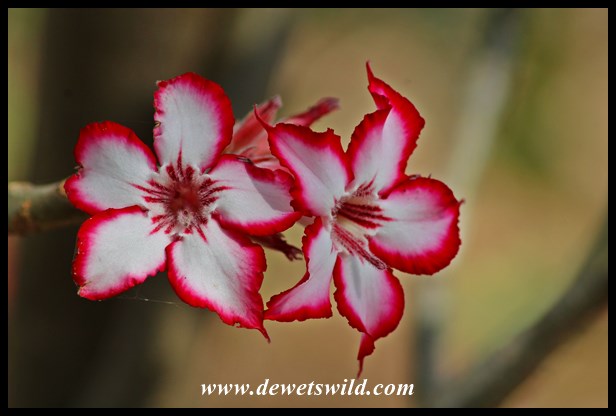
Beautiful impala lily flowers
In the afternoon, we headed for the open plains to the east of Satara, opting to drive the S100 back to camp in the last light of the day. Our cheetah sighting on this drive will remain a lasting memory.

Steenbok

Magnificent Kudu seen near Mavumbye

Cheetah on the lookout, Gudzani Road

Cheetah on the lookout, Gudzani Road

Cheetah on the lookout, Gudzani Road

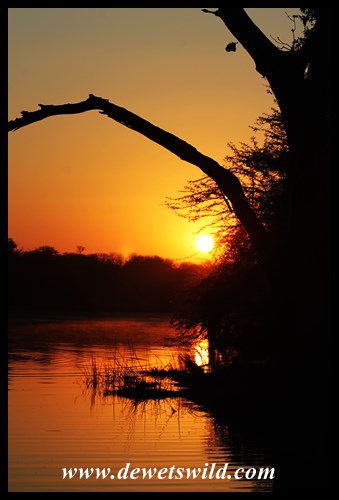
Sunset on the Nwanetsi River Road (S100)
Come the 12th of August and it was time to pack up our campsite and head back home. We decided to leave the Park through Phalaborwa Gate, roughly 120km to the northwest of Satara, so that we could stretch our legs at Joubert’s favourite place to visit in the entire Kruger Park, Letaba’s Elephant Hall.

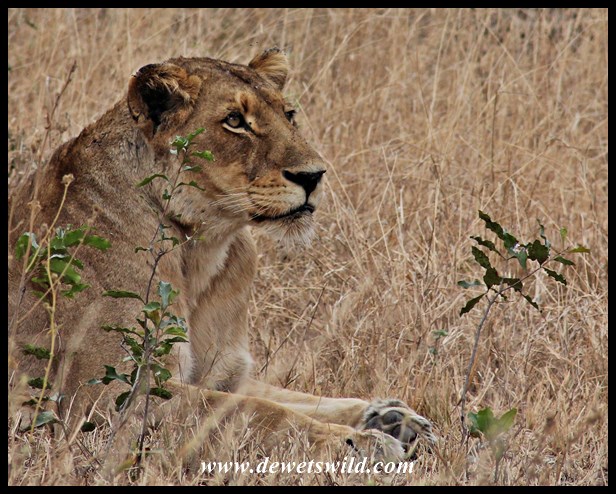
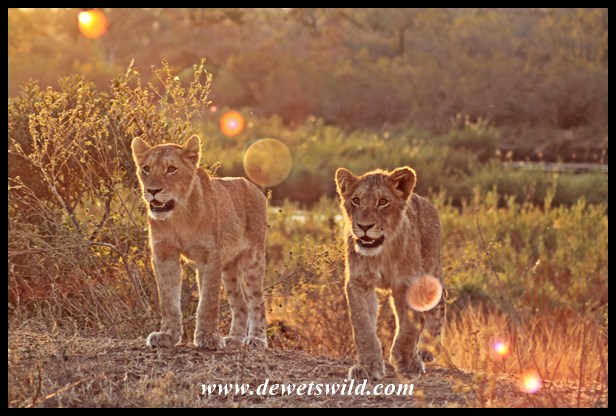
More lions, this time just north of Satara

Giraffe near Ngotso Dam (Kruger)

View over the Olifants River

Baboon family life

Male baboon

Elephant in the mopane

Hyenas at their den just outside Letaba, Kruger Park

Is he just sunning himself, or saying goodbye?
Of course, after a wonderful visit like this there was no way we could have had our fill of our beloved Kruger National Park, and so within a day of getting back to Pretoria we had to feed our addiction by making another reservation. We’ll be heading for the Shipandani Overnight Hide near Mopani, and heavenly Shingwedzi, later this month 😉 .










 DeWetsWild