After three nights at Lower Sabie it was time to move northwards to the central regions of the Kruger National Park. Just as we set off, a light drizzle started falling, and kept falling for the entire 50km or so distance between Lower Sabie and Tshokwane picnic site. While the low clouds meant that we could not enjoy the magnificent view from the top of Nkumbe mountain, we did not mind having a break from the previous few days’ oppressive heat! Pretty soon little puddles were forming on rocks and in the road, and while the shower would not have broken the drought, it would have brought a little bit of relief to the parched veld.


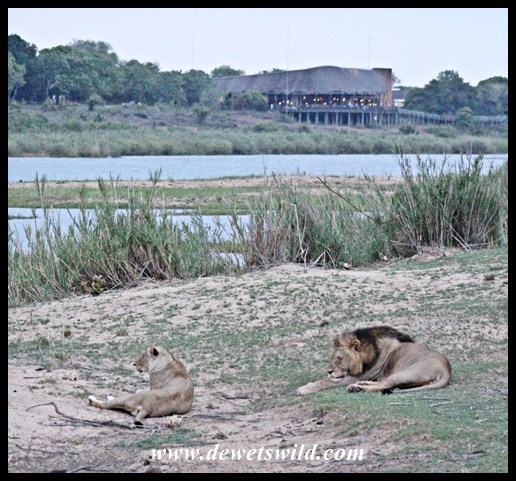
Between Tshokwane and Satara we encountered two more pairs of mating lions. While one couple moved away from the road for more privacy, the other was a lot more relaxed in the company of the few cars that had gathered to watch them. The prevailing drought makes catching prey much easier, and the way the lions are going on there will soon be many more young and hungry mouths to feed.


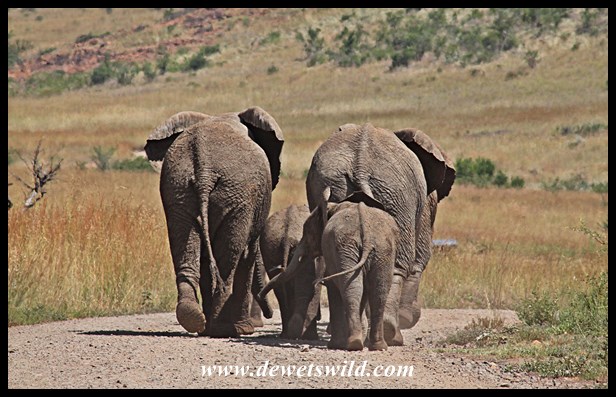
After lunch (take-away pizzas enjoyed in Satara‘s day visitors area) we tackled the final stretch of the long drive from Lower Sabie to Olifants Rest Camp. The plains between Satara and the Olifants River were positively teeming with wildlife of all descriptions.


Checking in at Olifants Rest Camp, we were given the keys to our cottage, number 14, one of the most popular units in the camp, and for good reason. The view of the wide bend of the Olifants River with its pods of hippos and lurking crocodiles far below, the endless wild plains beyond and the continuous stream of game and birds arriving to slake their thirst, is almost unrivaled anywhere on the continent, and you can take it all in from the comfort of a sofa on the wide veranda!


With the area around Olifants suffering from an extreme drought and intense heat, we thought it best to stick to the routes along the Olifants River and some of its tributaries that still held water for our afternoon drive. The high bridge and low-level causeway crossing the Olifants, and the weir at the Ngotso-crossing (on the S89 route) proved to be hot-beds of wildlife activity, though in the areas in between, away from the water, there were few animals to be found.


Next morning we were already waiting, with a few other cars, at Olifants’ gate for the 04:30AM opening – that’s the way to maximise your chances of encountering large predators on the prowl in the hot summer and we didn’t have to drive far before encountering two spotted hyenas just as first light started painting the African morning. Our drive took us along the Olifants and Letaba rivers, an area of rugged beauty, to Letaba Rest Camp, where we planned on enjoying our picnic breakfast. We didn’t however bargain that we’d be joined by a snake, even if only a slightly venomous Olive Grass Snake. Happily the snake was very well behaved and totally relaxed, and so he enjoyed the warm morning sun while we enjoyed our rusks and coffee…


Seeing as the Olifants river delivered such enjoyable sightings to us the previous day, we again focussed on the H1-5 tar road and the connecting S90, S91 and S92 gravel roads the following afternoon. This time we worked a quick detour to Bangu waterhole, some distance to the south of the river, into our drive as well – a well rewarded decision as we found a pair of black-backed jackals and flock of Temminck’s Coursers at the Xipembane stream, which still held a bit of water.


Driving up to Olifants two days earlier, the tremendous concentrations of game around Satara really drew our attention, and we decided that we had to explore that area a bit more on our final full day at Olifants. With the tarred road between Olifants and Satara carrying most of the tourist traffic, we opted to rather follow the gravel S90 “old main road”, past Bangu and Gudzani waterholes, to Satara, and then return to our lovely cottage at Olifants along the tar route when the day starts hotting up. Ticking excellent sightings along the way; a large pack of hyenas, showboating hippos, a rarely seen honey badger, two regal lions, more jackals and a quick view of a pair of cheetahs surrendering their kill to descending vultures, not to mention a huge number of more commonly seen birds and animals, and despite heavy cloud cover, a howling wind and the irritation of a punctured tire (quickly fixed at Satara’s car wash), you’ll appreciate that we were a very happy group when we arrived back at Olifants that morning!


After spending the hot midday hours in camp appreciating the enchanting view and the accompanying birdlife, it was time for our final leisurely afternoon drive along the Olifants and Letaba Rivers. While the drive wasn’t anywhere as exhilarating as our drive that morning, it did give us another opportunity to enjoy the rugged scenery of the valleys these rivers have carved over aeons through the Lebombo foothills.


We still had three nights left at Shingwedzi Rest Camp after our time at Olifants, and we’ll be telling you all about those next week. We’ll also be telling you more about Olifants and its environs in an upcoming edition of de Wets Wild.