
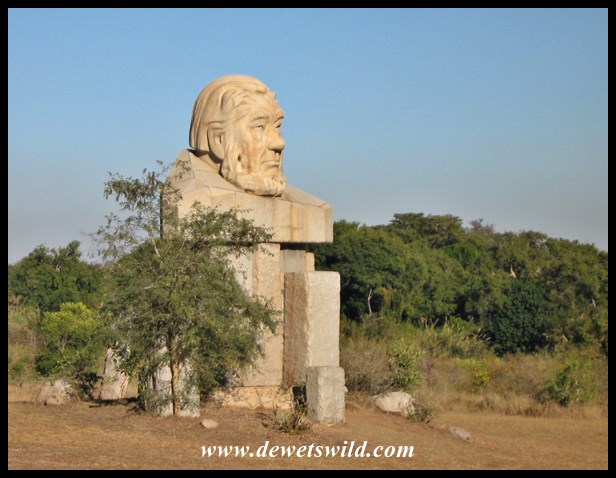
Statue of Paul Kruger at Kruger Gate
Today we celebrate the centenary of one of the world’s greatest conservation areas; the Kruger National Park. I am grateful to say that I was introduced to the Kruger National Park 43 years ago, have loved her ever since, got to spend 22 years in her service and now have the immense privilege of showing her off to new fans from this country and from all over the rest of the world.
At the end of the South African War, Major (later Colonel) James Stevenson-Hamilton was appointed to the position of warden of the Sabie Game Reserve; a loosely defined piece of land between the Sabie River in the North, the Crocodile River in the South, the foothills of the Drakensberg in the West and the Lebombo Mountains in the East that was proclaimed a game sanctuary by president Paul Kruger of the (then still independent) Zuid-Afrikaansche Republiek, some months before hostilities broke out with the British.
Stevenson-Hamilton, born in October 1867, arrived at his new station in July of 1902, soon setting up his office at Sabie Bridge, the place where the Selati Railway crossed the Sabie River. It was the local Shangaan population that gave Stevenson-Hamilton his nickname of “Skukuza“, meaning “he who sweeps clean” or “he who turns everything upside down“. Against considerable odds, piled up against him from politicians, mining houses and wealthy landowners, the plucky Scotsman managed to considerably enlarge the area under his jurisdiction, expand his powers of law enforcement, and won considerable support from the South African public, culminating in the proclamation of the Kruger National Park by Minister of Lands, Piet Grobler, on the 31st of May 1926.
The Kruger National Park was opened to the public in 1927, and by 1929 the first purpose-built accommodation facilities at Sabie Bridge, or “Reserve” as it became known, housed their first guests. The first hut, named the “Campbell Hut” after W.A. Campbell, a founding member of the National Parks Board, has been preserved as a tiny museum showcasing the early years of tourism in the Kruger Park, and is located near Skukuza’s restaurant.
From humble beginnings, through the dedication and hard work of her staff compliment and the love and loyalty of her visitors, the Kruger National Park today stands as a beacon in a world where wild places are more scarce and endangered than ever.


The fathers of the Kruger National Park: On the left, Minister Piet Grobler, in the centre President Paul Kruger, and on the right, Colonel James Stevenson-Hamilton


Ah, Kruger! Just the name – never mind your lovely array of photographs – conjures up many happy memories from my childhood onwards!
So much to celebrate, Dries. ❤️. Hope you’re all doing well.