Tag Archives: view sites

A garden where the eagles soar

Jumping up from a picnic, while celebrating a special friends birthday, to take pictures of large eagles flying over a major metropolis is not a familiar scenario for the de Wets. And yet that seems to be par for the course at the Walter Sisulu National Botanical Gardens!

Opened to the public in 1987 as the Witwatersrand National Botanical Garden on land donated five years earlier by the town councils in Johannesburg’s western suburbs, the gardens were renamed after the ANC leader Walter Sisulu in 2004. The focal point of the garden is undoubtedly the Witpoortjie Waterfall, the source of the Crocodile River which flows through much of the garden. Apart from beautifully tended and themed plant displays, the grounds include large tracts of natural vegetation and ample lawns under shady trees, very popular for picnics. Several pathways and tracks provide access to various parts of the gardens, and the most challenging of these lead to the top of the cliff above the waterfall, a favourite spot for many photographers hoping for a special shot of the eagles soaring past.

The gardens are open daily from 08:00 to 17:00 and facilities include a restaurant, kiosk, several function venues, a concert stage, an environmental education centre, a curio shop and a nursery selling indigenous garden plants. Guided tours of the gardens can be arranged in advance. We like the garden’s policy of “picnic in, litter out” encouraging visitors to take all their garbage with them when they leave.

The gardens are a haven for a multitude of birds and small animals, many of which are quite tame and obviously used to the human presence.

It’s been more than thirty years since a pair of Verreaux’s Eagles (formerly known as Black Eagles) first took up residence at a nesting site next to the Witpoortjie Waterfall. The current pair had successfully raised a chick to sub-adulthood and at the time of our visit was just starting to let the youngster know that it has to start looking for lodgings of its own. This made for spectacular flying displays over the gardens and against the backdrop of the Roodekrans cliffs.

On the other side of the garden, a dam with a bird-viewing hide at its edge was just one more delightful feature to add to our reasons to return to the gardens (soon!). Here we found an extremely irritable Egyptian Goose laying claim to the body of water and intent on ridding it of anything else that seemed remotely like waterfowl! It probably had a nest or goslings hidden somewhere near.

This was our first visit to these beautiful gardens, and we were wonderfully surprised and delighted by what we found. We spent the entire day at the garden, from when the gates opened until they closed, and yet feel like we haven’t seen most of it. Couple that with a jolly time spent with good friends, we’re sure it won’t be long before we return.


—————————————————–

Please vote for de Wets Wild in the 2014 SA Blog Awards

If you enjoy de Wets Wild as much as we enjoy sharing our love for South Africa’s wild places with you, please vote for us in the 2014 SA Blog Awards by clicking on this badge. We’ve entered both the Travel and Environment categories, and you may vote for us in both.

Thank you for your support!

SA Blog Awards Badge

Elephant mayhem at Mooiplaas

Marvelous Mooiplaas

There’s several waterholes in the Kruger National Park that have delivered us consistently good wildlife sightings over the years. One such drinking place is Mooiplaas, an artificial waterhole supplied by a borehole and windpump, adjacent to a natural wetland, about 5km to the south of Mopani Rest Camp. Directly translated from Afrikaans, Mooiplaas means “pretty farm”. The waterhole undeniably lives up to its name both in scenery and for the constant stream of birds and animals moving from the surrounding mopane vegetation to slake their thirst.

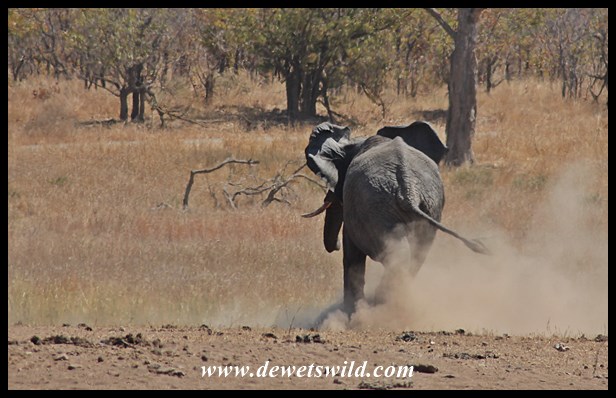
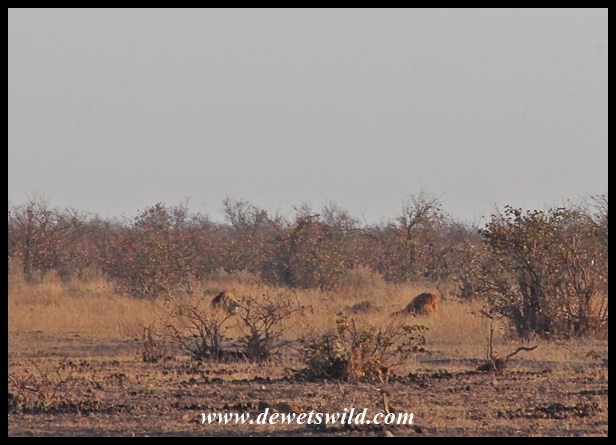
We visited Mooiplaas again on Heritage Day (24th September) while on our most recent visit to the Park. We arrived in the heat of the day, and found the place brimming with animals. Elephants, tsessebe, zebras, wildebeest, ostriches and a lone kori bustard were milling around, and from their behaviour we deduced that there must be predators around. Sure enough, in a clump of mopane shrubs, we saw two lions hiding from the heat; the female just out in the open enough to get photographic proof. It was obvious that these lions were not interested in hunting, and the animals could safely venture to the water for the moment. A young elephant bull caused a bit of an uproar among the plains game when he caught the lion’s smell on the wind, and started running around wildly, kicking up dust as he went.

After checking in for our night at Shipandani Hide, we decided to stop by Mooiplaas again in the late afternoon, and found that the lions had still not moved from their shady hideout. A group of elephant bulls were drinking from the reservoir, and a variety of birds were searching for food in the dust, but there was no sign of the large herds of zebra and antelope that frequented the area earlier in the day. Perhaps they understood that the lions would not be resting for much longer…

Throughout the night in the hide we could hear the lions roaring towards Mooiplaas, and of course that’s where we headed as soon as the gates opened. If the lions had made a kill during the night, the carcass wasn’t anywhere we could see it, and we had to be content with a far-off sighting of two large males lying in the grass some distance from the otherwise deserted waterhole.

Mooiplaas_25Sep2014

All too soon we had to leave, as we were heading for Shingwedzi and still had to return the keys for the hide to the reception at Mopani. Leaving Mooiplaas behind, we knew there would be more wildlife spectacles unfolding there that day. And we knew we’d return to Mooiplaas again as soon as we have the chance…


Golden sunrise on the water

An hour or two at Lake Panic

Lake Panic is a man-made body of water just outside of Skukuza, the headquarters and biggest rest camp of the Kruger National Park. The dam originally got its name when a flood threatened to destroy it shortly after it was built, but today, being home to enormous crocodiles and cantankerous hippos, the name is still just as apt.

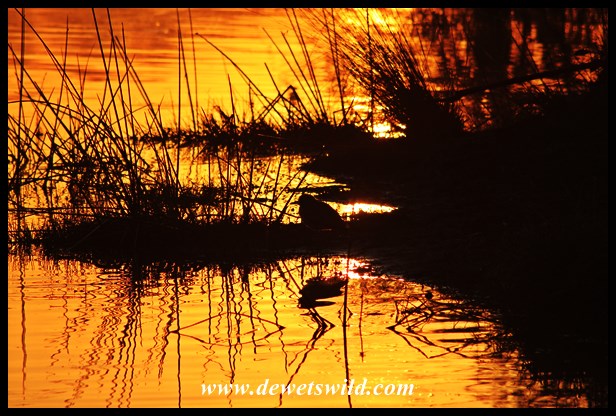
The hide at Lake Panic, situated at the water’s edge surrounded by lush vegetation, is extremely popular with photographers. In the early morning the sunrise over the water, often shrouded in a cloak of mist, is absolutely breathtaking, and there’s a constant processions of birds and animals to focus on throughout the day.

While staying at Skukuza recently, we made sure we popped in at Lake Panic regularly, staying for an hour or two. These are just some of the sights we enjoyed.

Time to depart the Giant’s Castle

21 April 2014

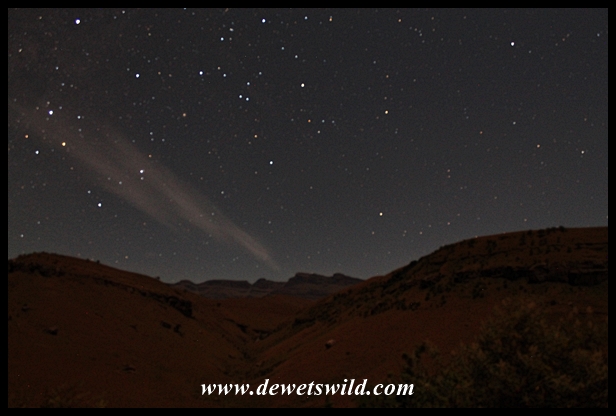
We left Giant’s Castle before dawn this morning, hoping to beat the Easter Weekend traffic back to Pretoria (which we did). Between the packing there was just enough time to take a picture or two of the Drakensberg illuminated by moon- and starlight.

Giants Castle 20140421

Look out for more from Giant’s Castle Game Reserve in an upcoming edition of de Wets Wild!

A serpent in the Giant’s garden

20 April 2014

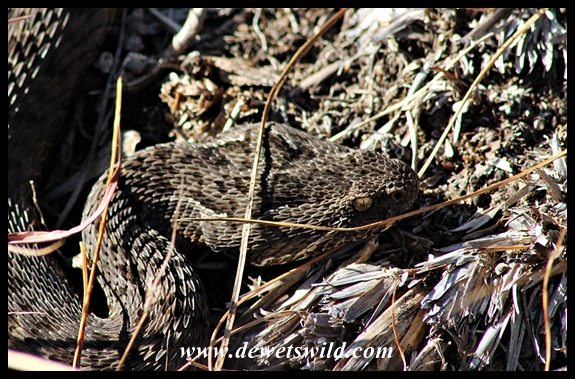
We happened upon this adder sunning itself on an open patch next to the hiking trail this morning. Just goes to prove that even when hiking in such exquisite surroundings as here at Giant’s Castle, you have to keep a sharp look-out for dangerous situations.

Giants Castle 20140420

Easter in the Giant’s front yard

18 April 2014


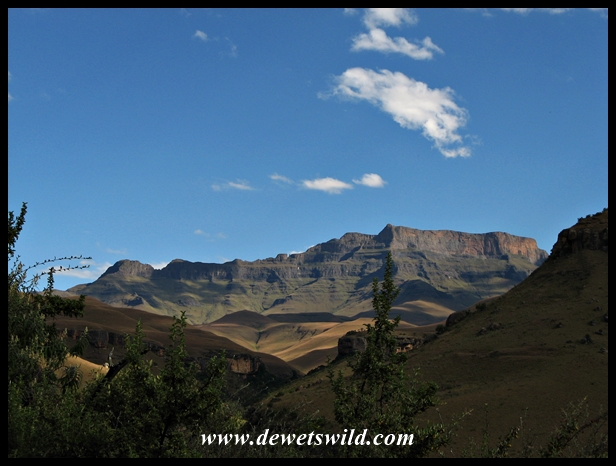
With this view of the giant and his castle, it’s not difficult to imagine that the beautiful resort at Giant’s Castle Game Reserve is located smack in the middle of the colossus’ front garden.

This is a small piece of the magnificent view from the veranda and master bedroom of the chalet we’re spending the Easter weekend in.

Yes, we’re bragging ;-).

Wishing you all a blessed Easter!

The view from our chalet at Giant's Castle Game Reserve

The view from our chalet at Giant’s Castle Game Reserve


Blyde River Canyon Nature Reserve, February 2014

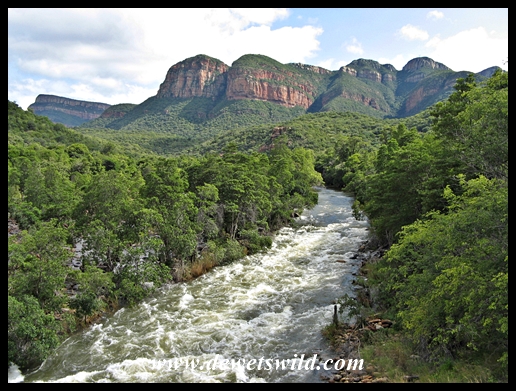
The Blyde River Canyon in the Lowveld of South Africa s the world’s third biggest canyon, and one of our country’s most diverse and scenically spectacular conservation areas.

BlydeCanyon_Feb14 (24)

We had the pleasure of spending four nights at Forever’s Swadini Resort during our recent visit to this beautiful area. The resort has all the amenities you’d associate with a family destination of Swadini’s calibre, yet there’s no feeling of being removed from the natural splendour that completely surrounds it.

Several easy-to-follow trails meander through the enchanting riverine forests around Swadini and it’s not difficult to forget all about time and the daily rat race while exploring these unique surroundings. Be sure to visit to the nearby Blyderivierspoort Dam, where you may join a cruise on the Dam’s deep waters and encounter hippos and crocodiles, or have a picnic at the viewpoint that overlooks the watery expanse.

We’ve dedicated several other posts to the Blyde River Canyon Nature Reserve – have a look here if you’d like to learn more about this fantastic destination. It’s one of our favourite South African wild places, and when you visit you’re sure to fall under its spell as well.


Letaba, February 2014

Following our explorations of the paradise that is Pafuri, in the far north of the Kruger National Park, we headed towards the central regions of the Park, for a two-night stay at Letaba Rest Camp.

It’s a long drive down from Pafuri to Letaba and, at game viewing speeds with regular stops for photographs and leg stretches at the camps and picnic spots along the way, it took us the entire day to cover the distance of 250km, reaching Letaba just before the gates closed. Covering such a distance in a national park like Kruger, you’re bound to come across some great sightings and some thrilling experiences, but we didn’t count on getting growled at when we stopped at Mooiplaas picnic site for a bit of a break. We were back in the car in a flash, and still have no idea what it was that was so irritated by our presence…

When you’re hoping for great wildlife sightings in any wild place, you have to be out-and-about at the times that the animals are most active, being the early morning and late afternoon, to maximise your chances.

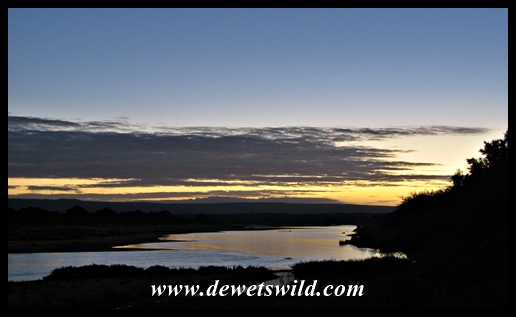
Letaba sunrise

We set out early from Letaba the next morning, heading towards Olifants Rest Camp along the gravel roads that follow the courses of the Letaba and Olifants Rivers. We were soon rewarded with a great sighting of a spotted hyena, followed shortly afterwards by the highlight of our trip: an encounter with wild dogs! The dogs came running along the road in the opposite direction we were travelling in, and passed us in a flash. We had to make a u-turn and followed them a couple of hundred metres, before they decided to take a bit of a break right in the middle of the road. These animals are so rare and sightings so infrequent that we spent quite a bit of time with them before moving on.

Fish eagle

Shortly before reaching Olifants we crossed a small stream and noticed lots of terrapins and a lone juvenile crocodile sharing a pool next to the road. It soon became apparent that these animals have become accustomed to being fed by passing tourists as they started moving towards our vehicle the moment we came to a halt. This aberrant behaviour is exactly the reason why the park authorities are so strict about visitors not being allowed to feed the animals, but some choose to ignore it nonetheless. We didn’t stay long, fearing that the terrapins would end up beneath our vehicle preventing us from driving away.

We spent the hot hours of the day walking around the Letaba campgrounds, enjoying the peace and quite and the company of Letaba’s resident bushbuck and birds.

Our afternoon excursion focused on the riverine drives to the north of the camp. Again we were not disappointed, seeing two waterbuck bulls sparring, herds of other game, including elephants, hippos, impalas, nyalas, bushbuck, giraffes, buffalo and baboons, various bird species, even some fish at a river crossing, and of course beautiful scenery.

A fascinating but gruesome sighting of a ground hornbill using its massive bill to kill and devour a tortoise in its carapace was a reminder that this is still wild Africa after all…

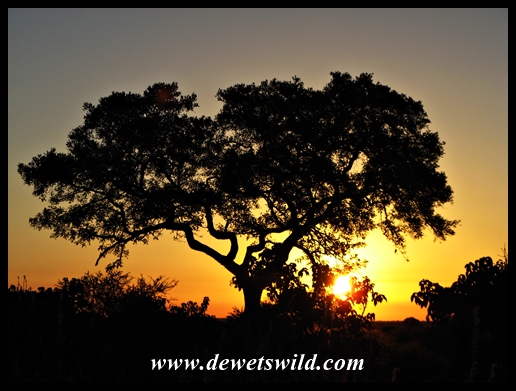
Letaba Sunset

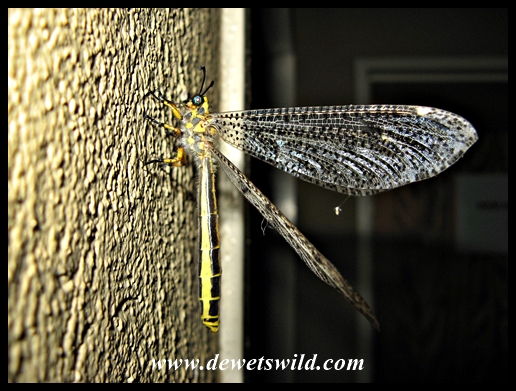
Lacewing

With the sunrise the next morning it was time to pack up and head to our next destination, the Forever Swadini Resort in the Blyde River Canyon Nature Reserve. It wouldn’t be our last taste of the Kruger National Park however, and as we were heading towards the Orpen Gate we could console ourselves in the knowledge that we were planning one last day visit for later in the week.

We’ve previously dedicated a special post to Letaba – have a look here if you’d like to read more about this peaceful rest camp