Tag Archives: view sites

Elephant mayhem at Mooiplaas

Marvelous Mooiplaas

There’s several waterholes in the Kruger National Park that have delivered us consistently good wildlife sightings over the years. One such drinking place is Mooiplaas, an artificial waterhole supplied by a borehole and windpump, adjacent to a natural wetland, about 5km to the south of Mopani Rest Camp. Directly translated from Afrikaans, Mooiplaas means “pretty farm”. The waterhole undeniably lives up to its name both in scenery and for the constant stream of birds and animals moving from the surrounding mopane vegetation to slake their thirst.

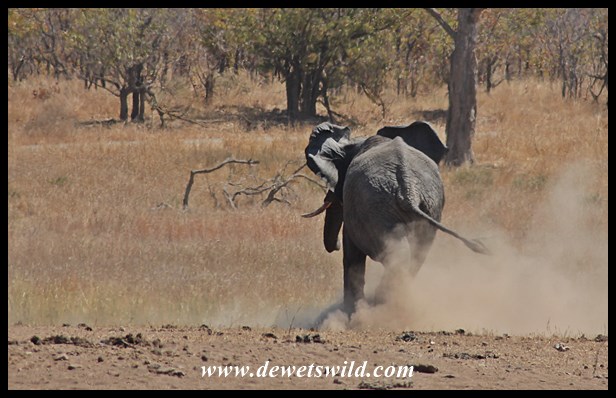
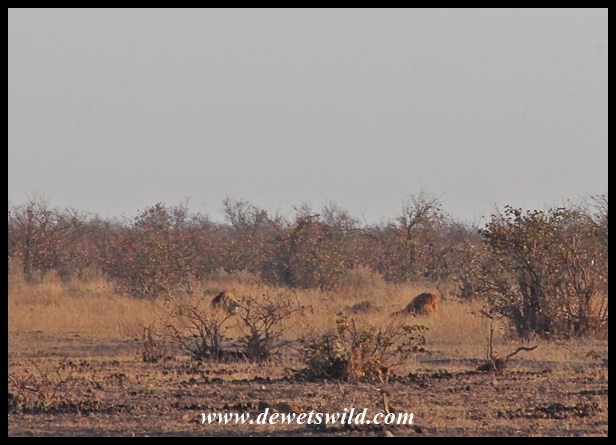
We visited Mooiplaas again on Heritage Day (24th September) while on our most recent visit to the Park. We arrived in the heat of the day, and found the place brimming with animals. Elephants, tsessebe, zebras, wildebeest, ostriches and a lone kori bustard were milling around, and from their behaviour we deduced that there must be predators around. Sure enough, in a clump of mopane shrubs, we saw two lions hiding from the heat; the female just out in the open enough to get photographic proof. It was obvious that these lions were not interested in hunting, and the animals could safely venture to the water for the moment. A young elephant bull caused a bit of an uproar among the plains game when he caught the lion’s smell on the wind, and started running around wildly, kicking up dust as he went.

After checking in for our night at Shipandani Hide, we decided to stop by Mooiplaas again in the late afternoon, and found that the lions had still not moved from their shady hideout. A group of elephant bulls were drinking from the reservoir, and a variety of birds were searching for food in the dust, but there was no sign of the large herds of zebra and antelope that frequented the area earlier in the day. Perhaps they understood that the lions would not be resting for much longer…

Throughout the night in the hide we could hear the lions roaring towards Mooiplaas, and of course that’s where we headed as soon as the gates opened. If the lions had made a kill during the night, the carcass wasn’t anywhere we could see it, and we had to be content with a far-off sighting of two large males lying in the grass some distance from the otherwise deserted waterhole.

Mooiplaas_25Sep2014

All too soon we had to leave, as we were heading for Shingwedzi and still had to return the keys for the hide to the reception at Mopani. Leaving Mooiplaas behind, we knew there would be more wildlife spectacles unfolding there that day. And we knew we’d return to Mooiplaas again as soon as we have the chance…


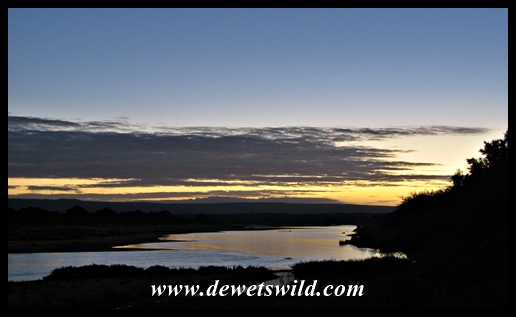
Golden sunrise on the water

An hour or two at Lake Panic

Lake Panic is a man-made body of water just outside of Skukuza, the headquarters and biggest rest camp of the Kruger National Park. The dam originally got its name when a flood threatened to destroy it shortly after it was built, but today, being home to enormous crocodiles and cantankerous hippos, the name is still just as apt.

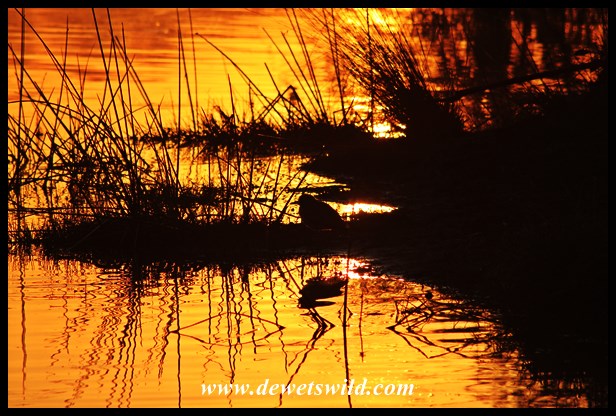
The hide at Lake Panic, situated at the water’s edge surrounded by lush vegetation, is extremely popular with photographers. In the early morning the sunrise over the water, often shrouded in a cloak of mist, is absolutely breathtaking, and there’s a constant processions of birds and animals to focus on throughout the day.

While staying at Skukuza recently, we made sure we popped in at Lake Panic regularly, staying for an hour or two. These are just some of the sights we enjoyed.

Time to depart the Giant’s Castle

21 April 2014

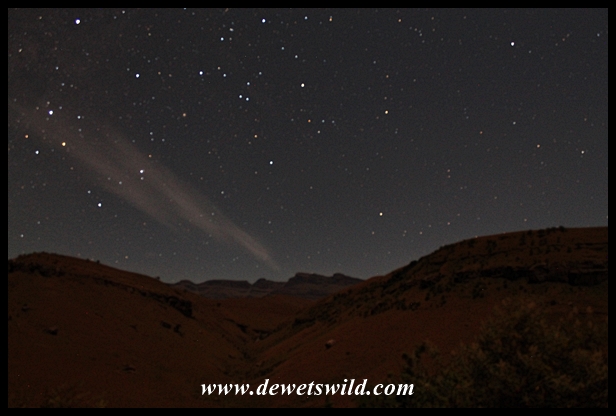
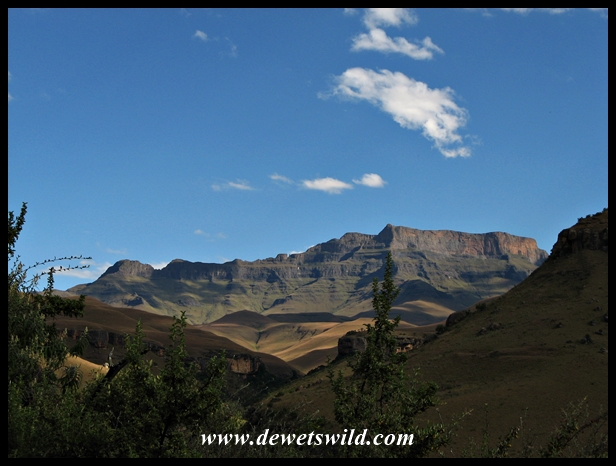
We left Giant’s Castle before dawn this morning, hoping to beat the Easter Weekend traffic back to Pretoria (which we did). Between the packing there was just enough time to take a picture or two of the Drakensberg illuminated by moon- and starlight.

Giants Castle 20140421

Look out for more from Giant’s Castle Game Reserve in an upcoming edition of de Wets Wild!

A serpent in the Giant’s garden

20 April 2014

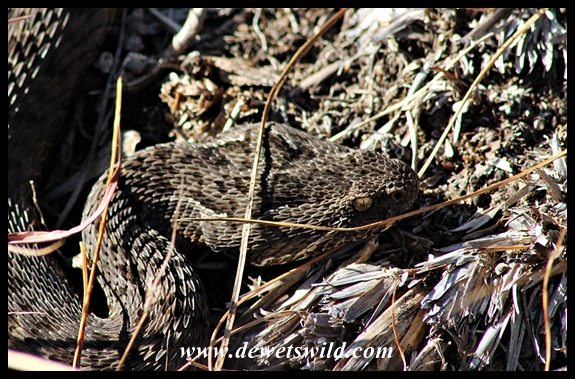
We happened upon this adder sunning itself on an open patch next to the hiking trail this morning. Just goes to prove that even when hiking in such exquisite surroundings as here at Giant’s Castle, you have to keep a sharp look-out for dangerous situations.

Giants Castle 20140420

Exploring the Giant’s garden

19 April 2014

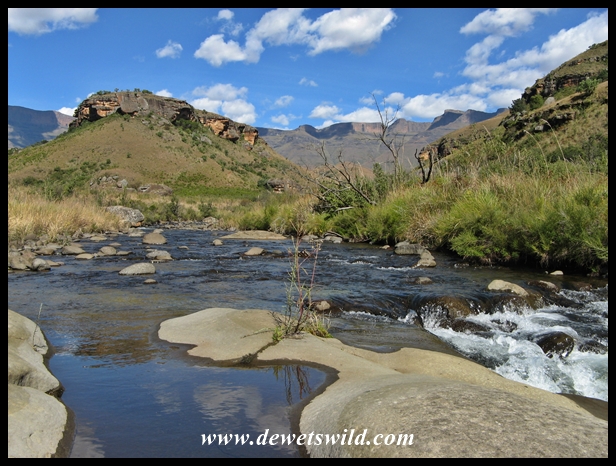
We’re still having a wonderful time out in the fresh Drakensberg air, exploring the beautiful Giant’s Castle Game Reserve.

Amazing scenery along the Bushmans River

Easter in the Giant’s front yard

18 April 2014


With this view of the giant and his castle, it’s not difficult to imagine that the beautiful resort at Giant’s Castle Game Reserve is located smack in the middle of the colossus’ front garden.

This is a small piece of the magnificent view from the veranda and master bedroom of the chalet we’re spending the Easter weekend in.

Yes, we’re bragging ;-).

Wishing you all a blessed Easter!

The view from our chalet at Giant's Castle Game Reserve

The view from our chalet at Giant’s Castle Game Reserve


Blyde River Canyon Nature Reserve, February 2014

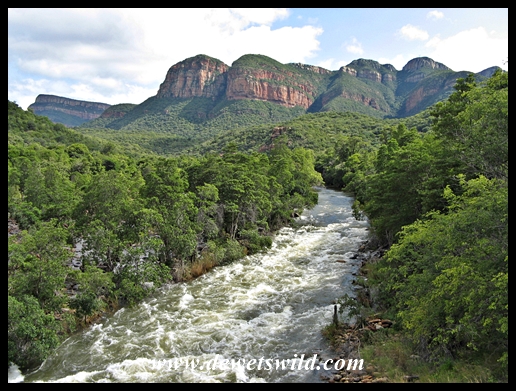
The Blyde River Canyon in the Lowveld of South Africa s the world’s third biggest canyon, and one of our country’s most diverse and scenically spectacular conservation areas.

BlydeCanyon_Feb14 (24)

We had the pleasure of spending four nights at Forever’s Swadini Resort during our recent visit to this beautiful area. The resort has all the amenities you’d associate with a family destination of Swadini’s calibre, yet there’s no feeling of being removed from the natural splendour that completely surrounds it.

Several easy-to-follow trails meander through the enchanting riverine forests around Swadini and it’s not difficult to forget all about time and the daily rat race while exploring these unique surroundings. Be sure to visit to the nearby Blyderivierspoort Dam, where you may join a cruise on the Dam’s deep waters and encounter hippos and crocodiles, or have a picnic at the viewpoint that overlooks the watery expanse.

We’ve dedicated several other posts to the Blyde River Canyon Nature Reserve – have a look here if you’d like to learn more about this fantastic destination. It’s one of our favourite South African wild places, and when you visit you’re sure to fall under its spell as well.


Letaba, February 2014

Following our explorations of the paradise that is Pafuri, in the far north of the Kruger National Park, we headed towards the central regions of the Park, for a two-night stay at Letaba Rest Camp.

It’s a long drive down from Pafuri to Letaba and, at game viewing speeds with regular stops for photographs and leg stretches at the camps and picnic spots along the way, it took us the entire day to cover the distance of 250km, reaching Letaba just before the gates closed. Covering such a distance in a national park like Kruger, you’re bound to come across some great sightings and some thrilling experiences, but we didn’t count on getting growled at when we stopped at Mooiplaas picnic site for a bit of a break. We were back in the car in a flash, and still have no idea what it was that was so irritated by our presence…

When you’re hoping for great wildlife sightings in any wild place, you have to be out-and-about at the times that the animals are most active, being the early morning and late afternoon, to maximise your chances.

Letaba sunrise

We set out early from Letaba the next morning, heading towards Olifants Rest Camp along the gravel roads that follow the courses of the Letaba and Olifants Rivers. We were soon rewarded with a great sighting of a spotted hyena, followed shortly afterwards by the highlight of our trip: an encounter with wild dogs! The dogs came running along the road in the opposite direction we were travelling in, and passed us in a flash. We had to make a u-turn and followed them a couple of hundred metres, before they decided to take a bit of a break right in the middle of the road. These animals are so rare and sightings so infrequent that we spent quite a bit of time with them before moving on.

Fish eagle

Shortly before reaching Olifants we crossed a small stream and noticed lots of terrapins and a lone juvenile crocodile sharing a pool next to the road. It soon became apparent that these animals have become accustomed to being fed by passing tourists as they started moving towards our vehicle the moment we came to a halt. This aberrant behaviour is exactly the reason why the park authorities are so strict about visitors not being allowed to feed the animals, but some choose to ignore it nonetheless. We didn’t stay long, fearing that the terrapins would end up beneath our vehicle preventing us from driving away.

We spent the hot hours of the day walking around the Letaba campgrounds, enjoying the peace and quite and the company of Letaba’s resident bushbuck and birds.

Our afternoon excursion focused on the riverine drives to the north of the camp. Again we were not disappointed, seeing two waterbuck bulls sparring, herds of other game, including elephants, hippos, impalas, nyalas, bushbuck, giraffes, buffalo and baboons, various bird species, even some fish at a river crossing, and of course beautiful scenery.

A fascinating but gruesome sighting of a ground hornbill using its massive bill to kill and devour a tortoise in its carapace was a reminder that this is still wild Africa after all…

Letaba Sunset

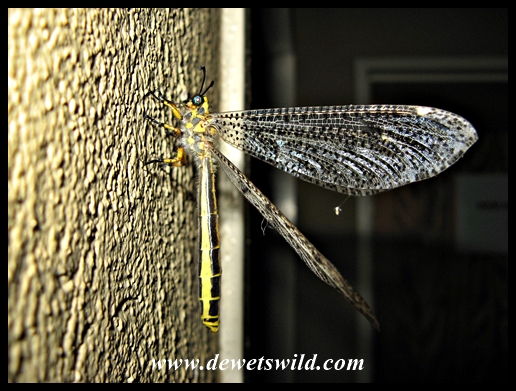
Lacewing

With the sunrise the next morning it was time to pack up and head to our next destination, the Forever Swadini Resort in the Blyde River Canyon Nature Reserve. It wouldn’t be our last taste of the Kruger National Park however, and as we were heading towards the Orpen Gate we could console ourselves in the knowledge that we were planning one last day visit for later in the week.

We’ve previously dedicated a special post to Letaba – have a look here if you’d like to read more about this peaceful rest camp

Pafuri Paradise

Pick up any guidebook about the Kruger National Park, and it will probably tell you that you’ve not experienced the “real” Kruger if you haven’t seen Pafuri.

Pafuri Treasure (7)

Pafuri is a diverse wilderness in the far north-eastern corner of South Africa, where the borders of SA, Zimbabwe and Mozambique meet at the confluence of the Limpopo and Luvuvhu Rivers. Because all kinds of smugglers, bandits and poachers from the late 1800′s and early 1900′s could evade capture by the law-enforcement authorities of these countries by simply slipping across the borders, the area quickly became known as “Crook’s Corner”.

Pafuri Treasure (10)

The wide variety of habitats – muddy rivers, glimmering pans, lush riverine vegetation with magnificent stands of yellow fever trees , mopane woodland interspersed with huge baobabs (some hundreds if not thousands of years old) and dramatic sandstone ridges and cliffs, are home to probably the greatest variety of birds in the country and supports large concentrations of mammals.

Along the roads that follow the course of the Luvuvhu River, five species of game are especially numerous. The antics of the vervet monkeys and chacma baboons are always entertaining to watch, and the warthogs go about their business as if without a care in the world. Impalas are a familiar sight; as they are in many other parts of the Kruger National Park. But it is to the regal Nyala that Pafuri belongs.

Pafuri however has even more to offer in terms of big game viewing with hippos, elephants, buffaloes, zebras, giraffe, wildebeest, kudu, bushbuck and crocodiles being encountered often, while lucky visitors enjoy sightings of the resident lion pride.

As already mentioned, Pafuri is a bird-watcher’s heaven. Several bird species are at the southernmost limit of their range here and can be seen nowhere else in South Africa. During summer, when the already astounding diversity of birdlife swells with the arrival of migrants from further north, Pafuri is the place to be!

The Pafuri Picnic Site on the bank of the Luvuvhu River is the ideal stopover for anyone and everyone that find themselves in the magical place. Among the picnic tables and benches that overlook the river the birdlife seems especially relaxed and a keen eye is sure to notice many of the small invertebrates that hide among the leaf litter and twigs. We spent lots of time enjoying the energetic vervet monekys that frequent the site, but our most memorable sighting of this visit to Pafuri was the stiff-legged show of dominance between two mature nyala bulls, strutting their stuff as if we were not even there.

And this is exactly why Pafuri has such a special place in our hearts. It still feels like a wild frontier, a place where humans are just passing through. We absolutely agree: You haven’t experienced the “real” Kruger if you haven’t spent some time at Pafuri.

________

While exploring magical Pafuri on our latest (February 2014) visit, we based ourselves at the Pafuri Rivercamp, which is located just 3km outside the Kruger’s Pafuri Gate, in mature riverine woodland along the Mutale River. Rustic though the camp may be (there’s no electricity or cellphone reception and everything is built from wood, reeds, canvas, gauze and chicken mess) but you could hardly imagine a more romantic place from which to explore the Pafuri’s wilderness. The camp staff are friendly and hospitable, and the camp has a central pool, bar, lounge, and lapa where meals (which must be pre-arranged) can be enjoyed. The tents are pitched on platforms among the branches of large jackalberry, leadwood and apple-leaf trees and in the clearing below is a fireplace, picnic table and comfortable canvas chairs with your private kitchen and ablutions located to the side. There’s nothing like being lulled to sleep on a hot February night by a cool breeze passing through the leaves around you and straight through your open tent windows, accompanied by the sounds of bushbabies and nightjars! We’ll definitely return to Pafuri Rivercamp at the first opportunity.

The Kruger National Park’s own Punda Maria Rest Camp is also a highly recommendable alternative accommodation option if you want to visit Pafuri. Have a look at our special Punda Maria post if you’d like to learn more about this historic rest camp.

Hluhluwe-Imfolozi Park, December 2013

HIP_Dec2013 (60)

After leaving Ithala Game Reserve (read here for more about Ithala and Ntshondwe Resort) our next December holiday destination was the wilds of the Hluhluwe-Imfolozi Park and our much loved Mpila Camp.

We love Hluhluwe-Imfolozi because of its wilderness atmosphere (the Park covers almost a thousand square kilometres), its fascinating history and the enormous contribution it has made to the conservation successes of our country. We love Mpila most because of its unspoiled character. The camp is  not fenced (except for a single strand of electrical wiring supposed to keep the elephants out – they come into camp and destroy the water pipes looking for a drink) and a wide variety of animals, including predators from time to time, move freely among the accommodation units. Surrounding the camp, the Imfolozi-section of the Park offers some of the best game viewing available in South Africa, and there’s few game-viewing roads as rewarding as the Sontuli Loop, just half-an-hour’s leisurely drive from camp.

December is one of the wetter months in this part of the country and by the time we arrived in the Park the vegetation was lush and green and the waterholes, streams and rivers filled to capacity. What a contrast to the huge swathes of veld burnt to ashes just prior to our visit last year and yet again we were amazed at nature’s resilience.

Of course, Hluhluwe-Imfolozi is known as a Big-5 reserve and within 24 hours of our arrival we were rewarded with excellent sightings of all these sought-after animals: elephant, rhino, buffalo, lion and leopard.

The Hluhluwe-Imfolozi Park is world renowned as the place where the Southern White Rhinoceros was rescued from the brink of extinction in the middle of the previous century. Today the reserve is home to a substantial number of white and black rhinos – let’s hope that the current tide of poaching can be halted before we find ourselves that close to losing these enigmatic animals again…

Elephants were shot out of the area by hunters before the Park’s proclamation in 1895, and were reintroduced to the Park in the 1980’s. Today, the park boasts a healthy population of 550 of these majestic animals. We had wonderful encounters with several mature bulls, but our most memorable sighting was of a very large herd of cows and calves of all ages crossing the Imfolozi River.

Hluhluwe-Imfolozi protects the second biggest population of Cape Buffalo in South Africa – almost 5,000 – and we regularly encountered these apparently placid but actually extremely dangerous animals on our drives through the reserve.

The lion is another species that was hunted to local extinction before the reserve came into being, but unlike the elephant they made their own way back to the reserve in the 1960’s (well, just one male, probably from Mozambique, which was later joined by a pride of females translocated by the reserve management) and today there’s about 200 lions in the Park.

The Park is estimated to be home to only about 80 leopards and, given their secretive nature, any encounter should be considered extremely fortunate. We were very happy to spot a female at the bridge over the Imfolozi River early one morning – only our second ever sighting of leopard in the Hluhluwe-Imfolozi Park.

HIP_Dec2013 (5)

The Park is also home to three other big African predators. On this visit we missed out on seeing the African Wild Dogs and Cheetahs, but we did get to see Spotted Hyenas a couple of times

As magnificent as the “Big Five” and large predators are, there’s so much more to enjoy when visiting Hluhluwe-Imfolozi. The Park harbours thousands upon thousands of primates, antelope, zebra, warthog and giraffe, and a multitude of birds and reptiles.

You’ll easily imagine how sad we were when our four nights at Mpila and in the Hluhluwe-Imfolozi Park came to an end – seemed it was over in the blink of an eye. Hluhluwe-Imfolozi is one of South Africa’s genuine wildlife treasures and we’re already planning our next visit there.

From Hluhluwe-Imfolozi Park we headed back home to Pretoria to enjoy Christmas with the extended family before heading to Golden Gate Highlands National Park (yes, again! And we’ll be posting photographs from that trip soon 😉 )