Tag Archives: view sites

Suikerbosrand Nature Reserve

Suikerbosrand Nature Reserve is one of the largest and most popular wild places in Gauteng, South Africa’s most urbanised province, providing vital environmental education and outdoor recreation to thousands of overworked city dwellers.

Suikerbosrand (5)

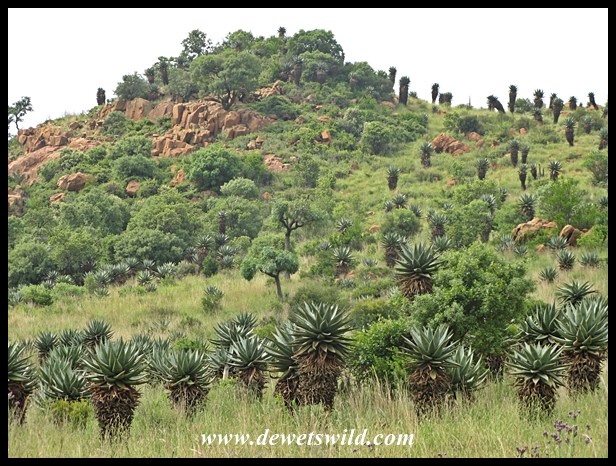
Proclaimed in 1974 and substantially enlarged in 2003, Suikerbosrand is managed by the Gauteng Department of Agriculture and Rural Development. Today it protects 220km² of scenic highveld grassland, rich in flowering plants and grasses, interspersed with areas of thorny bushveld, aloe forests, wooded gorges and marshland. The reserve is named after the Suikerbosrand range of hills (1,545 to 1,917m above sea level), which in turn is named for the Sugarbush (Protea caffra) that’s quite common in the area.

More than 250 bird species have been recorded at Suikerbosrand, and several species of non-threatening indigenous large game animals have been introduced. There is also an abundance of smaller mammals and reptiles, including a few venomous snakes, that find protection here.

Hiking is a big attraction at Suikerbosrand, with day trails ranging from the 800m long Toktokkie trail, accessible in wheelchairs, and the 4km long Cheetah Trail to the 10 or 17km Bokmakierie Trail, while overnight hikes that take up to 6 days to complete along a 66km network of trails, with basic huts to sleep in, can also be undertaken. The reserve is immensely popular with the cycling fraternity, especially so on weekends and holidays, and due care is required wherever vehicles and cyclists have to share the roads. The reserve has a network of approximately 60km good tar road that traverses most of the area’s habitats, allowing good game- and bird viewing. Two picnic areas cater to the needs of day visitors. At the time of our last visit (December 2015), the Kareekloof Resort, which used to offer options to overnight in the reserve in addition to the usual holiday resort amenities, was closed with no indication as to when, or if, it will reopen. Sadly, the same applied to the information centre at Diepkloof, the reserve headquarters.

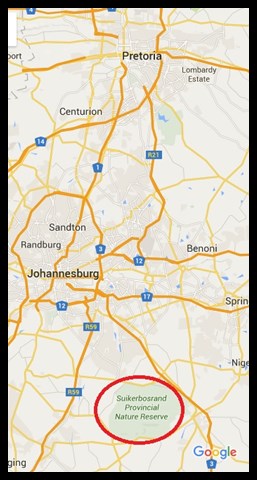
Suikerbosrand is easily accessible from the N3 highway, just north of the town of Heidelberg, south-east of sprawling Johannesburg.

Road to Suikerbosrand

Summer heat at Shingwedzi

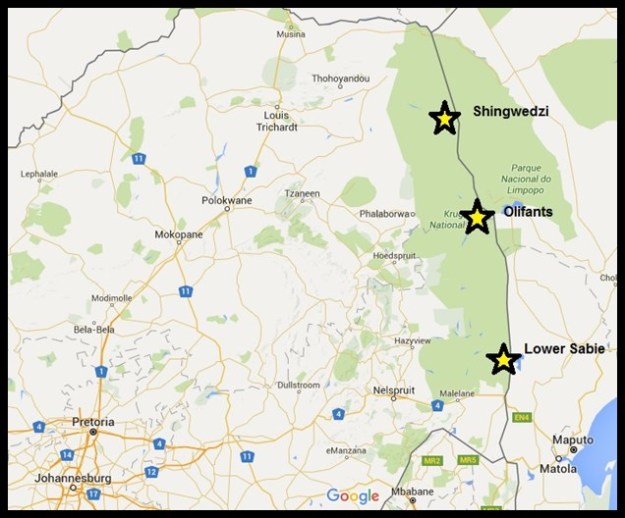
After three enjoyable nights in Olifants‘ spectacularly situated unit 14, we had only a third of our December holiday in the Kruger National Park left. Happily that didn’t depress our mood too much, as we would be spending the last three nights in our beloved Shingwedzi Rest Camp.

Soon after leaving Olifants, we came across a cantankerous hippo bull blocking the road to the north. While waiting for him to get out of the way, in his own time of course, a rustle in the dry mopane leaves beside the roads alerted us to a hyena that was also waiting for the traffic to clear…

Our plan was to stop at Mopani for brunch, so we only had a quick cup of coffee and a rusk or two at Letaba, no snakes in sight this time! On the way we couldn’t resist making a quick detour to marvelous Mooiplaas waterhole, as there is always something interesting to see there, and were handsomely rewarded with a couple of tsessebe sightings as well as a blue wildebeest that was having far too much fun rolling around in elephant dung to be considered sane…

Mopani was a delight of feathered friends, with there even being a pair of African Paradise Flycatchers nesting in a tree right between the shop and the Tindlovu restaurant (which serves delicious mince-meat jaffles by the way!)

The final stretch to Shingwedzi delivered special sightings of yet more mating lions, unfortunately spoiled by an idiot who got out of his car to try and get a better photo, as well as a beautiful old tusker.

Whenever we stay at Shingwedzi, there’s only one road we take for our first afternoon drive – a slow drive along the S50 gravel road that follows the river, offering ample opportunity to appreciate the diverse and abundant wildlife that congregate on the river bank. That’s exactly where we pointed the Jazz’s nose after checking into our cottage, number 29, donated by the Wildlife Society in the 1950’s.

Around Shingwedzi the best viewing is usually along the watercourses, which is why we decided on the S56-route along the Mphongolo River for our first morning drive from Shingwedzi.

That afternoon, Red Rocks and Tshange viewpoints to the southwest of camp beckoned.

One last guided nightdrive in search of nocturnal wildlife delivered much better sightings than the windy nightdrive we undertook from Lower Sabie a few days earlier.

By the time the sun rose over the horizon on our last full day in the Park, we were already travelling along the S50-route enjoying the Shingwedzi River’s abundant wildlife and awesome scenery before returning to camp and a late breakfast.

Shingwedzi was nice and quiet in the early morning, as most guests were still out on the road searching for game, giving us an excellent opportunity to amble through the camp.

With such a wide variety of bird and animal life around Shingwedzi it was a rather difficult decision which area we’d drive to on our final afternoon. In the end we opted for the Mphongolo Loop (S56) again, and what a great choice that was! We’ve already shown you pictures of the waterhole meeting between large herds of elephants and buffaloes we witnessed that day. Dodging a couple more elephant and buffalo herds along the way, navigating through several herds of antelope and scanning the landscape for new species of birds to add to our ticklist, we were thrilled that our afternoon was concluded with a leopard lying in wait at a small waterhole.

And so, our time at Kruger National Park has come to an end, for this visit at least as, of course, the next trip has already been booked. All that remained was to drive down to Phalaborwa Gate, from where Pretoria lay a hot six-hour drive away.


KNP Dec15


Summer heat at Olifants

After three nights at Lower Sabie it was time to move northwards to the central regions of the Kruger National Park. Just as we set off, a light drizzle started falling, and kept falling for the entire 50km or so distance between Lower Sabie and Tshokwane picnic site. While the low clouds meant that we could not enjoy the magnificent view from the top of Nkumbe mountain, we did not mind having a break from the previous few days’ oppressive heat! Pretty soon little puddles were forming on rocks and in the road, and while the shower would not have broken the drought, it would have brought a little bit of relief to the parched veld.

Between Tshokwane and Satara we encountered two more pairs of mating lions. While one couple moved away from the road for more privacy, the other was a lot more relaxed in the company of the few cars that had gathered to watch them. The prevailing drought makes catching prey much easier, and the way the lions are going on there will soon be many more young and hungry mouths to feed.

After lunch (take-away pizzas enjoyed in Satara‘s day visitors area) we tackled the final stretch of the long drive from Lower Sabie to Olifants Rest Camp. The plains between Satara and the Olifants River were positively teeming with wildlife of all descriptions.

Checking in at Olifants Rest Camp, we were given the keys to our cottage, number 14, one of the most popular units in the camp, and for good reason. The view of the wide bend of the Olifants River with its pods of hippos and lurking crocodiles far below, the endless wild plains beyond and the continuous stream of game and birds arriving to slake their thirst, is almost unrivaled anywhere on the continent, and you can take it all in from the comfort of a sofa on the wide veranda!

With the area around Olifants suffering from an extreme drought and intense heat, we thought it best to stick to the routes along the Olifants River and some of its tributaries that still held water for our afternoon drive. The high bridge and low-level causeway crossing the Olifants, and the weir at the Ngotso-crossing (on the S89 route) proved to be hot-beds of wildlife activity, though in the areas in between, away from the water, there were few animals to be found.

Next morning we were already waiting, with a few other cars, at Olifants’ gate for the 04:30AM opening – that’s the way to maximise your chances of encountering large predators on the prowl in the hot summer and we didn’t have to drive far before encountering two spotted hyenas just as first light started painting the African morning. Our drive took us along the Olifants and Letaba rivers, an area of rugged beauty, to Letaba Rest Camp, where we planned on enjoying our picnic breakfast. We didn’t however bargain that we’d be joined by a snake, even if only a slightly venomous Olive Grass Snake. Happily the snake was very well behaved and totally relaxed, and so he enjoyed the warm morning sun while we enjoyed our rusks and coffee…

Seeing as the Olifants river delivered such enjoyable sightings to us the previous day, we again focussed on the H1-5 tar road and the connecting S90, S91 and S92 gravel roads the following afternoon. This time we worked a quick detour to Bangu waterhole, some distance to the south of the river, into our drive as well – a well rewarded decision as we found a pair of black-backed jackals and flock of Temminck’s Coursers at the Xipembane stream, which still held a bit of water.

Driving up to Olifants two days earlier, the tremendous concentrations of game around Satara really drew our attention, and we decided that we had to explore that area a bit more on our final full day at Olifants. With the tarred road between Olifants and Satara carrying most of the tourist traffic, we opted to rather follow the gravel S90 “old main road”, past Bangu and Gudzani waterholes, to Satara, and then return to our lovely cottage at Olifants along the tar route when the day starts hotting up. Ticking excellent sightings along the way; a large pack of hyenas, showboating hippos, a rarely seen honey badger, two regal lions, more jackals and a quick view of a pair of cheetahs surrendering their kill to descending vultures, not to mention a huge number of more commonly seen birds and animals, and despite heavy cloud cover, a howling wind and the irritation of a punctured tire (quickly fixed at Satara’s car wash), you’ll appreciate that we were a very happy group when we arrived back at Olifants that morning!

After spending the hot midday hours in camp appreciating the enchanting view and the accompanying birdlife, it was time for our final leisurely afternoon drive along the Olifants and Letaba Rivers. While the drive wasn’t anywhere as exhilarating as our drive that morning, it did give us another opportunity to enjoy the rugged scenery of the valleys these rivers have carved over aeons through the Lebombo foothills.

We still had three nights left at Shingwedzi Rest Camp after our time at Olifants, and we’ll be telling you all about those next week. We’ll also be telling you more about Olifants and its environs in an upcoming edition of de Wets Wild.


Summer heat at Lower Sabie

We knew our December 2015 visit to the Kruger National Park was going to test our personal thresholds for high temperatures. It is general knowledge that South Africa’s Lowveld region has sweltering summers, confirmed by the weather forecasts in the week before our departure. On our early morning way, descending into the Lowveld along Schoemanskloof on the N4-highway, we were amazed at how quickly the outside temperature our car was registering was climbing upwards. By the time we arrived at Malelane Gate just after 08:00, we had reached 33°C, with the sun blazing down relentlessly. And yet, we couldn’t think of any place we’d rather be; we were back in South Africa’s flagship National Park, one of our favourite wild places, and we had ten days to explore the length and breadth of it to look forward to!

We were heading to Lower Sabie, and instead of following the tar roads via Skukuza we opted for the more direct route, along the gravel S25 and H5, from Malelane. Of course we had wonderful sightings along the way, most especially of some sleepy elephants! Early December is lambing season for the impalas, and each herd we passed had a few new members, all ears and long legs, to broaden our smiles.

By the time we checked in at Lower Sabie Rest Camp for our 3 night stay, the temperature had soared to a searing 43°C. Our cottage (unit 93), with a lovely view of the Sabie River in front of the camp and surrounded by huge, shady trees, provided welcome respite!

But of course no amount of heat was going to keep us indoors for long when there’s Big-5 country to explore outside! Our afternoon drive took in Gomondwane, Duke’s waterhole and a section of the Nhlowa-road to the south of Lower Sabie, after a quick visit to Sunset Dam just outside camp. Highlights of the drive included an unusually relaxed black rhinoceros, our best sighting ever of a side-striped jackal, and the cutest little warthog piglets you could imagine!

The itinerary planned for Sunday 13 December meant that we would be out of camp all day: a slow early morning drive (the camp gates open at 04:30 in high summer) to Skukuza along the Sabie River, visit with good friends at Skukuza over lunch, and then back to Lower Sabie via the Sand River, the Salitje road, Muntshe Mountain and Mlondozi Picnic Site. Covering that big an area is sure to deliver some unusual sightings; apart from a skittish leopard and all the more commonly seen game animals, we even found an African Rock Python along the way. Our final wildlife encounter of the day was with a pair of mating lions, within sight of Lower Sabie, resulting in sightings of all the Big-5 on a single day!

That wasn’t the end of the day however, as we were booked for a guided night drive after supper. Unfortunately strong winds sent the nocturnal animals into hiding, and the drive did not yield much more than a Verreaux’s Eagle Owl and enormous scorpion to get excited about.

We had one more day to explore the Lower Sabie area, and headed for Crocodile Bridge along the Nhlowa Road as soon as the camp’s gates opened. About halfway we met a large pack of hyenas at their den, and after spending some time with them our grumbling tummies told us that it was time to go enjoy our picnic breakfast at Croc Bridge. More great sightings on our way back to Lower Sabie along the Gomondwane Road, including a herd of elephants coming to drink from the Sabie River. We also noticed a male lion lying on the river bank and after slaking their thirst, the elephants started crossing the river. This was the lion’s cue to vacate his spot, and we were thrilled that he chose to head into the bush straight past our vehicle!

Lower Sabie is a wonderful place to while away the hot midday hours as there’s a constant stream of animals coming to drink from the river and birdlife abounds in the camp grounds!

There’s no better way to spend your last afternoon at Lower Sabie than slowly driving along the river, and spending some time at Sunset Dam. So that’s exactly what we did!

With that, our final night at Lower Sabie had arrived. Next morning we’d depart for Olifants Rest Camp, further north in the central regions of the Kruger National Park. We’ll share more about our time at Olifants next week, and will dedicate a special post in which we’ll tell you all about Lower Sabie and surrounds in an upcoming edition of de Wets Wild.

________________________

If you enjoy de Wets Wild as much as we enjoy sharing our love for South Africa’s wild places and their denizens with you, please vote for us in the 2015 South African Blog Awards.

We’ve entered the categories for “Best Travel Blog” and “Best Environmental Blog”, and you are allowed to vote for us in both. Clicking on the badge below will bring you to the voting site.

SA Blog Awards Badge

Thank you very much for your support!
A new treasure unveiled in Kruger; the Pafuri Border Camp

An omnipresent sense of history permeates the grounds and buildings of Pafuri Border Camp, with the call of a wild frontier on your doorstep clarion clear and impossible to refuse.

Here at Pafuri in the Far North of the Kruger National Park, Harold and Tiny Mockford built their lives, raised a family, grew old. From 1938 to 1985, Mockford was the recruiting agent and administrative officer at the labour recruitment station established at Pafuri by the Witwatersrand Native Labour Association (WNLA, colloquially simply “Wenela”, later TEBA – The Employment Bureau of Africa) to provide migrant workers for the mushrooming gold mines at Johannesburg.

Comprising the beautifully restored and period-furnished residences inhabited by the Mockfords and other WNLA / TEBA staff, the Pafuri Border Camp will offer overnight accommodation in three very spacious self-catering units: the one-bedroom (4-sleeper) Mockford Cottage, the three-bedroom (6-sleeper) Doctor’s House, and the four-bedroom (8-sleeper) Mockford House. Relaxing on the wide verandas that wrap around the houses, enclosed by mosquito gauze just as they were when their original inhabitants lived there, it is hard not to imagine what daily life entailed for those who lived and worked here all those years ago. The camp’s deep swimming pool will be a delight on hot summer days, as it was no doubt for the family Mockford. A small room next to the tiny reception office will be dedicated as a museum in which Pafuri’s fascinating history can be regaled. More “modern” amenities, such as a fuel station, shop and restaurant, is available at Punda Maria Rest Camp, approximately 65km to the South-West.

One of the biggest highlights of the new Pafuri Border Camp is its proximity to Crooks Corner, the Luvuvhu River and Pafuri Picnic Site. Being first to arrive at the river viewpoints in the morning and the last to have to leave those serenely beautiful scenes in the evening is a privilege not to be underestimated. Crooks Corner, so named because the borders of South Africa, Zimbabwe (then Southern Rhodesia) and Mozambique (then Portuguese East Africa) meet here and allowed scoundrels of all description to escape the long arm of the law, has a very special allure in the golden light of sunrise and dusk. Spending time along the Luvuvhu as the riverine forest slowly awakes in the morning delivers a serenity to the human spirit that must be experienced to be truly appreciated.

You can bet that the birdwatching fraternity will be ecstatic at the news of Pafuri Border Camp’s opening. Pafuri is South Africa’s bird-watching mecca; the diversity of its feathered inhabitants simply astounding.

Mammalian wildlife abounds in the Luvuvhu’s riverine bush, with nyala, impala, warthog, baboon and vervet monkey occurring in exceptional numbers. Several other species, including elephant, buffalo, hippo, waterbuck, kudu, blue wildebeest, zebra, and seldomly-seen predators, add to the show. An astonishing number of Nile crocodiles, some in excess of 5 meters in length and probably weighing more than a ton, rule the murky waters of the Luvuvhu.

Come 1 November 2015, this new destination, hard not to describe in superlatives and quite literally a stone’s throw away from the border post into Mozambique, will open to its first official guests. We recently had the immense pleasure and privilege to spend two nights at Pafuri Border Camp while the finishing touches were being made to the accommodation. It is sure to prove very popular with nature lovers and history buffs from all over the world. Bookings for Pafuri Border Camp is through South African National Parks. Via the N1 highway and Kruger’s most northern entrance, Pafuri Gate, the camp is located approximately 620km from Pretoria.

(Google maps)

(Google maps)

Marievale’s for the birds (and birdwatchers)!

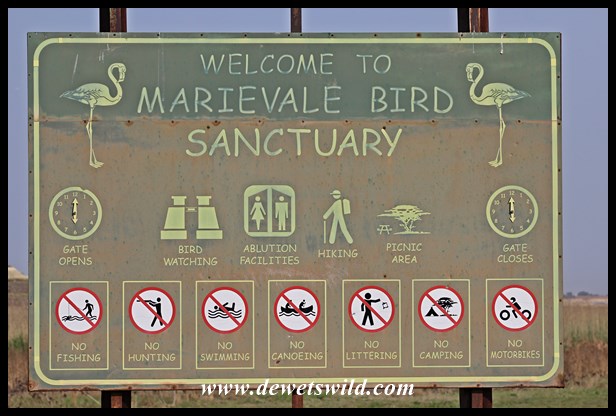
This past Sunday, my brother introduced Joubert and me to the Marievale Bird Sanctuary, a popular destination for birdwatchers and photographers in Gauteng’s Far East Rand.

Marievale 11Oct2015 (16)

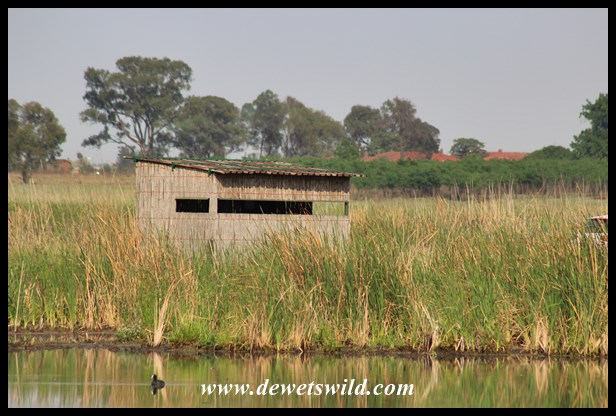
Marievale protects 1012 hectares of the much larger Blesbokspruit RAMSAR wetland, surrounded by mine dumps and other development. Facilities include two 4-bed chalets overlooking the wetland for overnight visitors, a conference centre, picnic sites, walking trails and several photographic hides. The roads in the reserve are rough gravel, for the most part easily traversed in a normal sedan.

Marievale 11Oct2015 (13)

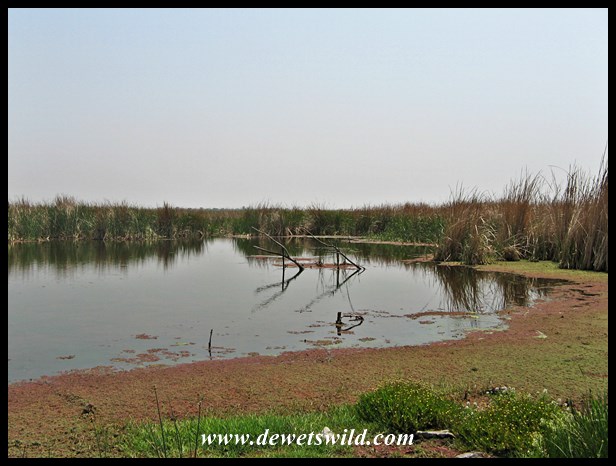
The reserve’s vegetation comprises extensive stands of reedbeds (about 70% of its surface area) and flooded grasslands, interspersed with areas of open water and, during drier periods, mud flats frequented by impressive concentrations of wading birds. The area can hardly be described as pristine however, as the wetland itself owes its existence to the altered flow of the river caused by mining, railways and roadworks, inundating what would otherwise have been grasslands. Pollution from the mines and industries surrounding it, and upstream, is now threatening Marievale’s man-made wetlands.

Marievale 11Oct2015 (35)

Nevertheless, the list of bird species recorded at Marievale has around 280 entries; during the extremely enjoyable six hours we spent in the reserve on Sunday we managed to tick 70 of those. Many of the birds are quite accustomed to the steady flow of human visitors and offer excellent photographic opportunities from the hides or while walking and driving around.

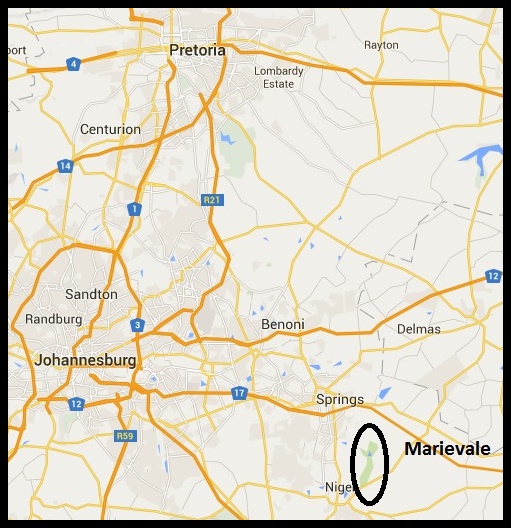
Marievale Bird Sanctuary is controlled by the Gauteng Province’s Department of Agriculture and Rural Development and is easily accessed from the R42 to Delmas, just 4km outside the town of Nigel (map drawn with Google Maps).

Marievale location


The joys of spring at Ithala

We’ve been singing Ithala Game Reserve‘s praises on this blog for a long time and our recent Heritage Day long weekend visit to this South African treasure further cemented our belief that Ithala is one of our country’s prime conservation areas.

Colourful spring flower displays were in evidence all over the reserve, despite not receiving much rainfall yet. With over 900 plant species at Ithala, including some extreme rarities like the pepper-bark tree and Lebombo cycad, Ithala is a botanist’s delight. Unfortunately we don’t know the names of most, but that doesn’t mean we didn’t enjoy the show just the same!

The giraffe is Ithala’s emblem, and we were lucky to enjoy several encounters with these curious animals.

Most large game species were eradicated from the area before the reserve was proclaimed in 1972, and Ithala therefore had to be restocked. Today it is home to all the species that occurred here historically, with the exception of lion, and all-in-all provides sanctuary to 83 mammal species.

Ithala’s a bird-watcher’s paradise, with a list of 318 species recorded in the reserve. While we didn’t tick quite that many species during our visit – most of the summer migrants have not yet arrived – we were very thrilled with our close-up sighting of a pair of blue cranes shortly after arriving. Being South Africa’s national bird, it seemed a particularly special treat for Heritage Day!

Ithala’s not only about the big and obvious birds and animals, and closer inspection will reveal a multitude of insects, arachnids, amphibians and reptiles. We even encountered three of the reserve’s 41 snake species while walking around Ntshondwe Camp; they pose no danger as long as you don’t threaten them and true to form all three moved away very quickly and quietly.

Talking about Ntshondwe, we just have to mention again how beautifully the accommodation units are placed into the natural vegetation, offering privacy and a really intimate nature experience.

INtshondwe Unit 15, Ithala Game Reserve, September 2015

Ntshondwe Unit 15, Ithala Game Reserve, September 2015

Its faunal and floral diversity aside, Ithala is richly blessed with amazingly diverse scenery. The reserve extends over 30,000 hectares, its area ranging in altitude between the 1,450m peak of Ngotshe Mountain to 400m above sea level along the Pongola River. The reserve’s vegetation ranges from grasslands to woodlands to dense riverine forest.

We’re already making plans for our next visit to Ithala in early 2016, and you can probably see why!

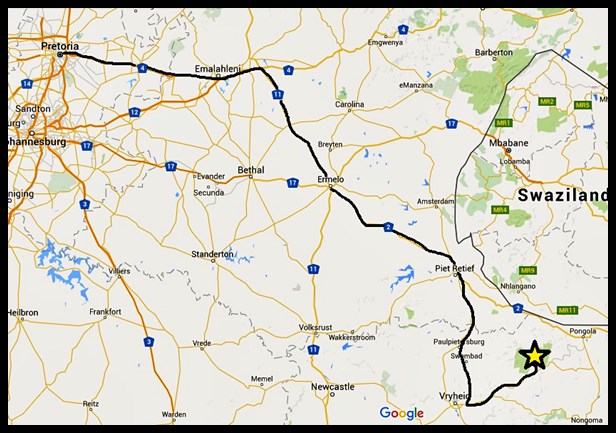
Ithala Game Reserve is managed by Ezemvelo KZN Wildlife, and lies a 500km drive to the South-East of Pretoria.

Pretoria to Ithala (drawn with Google Maps)

Pretoria to Ithala
(drawn with Google Maps)


Connected

Joubert communing with nature, at Ntshondwe in the Ithala Game Reserve:

Ntshondwe Walkabout (21)

Connected” is the theme for this week’s WordPress Photo Challenge

Winter, or not, at Royal Natal

Early August is still considered winter in South Africa. In preparing for our latest trip to Royal Natal National Park, in the uKhahlamba Drakensberg Park and World Heritage Site, we had therefore anticipated snow, at least on the high peaks, and severely cold temperatures. Watching the weather forecasts in the days before our visit was a confusing affair. One private weather site was predicting extreme cold and gloomy weather, while the national weather service predicted glorious sunshine with temperatures in the mid 20’s. Not knowing what to expect, we packed for any eventuality.

The Women’s Day long weekend was only three days long, and so we decided to get an early start out of Pretoria. Through the Free State, the outside temperature remained around freezing. Imagine therefore our excitement seeing the temperature reading on the dashboard rise as we descended the Drakensberg Range into Kwazulu-Natal Province, with not a flake of snow to be seen anywhere! By the time we arrived at Rugged Glen, just to the east of the Royal Natal National Park‘s entrance, it was warm enough to start taking off some layers of clothing and soak in the sunshine. The South African Weather Service got it right this time!

Despite it being a long weekend, the campsite at Rugged Glen was devoid of people; perhaps the predictions of poor weather dissuaded many campers from venturing to “The ‘Berg” for a break. Whatever the case may have been, we didn’t complain about having only Rugged Glen’s diverse birdlife and a few nervous reedbuck to share our first mountain picnic with.

From Rugged Glen, which is also the base for the popular guided bridle trails that traverse these scenic hills, we headed to the Park’s gate, supported the crafters selling their wares and then drove the short distance to the Mahai Visitor Centre. Time for another picnic at one of the tables along the Mahai stream before making our way along, and a little beyond, the pretty and easy Cascades boardwalk, passing several dainty bushbuck ewes along the way while a herd of eland grazed high above us on the slope of Dooley Mountain (named after an Irish logger given a concession to cut wood here in the late 1800’s).

With our hiking boots now introduced to Royal Natal’s network of walking trails it was time to head to Thendele Camp and our accommodation for the two nights we’d be spending at the foot of the magnificent Amphitheatre formation, a basalt cliff-face almost 1000m high and 5000m wide. To the left of the Ampitheatre is the Eastern Buttress, 3011m above sea level, and to the right Sentinel peak soars to 3165m ASL. These majestic natural features absolutely dominates the scenery at Royal Natal, which together with Rugged Glen covers over 8000 hectares, and was the main reason for the Park’s proclamation in 1916. The “Royal” moniker was added to the reserve’s name after a visit by the British Royal family in 1947. The vegetation in the Park, more than 900 species strong, is mostly open grassland dotted with a few hardier trees and shrubs, with heathland on the summit and mountain forests in the sheltered valleys.

We found Thendele alive with bird song, and just below the huts a small group of mountain reedbuck were right at home. Despite the camp’s 29 units (offering between 2 and 6 beds each) being fully booked, it was a haven of peace and tranquility – just the way we like it. At 1580m above sea level, Thendele lies a lot lower than the peaks that tower above it.

Evening temperatures were admittedly a lot cooler, and our chalet’s lounge with its cosy fireplace was just the place to enjoy dark chocolate and a cup of coffee at the end of a wonderful day spent outdoors.
Royal Natal August 2015 (36)

The early morning sun on Sunday bathed Thendele and the Amphitheatre in a glorious gold, inviting Joubert and I to walk around camp while Marilize prepared a hearty breakfast.

Our first destination this morning was the trout dam at Mahai, where the windstill conditions made for splendid reflections on the water’s surface and we found out just how easy it is to loose complete track of time while marveling at the spectacular scenery around us.

Royal Natal’s biggest attraction is the selection of well demarcated hiking trails traversing the area and excellent pocket guides and maps are available at the shops at Thendele and the Visitor Centre. One of the easier trails is Otto’s Walk, which starts at the Visitor Centre’s parking area and named after one of the reserve’s early Superintendents, Otto Zunckel. It follows the course of the Mahai stream through dense mountain forest for most of the way before returning along the main access road, a total distance of 3km. The pair of rare Mountain Wagtail we encountered at a pleasant spot next to the stream was a real highlight. Another particularly interesting walk is to the San Rock Art site in the Sigubudu Valley, accessible at a small fee and accompanied by a local guide.

Along the main access road from the gate to the Visitor Centre there’s a viewpoint offering an absolutely unobscured view of the Amphitheatre and the wider Drakensberg range. With winter being the dry season, the Thukela River was barely flowing, with only a trickle evident among the rocks and pebbles in the river bed. There was also no sign of the Thukela Falls, which with a combined drop of almost 950m is the 2nd highest waterfall on the planet. One of the Park’s most popular trails follows the impressive gorge cut by the Thukela through the Drakensberg’s sandstone.

Royal Natal August 2015 (57)

We spent the afternoon relaxing around Thendele, enjoying an ice cream on the lawns outside the reception office and exploring the short forest walk behind the camp.

On our final morning, before heading back to Pretoria, we awoke to a Thendele cloaked in thick mist. And cold. Neither the Amphitheatre above nor the Thukela Valley below was to be seen. The wintry weather we had been dreading seemed to have set in just as we were about to depart. After spending two lovely days walking and picnicking in these beautiful mountains, we were immensely grateful for the blessing of good weather! And as we drove out the park that morning, we were already going through our diaries to see where we’d be fitting in our next visit to this magnificent mountain landscape.

The previous time we visited Royal Natal (April 2012), we traveled to the Park via the Oliviershoek Pass and found it such a pothole-ridden affair that we took a 100km detour to return via Van Rheenens Pass instead. This time we decided to give Oliviershoek (the R74) another try for the last 70km from Harrismith to the Park. The road is being rebuilt and by the time it is finished this should again be one of the country’s most enjoyable drives. For the moment, there’s a 6km stretch of one way traffic on which Stop / Go controls are operating, and a further 15km portion on a wide, smooth gravel detour, perfectly safe to travel in a sedan as long as you don’t try to drive too fast.

Route to Royal Natal

Pretoria to Royal Natal (drawn with Google Maps)

The Royal Natal National Park, Thendele Resort and Mahai and Rugged Glen Campsites are managed by Ezemvelo KZN Wildlife.

Sweni Wilderness Trail

It is Sunday afternoon and we’re standing around in the parking area of Satara Rest Camp, in the Kruger National Park. My sister Ansie and I have already enjoyed two wonderful days exploring the southern part of the reserve, and now we’re very excited to depart on the next part of our visit – the Sweni Wilderness Trail. Having been introduced to our lead ranger Ndou and the six kind ladies we’ll be sharing the experience with, and with all the baggage packed into the trailer, it is time to get into the open game viewing vehicle and head into the wilderness.

We drive southwards, and apart from Ndou having to admonish a group of tourists for getting out of their vehicle among a herd of giraffe, enjoy sightings of kudu, waterbuck, more giraffe, impala, elephant, blue wildebeest and steenbok. Just across the bridge over the Sweni Spruit, Ndou turns left onto a no-entry road, reserved to access the base camp of the Sweni Wilderness Trail. Soon after, we have our first tastes of what makes the Sweni such a hugely popular trail: two separate sightings of lion males, first an old loner and then two beautiful specimens in their prime. It is a vehicle filled with some very excited trailists that arrives at the Sweni Trails Camp late that afternoon!

The base camp has four small A-frame huts that accommodate two guests each, and as the camp has no electricity we quickly settle into our units while there’s still daylight left. We are introduced to Rhulani, Ndou’s assistant ranger, and James, the very experienced camp caretaker and cook. The conversation around the Sweni dinner table that evening centered on the collective nouns used to describe various groups of animals – a business of mongoose, a tower or caleidoscope of giraffe, a parliament of owls.

“You’ve got the watches, we’ve got the time”. Ndou’s speaking as we sit around the camp fire after dinner, the camp entirely immersed in the darkness of the African night. He’s making the point that there’s a different pace to the wilderness and that we should let go of our own perceptions of time and distance in order to fully take in the wilderness experience. He and Rhulani goes through the “programme” of the days ahead, ensuring that we understand the rules necessary to our safety while walking out in the wilderness among some of Africa’s most dangerous animals.

Most of the group opt to turn in early, leaving three of us to enjoy a last cup of coffee at the fireside. A rustle in the grass followed by an enormous splash has us grabbing for a spotlight, illuminating an impala ewe standing knee-high in the shallow pool in front of camp. We watch as she gets out of the water, and walks along the water’s edge. She disappears from sight for a second as she passes behind the trunk of a big tree next to the camp fence. Just then, there’s another tremendous splash from the water, and as the spotlight finds the impala again it is abundantly clear that her situation has turned for the worse. There’s a frantic scene playing out just meters in front of us and no one thinks to pick up a camera! A medium-sized crocodile has her body firmly in its mouth, and a hyena (or was it two?) is running up and down along the water. We watch in dumbfounded awe as the struggling impala disappears below the water, a string of bubbles rising to the surface signalling that she breathed her last. Five minutes later, the crocodile surfaces again with his now drowned prize, just for a few seconds, her eyes still open and eerily reflecting the light from our torch. We speculate that the hyenas must have chased the impala into the water the first time, and that the opportunistic crocodile then grabbed her as she walked along the pool. However it came about, the excitement of what we’d witnessed and the sounds of the crocodile thrashing in the water as it enjoyed its meal while baboons scream in horror from the trees nearby kept me awake for quite some time that night.

Sweni Trail July 2015 (10)

The drowned impala brought to the surface for a few seconds

James provided an early morning wake-up call for those finding it hard to rise Monday morning, and all of us enjoyed the coffee and rusks before heading out for our first hike. Ndou and Rhulani chose to go walking in an area known as Milaleni, a short drive into the west of the Sweni Wilderness. Our walk started off shrouded in dense mist, which only lifted much later in the morning. Regular sightings of game and birds kept our senses peaked while Ndou and Rhulani astounded us with their tracking skills and shared their extensive knowledge of the bushveld. They chose a rocky outcrop as a picturesque picnic spot before leading us back to the vehicle along the course of the Sweni.

We arrived back at camp to the smells of a delicious brunch, expertly prepared by James while we were out walking. Meals are enjoyed under a large thatched roof, with a view over the Sweni stream, the crocodile pool below the camp and the muddy waterhole on the opposite bank. There’s a constant stream of wildlife heading to the water, and combined with the wide variety of birds and small animals in the camp it is very difficult to go and enjoy a siesta after brunch, for fear of missing out on any of the action!

The afternoon outings take in a spot from which to enjoy the beautiful sunsets that the Lowveld is famous for. Heading eastwards to the Lebombo Mountains on Monday afternoon we spotted a selection of plains game and several species of birds – the Greater Painted Snipe we flushed as the vehicle crossed the Gwini stream causing much excitement in particular for the “twitchers” in our party. The sunset spot Ndou and Rhulani brought us to is known as Ted’s Place – a site high on a cliff in the Lebombos with the mostly dry bed of the Sweni far below and the plains of central Kruger stretching as far as the eye can see. In the distance a herd of elephant were kicking up dust on their hurried way while baboons and impalas foraged on the river bank, unworried by our presence high above them. There’s a calmness that settles over you at sunset in South Africa’s wild places, and it is easy to see why ranger Ted Whitfield enjoyed this tranquil spot so much.

That evening James had a delicious pot of stew waiting for us back at camp, and what better way to end a memorable day out in the bush than with good company and intelligent conversation around the campfire.

Sweni Trail July 2015 (43)

It’s another early wake-up accompanied by coffee, rusks and birdsong on Tuesday morning. Our ranger-guides drive us out to the Gwini-stream area again, where we’d concentrate our walking along the stream in the hopes that we’ll find the snipes again.  The area literally teemed with animals and we often found ourselves among mixed herds of wildebeest, plains zebra, giraffe and impala. Rhulani pointed out a well camouflaged rock monitor lizard, hibernating high in the branches of a fever tree, and then later explained to us why the weeping wattle is also known as the “toiletpaper bush” (if you chew on the branches of this tree you’ll soon find a need for its soft leaves 😉 ).

For a long stretch of our walk we were accompanied by the shrill chattering of a Greater Honeyguide. Ndou related the local belief that if you don’t reward the honeyguide with a piece of the spoils after it has guided you to a beehive, the next time it will lead you into danger. Shortly after, with this warning still fresh in our minds, the recently placed tracks of lions we came across made us hope that Ndou and Rhulani didn’t owe this honeyguide anything!

We had our picnic rest-stop near Kally’s Fountain while curious giraffes peered at us from close by. Considering that it was the middle of a rather dry winter season the amount of water simply flowing out of the muddy soil at this spot was astounding and from the tracks in the area it was clear that it was also a favourite drinking and wallowing place for the area’s wildlife.

It was not long after picking up our backpacks again and continuing along the stream that we passed a herd of giraffe that seemed less worried about us and more concerned with something else moving through the savanna on their other side. Walking into a clearing, we were thrilled to see three lionesses and about a dozen tiny cubs heading towards a thicket some 200m ahead of us. We enjoyed the sighting from a safe distance, as lion mothers are notoriously aggressive and extremely dangerous. They quickly rushed the cubs to the safety of the thicket and Ndou and Rhulani then steered us in the direction of the vehicle. While we didn’t see the lions again I’m sure they kept a watchful eye on us as we walked past!

Back at camp it was time for another scrumptious brunch and then more opportunities to enjoy the real-life wildlife documentary playing out around the waterhole. The satiated crocodile was baking in the sun at one end of the pool while Egyptian Geese were noisily laying claim to the other. All around us tiny birds were flitting about the branches while wildebeest, zebra, giraffe, bushbuck, kudu and impala put in appearances at the water’s edge. In the late afternoon a big herd of elephants came to slake their thirst from the pool in front of camp, and it was a difficult decision whether to stay in camp enjoying their antics or to head out into the wilderness for one final sundowner walk.

I am glad everyone decided to go out for that last walk in the wilderness with ranger guides Ndou and Rhulani, as it turned out to be the absolute highlight of an already memorable wilderness trail. We drove to the Milaleni area again, to enjoy a short walk to a waterhole in the bed of the Sweni before returning to a low rocky ridge from where we could appreciate another spectacular sunset.

We spotted the agitated elephant bull on the opposite bank of the Sweni as we got off the vehicle, but it seemed he was moving off and we weren’t too perturbed. Not ten minutes later, we had spotted another pride of lions, more relaxed and with slightly older cubs than those we saw that morning. With our attention focused on the lions as we crossed over to the other bank, we didn’t immediately notice that the elephant bull was still in the area and quite close (I’m sure the rangers knew he was there though). With head held high he was making it clear that we shouldn’t follow. And so we found ourselves between a huge and unfriendly elephant bull and a large pride of lions. Eventually the lions realised that we had seen them and the adults moved to cover, while the curious cubs did a poorer job at hiding. The elephant at our back had also moved on and satisfied with our viewing we moved away from the scene as well.

Ndou found a Magic Guarri bush and was busy telling us about how it could be used for anything from a useful toothbrush and fire-fighting tool, its uses in traditional medicine and how it wards of ghosts from your home, when the sounds of hippos rushing to water had us all alert. It seemed hippos have taken up residence at the waterhole to which we were heading and to add to the gravity of the situation Rhulani also reported that a herd of elephant was feeding around the waterhole. Our rangers then explained the dangerous situation in which we found ourselves as we had to pass the waterhole to get back to our vehicle at the sundowner spot. With the sun setting fast, we couldn’t wait the situation out and with the wind against us we couldn’t go back past the lions along the track we came. Having reminded us of the rules and what they expected from us, the rangers lead us closer to the pool.

Peering through the bush we could see a huge hippo bull standing tall in the water as Ndou took up position in the stream bed, facing Africa’s most dangerous mammal. There was simply no time for photos as Rhulani led us behind Ndou and up onto the opposite bank of the river. At this point, the herd of elephants became aware of our presence and sounded their dissatisfaction. Some of the herd, mostly cows with calves, thundered away while especially the younger males gave impressive threat displays. We in turn were following Rhulani in single file heading straight back to the vehicle at brisk pace as Ndou caught up from behind. What an adrenalin rush! Pretty soon a couple of jackals started yelping, probably complaining that the lions, elephants and hippos failed to deliver them some tasty morsels!

It was a supercharged group of trailists that clambered onto that rocky ridge that evening. The show however was not over. As we unpacked our snacks and opened our drinks, we all found a spot from where we could take in our final Sweni spectacular. With the glowing red of an African sunset surrounding us, the lions started roaring. You could feel their booming voices resonating in your chest. From a distance more lions started roaring, moving closer at speed. Must be the males coming to join the rest of the pride! Through binoculars in the fading light we could make out their shapes as they moved up the opposite bank. Every now and then a hippo would chime in with a grunt or an elephant’s trumpeting would silence the almost constant calling of the jackals. The sweet whistles of a fork-tailed drongo coming from a knob-thorn just behind us provided such contrast to the bellowing of the big mammals. And then, the rasping roar of a leopard, very close but out of sight, provided the closing notes to the African symphony. The curtains were drawn on one of the most memorable experiences I’ve ever had in South Africa’s wild places.

That night, after a delicious traditional meal of pap-en-braaivleis (barbecued meat with maize meal porridge) we reflected around the campfire about the experiences we shared the last couple of days, the professionalism and extraordinary knowledge of the two rangers that guided us, safely, through the Sweni wilderness, and the way the wilderness makes friends of strangers.

WIth heavy hearts we had to vacate the Sweni Trails Camp on Wednesday morning, to be delivered back to Satara and civilisation. A honey badger came to wish us goodbye at the camp, and after savouring James’ home-baked bread for the last time we’re on our way.

At Satara it is time to bid farewell to rangers Ndou and Rhulani and to newly made friends Verna, Sinmarie, Shareen, Hanneli, Ronel and Cerita. Four of the group would have a few more days in the Park, four of us (including Ansie and me) were headed to Orpen Gate and back to Pretoria, and the two rangers would that afternoon take a different group back with them to the wonderful Sweni Wilderness Trails Camp. How we envied those lucky souls!

Sweni Trail July 2015 (100)

Orpen Gate, and Sweni Wilderness Trail, to Pretoria via Lydenburg (map drawn with Google Maps)

The Sweni Wilderness Trail is one of seven operated by SANParks in the Kruger National Park.

The story of our three magical days on the Sweni trail is a perfect fit for the WordPress Weekly Photo Challenge “Today was a Good Day