Tag Archives: travel

Muddy fun at Dries se Gat

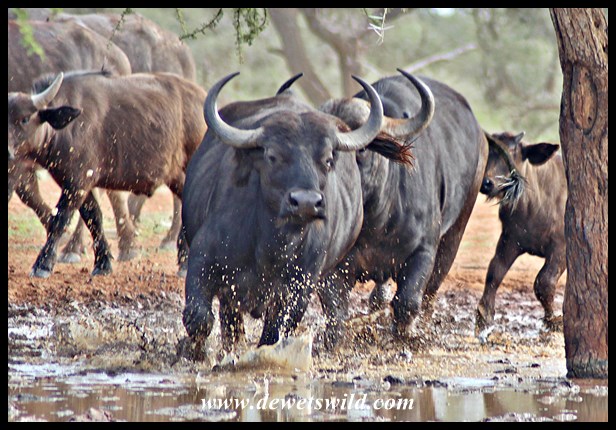
“Dries se Gat” is one of our favourite waterholes in Mokala National Park, not only because I share a name with it but also because there always seem to be something interesting happening there.

During our latest visit to Mokala we arrived at the waterhole just as a big herd of 100+ buffaloes were making their way to the water, and could spend quite a bit of time watching the animals interact with each other while slaking their thirst and enjoying a mud bath.

If you’d like to learn more about Mokala National Park, why not have a read through the detailed post we did about the Park in 2016.

Back from another taste of Mokala Magic

We’ve just returned home after spending a four-night weekend at beautiful Mokala National Park in the Northern Cape. We had a lovely time and of course we have lots to share with you in the coming days – Here’s just a little teaser!

If you’d like to learn more about Mokala National Park, why not have a read through the detailed post we did about the Park in 2016.

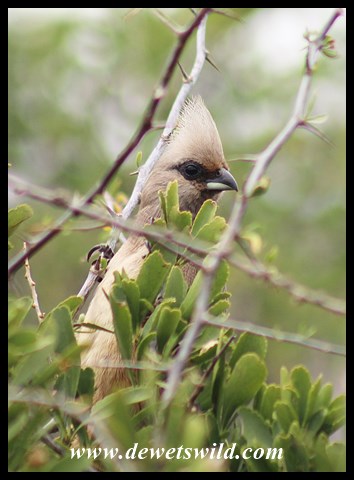
Speckled Mousebird

MousebirdColius striatus

Mousebirds are a uniquely African order of six species, named for their habit of clambering around the branches of trees and shrubs in a very rodent-like manner. Speckled Mousebirds, both the largest and the most widely distributed of the family, inhabits thickets, moist savannas, woodlands and forests, and particularly the edges of these, as well as well-wooded drainage lines, exotic plantations and suburban parks and gardens in otherwise unsuitable areas (such as the grasslands of our Highveld). They feed on fruit, berries, seeds, leaves, buds, flowers and nectar. Adults are around 35cm long (their tail making up roughly half of this) and weigh about 55g.

Speckled Mousebirds congregate in small flocks of 5 to 20 birds, moving around from tree to tree one after the other, and often in association with other kinds of mousebirds. Breeding in Speckled Mousebirds have been recorded throughout the year, with a peak in spring and summer. Nests are untidy cups of grass lined with fine material built in trees or shrubs. Clutches of 1 to 7 eggs are incubated by both parents for a period of two weeks. Some males may have active nests with more than one female. Chicks start leaving the nest to clamber around the branches when they’re about 10 days old, and become independent at only three weeks of age. Breeding pairs may have as many as 6 helpers assisting to raise their latest brood.

The IUCN describes the Speckled Mousebird as common and widespread with an increasing population and distribution, listing it as being of least concern. They occur from Cameroon in the west to Ethiopia in the east and then southwards to South Africa, being absent from the equatorial forests and arid south-west of the continent. In South Africa they can be found in all our provinces, excluding the driest parts of the Free State, Northern Cape and North West Province.

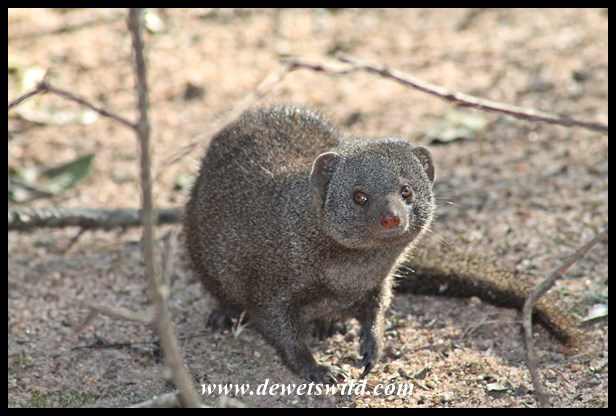
Dwarf mongoose in Pretoruskop

Dwarf Mongoose

Helogale parvula

With a weight of only 350g and growing to a maximum length of 40cm (including its tail), the Dwarf Mongoose is the smallest mammalian carnivore in South Africa. They inhabit open savannas and woodlands with an ample supply of termite mounds and fallen logs and often in or near rocky outcrops. They prey on anything from insects, spiders and scorpions to reptiles (including snakes), birds and rodents, often banding together to overpower larger prey.

Diurnal in habits, Dwarf Mongooses live in clans of up to 40 members occupying a fixed home range within which they may have as many as 20 dens (often in termite mounds, tree stumps, rocky outcrops or in tunnels dug by themselves or other animals). These clans are controlled by a dominant pair that stays together for life. The dominant female gives birth to litters of 1-7 pups after a 2 month gestation, usually in the rainy season. While the babies will only suckle from their mother, all troop members assist in raising the young. Dwarf Mongooses are exceptionally curious, and even though they flee for cover at the slightest sign of danger it doesn’t take very long before they start popping up again to check out whatever it was that disturbed them. They have a life expectancy of only about 6 years in the wild.

The IUCN considers the Dwarf Mongoose to be of least concern. It occurs from Ethiopia and Somalia southwards to Angola and South Africa. In South Africa it is to be found from northern Kwazulu-Natal through Mpumalanga and Limpopo into the north-eastern corner of the North West Province.

Easter in Kruger

The Easter break afforded us the opportunity to visit South Africa’s flagship National Park, and one of our favourite destinations, again, spending first three nights at Skukuza Rest Camp in the south of the Kruger National Park, and then four nights around Mopani Rest Camp in the north. After a summer of apparently good rainfall, the Park’s vegetation is lush and green, with water in ample supply. These conditions make searching for wildlife a bit trickier, but it is wonderful to see the Park transformed from the harrowing effects of the recent drought that is still so fresh in our minds.

The Kruger National Park is renowned for its Big-5 sightings. There isn’t very many other places where one can so easily find completely wild lions, leopards, elephants, buffaloes and rhinos from the comfort of your own vehicle, at your own pace and according to your own schedule. And then there’s always a chance that you may cross paths with a magnificent big tusker!

On the other side of the scale are those less frequently noticed smaller critters (“creepy crawlies” or “goggas” as we call them), that fairly seldom feature on any of the Kruger visitors’ sightings wish-lists. They may be small and unobtrusive, but they are certainly no less fascinating than the glamorous Big-5. We already shared with your the exciting scenes of a Western Stripe-bellied Sand Snake catching and swallowing a skink in Shingwedzi, but there’s plenty more to see if you bend your knees!

The Mopani area is well-known for prized sightings of the rarer antelope species, and we weren’t disappointed on that score either, ticking bushbucknyalaeland, tsessebe, reedbuck and roan antelope on our list.

The lush vegetation made it very challenging to see the smaller antelope species. We managed to photograph steenbok, grey duiker and klipspringer, but unfortunately the grysbok just weren’t willing to pose for a picture this time around.

There’s quite a few herbivore species that you are virtually guaranteed to see when visiting the Kruger National Park. Among these are baboons and vervet monkeys, blue wildebeest, plains zebra, impala, kudu, waterbuck, giraffe, warthog and hippo.

Of course, with such a menu there are many predators in attendance. Apart from lions and leopards, on our latest visit we also encountered spotted hyena, side-striped and black-backed jackal, crocodile and large-spotted genet.

The Kruger National Park is regarded as a paradise for bird-watchers, and that is not without reason. During the warmer months especially, when many summer migrants from northern latitudes enjoy our warm weather, the variety and numbers of bird species to be seen is absolutely prolific, but even in winter feathered life abounds in the Lowveld.

The Kruger National Park is an addictive place. You only need to visit once for it to get under your skin, and stay there. The more you experience of Kruger’s wonders, the more you pine for it. We’ll be back again and again, no question about it.

 

Easter Encounters with Tuskers

One of our greatest joys when visiting the Kruger National Park is being treated to an encounter with a real “Tusker”; a majestic elephant bull carrying massive ivory. There are only a handful of these enigmatic animals on the continent, and they are living monuments to those who protect our wild places for generations to come. Owing to their special status, they are given names by the Park authorities, often according to specific areas they roam or in remembrance of rangers or other members of staff that dedicated their lives to the Park.

During our Easter visit to Kruger, we were lucky to have seen no less than three of these awesome animals. Each one of them has some unique features – scars on the ears, marks on the trunk, characteristic tusk shape, etc. that aids in the identification. We’ve submitted our photographs to the Kruger’s Emerging Tuskers Project and will update this post once we hear the names of these tuskers.

This is Xidudla, the name being in reference to his large size:

This big bull is known as “Hahlwa“, which is Tsonga for “twin” because he looks so similar to Masasana, another big tusker roaming the Kruger Park.

This last bull has not been named yet, but the project team will be keeping a close watch on him until he too receives his well-deserved moniker.

For some more pictures of tuskers we’ve seen in Kruger in years past have a look at this post.

Western Stripe-bellied Sand Snake

Psammophis subtaeniatus

One of the most exciting and memorable sightings of our Easter trip to the Kruger National Park took place right in front of the reception office at Shingwedzi Rest Camp. We watched as a Western Stripe-bellied Sand Snake (aka Western Yellow-bellied Sand Snake) stalked, caught, killed and swallowed a skink – the whole episode playing out within perhaps ten minutes at the most.

This was a fairly large specimen of this slender species, which grows to around a metre in length. Western Stripe-bellied Sand Snakes are strictly diurnal, equally at home on the ground or in low trees and shrubs, and extremely fast moving. Aside from lizards they will also prey on frogs, small birds and rodents, which they dispatch with a dose of mild venom (not lethal to humans though).

Females lay between 4 and 10 eggs in summer, and probably lives for between 5 and 10 years in the wild.

The Western Stripe-bellied Sand Snake is described as widespread and common by the IUCN, which considers it to be of least concern. It is distributed from southern Angola and northern Namibia through to Swaziland and South Africa (North West, Limpopo, Gauteng, Mpumalanga and possibly northern Kwazulu-Natal), occurring in a variety of savanna types and being especially closely associated with mopane veld (such as which occurs around Shingwedzi).

While visiting Marakele National Park over Easter in 2019, we encountered another Western Stripe-bellied Sand Snake at the Thutong Environmental Education Centre, and watched as it searched, this time unsuccessfully, for a lizard to catch.

This Western Stripe-bellied Sand Snake visited our tent at Tlopi in the Marakale National Park during a visit in February 2021:

Western Stripe-bellied Sand Snake at our tent

While staying at Shingwedzi Rest Camp in the Kruger National Park in June 2019, a Western Stripe-bellied Sand Snake came to visit us at our campsite – seems Shingwedzi is a really good place to go looking for this species!

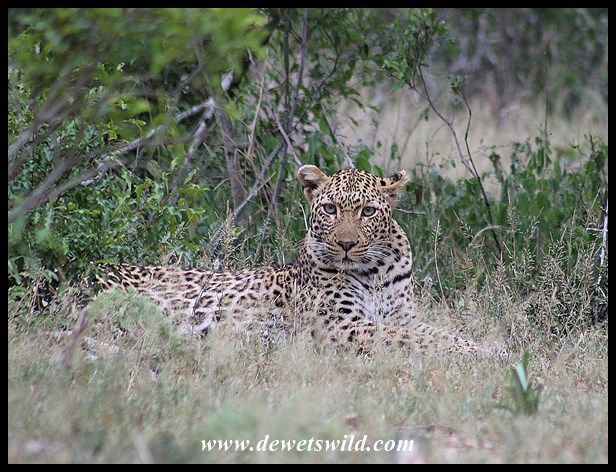
We were parked at a Leopard sighting while visiting the Kruger National Park in December 2021 when Marilize noticed this Western Stripe-bellied Sand Snake in a bush next to our car.

Western Stripe-bellied Sand Snake (photo by Joubert)

In July 2022 we visited Marakele National park and Tlopi Tented Camp again, and were delighted to find another Western Stripe-belllied Sand Snake guarding our tent again.


Back from our Easter Bush Breakaway

We’re fresh back from our Easter break around Skukuza and Mopani in the Kruger National Park, and of course well be sharing lots and lots more photos from this beautiful place with you soon! (as well as replying to all the comments you left us over the last few days).

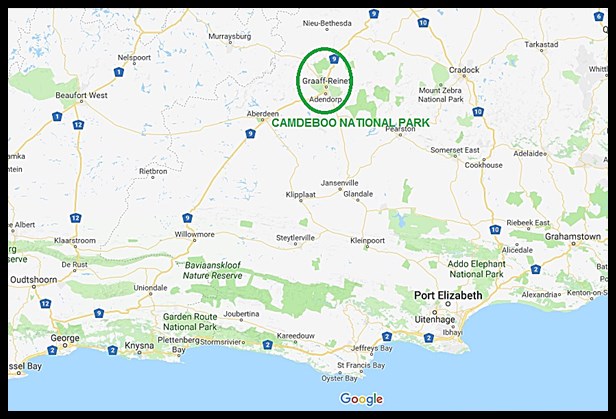
Camdeboo National Park

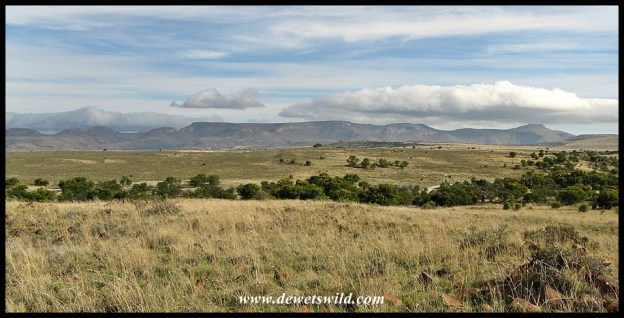
In 1975 the Southern African Nature Foundation (today WWF-SA) established the 165km² Karoo Nature Reserve virtually all around the historic town of Graaff-Reinet. It was only in 2005 that the Karoo Nature Reserve was transferred to the stewardship of South African National Parks, and officially proclaimed as the Camdeboo National Park. Additional land was incorporated into the new Park, enlarging it to 194km². Some parts of the reserve consists of inspiring mountain topography, and yet others of wide open arid plains. The Nqweba Dam, previously known as the Van Rhyneveld’s Pass Dam and built in the early 1920’s, occupies a large section of the Park (up to 1000 hectares when full). The vegetation of the Park is a mix of Karoo scrub, grasslands, thorn savannas and succulent thickets, consisting of over 330 species.

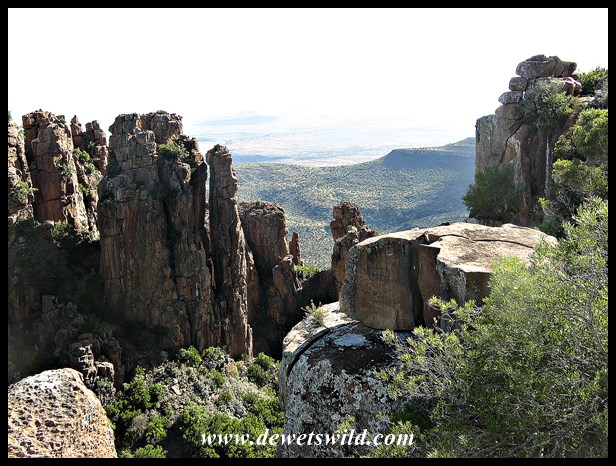
Camdeboo National Park’s most celebrated natural feature, and a declared scenic national monument, is the Valley of Desolation, an awesome cleft over 100m deep, bordered by imposing pillars of stone and cut by natural forces over a period of 240-million years into the side of the mountain looming over Graaff-Reinet. A tarred road leads to the toposcope and viewpoints right at the top, where visitors have an opportunity to enjoy the magnificent vistas over the expansive Great Karoo and the small frontier town situated in an oxbow bend of the Sundays River below.

The Karoo Nature Reserve and later Camdeboo National Park was stocked with several large game animals that used to occur here historically, and today Cape Buffalo and Cape Mountain Zebra count among the 43 kinds of mammals that can be seen here. All told, there’s no less than 225 kinds of birds, 34 reptile species and 8 varieties of frogs and toads that has been recorded within the Park’s borders.

Overnight guests have a choice between the four basic two-bed safari tents at the Lakeview Tented Camp, which make use of a communal ablution block, kitchen and lounge, or the Nqweba Campsite which has fifteen sites for caravans and tents (each with a braai stand (barbeque) picnic table and electric point). There’s a limited network of gravel game-viewing roads available to sedans, a few more 4×4 trails, hiking trails, fishing and other watersports on the Nqweba Dam, a bird-watching hide (unfortunately really only of use when the dam is full), and rustic picnic sites. Graaff-Reinet has shops, restaurants, fuel stations and more.

Camdeboo National Park was the final stop on our December 2017 holiday tour through eight of South Africa’s national parks. The easiest access to Camdeboo’s Nqweba Campsite, Lakeview Tented Camp and the main game-viewing area is from the gate on the N9, just a few kilometres north of Graaff-Reinet, while the gate to the Valley of Desolation lies on the R63 to Murraysburg.

Mountain Zebra National Park

Historically, the Cape Mountain Zebra occurred widely in the mountainous areas of what today is South Africa’s Eastern, Western and Northern Cape Provinces. With the settlement of Europeans in these areas, and the consequent increase in competition for grazing with their livestock as well as uncontrolled hunting, the numbers of the zebras started plummeting. With their plight finally brought to public awareness, the National Parks Board (today SANParks) proclaimed the farm Babylons Toren in the Cradock district the Mountain Zebra National Park in 1937. At 1,432 hectares in extent, the newly established Park was hopelessly too small, and the founding herd of 5 stallions and 1 mare entirely inadequate to save the species from certain doom, and by 1950 the world population of Cape Mountain Zebra had dwindled to only 91 animals, of which only 2 were in the national park that carried their name. That same year a local farmer donated 11 zebras to the park, but it was only in 1964 that the Park was expanded to 6,536 hectares with the addition of neighbouring properties. This proved very much to the zebras’ liking, and by 1969 the Park’s herd stood at 98 head and by 1978 had grown to 200. Today, the Mountain Zebra National Park protects around 500 of these beautiful animals, and several hundred more have been reintroduced to areas in their historic distribution range.

The Mountain Zebra National Park lies at the transitional zone between the arid western Karoo-scrublands and the moister, eastern grasslands, and protects a wide variety of habitats and landscapes within its borders. Given its amazing topographical diversity it should come as no surprise that over 700 plant species occur in the Park. With the future of the Cape Mountain Zebra secured, the focus of the Park could be shifted to biodiversity conservation, and with the help of wildlife artist David Shepherd and several corporate sponsors, enough funds were collected to enlarge the Park to over 28,000 hectares, which allowed the introduction of several large game species – notably lion, cheetah, buffalo and black rhino – to their former haunts.

Sharing the Mountain Zebra National Park with its most celebrated inhabitants is 65 other kinds of mammals…

… and to date 257 bird species have been recorded in the Park.

There’s also a multitude of smaller, less noticeable animals in the Park, including 45 kinds of reptiles, 10 species of frogs, and giant 4m long earthworms!

In recent years, Mountain Zebra has become one of South Africa’s most popular national parks, and recently the number of accommodation units at the Park’s rest camp (which also boasts a small shop, restaurant and swimming pool) had to be substantially increased to cater for the demand. Doornhoek Guest House is a historic homestead restored to its former glory and now converted to luxurious overnight accommodation in a secluded corner of the Wilgerboom River valley. There’s also a terrific camping site, two picnic sites, an extensive network of game-viewing roads, three 4×4 trails, a guided hiking trail and guided game drives available to visitors. A unique attraction at Mountain Zebra is the “cheetah tracking” where guests accompany researchers and rangers to find radio-collared cheetahs in their natural habitat.

Mountain Zebra National Park was the eighth and penultimate stop on our December 2017 tour through eight of South Africa’s national parks. It is located just outside the small town of Cradock, on the R61-road to Graaff-Reinet.