Tag Archives: Summertide Rambles 2020-2021

Ghost Crabs

Subfamily Ocypodinae

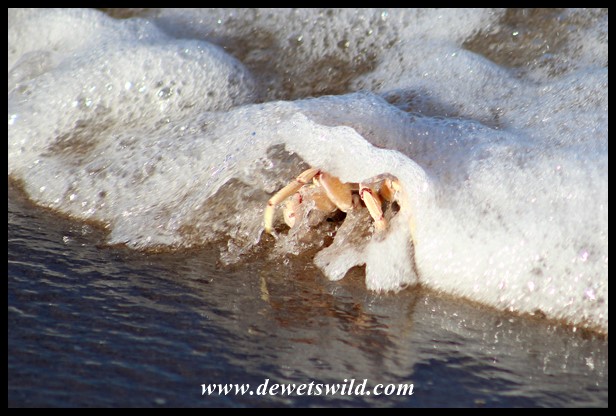
The beach at Cape Vidal is alive with Ghost Crabs, a good indication as to the health of the intertidal ecosystem thanks to minimal human impact on this stretch of coast.

Ghost Crabs are omnivorous scavengers, living on any carrion, debris, and even small living creatures up to the size of turtle hatchlings that gets washed onto the beach.

Being semi-terrestrial and living in burrows they dig for themselves in moist sand, Ghost Crabs can breathe oxygen from the air through their gills, provided they can keep them wet which requires the crabs to scuttle into the waves every so often. However, they can’t stay in the water too long or they’ll drown.

This necessity for the Ghost Crabs to go into the water at regular intervals had us quite amused during our recent visit to Cape Vidal in the iSimangaliso Wetland Park. The crabs would run towards the approaching wave, stand their ground, get pounded, and then re-appear when the wave retreats, still standing in the same spot. Not once did we see one of the crabs loose its footing and get tossed around by the wave action!


Summertide Diary: Arriving at Cape Vidal

16 January 2021

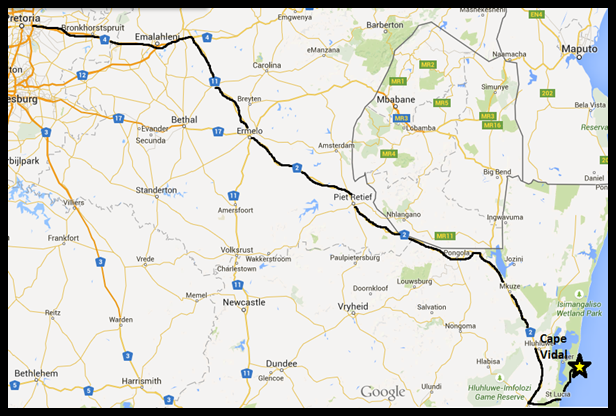
Thankfully our government didn’t opt to impose even stricter lockdown regulations following the festive season spike in covid-infections and so, after 13 days at home in Pretoria we could recommence our summertide rambles, this time heading to Cape Vidal on the eastern shores of Lake St. Lucia, in the iSimangaliso Wetland Park. After 7-and-a-half hours on the road we finally arrived in the holiday town of St Lucia and, after filling up on fuel and stocking up on eats and drinks we couldn’t wait to enter Bhangazi Gate for the 30km drive to Cape Vidal.

The Bhangazi gate into the Eastern Shores of Lake Saint Lucia lies roughly 610km South-East of Pretoria.
(Drawn using Google Maps)

This is one of our favourite destinations and sadly in the midst of South Africa’s first wave of the pandemic a booking we had to come to Cape Vidal in the winter holidays of 2020 had to be postponed. We were so grateful to be back now.

We were allocated log cabin #1 at Cape Vidal – although it’s the first unit as you drive into the accommodation area of the camp it was still very privately situated and surrounded by bush.

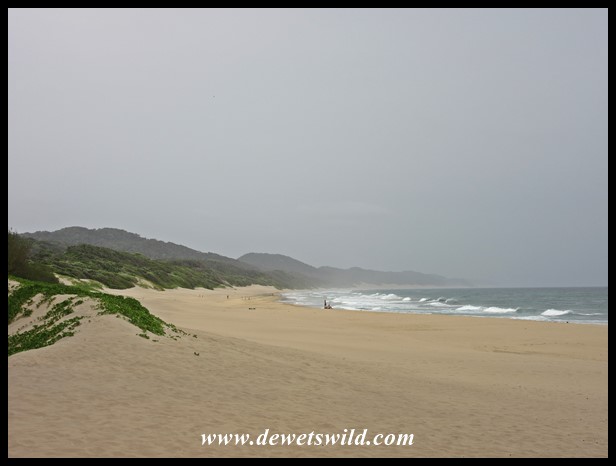
After settling into our accommodation there was only one place we wanted to go – the beach – even if by then some heavy cloud cover had started to move in from the Indian Ocean.


Map of the eastern shores section of the iSimangaliso Wetland Park (from https://isimangaliso.com/)


Summertide Diary: Departing Mountain Zebra

3 January 2021

Today we had to leave Mountain Zebra National Park early, for we had a long way to get back home to Pretoria and had to beat the government-imposed curfew at that. It may have been only 12km from the camp to the gate, but still there was loads to see!

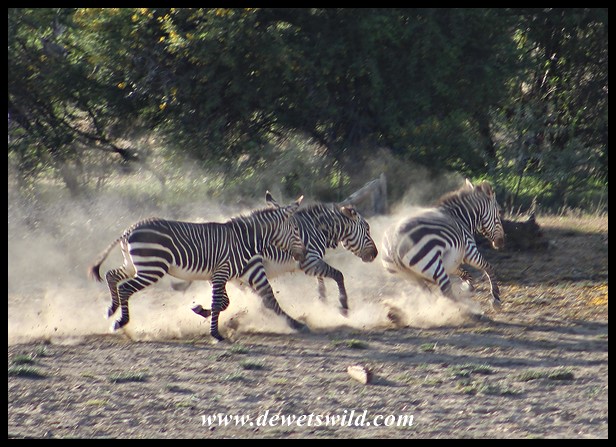
Very near the gate there’s a nice waterhole where even this early in the morning a procession of game was already congregating. The serenity of the scene was shattered when a mountain zebra love triangle got out of hand, but calm soon settled again.

During our time in Mountain Zebra National Park we were very lucky to come across a Black Rhinoceros cow and calf. For their protection I won’t be able to share where or when it was that we saw them, but being able to see more of these magnificent creatures was a privilege we were very grateful for.

And with that our summertide ramble came to a halt, if temporarily, as I had important start-of-the-year work to attend to back in Pretoria. As it would be some weeks still before the schools were due to reopen we did have another reservation in the offing, but with South Africa in the midst of a serious second wave of COVID-19 infections we weren’t at all certain that we would be able to take it up…

We posted a special feature about Mountain Zebra National Park following a previous visit, if you’d like to learn more about this special destination.

Map of Mountain Zebra National Park from the SANParks website (https://www.sanparks.org/images/parks/mountain_zebra/mznp-map.jpg)


Summertide Diary: Exploring Mountain Zebra (part two)

2 January 2021

When dawn found the Mountain Zebra National Park under heavy skies this morning we were already underway along the Kranskop Loop.

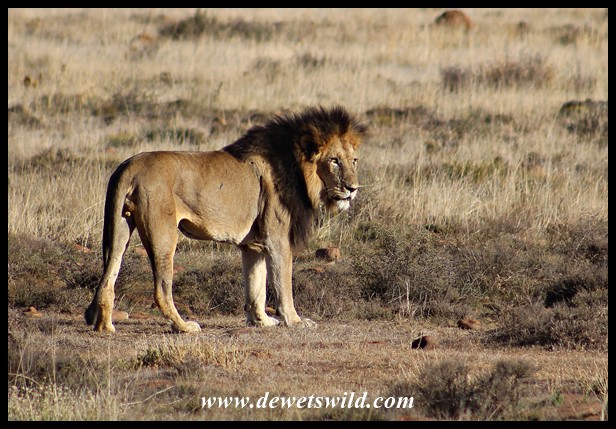
When we arrived at the start of Rooiplaat Loop we found a male lion lying there, flat on its right-side. We sat there as the minutes passed, studying it through cameras and binoculars and finally coming to the sad conclusion that this lion was dead – there wasn’t even a twitch of an ear or any movement of its stomach to indicate a breath being taken. Disheartened, I started the car to drive off.

King Roy, fast asleep

The sound of the Duster’s engine had a miraculous effect. The lion lifted his head, sleepily. He rested his head on his paws for a while, then gave a mighty yawn before getting up, stretching his legs and then lying down again to look at us in irritation. He is magnificent, known as Roy, and despite his advanced age one of the ruling coalition of lion males here at Mountain Zebra National Park, along with Nomad whom we saw at a distance the day before .

When the next vehicle arrived at the lion sighting we moved of so that those visitors too could have a private audience with The King. The skies have cleared and it’s turning into a glorious day. On our way back to camp we passed Roy again, and he was fast asleep again.

With it being our last afternoon at Mountain Zebra we opted to visit all our favourite spots along the Ubejane and Rooiplaat Loops and the Link road between them again. There’s just something so indescribably peaceful about driving around wild Africa as dusk approaches.

We posted a special feature about Mountain Zebra National Park following a previous visit, if you’d like to learn more about this special destination.

Map of Mountain Zebra National Park from the SANParks website (https://www.sanparks.org/images/parks/mountain_zebra/mznp-map.jpg)

Summertide Diary: Bat-eared Fox puppies

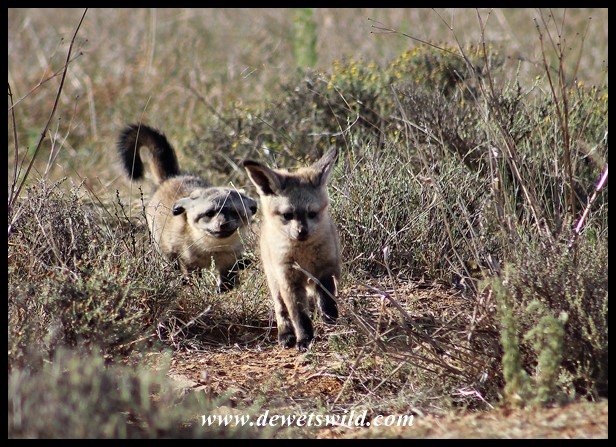
Our new year got off to a great start when we encountered this lovely family of Bat-eared Foxes along the Link Road in the Mountain Zebra National Park on the 1st of January. At the den there were three very lively puppies and four adults who did everything they could to get the pups to hide away from the enamoured humans, without much success!

Summertide Diary: Exploring Mountain Zebra (part one)

1 January 2021

As soon as the gates opened on New Year’s Day we headed for the Rooiplaat Loop, the sightings board at reception having indicated that Lions and Cheetahs were seen there the previous day. And we did not wait long – right where the road skirts the Park’s boundary fence we came across a big male lion, known as Nomad, patrolling his territory.

We supposed that it was the proximity of the big predator that made these Black Wildebeest so jittery!

It’s early morning in the Mountain Zebra National Park and there’s so much to be seen!

It was on the link road between Rooiplaat and Ubejane Loops that we happened upon these cute little Bat-eared Fox pups and their elders. More photos of them tomorrow!

Bat-eared Fox pups

Along the main road, between the two junctions with the Ubejane Loop, we saw this pair of unusually tolerant Secretarybirds – they’re normally quite nervous and move away from the road the moment a vehicle approaches, so this was a great opportunity to watch them in action.

At the southern junction of Ubejane Loop with the main road there’s a small earth dam filled with rainwater. By the time we arrived there at mid-morning Cape Mountain Zebra families were arriving from all corners, along with some other wildlife, to slake their thirst and it was wonderful to watch their social interactions before heading back to camp.

Back at camp there was time to kill either side of lunchtime, and thankfully there’s very much of interest around the accommodation and camping area.

Our route for the afternoon would first take us into the mountains along the Kranskop Loop before taking another jaunt around the Rooiplaat Loop.

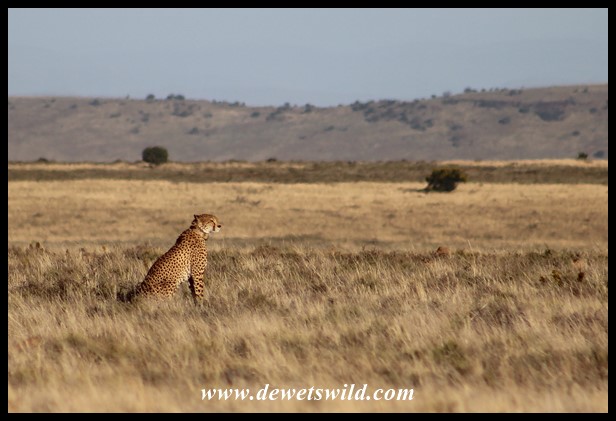
A real highlight of our afternoon drive was an encounter with a group of three Cheetahs – one adult and two youngsters – on the Rooiplaat Plateau, just half-an-hour before we had to be back in camp.


We posted a special feature about Mountain Zebra National Park following a previous visit, if you’d like to learn more about this special destination.

Map of Mountain Zebra National Park from the SANParks website (https://www.sanparks.org/images/parks/mountain_zebra/mznp-map.jpg)

Summertide Diary: Arriving at Mountain Zebra

31 December 2020

It’s a 210km drive from Addo‘s Main Rest Camp to the gates of the Mountain Zebra National park, and we arrive just after 13:00. The rest camp lies about 12km into the Park, but it’s hot and most animals are hiding from the midday summer sun and we don’t see much of them before reaching the camp.

After checking in we make our way to our allotted unit, cottage 20, and while Marilize and I unpack the car and settle into our accommodation Joubert is already out exploring and enjoying the birdlife in camp.

Time to go exploring as a family, and off we go to the Rooiplaat and Ubejane Loops before returning to camp three hours later.

2020 draws to a close with a beautiful sunset over the hills of the Mountain Zebra National Park

The last sighting of the year: a Raucous Toad next to the swimming pool in camp.

We posted a special feature about Mountain Zebra National Park following a previous visit, if you’d like to learn more about this special destination.

Map of Mountain Zebra National Park from the SANParks website (https://www.sanparks.org/images/parks/mountain_zebra/mznp-map.jpg)

Summertide Diary: Elephant Processions at Addo

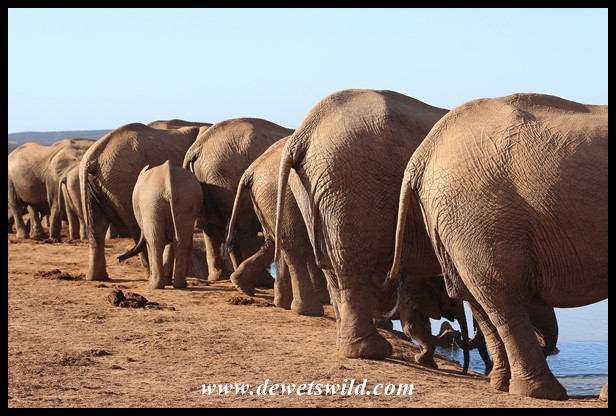
One of the most wonderful experiences one could hope to have in the Addo Elephant National Park is to sit at a waterhole while a herd of elephants arrive, often passing so close to your vehicle that it will take your breath away.

Summertide Diary: Exploring Addo (part three)

30 December 2020

Today was our last day in the Addo Elephant National Park, and that meant it was also the last day we had to enjoy with Joubert’s maternal grandparents and we all felt a little melancholy. It was a very windy day and most of the animals were hiding away from the gusts, so we decided to do an extended morning drive to the Ngulube and Harvey’s loop in the southern section of the Park, again taking a break at Jack’s Picnic Spot, and then spend the afternoon hours together in camp.

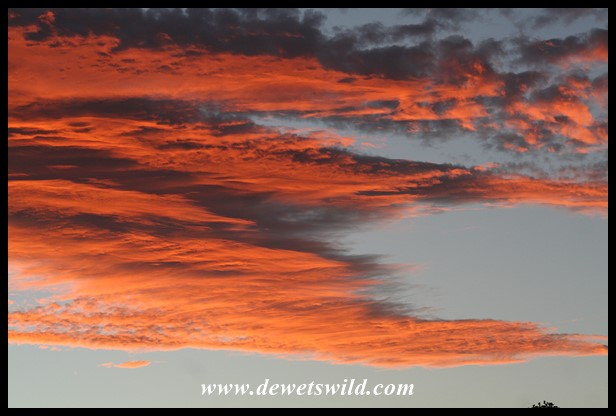
We enjoyed a wonderful final sunset over Addo, the clouds glowing red in the last rays of sunshine coming over the horizon. This is Joubert’s photo. The next morning there would be sad goodbyes as we left for Mountain Zebra National Park while Marilize’s parents returned home to Jeffreys Bay.

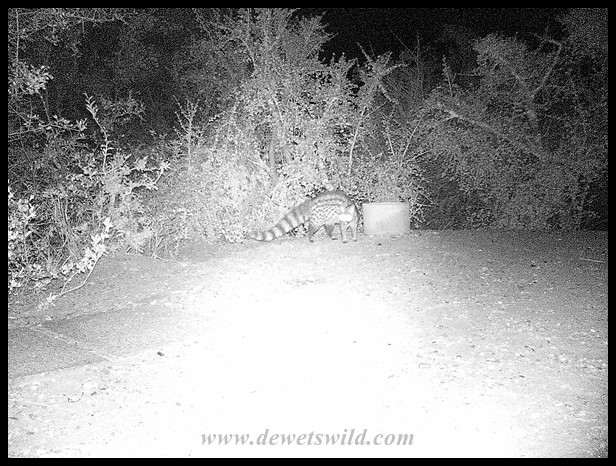
While we were enjoying our meal on the stoep that evening this Small-spotted Genet, picked up by our small camera trap, was (unsuccessfully) looking for leftovers of our braai (barbeque) just outside the little circle of light around our chalet.

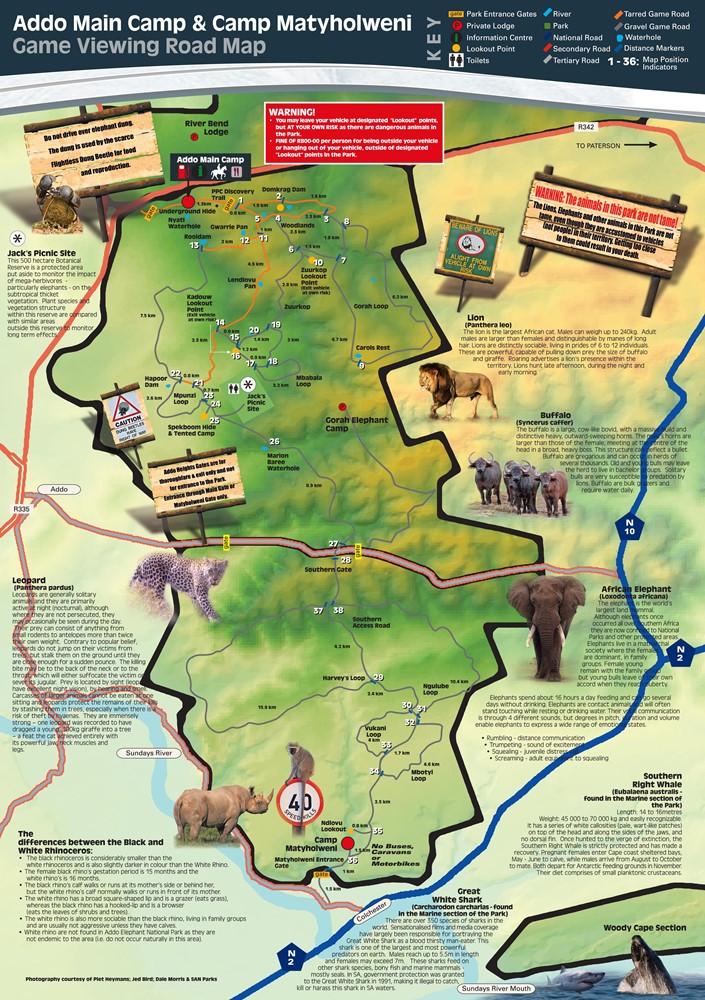
If you’d like to learn more about the Addo Elephant National Park’s history and all it has to offer visitors, why not have a read through this post we compiled after our previous visit? And to follow along on our travels through Addo, you might find this map (from the SANParks website) most handy.Addo map from https://www.sanparks.org/parks/addo/tourism/map.php

Summertide Diary: Hyenas versus Elephant

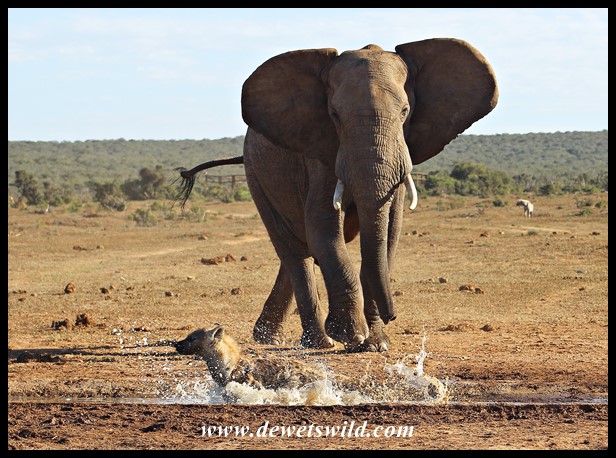
Yesterday we promised you more photos of the fascinating interaction between the Spotted Hyenas and Elephant at Hapoor Dam in Addo Elephant National Park, and here they are.

When we arrived on the scene, the hyenas were quite far from the road and only barely visible without binoculars (or a 300mm camera lens). We could see they were eating, but couldn’t figure out what. Then one adult hyena picked up a sizable chunk of meat and started walking towards us, followed closely by a sub-adult with a piece of leg in its mouth. As they came closer we could identify the prey item as a buffalo calf, or what was left of it anyway. Whether it was caught by the hyenas themselves or killed by lions and then stolen we’ll never know. In any event, the hyenas promptly deposited their meat in a drinking trough on the opposite side of the road to where the actual Hapoor Dam is. Caching food in this fashion is quite well-known hyena behaviour.

The hyenas were still tussling in the water, apparently not knowing whether they want to save their meal for later or gobble it all up now, when a big elephant bull appeared out of the spekboom-thicket some distance away. And he was obviously on a mission. In no time the elephant closed the distance to the hyenas, and while the courage of the younger of the two predators gave in much quicker than that of his older pack mate both had to vacate their bath-cum-larder before the agitated bull got too close. For his part the elephant then gave the fouled water one indignant sniff before moving across the road to drink from Hapoor Dam proper.

With the elephant gone, the hyenas quickly moved back to their pantry, retrieved their meat and continued their meal. The day was heating up though and the Pied Crows were starting to get really annoying, and so they put their meat away a final time to be enjoyed later.