Tag Archives: Satara Rest Camp

Satara Summer 2021 – 16 December

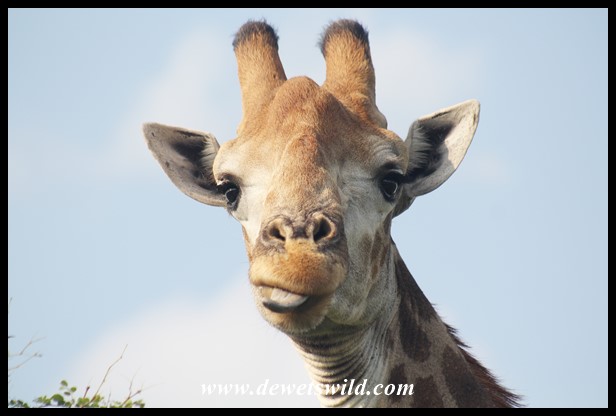
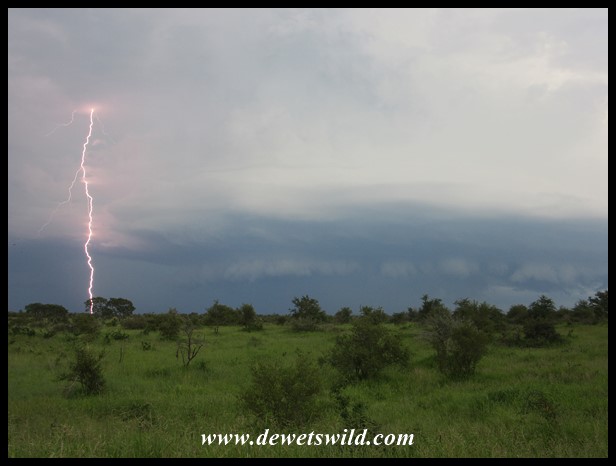
Another day of exceptional and wildly diverse encounters with the wildlife and scenery of the Kruger National Park.

Satara Summer 2021 – 15 December

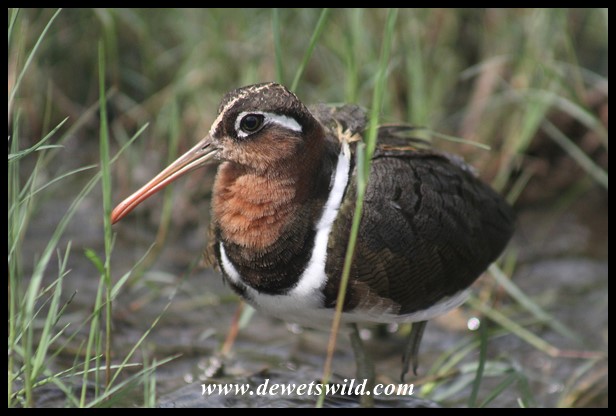
Tonight just a quick collection of photographs taken today in the Kruger National Park.

Thank you also for all the comments received on posts in the previous days – I will still get around to answering them all!

Satara Summer 2021 – 14 December

It’s the summer holidays in South Africa and we find ourselves back at Satara, in the Kruger National Park. We encountered these Painted Wolves, or African Wild Dogs, on the road heading into the Park from Orpen Gate today. These are all Joubert’s photographs.

The Birthday Boy, The Angry Lions, and the Sweni Wilderness Trail

For almost as long as he’s been able to talk, Joubert expressed a wish to go walking in the Kruger National Park. The challenge with that however was that children younger than twelve years old are not allowed to take part in the guided walks on offer, due to the danger and distances covered (and, I suppose in some cases, short attention spans).

However, at short notice we were made aware of availability on the Sweni Wilderness Trail – the most popular of the trails in Kruger – running from the 18th of August 2021 and, with that being Joubert’s 12 birthday it seemed a blessing straight out of heaven, too good to pass up even if it meant he’d have to miss a week of school…

Unfortunately work commitments meant Marilize wouldn’t be able to join us, so it was just the two de Wet boys that departed Pretoria on the 15th of August for our wilderness adventure. Over the past few weeks we showed you most of what we saw and experienced in the three days leading up to the trail as we traversed the southern reaches of the Kruger Park and then made our slow way up to Satara on the 18th of August.

It is at Satara Rest Camp that the ranger-guides meet their guests at the start of the Sweni Wilderness Trail, every Wednesday and Sunday. Having been introduced to our fellow trailists as well as rangers Orbet and Rhulani who’d be guiding the trail, and with all our luggage stowed in the trailer, it was finally time to get onto the open safari vehicle and head into the wilderness. With some wonderful sightings along the way it took us quite some time to cover the distance between Satara and the Sweni Trails camp, and so it is already almost dark when we arrive. Finally Joubert’s wish was coming true, and on his birthday no less.

Guests spend three nights in a rustic, remote base camp on the southern bank of the Sweni stream, from where they are taken out into the wilderness on four guided walking excursions before being brought back to Satara at the end of the trail. Joubert and I were allocated the sleeping hut in the furthest corner of the camp. After settling in we all could sit down to the delicious cooking of James, the camp caretaker and chef, rounding off our meal with a slice of birthday cake before Orbet and Rhulani made us aware of the rules of walking in the wilderness in the days to come. Lions roaring nearby lulled us to sleep that night. What would tomorrow hold?

At sunrise, and after enjoying hot coffee and rusks, we were ready to set out exploring. A beautiful clear morning forewarned that it was going to be a hot day, so we made sure we had plenty to drink in our backpacks, in addition to the fare we’d be enjoying whilst having a picnic somewhere in the bush later.

A short drive westwards out of camp, and in the direction from where the lions were roaring the previous evening, brought us to the area where our ranger-guides determined we’d be walking this first morning. Our walk followed the course of the Sweni stream where the tracks of numerous animals around the remaining pools of water was a sure sign that we’d be encountering lots of wildlife on our morning amble.

When we came across the lion pride feeding on their wildebeest kill, I was surprised at how close we were to them. Surprised and excited, and entirely unafraid. A good chance at having close encounters with lions while on foot is after all the reason why Sweni is the most sought-after wilderness trail offered in Kruger, and the rangers are experts at keeping their guests safe under such circumstances. One of the lioness were keeping a calm eye on the approaching humans, while the others – three more females, one male and seven cubs – were feeding entirely oblivious to our presence. That was until the male looked up. When he saw the humans just a stone’s throw from where he and his pride were feasting the great beast gave a mighty growl – and fled for his life! This sent the cubs fleeing in every direction while the females were immediately ready to go to war to protect their cubs and their prey. While one female slinked away to go round up the cubs, and the male turned around after a hundred meter dash to stare at us from  a distance, the three remaining females left us with no confusion that we were not welcome at their breakfast table. The intensity of their growls was like thunder rumbling from inside the earth; you could feel it resonating in your chest. With lightning in their eyes, their snarls exposing their deadly weaponry, ears pulled back and tails flicking from side to side there was only one way for us to go. Backwards. Slowly. Don’t turn your back on them, or they will charge. And when they do charge, stand still and face them. When she stops, you move backwards again. Slowly, without any sudden movements. And without turning your back! An amazing experience I will never forget. And I don’t believe Joubert will forget it either. No fear, just an amazing sense of respect and gratefulness for being there in the moment.

After the exciting encounter with the lions we continue along the Sweni, criss-crossing it and its tributaries at several points, enjoying a well deserved picnic at a beautiful turn in the stream and just soaking in the wildness around us.

Just before we arrive back at the vehicle, and with the sun sitting very high and very hot already, we sneak up on a herd of elephants sleeping in the shade of a tree.

The hot midday hours we spent in camp (after enjoying the delicious lunch James welcomed us back with). The waterhole in front of camp is a magnet for thirsty animals, there’s a lot of habituated birds attracted to the birdbath and there was even a brief appearance by a good-sized African Rock Python in one of the large trees next to the river, meaning there was more than enough entertainment to keep us occupied until the afternoon outing.

On the way to the area where we’d be walking in the afternoon, our guides took a detour to the feasting lions we encountered in the morning. They were still in the same spot, and still gnawing on the remains of their wildebeest prize. We didn’t venture off the vehicle this time, enjoying this meeting from even closer and much safer quarters.

The afternoon walks cover a shorter distance, and take in a pleasing spot from which the African sunset can be enjoyed with something cold in hand. While we didn’t cover as much ground in the afternoon we were again treated to an encounter with lions – this time a mating pair some distance away – as well as lots of other animals and inspiring scenery. From atop the rocky outcrop where we sat enjoying the sunset we also realised that the mating pair of lions were in fact a threesome – two males attending to one female in oestrus.

We arrive back at camp around 7pm that evening, but not before we enjoy some thrilling night time sightings along the way – and of course we paid “our” lions another visit!

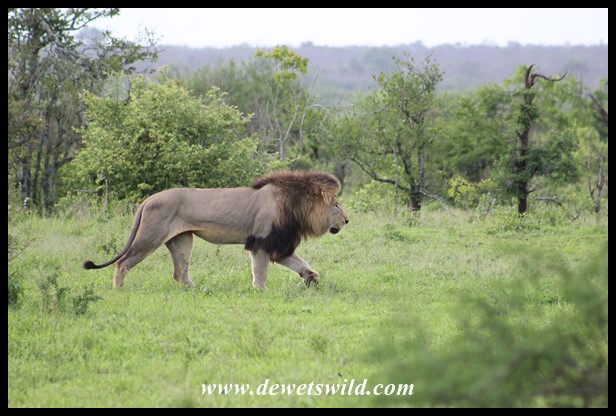
The next morning is a lot chiller than the previous, and it soon clouds over. Our route takes along the Nungwini stream and past a natural fountain. Despite the inclement weather we again have wonderful encounters with a wide range of animals, including a lone male lion, elephant bulls, giraffes and honey badgers, and by the time the vehicle comes into sight again I’m sure all of us still had a good few kilometers in the tank.

Back at camp for lunch and (if you were so inclined) a siesta, a wildebeest bull harassing cows around the waterhole had Joubert happily clicking away, and later the little birds at the birdbath received his full attention.

On the way to our sundowner spot, Orbet and Rhulani took us to a beautiful stretch of water along the Nungwini stream, just a short walk away. We weren’t there very long, when we had to vacate our prime spot at the water’s edge to allow an approaching herd of elephants to have right of way.

Ted’s Place, a cliff in the foothills of the Lebombo Mountains looking out over the plains of the central Kruger Park with the course of the Sweni River snaking through the scene, was a fitting location to reflect on a memorable trail before heading back to base camp, where a pair of honey badgers were waiting for us to return.

It wasn’t easy to say goodbye to the Sweni Trail’s base camp that final morning, and the drizzly weather certainly reflected our mood. Aside from a wet family of spotted hyenas, there wasn’t a lot of animals to be seen along the road back to Satara.

After saying goodbye to Orbet, Rhulani, James and the other guests that shared our experiences in the wilderness in those three short days, it was time for Joubert and me to head for home… Leaving through Orpen Gate really was our only option if we wanted to beat the government COVID-curfew, though we delayed our departure just a smidgeon by detouring past Muzandzeni Picnic Site and Talamati Bushveld Camp.

We were already quite some distance out the gate at Orpen, and passing one of the many game farms along the road, when we saw a leopard next to the fence of one of these farms. While we were still despondent about no longer being in Kruger this unexpected find made us realise all over again that we were still in Africa, which means we’re more blessed than 6.5-billion other people on earth…


The bloody fight that never was

At the end of our Satara Summer, on the way to the Kruger National Park’s Orpen Gate from where we were to head back home to Pretoria, we were lucky to see a lone Cheetah resting in the shade of a small thorn tree. Having stopped for a last photo or two, it was Marilize who noticed a Spotted Hyena heading straight towards the Cheetah. Knowing just how hateful the relationship between Africa’s large predators are, we were sure we were probably going to witness a tremendous fight when the two meat-eaters meet, especially when the Cheetah noticed the Hyena, snarled at it viciously, and got up to defend its turf. But turns out this Hyena was not a fighter; he walked straight past the Cheetah as if it wasn’t even there, and not paying the cheetah’s tantrum any attention whatsoever. It was rather amusing seeing the Cheetah standing by himself, looking decidedly confused, as the Hyena disappeared from view…

Waiting hours for a glimpse at a White Lion

White Lions are exceedingly rare and especially so in the wild. Several zoos, “safari parks” and circuses around the world house White Lions, but these are often horribly inbred. These lions are not albinos, instead being the result of a mating between two lions carrying a recessive gene for white (leucistic) fur instead of the usual tawny colouration. Naturally White Lions are only ever found, from time to time, in South Africa’s Lowveld, where the Kruger National Park and a few renowned private nature reserves are situated. As far as wild White Lions are concerned, at present, there are known to be two young white cubs in the same pride that roam around Orpen in western Kruger and the adjacent Timbavati reserve, and a single young male born to a pride near Satara and fairly wide-roaming since he and his brothers were ejected from their natal pride.

It is this latter individual that we came across on the 3rd of January 2020, the final full day of our Satara Summer. Having fairly often visited the Kruger National Park my entire life, it was always my, hitherto unfulfilled, wish to see a truly WILD White Lion, so you will appreciate just how excited we were at this opportunity! It was an exceedingly hot day, and on hot days lions are seldom very active. So we sat for hours in our vehicle in the blazing sun, waiting, hoping, that he might get up, and move around just a little, so that we can get more than just a glimpse. He obliged, for a minute or two only, to move from the large tree where he was lying with his three brothers to a smaller shrub a few meters away. That was it. He didn’t move again until we had to leave to get back to camp before the gates closed. But we were thrilled and grateful for the chance to see such an enigmatic animal.

While they can not be considered wild, there is a pride of White Lions on view at the Rhino & Lion Nature Reserve near Johannesburg.

A most memorable encounter with Leopards

The 2nd of January 2020, almost at the end of our Satara Summer, delivered one of the most memorable sightings of the month we spent in the Kruger National Park. About half-way between Satara and Olifants we came across this pair of Leopards, and did they put on a show to remember! Trust us; seeing Leopards like THIS happens only very rarely…

Hell hath no fury like a female Baboon!

While driving slowly back to Satara Rest Camp along the S100 one evening, we came across a mixed group of Impalas and Baboons peacefully whiling away the final minutes of sunlight at Shibotwana waterhole. It is then that we noticed a Black-backed Jackal moving through the group, obviously looking for an easy meal. The Jackal spied a young Baboon and gave it a little more attention than the Baboon wanted; it shrieked and set off running towards its mother and then things took a very quick turn for the worse for the Jackal, who managed to escape a serious hiding by the skin of his teeth!

When an elephant won’t let go…

One of the most touching sightings of our recent Satara Summer in the Kruger National Park was of an elephant bull trapped in a shallow pan (waterhole) and unable to get out. Just how the bull ended up in this predicament was unclear as we arrived on the scene too late to know – perhaps it was simply something as benign as taking a mud bath gone wrong, or perhaps something as violent as a debilitating blow received in a fight for dominance. However it may have occurred, we spent several hours in the exceptional heat wishing him on every time he tried lifting his massive bulk out of the mud, watching with lumps in our throats as other elephant bulls, obviously distressed, tried to help and failed, how they had to give up on their valiant attempts, extending trunks towards their comrade as if in a final greeting. Eventually the hopelessness of his situation became too much to bear for us too and with every pause in his feeble movements we hoped that he has finally breathed his last, only to see the tip of his trunk being raised limply above the waterline once again, over and over. Why won’t he just let go..?

Dusk settled over the plains and we had to leave to get back to Satara in the knowledge that he was unlikely to see the sun rise tomorrow. Difficult as it was to watch, we realise that tragedies like this have played out in the wilderness for millennia, nature taking its course without human interference, as it should and will continue to do in places like the Kruger National Park, and whether we were there to witness it or not made no difference to the outcome.


Front row seats for an epic battle!

One of the most exciting sightings (and we had many!) of our Satara Summer was this epic battle between two big Kudu bulls, encountered near the Kruger National Park‘s Nhlanguleni picnic site. At times the fight was so heated that we were sure one of them was going to break the other’s neck or stab a hole straight through his adversary. After several minutes the fight ended abruptly when they found themselves in thicker vegetation and one of the combatants threw in the towel.