Tag Archives: nature

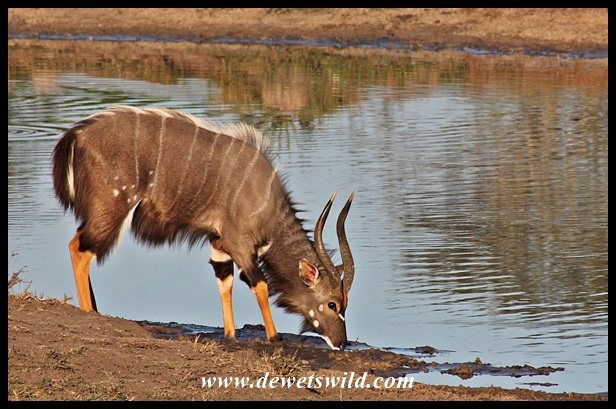
Nyala

Tragelaphus angasii

The graceful nyala is one of our favourite antelope, and a close relative of the kudu. They occur naturally in the south-east corner of Africa, ranging from Malawi to South Africa’s eastern provinces.

To the uninitiated, the adult bulls in their dark, shaggy, coats and the ewes dressed in bright chestnut seem to be from two different species altogether. Bulls are almost double the size of the ewes, and can weigh up to 130kg.

Nyalas inhabit thickets and woodland near water, and will often forage in adjacent clearings. They’re mixed feeders, subsisting on a diet of leaves, succulent shoots and short grass.

Being social animals, nyalas occur in small groups consisting mostly of adult females and their offspring, with adult males tending to form bachelor groups. Lambs are born at any time of the year, though mostly in the wetter summer months.

The stiff-legged dominance display – you could even call it a dance! – of the adult bulls is one of nature’s most intriguing spectacles.

The bulls also have the curious habit of horning the ground at mud puddles, carrying the caked mud off with them on their headdress…

The IUCN consider the nyala’s conservation status to be of “least concern“, with a population of at least 32,000. The best places in South Africa to see these graceful antelope is the Kruger National Park (especially at Pafuri in the far north of the Park), Hluhluwe-Imfolozi Park, uMkhuze Game Reserve, and Tembe Elephant Park, though they occur in a number of other state and private reserves as well.

uMkhuze Game Reserve’s Kumasinga Hide is one of the very best places to watch Nyala behaviour.

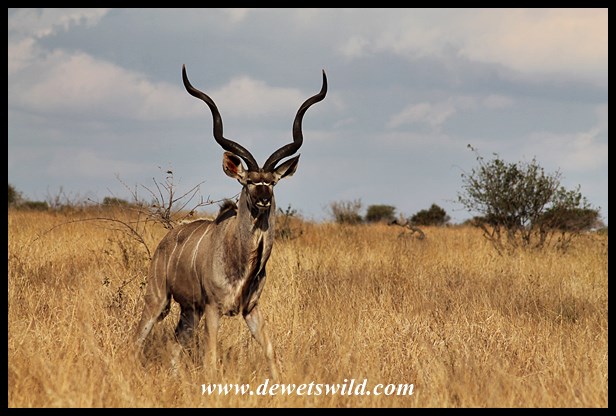
Magnificent Kudu seen near Mavumbye

Greater Kudu

Tragelaphus strepsiceros

The striking kudu is one of the largest, and according to many nature lovers one of the most beautiful, of South Africa’s antelope.

Weighing up to 315kg and standing up to 1.6m high at the shoulder, kudu bulls are considerably bigger than the cows.

Adult bulls are solitary or move around in bachelor groups, associating with the herds of cows and their calves only during the rutting season. Though the bulls are not territorial, they do maintain a strict dominance hierarchy through fighting, sometimes leading to the death of one or both combatants through injuries or having their horns inextricably interlocked.

Kudu inhabit a variety of bush- and shrubland habitats, and, being browsers, subsists on an extremely wide variety of leafy vegetation, being particularly fond of the thorny Acacias. While they can survive for extended periods without water, they will drink daily if it is available.

In South Africa, most calves are born in the summer months between December and March. Newborn calves are kept hidden in thick vegetation for up to three months after birth, with the cows returning to them every couple of hours to nurse. They can live to the age of 18, but being a favourite prey item for all Africa’s large predators as well as being prone to drought and cold conditions, and susceptible to a range of diseases, few kudus wil reach that age in the wild.

Kudus occur widely across South Africa, both in and outside of formal conservation areas, and are still relatively numerous. The IUCN regards their conservation status to be of “least concern”, estimating the total population to stand at almost 500,000 individuals.

Room to roam

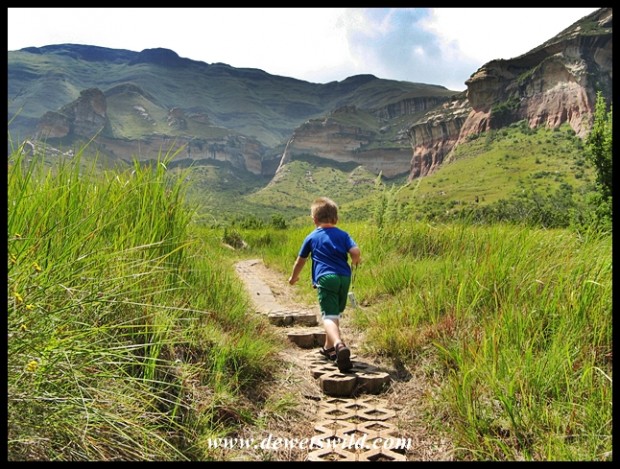
Joubert exploring the Golden Gate Highlands National Park

Room to roam

Room” is the theme for this week’s photo challenge from WordPress

Autumn in Kruger: Orpen, April 2014

We had started our autumn trip through the Kruger National Park up in the far north of the reserve at Shingwedzi, and after three fantastic days there it was time to move camp again, heading south to tiny Orpen Rest Camp in the central regions of the Park.

We were in for a long drive down at leisurely game-viewing pace, stopping en-route at Mopani, Letaba and Satara to stretch our legs.

Very near Orpen we received a nice reward for a long day of driving, encountering a beautiful cheetah just as dusk was descending over the lowveld.

Having spent most of the previous day in the car, on the 30th of April we decided to take only short morning and evening drives and spend the hotter hours of the day relaxing in the camp.

We’ll dedicate a special post to the Orpen Rest Camp in another blogpost, but for now just a quick introduction. We spent two nights at Orpen, in the very spacious Oasis Cottage (number 15) right in the corner of the camp, with a clear view of Orpen’s famous waterhole (which is floodlit at night, and you can follow the action live via a webcam!). Enjoying an early morning cup of coffee and a rusk or two on the veranda and watching first a pair of leopard and then a pair of lion walk past within half-an-hour was undeniably one of the highlights of our visit! The game viewing in the general vicinity of the camp is always excellent, though the road network near camp is rather limited.

Come May Day, and it was time to head on again, to Berg-en-Dal in the far south-west of the Park.

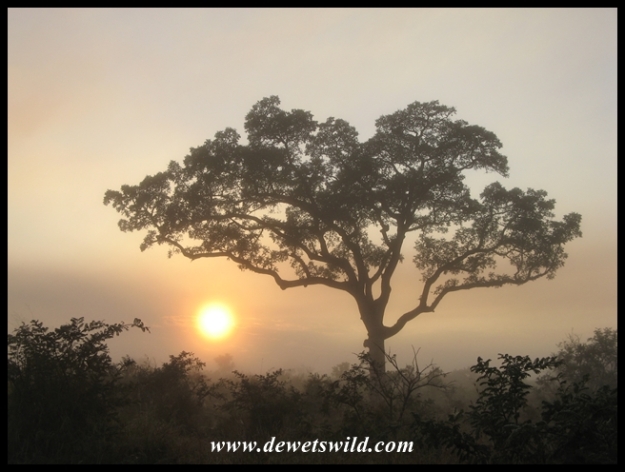
Misty Orpen sunrise

Misty Orpen sunrise

Autumn in Kruger: Shingwedzi, April 2014

After entering at Phalaborwa Gate in the early morning of 26 April 2014, our most recent visit to the Kruger National Park kicked of with three nights at our beloved Shingwedzi Rest Camp, in the far north of the Park.

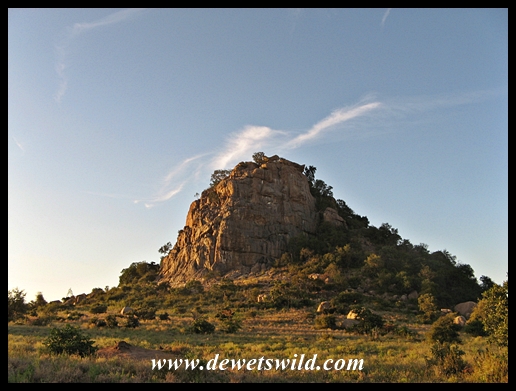
Rocky outcrop near Phalaborwa Gate

Rocky outcrop near Phalaborwa Gate

Sunrise on the Mphongolo Loop

Sunrise on the Mphongolo Loop

When it comes to game-viewing we’ve always maintained that Shingwedzi does not need to stand back for any of the more popular camps in the southern half of the Park, and this latest visit served only to reinforce our opinion. We had excellent sightings while driving slowly along the Shingwedzi River, both in the direction of Tshange Viewpoint to the west along the S52-route, and towards the Lebombo’s in the east, along the S50 (our favourite Kruger drive) that skirts the Kanniedood Dam (or what is left of it after the January 2013 floods).


Despite the autumn season being in full swing, with most of the summer migrants having already left for warmer climes, the birdlife around Shingwedzi did not disappoint either!

Even if there were no wildlife around to keep us enthralled, Shingwedzi’s scenery alone would have been worth the trip.

Our accommodation at Shingwedzi, unit 29, was built in 1956 in the traditional white-washed Shingwedzi-style, and is a very comfortable little two-bedroomed cottage, ideal for our group of four (we were joined on the trip by my mom, a real treat and even more so for Joubert having his granny by his side for nine days in a row).

There’s few places where the hustle-and-bustle of daily life seem so far away as at Shingwedzi, and it was an excellent start to our eight-day autumn visit to the Kruger National Park. From Shingwedzi we moved to the central regions of the Park, basing ourselves at Orpen Rest Camp.

Work of art

Misty sunrise in the Kruger National Park

Work of art

Work of art” is this week’s photo challenge from WordPress


At home in the Giant’s Castle…

If you are going to brave the Easter weekend traffic on South Africa’s roads you had better be heading to a very special destination. Giant’s Castle Game Reserve in the uKhahlamba Drakensberg Park is just such a place and that’s where the de Wet’s spent Easter 2014.
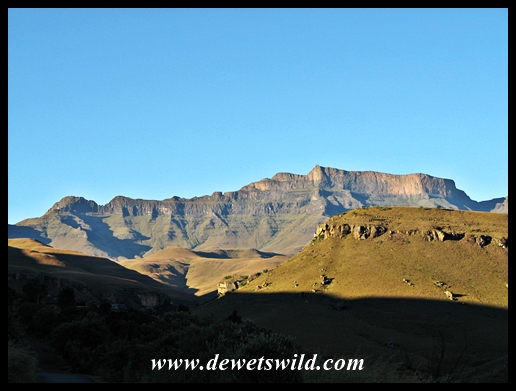
Arriving at Giant's Castle

Arriving at Giant’s Castle

Getting to Giant’s Castle is no problem. The road is clearly signposted from the N3 highway near Estcourt in the Natal Midlands. From there it is about a 60km drive on a narrow tar road, though beware the last eleven or so kilometres before the gate, which is badly potholed. You’ll be richly rewarded for the slow drive with tranquil rural scenes and waves from friendly locals.
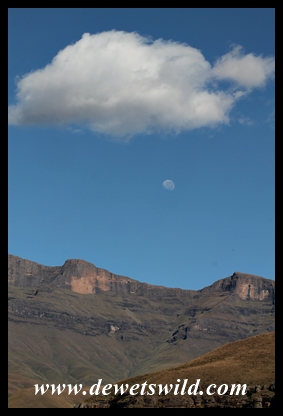
GiantsCastleLandscape (2)

The 7km stretch of road leading from the gate to the hutted camp is an excellent introduction to the breathtaking mountain landscape. In the green valley far below flows the Bushmans River, with the high peaks of the Drakensberg Mountain Range forming a grand backdrop. Inside the reserve, altitudes range from 1,650m at the entrance to over 3,400m at the top of the escarpment and vegetation varies from grasslands to small patches of valley forest.

The reserve was first proclaimed in 1903 to protect the dwindling herds of eland, Africa’s largest antelope, and today these bulky animals are among the most frequently encountered animals in the Giant’s Castle Game Reserve. Over 340 species of birds and more than 50 species of reptile occur in the uKhahlamba Drakensberg Park.

There’s also the cliff-top vulture hide, where photographers can stakeout a wide variety of  carrion-eating birds and animals. It is immensely popular and booked out months in advance, the big attraction being the chance of getting close-up shots of the endangered Bearded and Cape Vultures in their natural habitat.
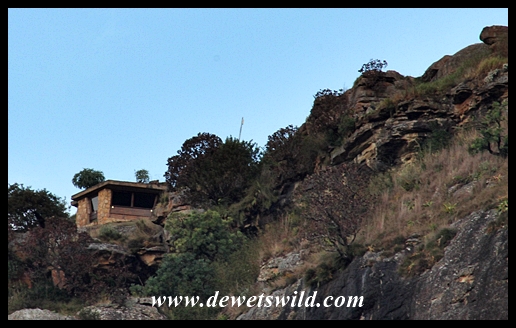
Giant's Castle's vulture hide

Giant’s Castle’s vulture hide

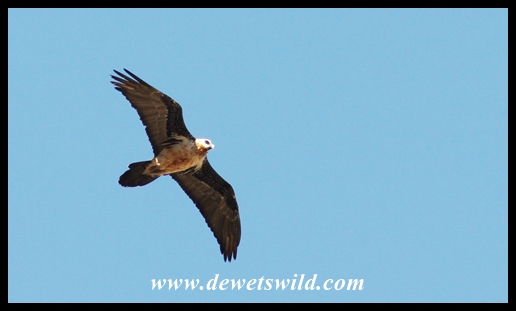
Bearded vulture in flight

Bearded vulture in flight

Hiking in the mountains is a major activity at Giant’s Castle and there’s a number of trails of various lengths to undertake, ranging in time from a few hours to several days to complete. The most popular trail is the easy 45 minute walk to the Main Caves Museum – around a two-hour return trip if you include the guided tour of the museum. These mountains was once the home of the San people, though today the only proof of their erstwhile presence is the paintings they left on the walls of the many caves in the area, including the drawings on display at the Main Caves Museum.

Along the way back from the caves you can stop for a breather at “Rock 75”, a campsite of Col. Durnford’s 75th Regiment during the 1870’s Langalibalele Rebellion, and take in some more of the region’s rich history.

The hutted camp at Giant’s Castle is a very comfortable place to stay and an excellent base from which to explore many of the shorter trails in the area. The camp offers a good restaurant and small curio shop with a limited selection of groceries. Accommodation is available in two-, four- or six-sleeper, fully self-contained, chalets, each of them themed after a different flowering plant that occurs in the Drakensberg (more than 800 species of flowering plants occur in these mountains). Our unit, number 7 – “Gladiolus”, had a terrific view of the Giant and his Castle and was decorated with exquisitely detailed and annotated paintings of several different species of gladioli.

Crisp mountain air and mountain water so clear and cool that you can’t stop yourself drinking directly from the stream seems good enough reason to brave the Easter traffic, wouldn’t you agree?
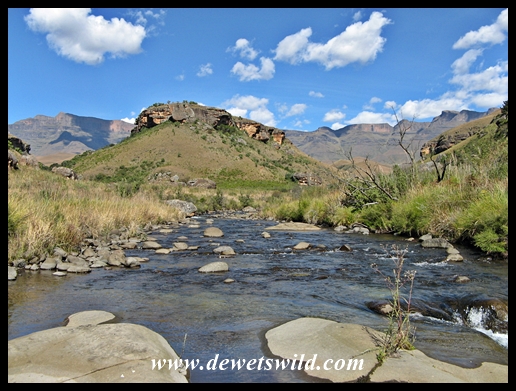
GiantsCastleLandscape (9)


On the Move!

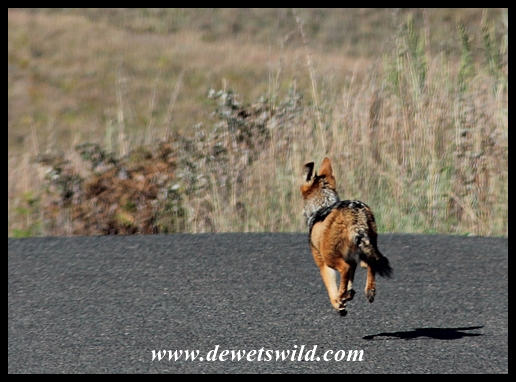
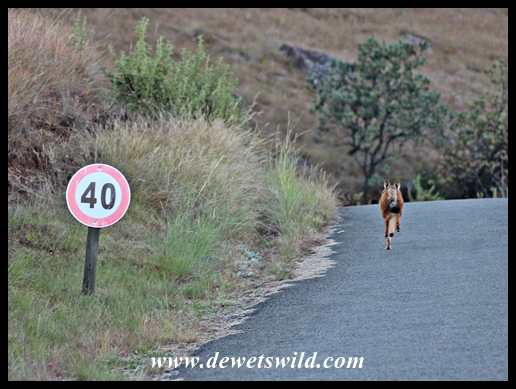
During our recent Easter visit to the Giant’s Castle Game Reserve in the Drakensberg we encountered numerous black-backed jackals, and most of them turned and made a run for it the moment they realised they were spotted.

On the move 1

On the move 2

On the Move” is the theme for this week’s WordPress Photo Challenge

Blyde River Canyon Nature Reserve, February 2014

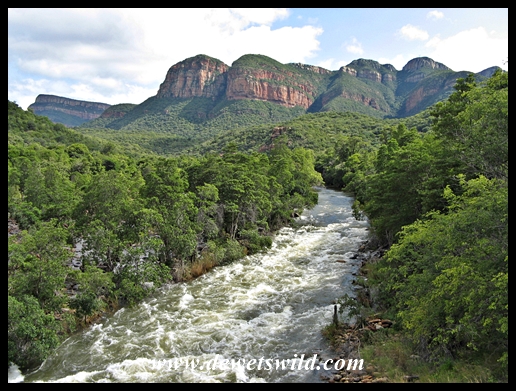
The Blyde River Canyon in the Lowveld of South Africa s the world’s third biggest canyon, and one of our country’s most diverse and scenically spectacular conservation areas.

BlydeCanyon_Feb14 (24)

We had the pleasure of spending four nights at Forever’s Swadini Resort during our recent visit to this beautiful area. The resort has all the amenities you’d associate with a family destination of Swadini’s calibre, yet there’s no feeling of being removed from the natural splendour that completely surrounds it.

Several easy-to-follow trails meander through the enchanting riverine forests around Swadini and it’s not difficult to forget all about time and the daily rat race while exploring these unique surroundings. Be sure to visit to the nearby Blyderivierspoort Dam, where you may join a cruise on the Dam’s deep waters and encounter hippos and crocodiles, or have a picnic at the viewpoint that overlooks the watery expanse.

We’ve dedicated several other posts to the Blyde River Canyon Nature Reserve – have a look here if you’d like to learn more about this fantastic destination. It’s one of our favourite South African wild places, and when you visit you’re sure to fall under its spell as well.


Street Life

Not your everyday street life scene…

These photographs were taken near Crocodile Bridge Rest Camp, during our October 2012 visit to the Kruger National Park.

(You can click on the images for a bigger view)

Street Life” is the theme for this week’s WordPress Photo Challenge