Category Archives: South African Wildlife

The inhabitants of South Africa’s wild places

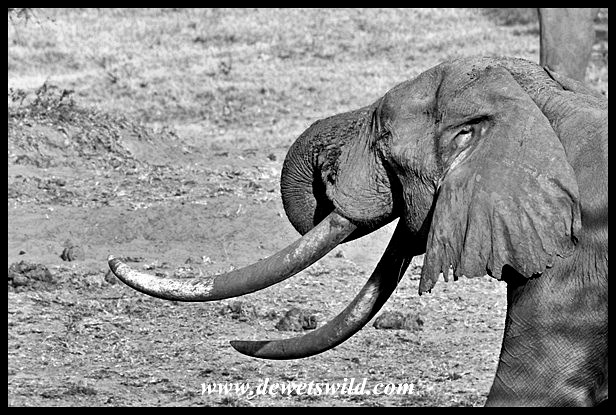
Remembering Isilo

Isilo was, towards the end of his life, the biggest tusker in South Africa, and our encounter with him at Tembe Elephant Park in May 2013 will forever be one of our most memorable wildlife experiences.

3

This is our third installment for the 5 Day Black-and-White Photo Challenge. Today we’d like to invite Dina of Perdebytjie se Nes, to join the challenge. She blogs in Afrikaans, our mother tongue, but you’ll need no translation to enjoy the fantastic photographs she shares on her blog! Dina, ons hoop jy sien jou weg oop om deel te neem maar dis geen probleem as jy nie kan nie, solank jy weet hoe baie ons jou blog geniet!

There are only two rules for this challenge:

1. On 5 consecutive days, create a post using either a past or recent photo in B&W.

2. Each day invite another blog friend to join in the fun.


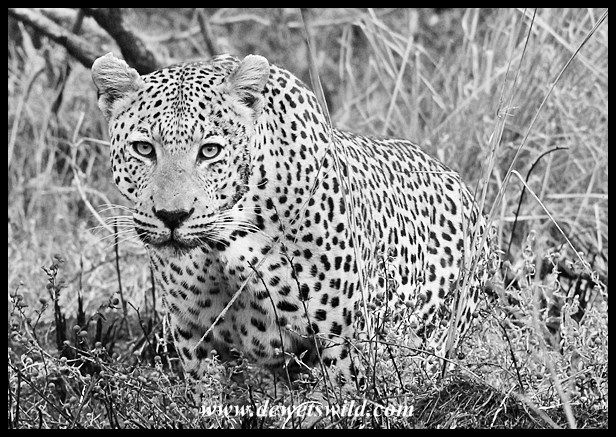
Remembering the Marula Leopard

Today, we flash back all the way to July 2012 to remember this spectacular leopard encounter near Skukuza in the Kruger National Park

2

This is our second entry into the 5 Day Black-and-White Photo Challenge. There are only two rules for this challenge:

1. On 5 consecutive days, create a post using either a past or recent photo in B&W.

2. Each day invite another blog friend to join in the fun.

i AM Safari” is the brilliant blog of another of de Wets Wild’s long standing friends, Maurice Hovens. Like us, Maurice and his family loves exploring earth’s wild places. Maurice, we hope you’ll accept our invitation to join the 5 Day Black-and-White Photo Challenge? If not, at least please see this as a token of how much we appreciate your friendship and support!

Remembering a special lion sighting

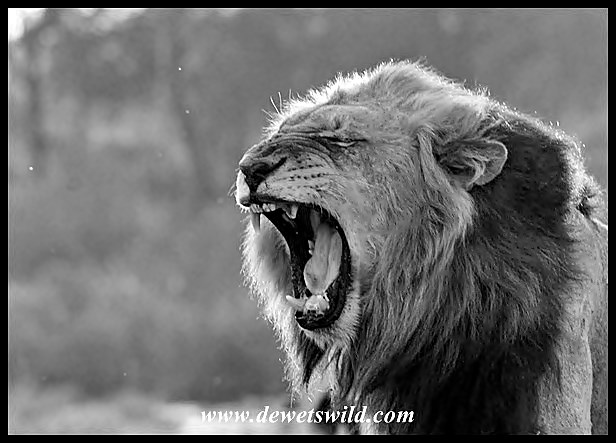
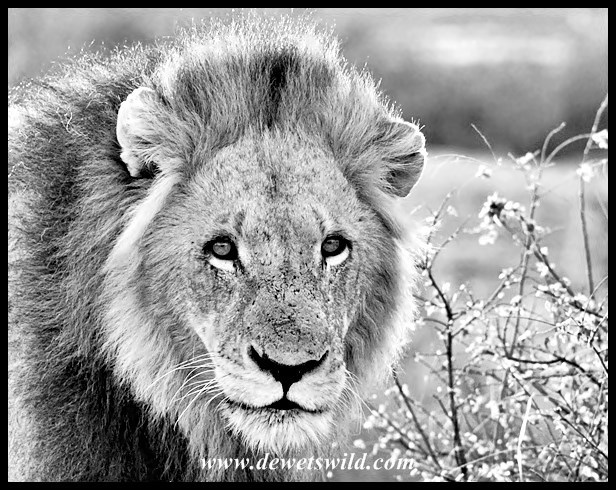
We took these photographs at a memorable lion sighting we told you about last year, almost seven months ago (it still feels like yesterday, so vivid is the memory!), though we’ve now converted them to black-and-white for a new challenge we’re taking part in.

1b

We’ve been invited by Jane (Just Another Nature Enthusiast) to join the 5 Day Black-and-White Photo Challenge. Jane cares a whole lot about what we’re doing to our planet, both good and bad, and if you share her love for nature, as we do, you”re sure to enjoy what she has to share.

There are only two rules for this challenge:

1. On 5 consecutive days, create a post using either a past or recent photo in B&W.
2. Each day invite another blog friend to join in the fun.

For this first of our posts, we’re throwing the ball to AJ Vosse, the expat South African talent behind “Ouch!! My back hurts” and a long time supporter of de Wets Wild. We hope you’ll find the time to join the challenge, AJ, and look forward to your contributions!

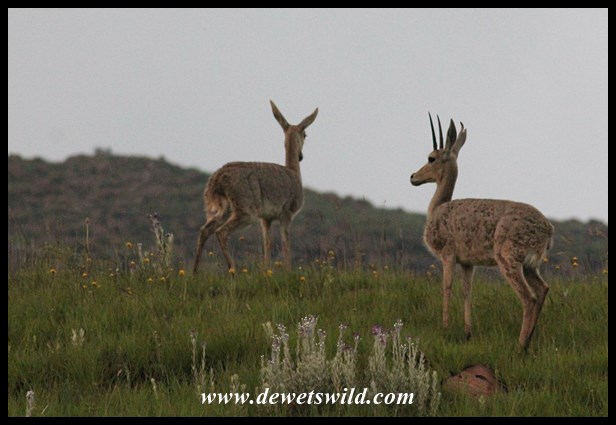
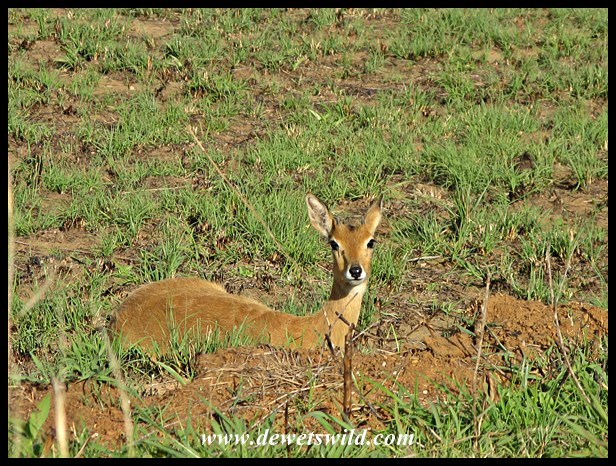
Southern Reedbuck

Redunca arundinum

As its name suggests, the reedbuck is an antelope with very special habitat requirements; occurring in reedbeds and areas of long, often flooded, grasslands, always within easy reach of a permanent water source.

Reedbuck (8)

Rams are slightly larger than the ewes, standing approximately 90cm high and weighing as much as 80kg. Only the males carry horns, that normally reach lengths of around 38cm.

Reedbuck live alone, in pairs or in small family groups within a territory defended by a mature ram, while the ewes dictate where and when the group moves. They graze mostly from dusk to dawn, preferring to hide in shady reedbeds and patches of long grass during daylight hours. They are not very fast nor agile, and rely heavily on camouflage to evade predators (all of Africa’s large meat-eaters prey on reedbuck). Ewes give birth to single lambs, mostly in the rainy season, and hide them away for two to four months before joining up with the family group again.

In South Africa, the reedbuck occurs mostly in the wetter eastern part of the country. While there’s a small population of reedbuck in the Kruger National Park (sightings there are special treats), the country’s (and probably the continent’s) biggest concentrations can be found along the shores of Lake Saint Lucia, in the iSimangaliso Wetland Park in Kwazulu-Natal Province. We’ll share some photos from our December visit to the Western Shores of Lake St. Lucia with you in our regular Friday post this week.

Reedbuck (2)

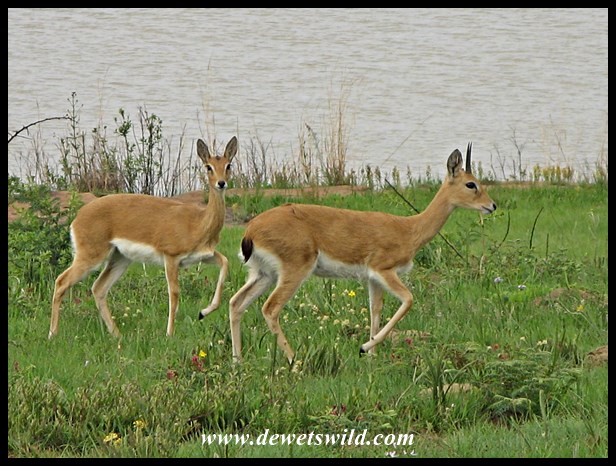
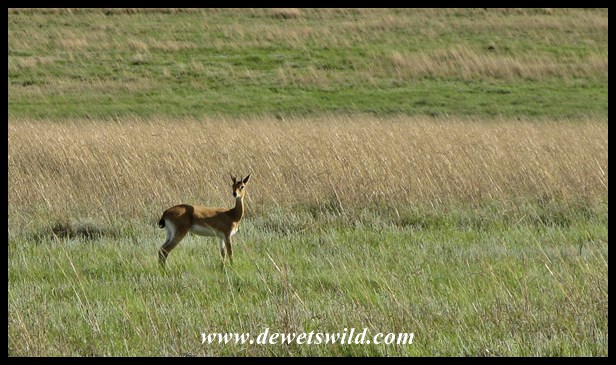
The Oribi

Ourebia ourebi

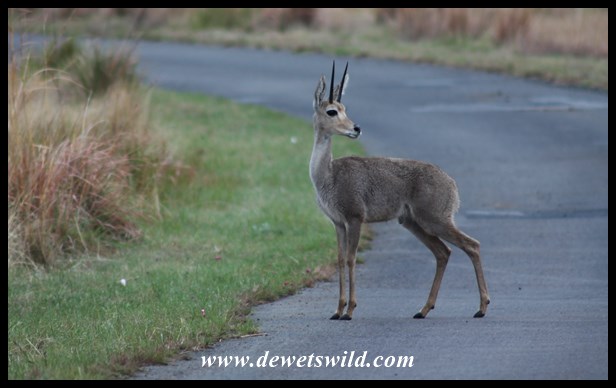
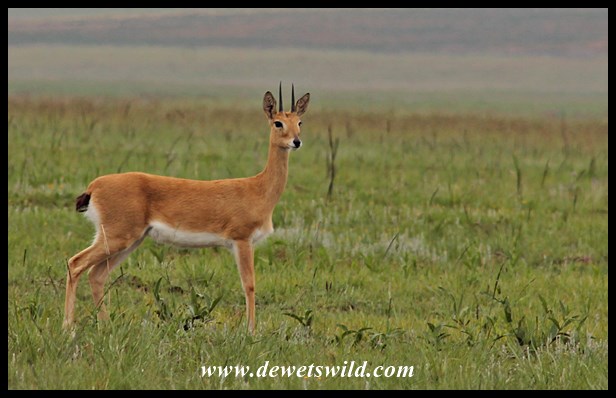
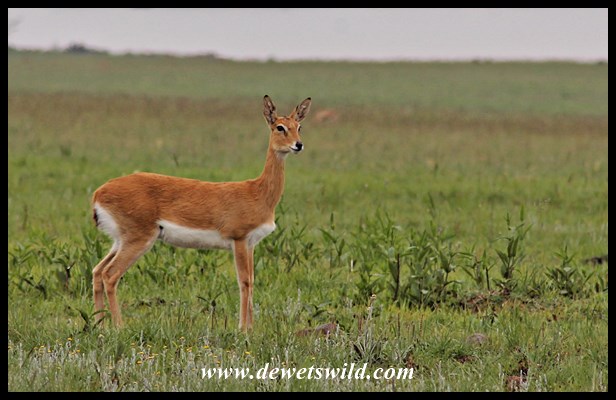
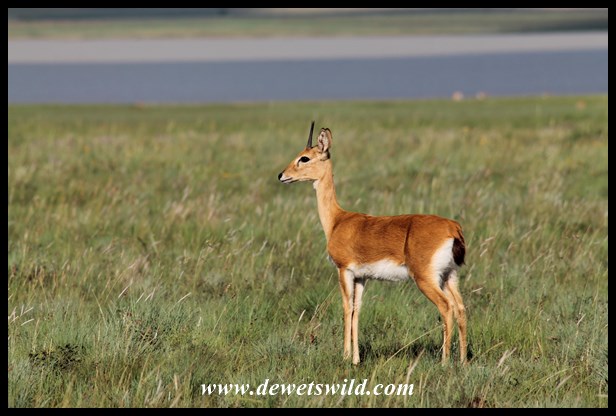
The long-legged oribi (oorbietjie in Afrikaans) is a small antelope, and one of the most special wildlife sightings you could hope for in South Africa.

Oribi (8) Oribi (7)

They stand only between 50 and 65cm high at the shoulder, and weigh around 14kg. Only the males carry the sharp little horns that average between 10 and 13cm long.

Oribi (4)

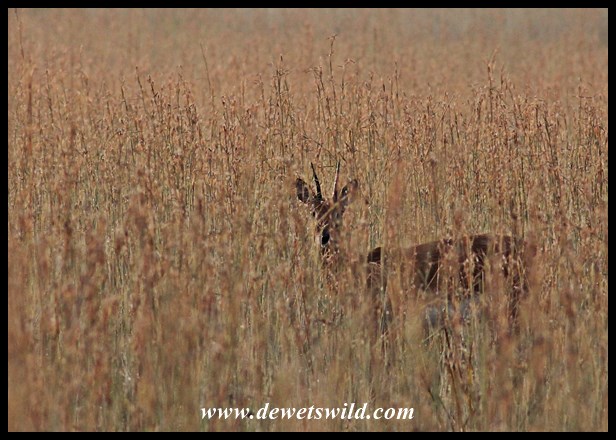
These dainty antelope have very specific habitat requirements, preferring grasslands and floodplains with just the correct mix of short (for grazing) and long (for hiding) patches of grass. They also have very specific preferences as to the type of short grasses they feed on and, while they often occur near water, do not appear to drink very regularly, if at all.

Oribi (9)

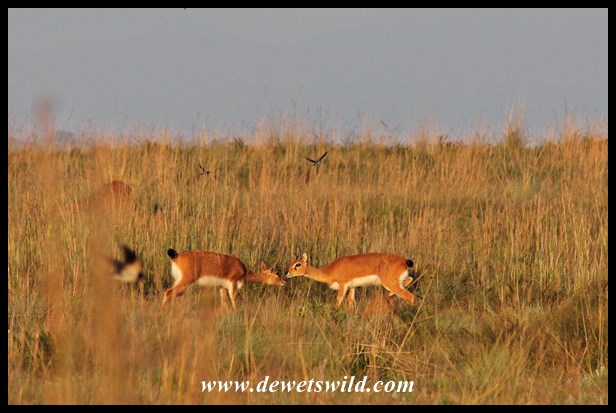
Oribis are the most social of the smaller antelope species; the most commonly encountered grouping being a single territorial ram with up to four adult ewes and their lambs.

Oribi (6)

Oribi grazing next to the Kamberg Road

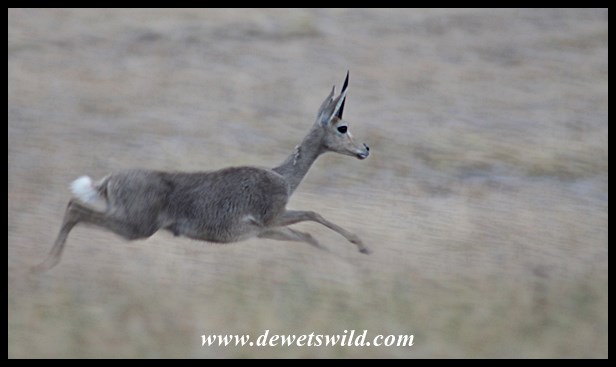
Oribi rams are territorial, and the family groups are extremely reluctant to leave their home ranges, even when being pursued (they prefer sprinting short distances to hide in long grass). For this reason, they suffer more than most dwarf antelope from predation and poaching.  In South Africa, most lambs are born in the summer months of November and December and remain hidden for up to 4 months before they join their mother’s family group. They have a natural lifespan of 8 to 13 years.

Oribi (5)

Today, the oribi is one of South Africa’s most endangered mammals, although in many other parts of Africa they are still quite numerous. Their favoured grassland habitat is prime for farming and thus getting ever scarcer and more fragmented, while illegal hunting with dogs is a further risk to their continued survival. Nevertheless, a substantial portion of the population still occurs on private land, and the Oribi Working Group’s annual census is an important tool to establish population sizes and trends.

Oribi (3)

South Africa’s biggest single population of oribi occurs in the Chelmsford Nature Reserve in Kwazulu-Natal Province. Chelmsford was the first destination on our recent summer holidays in the bush, and we’ll soon share more about our latest visit there with you.

Oribi (2)

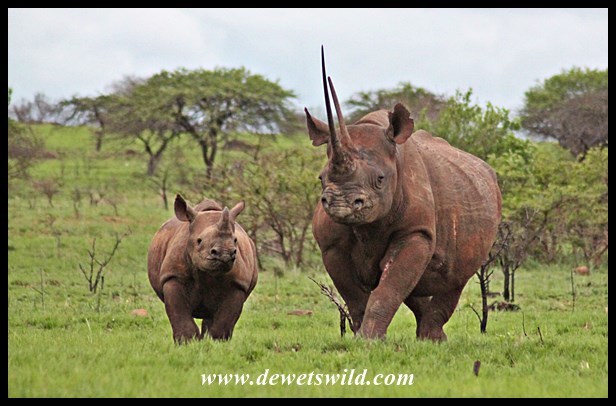
Magnificence embodied

This must surely rank as one of the most special wildlife encounters we’ve ever had.

We came across this beautiful black rhino cow and her two younger companions (at least one, maybe both, her calves) in December in one of the game reserves we visited on our summer trip to the bush. It was an overcast evening, with the little available light fading fast and perfectly accentuating the cow’s aggressive temperament, so characteristic of the species.

Long may she reign over her piece of African wilderness.

(click on any of the images to view them in a bigger format gallery)

Gone, but not forgotten

Dedicating this post to three of the most magnificent tuskers that roamed the Parks of South Africa and that we had the pleasure of seeing before they departed for heavenly pastures.

Gone, but not forgotten“is the theme for this week’s WordPress Photo Challenge


—————————————————–

Please vote for de Wets Wild in the 2014 SA Blog Awards

If you enjoy de Wets Wild as much as we enjoy sharing our love for South Africa’s wild places with you, please vote for us in the 2014 SA Blog Awards by clicking on this badge. We’ve entered both the Travel and Environment categories, and you may vote for us in both.

Thank you for your support!

SA Blog Awards Badge

Signs

Finding and interpreting the signs of the wild can be just as fascinating and rewarding as watching the actual wildlife that were responsible for it!

Signs” is the theme for this week’s WordPress Photo Challenge

The second male to appear was a beautiful specimen

Memorable lion sighting near Skukuza, 3 August 2014

It was late afternoon on the 3rd of August, and the sun was slowly setting on our first day back in the Kruger National Park. We were enjoying a leisurely drive along the Sabie River, taking in the deep calming atmosphere that comes with sunset in a magnificent natural setting like this, about 5km from Skukuza Rest Camp.

Unexpectedly, a young elephant ran across the road towards the river, trumpeting loudly and shaking his ears and trunk around, clearly extremely agitated. From a short side loop, we watched as he flushed a pride of lions from the reeds, quite some distance from the road.

The young elephant that started the show

The young elephant that started the show

Noticing that the lions will now be making their way towards the road, we anticipate where they’ll be moving out of the river bed and position our vehicle in that spot. We have to wait only a minute or two before noticing the first feline shapes appearing among the riverine vegetation, much closer to the road already. The lions are coming, and they are heading straight for us!

One by one, the entire pride of about fifteen animals, including three magnificent males, pass right beside us, crosses the road and moves into the bush on the opposite side. We watch enthralled from inside our vehicle as the big cats move by close enough to stroke (though of course, that would be very foolish to even attempt!).

(You can click on the photos to view them in a gallery, for a bigger view – we’re sure you won’t be sorry that you did 😉 )

Kruger welcomed us back in the most emphatic way imaginable. What else did it have in store for us in the nine days ahead? We hope you’ll join us again to find out!


Lion

Panthera leo

The lion. Such a short name for such a magnificent creature.

Leeu (18)

If there’s one animal that draws people from all over the world to our country’s wild places more than any other, it has to be the “King of the jungle”.

The lion is Africa’s biggest cat; males weighing over 200kg and standing up to 1.2m high at the shoulder.

They’re very adaptable creatures, inhabiting almost any habitat where there’s enough prey to sustain them. They’ll prey on anything from insects to crocodiles, buffaloes, rhinos, hippos and even elephants, and can consume up to 40kg of meat in a single sitting. And despite their association with royalty, they’re not above stealing carcasses from other predators, or taking carrion. They’ll drink regularly if water is available, but otherwise can go without it for extended periods.

It is well known that lions are the most sociable of cats, living in prides that can number over 30 animals where food is abundant. These prides are controlled by single or coalitions of up to 6 adult males, defending territories in which the core of the pride, the adult females, can safely raise their cubs. The strength of the pride lies in the defending of territory, hunting of large prey animals, and communal care of the cubs. Depending on the availability of food, the territories can cover areas as large as 2000 square kilometres, scentmarked by animals of both sexes and loudly proclaimed by their distinctive roaring. Neighbouring prides will get involved in serious fights over territory, and when new males take over a pride it is seldom a bloodless affair, more often than not killing the cubs sired by the ousted males (who themselves are lucky if they escape alive). All in all, the life of a lion is not an easy one, and their lifespan is limited to only 12 to 15 years in the wild, if they reach adulthood at all.

Today, despite all the reverence afforded to it through the ages as a symbol of nobility and bravery, the lion is a species under threat. Ever increasing human populations, and their accompanying livestock, is shrinking the habitat and prey available to these powerful cats by the day. They are being persecuted as livestock killers. They’re being poached for their skin and heads as trophies, and for their bones, used in traditional Asian “medicine”, “tiger wine” and “love potions”. There’s many so-called “captive-breeding facilities” where lions are exploited for the same purposes. To top it off, the dwindling populations are susceptible to disease and inbreeding. Though estimates range widely, there’s probably no more than 30,000 wild lions remaining in Africa (maybe as few as 10,000), and perhaps 400 in India. In South Africa, there’s sizable populations finding protection in the Kruger National Park and the Kgalagadi Transfrontier Park, with smaller numbers in several other reserves, including Pilanesberg, Hluhluwe-Imfolozi, iSimangaliso, Tembe, Mapungubwe, MarakeleAddo, Karoo and Mountain Zebra.

The 10th of August has been designated World Lion Day; “An independent campaign working to highlight the importance of the lion globally and to raise lion conservation awareness worldwide

Leeu (19)