Historically, the Cape Mountain Zebra occurred widely in the mountainous areas of what today is South Africa’s Eastern, Western and Northern Cape Provinces. With the settlement of Europeans in these areas, and the consequent increase in competition for grazing with their livestock as well as uncontrolled hunting, the numbers of the zebras started plummeting. With their plight finally brought to public awareness, the National Parks Board (today SANParks) proclaimed the farm Babylons Toren in the Cradock district the Mountain Zebra National Park in 1937. At 1,432 hectares in extent, the newly established Park was hopelessly too small, and the founding herd of 5 stallions and 1 mare entirely inadequate to save the species from certain doom, and by 1950 the world population of Cape Mountain Zebra had dwindled to only 91 animals, of which only 2 were in the national park that carried their name. That same year a local farmer donated 11 zebras to the park, but it was only in 1964 that the Park was expanded to 6,536 hectares with the addition of neighbouring properties. This proved very much to the zebras’ liking, and by 1969 the Park’s herd stood at 98 head and by 1978 had grown to 200. Today, the Mountain Zebra National Park protects around 500 of these beautiful animals, and several hundred more have been reintroduced to areas in their historic distribution range.

Mountain Zebras drinking

Cape Mountain Zebra showing how they got their name

Cape Mountain Zebra

Cape Mountain Zebra

The Star Attraction at Mountain Zebra National Park

Cape Mountain Zebras
The Mountain Zebra National Park lies at the transitional zone between the arid western Karoo-scrublands and the moister, eastern grasslands, and protects a wide variety of habitats and landscapes within its borders. Given its amazing topographical diversity it should come as no surprise that over 700 plant species occur in the Park. With the future of the Cape Mountain Zebra secured, the focus of the Park could be shifted to biodiversity conservation, and with the help of wildlife artist David Shepherd and several corporate sponsors, enough funds were collected to enlarge the Park to over 28,000 hectares, which allowed the introduction of several large game species – notably lion, cheetah, buffalo and black rhino – to their former haunts.

South African War history at Mountain Zebra National Park

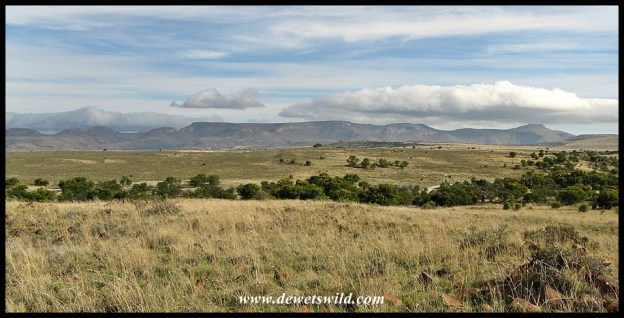
Scenery at Mountain Zebra National Park

Scenery at Mountain Zebra National Park

Scenery at Mountain Zebra National Park

Scenery at Mountain Zebra National Park

Scenery at Mountain Zebra National Park

Scenery at Mountain Zebra National Park

Scenery at Mountain Zebra National Park

Scenery at Mountain Zebra National Park

Scenery at Mountain Zebra National Park

Scar gouged by enormous tumbling boulder (Scenery at Mountain Zebra National Park)

Scenery at Mountain Zebra National Park

Scenery at Mountain Zebra National Park

Scenery at Mountain Zebra National Park

Scenery at Mountain Zebra National Park

Scenery at Mountain Zebra National Park
Sharing the Mountain Zebra National Park with its most celebrated inhabitants is 65 other kinds of mammals…

Black Wildebeest

Black-backed Jackal

Blesbok

Caracal at Mountain Zebra National Park

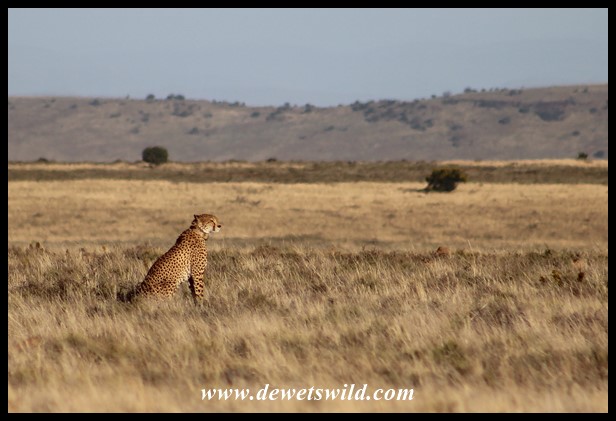
Cheetah

Eland

Gemsbok

Grey Rhebok

Southern African Ground Squirrel

Kudu Bull

Mountain Reedbuck

Red hartebeest

Smith’s Red Rock Rabbit

Territorial springbok ram

Meerkat / Suricate

Meerkat / Suricate

Vervet Monkey

Yellow Mongoose

Springbok herd
… and to date 257 bird species have been recorded in the Park.

African Pipit

Ant-eating Chat

Black-headed Canary

Blue Crane

Cape Robin-Chat (immature)

Chestnut-vented Warbler on nest

Chinspot Batis

Crowned Lapwing

Crowned Lapwing (immature)

Double-banded Courser

Dusky Indigobird male

Grey-winged francolin

Grey-winged francolin

Jackal Buzzard

Laughing Dove

Ostriches mating at Mountain Zebra National Park

Pale Chanting Goshawk

Pied Crows

Pied Starling

Red-headed Finch (female)

Red-winged Starling

Scaly-feathered Finch

Sickle-winged Chat

Southern Masked Weaver inside nest

Speckled Mousebird

Speckled Pigeon

Spike-heeled Lark

White-breasted Cormorant

White-browed Sparrow-weaver

White-necked Raven

Yellow Bishop

Yellow Canary
There’s also a multitude of smaller, less noticeable animals in the Park, including 45 kinds of reptiles, 10 species of frogs, and giant 4m long earthworms!

Karoo Toad

Namaqua Sand Lizard

Solifuge a.k.a. Sun Spider

Variegated Skink
In recent years, Mountain Zebra has become one of South Africa’s most popular national parks, and recently the number of accommodation units at the Park’s rest camp (which also boasts a small shop, restaurant and swimming pool) had to be substantially increased to cater for the demand. Doornhoek Guest House is a historic homestead restored to its former glory and now converted to luxurious overnight accommodation in a secluded corner of the Wilgerboom River valley. There’s also a terrific camping site, two picnic sites, an extensive network of game-viewing roads, three 4×4 trails, a guided hiking trail and guided game drives available to visitors. A unique attraction at Mountain Zebra is the “cheetah tracking” where guests accompany researchers and rangers to find radio-collared cheetahs in their natural habitat.

New cottage at Mountain Zebra National Park

Rock Chalet at Mountain Zebra National Park

Camping at Mountain Zebra National Park, December 2017

Doornhoek Guest House setting

Rest Camp setting at Mountain Zebra National Park
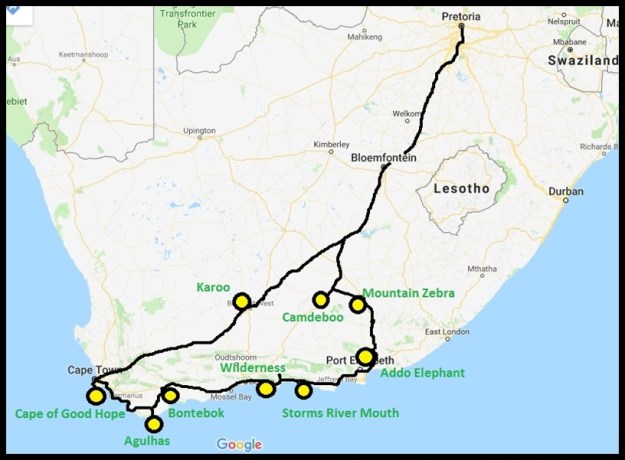
Mountain Zebra National Park was the eighth and penultimate stop on our December 2017 tour through eight of South Africa’s national parks. It is located just outside the small town of Cradock, on the R61-road to Graaff-Reinet.

-32.138321
25.511789









 DeWetsWild
