Following our explorations of the paradise that is Pafuri, in the far north of the Kruger National Park, we headed towards the central regions of the Park, for a two-night stay at Letaba Rest Camp.
It’s a long drive down from Pafuri to Letaba and, at game viewing speeds with regular stops for photographs and leg stretches at the camps and picnic spots along the way, it took us the entire day to cover the distance of 250km, reaching Letaba just before the gates closed. Covering such a distance in a national park like Kruger, you’re bound to come across some great sightings and some thrilling experiences, but we didn’t count on getting growled at when we stopped at Mooiplaas picnic site for a bit of a break. We were back in the car in a flash, and still have no idea what it was that was so irritated by our presence…

A dazzle of zebra on the plains south of Pafuri

A dazzle of zebra on the plains south of Pafuri

Eland seen near the aptly named Elandskuil windpump

Elephants crossing near Punda Maria

Elephants crossing near Punda Maria

Sharpe’s Grysbok

Frozen chameleon

Blue wildebeest at Babalala

Ostrich male among mopane trees

Crocodile and hippo sharing the Shingwedzi

Buffalo with leafy adornments at Shingwedzi

Free-tailed Bats roosting beneath the thatch at Mooiplaas’ ablutions

Doubt it was this squirrel that growled so ferociously at us at Mooiplaas!

Waterbuck on the banks of the Letaba

Waterbuck on the banks of the Letaba

Trio of Pied Kingfisher sharing an elephant bone
When you’re hoping for great wildlife sightings in any wild place, you have to be out-and-about at the times that the animals are most active, being the early morning and late afternoon, to maximise your chances.
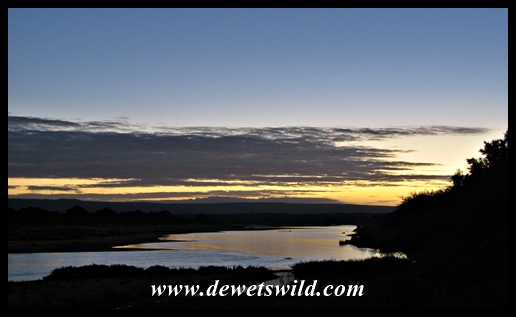
We set out early from Letaba the next morning, heading towards Olifants Rest Camp along the gravel roads that follow the courses of the Letaba and Olifants Rivers. We were soon rewarded with a great sighting of a spotted hyena, followed shortly afterwards by the highlight of our trip: an encounter with wild dogs! The dogs came running along the road in the opposite direction we were travelling in, and passed us in a flash. We had to make a u-turn and followed them a couple of hundred metres, before they decided to take a bit of a break right in the middle of the road. These animals are so rare and sightings so infrequent that we spent quite a bit of time with them before moving on.

Spotted hyena

Spotted hyena

Wild Dog pack on the move

Wild dogs

Wild Dogs taking a break

Wild dogs

Shortly before reaching Olifants we crossed a small stream and noticed lots of terrapins and a lone juvenile crocodile sharing a pool next to the road. It soon became apparent that these animals have become accustomed to being fed by passing tourists as they started moving towards our vehicle the moment we came to a halt. This aberrant behaviour is exactly the reason why the park authorities are so strict about visitors not being allowed to feed the animals, but some choose to ignore it nonetheless. We didn’t stay long, fearing that the terrapins would end up beneath our vehicle preventing us from driving away.

Begging Serrated terrapins near Olifants

Bold, begging crocodile near Olifants

Bold crocodile near Olifants

Begging Serrated Terrapin near Olifants

Bold, begging crocodile and terrapins near Olifants

Bold, begging crocodile and terrapins near Olifants

Sweeping views over the Olifants

Sweeping views over the Olifants

Sweeping views over the Olifants
We spent the hot hours of the day walking around the Letaba campgrounds, enjoying the peace and quite and the company of Letaba’s resident bushbuck and birds.

Bushbuck ewe in Letaba

Bushbuck ram in Letaba

The Letaba River
Our afternoon excursion focused on the riverine drives to the north of the camp. Again we were not disappointed, seeing two waterbuck bulls sparring, herds of other game, including elephants, hippos, impalas, nyalas, bushbuck, giraffes, buffalo and baboons, various bird species, even some fish at a river crossing, and of course beautiful scenery.

Waterbuck bulls sparring

Waterbuck bulls sparring

Beautiful scenery

Impala being targeted by a biting fly

Waterbuck

Hamerkop

Beautiful scenery

Juvenile Mozambique Tilapia in a small stream

Beautiful scenery

Baboon beauty treatment

Little elephant

Chubby hippo calf and mom
A fascinating but gruesome sighting of a ground hornbill using its massive bill to kill and devour a tortoise in its carapace was a reminder that this is still wild Africa after all…

Ground hornbill and tortoise feast

Ground hornbill and tortoise feast

Ground hornbill and tortoise feast

Ground hornbill and tortoise feast

Ground hornbill and Leopard Tortoise feast
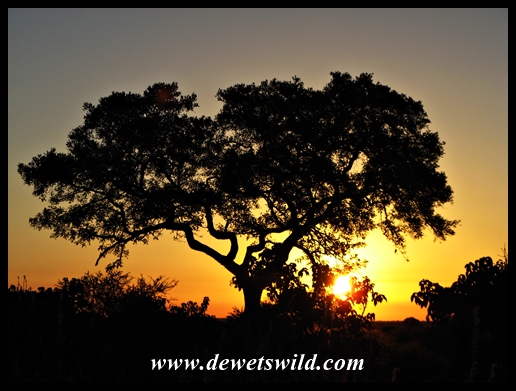
With the sunrise the next morning it was time to pack up and head to our next destination, the Forever Swadini Resort in the Blyde River Canyon Nature Reserve. It wouldn’t be our last taste of the Kruger National Park however, and as we were heading towards the Orpen Gate we could console ourselves in the knowledge that we were planning one last day visit for later in the week.

More beautiful scenery

Baboon mothers make excellent vantage points!

Lazy hyena cub

Swainson’s Spurfowl bidding us goodbye near Orpen

Zebra with a hard-to-reach itch
We’ve previously dedicated a special post to Letaba – have a look here if you’d like to read more about this peaceful rest camp