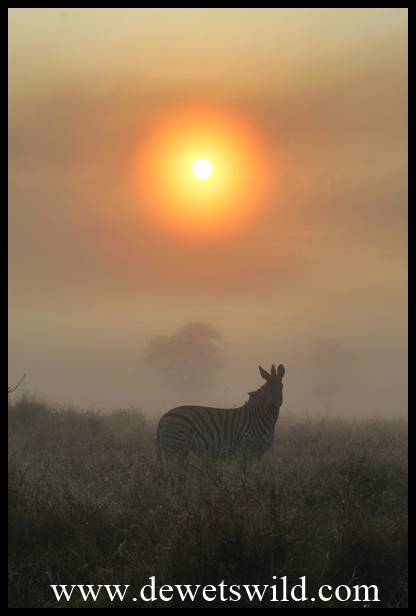
Thick mist blanketing the Crocodile Bridge section of the Kruger National Park this morning

Thick mist blanketing the Crocodile Bridge section of the Kruger National Park this morning

Good evening everyone!
An overcast start to the day at Pretoriuskop, but the cloud cover dissolved soon enough to reveal another glorious lowveld day here in the Kruger National Park. We visited a couple of dear friends at Skukuza before making our way here to Crocodile Bridge Rest Camp, where we’ll be spending the next four nights.
Crocodile Bridge Sunset (click on the image for a clearer view)
Yep, we’re back in the Kruger National Park – we simply cannot get enough of this paradise!
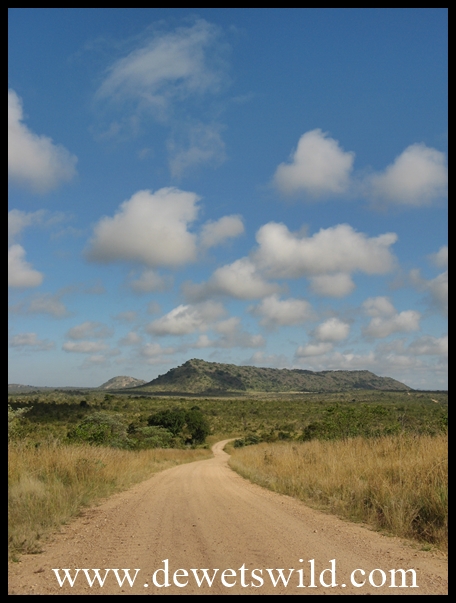
Tonight, we’re sleeping in historic Pretoriuskop Rest Camp. Depicted below is the nearby Ship Mountain (so named because it resembles the upturned hull of a ship) used as a landmark by transport riders and explorers more than a hundred years ago en route to Delagoa Bay (today’s Maputo in Mozambique).

If our internet connection allows, we’ll again try to post a picture or two on a daily basis while we’re in the Park, and there will definitely be a full report back when (unfortunately) we have to return to the city…
This cute, tree-dwelling, nocturnal primate is a thick-tailed bushbaby (or galago), often encountered while taking a night-time stroll through many of the rest camps in the Kruger National Park.


A look at the evolution of tourist accomodation in the Kruger National Park
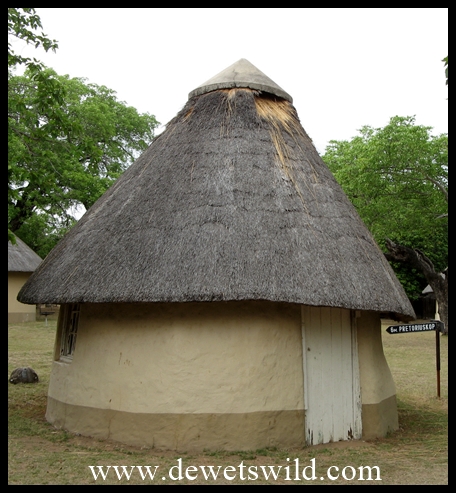
The Wolhuter Hut in Pretoriuskop Rest Camp dates from the 1920’s and has been preserved to offer a glimpse into what a visit to the Park was like when it was still in its infancy (it is no longer used to accommodate guests):

Wolhuter’s hut in Pretoriuskop
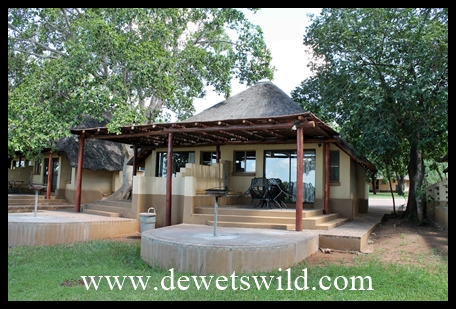
The accommodation on offer today is much more sophisticated and spacious – this is one of the new bungalows in Lower Sabie Rest Camp:

Bungalow in Lower Sabie
There’s a huge variety of accomodation options available in the Park today, ranging from the very rustic to the very luxurious, to cater for almost all tastes and budgets.
This post is in response to this weeks’ photo challenge from WordPress: Change
The Bateleur is a medium-sized, and very colourful, eagle. This one was photographed south of Satara, in the Kruger National Park.
WordPress’ theme for this week’s photo challenge is colour – have a look at all the entries here.
Mopani Rest Camp, named for the mopane tree with its butterfly-shaped leaves that dominates the plantlife of the northern Kruger National Park, is located just south of the Tropic of Capricorn. From its hilltop vantage point, the camp offers splendid views over the Pioneer Dam (with a rich aquatic birdlife) and the mopane plains beyond.
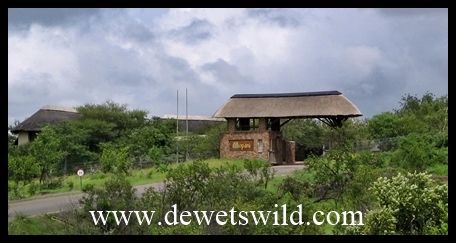
Mopani entrance

Mopani bungalow
Mopani has an unfair reputation for not being a very prolific game viewing area of the Kruger Park, mostly because the mopane shrub can get extremely thick and difficult to see through.

Impalas displaying just how thick the mopane’s can get!
However, if you choose your routes carefully, the Mopani area has very much to offer; the best drive is undeniably the circular route made up of the S49, S50 and S143 gravel routes to the east of the camp that skirts the Mooiplaas and Tinhongonyeni waterholes and the Nshawu Vlei (marsh). Mopani, and especially the area around Tinhongonyeni waterhole, is a hotspot for sightings of the rarer antelope and large birds like the kori bustard, ground hornbill, ostrich and secretary bird. In fact, Tinhongonyeni is one of the best waterholes in the entire Kruger National Park for overall game viewing, and a couple of hours there will assuredly be time well spent. Elephant and buffalo thrive in the Mopani area (there’s a herd of buffalo in the vicinity more than 1,000 animals strong) and we’ve had a number of good lion and cheetah sightings in the district.

Buffalo in rainy weather

This buffalo wasn’t overly happy to have his way blocked!

Unhappy elephant!

Eland – a rare sighting in Kruger – at Tinhongonyeni waterhole
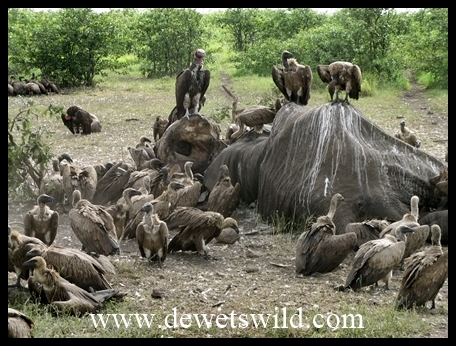
Vultures cleaning up the carcass of a tusker that died almost on Mopani’s doorstep

Claiming the road as his own, and who’s going to disagree?

Elephant procession

Lone elephant bull

Giraffe
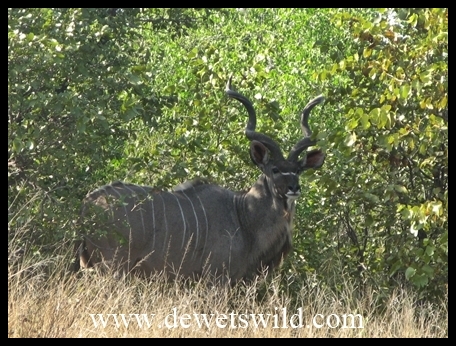
Kudu bull

This lion gave us a terrible fright, as we stopped right next to him without knowing he’s there (we were watching a herd of tsessebe at that moment)
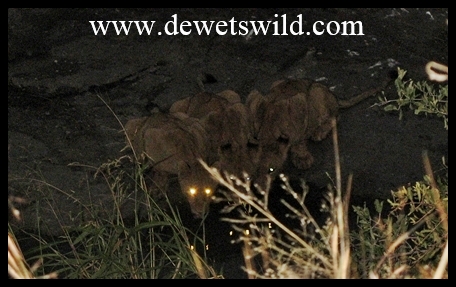
Lions quenching their early morning thirst just a kilometer from Mopani

Reedbuck are frequently seen in the Nshawu Vlei
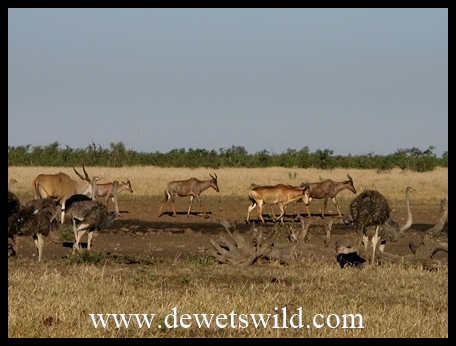
Tinhongonyeni waterhole, with three rare antelope in one shot: eland, tsessebe and Liechtenstein’s hartebeest

Tsessebe are seen more frequently near Mopani than anywhere else in the Kruger Park
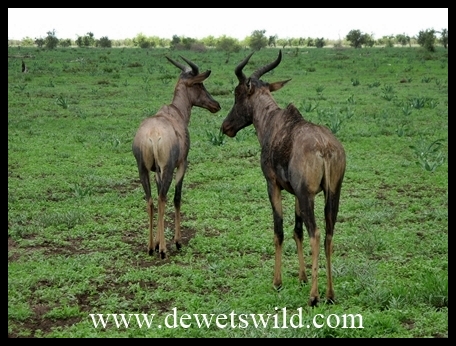
More tsessebe. Guess where? Tinhongonyeni!
Just south of Mopani, the Shipandani Hide, which overlooks a waterhole in the Tsendze River, offers a very different overnight experience as a single group of guests at a time may occupy the hide between sunset and sunrise.
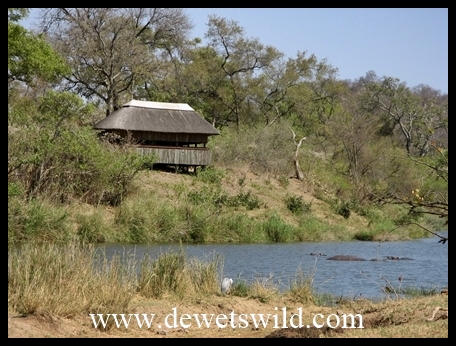
Shipandani Hide

The neighbours at Shipandani
Mopani is also special to the de Wets for one more reason: it is here, in the glow of a magnificently romantic African sunset, that Marilize and I got engaged!
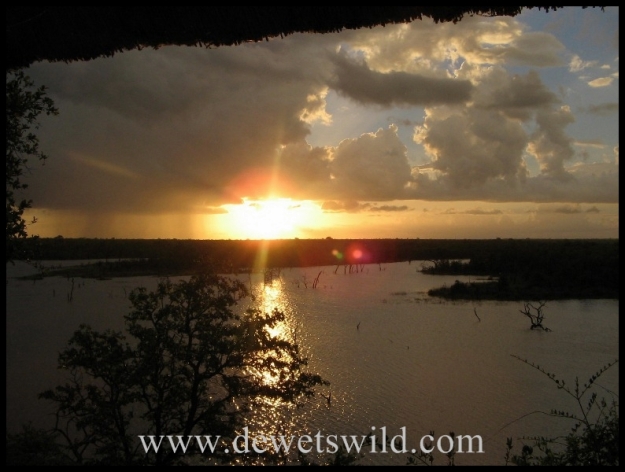
The scene was set to get down on bended knee!
We encountered this black-backed jackal hunting for moles near Satara, in the Kruger National Park.


The “Big Five” is probably Africa’s most sought-after animals – the term was coined by colonial-era trophy hunters to describe the group of animals considered the most dangerous to hunt: Black Rhino, Buffalo, Elephant, Leopard and Lion. Today, these animals are a major reason for the popularity of South Africa’s wildlife reserves among locals and tourists from all over the world.


We’re participating in the online adventure travel and photography magazine LetsBeWild.com‘s Wild Weekly Photo Challenge for bloggers. This week’s challenge is “Black-and-White“

Almost exactly in the middle of the Kruger National Park, on the southern bank of the broad and mostly sandy Letaba River, you will find the Letaba Rest Camp – a tranquil retreat beneath large, shady trees.

Sunrise between Phalaborwa Gate and Letaba Rest Camp
Letaba welcomed its first guests back in 1929, and remains very popular with visitors to this day. Hutted accommodation and camping is available for overnight guests, the restaurant offers sweeping views of the river and a spacious and shady picnic area, complete with swimming pool, is available to day visitors. Bushbuck, squirrels and a variety of birds have made themselves right at home among the accommodation units and provide endless entertainment to visitors lounging along the riverfront throughout the day.

Letaba bungalow

Bushbuck at home among the huts

Day visitor picnic site
The Elephant Hall is a unique educational facility with exhibits dedicated to every facet of the elephant’s ecology. Also on display is the ivory of several of the Kruger National Park’s famous big tuskers that have sadly departed to heavenly pastures.

Elephant statue

Elephant skeleton

Inside the Elephant Hall
You then won’t be surprised when we tell you that Letaba is elephant country. Visitors here have an excellent chance of encountering both breeding herds and bulls carrying impressive ivory. Masthulele, probably Kruger biggest tusker at the moment, is in fact regularly seen along the river right in front of the camp.


The late Hlanganini

Masthulele
Buffalo is another member of the “Big-5” that occurs in large numbers in the Letaba area, and visitors are bound to see a variety of other wildlife, including predators, in the area.


The best self-drive routes for game viewing from Letaba are those that track the course of the river; road S46 towards the south-east and road S47 to the north-west. Guided activities such as walks and night drives are also very popular.


Pay Letaba a visit and you’ll quickly understand why it is a firm favourite with many of the Kruger faithful!