Summer in the bush: Chelmsford, 13 December 2014

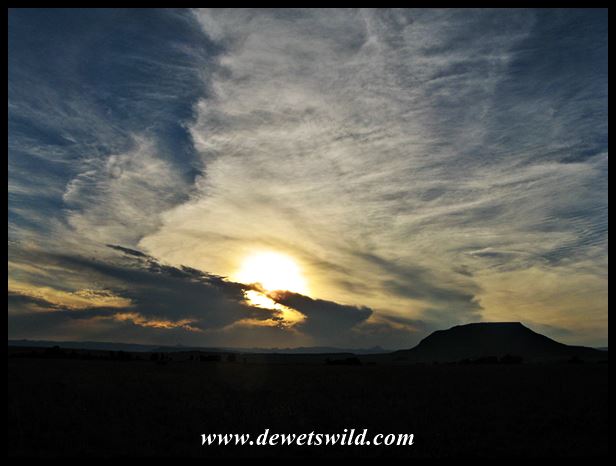
Today marks the start of our long-awaited, epic summer holidays in the bush, and we’re kicking it off with a visit to the lovely Chelmsford Nature Reserve. We’d have loved to post a photo from here for you this evening, but unfortunately the network connection’s just not good enough 😦

Seems we are able to post to our facebook page though 🙂

Edit 15 December 2014: At last I could add the photo I wanted to 2 days ago 😀

Chelmsford%20%2013122014


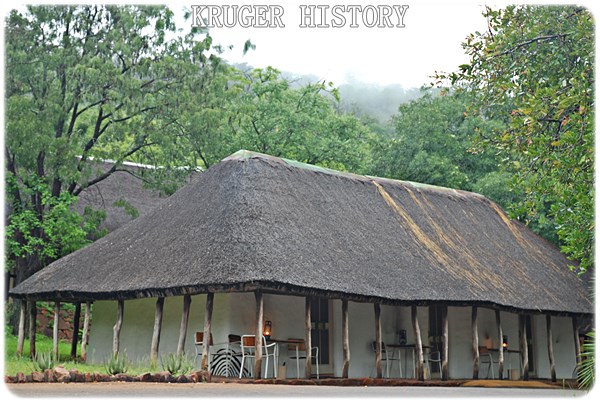
A history of Punda Maria and vicinity

Joep’s second installment on “Kruger History” is dedicated to the fascinating history of Punda Maria, the northernmost main rest camp in the Park.

Joep Stevens's avatarKruger History

  1. Introduction

The Shingwedzi Reserve was proclaimed in 1903 and comprised the area between the Luvuvhu and Letaba Rivers. Being a very remote part of South Africa, poaching and other illegal activities, such as prospecting, illegal logging and so called “black-birding” (the illegal recruitment of black workers from Zimbabwe (then Southern Rhodesia) and Mocambique (then Portuguese East Africa) for the gold and coal mines) was a serious concern to Major James C Stevenson-Hamilton, Warden of the Sabie and Shingwedzi Reserves. From 1904 until 1919, the only ranger in charge of the entire Shingwedzi Reserve was Major AA Frazer, based at Malunzane next to the Shongololo River (a tributary of the Tsende), west of the existing Mopani Camp. Stevenson-Hamilton expresses the need for a game ranger in the far north of the Shingwedzi Reserve.

Captain Johannes Jacobus (“Kat”) Coetser was appointed as game ranger on 01 May 1919 for the far northern…

View original post 2,870 more words

A garden where the eagles soar

Jumping up from a picnic, while celebrating a special friends birthday, to take pictures of large eagles flying over a major metropolis is not a familiar scenario for the de Wets. And yet that seems to be par for the course at the Walter Sisulu National Botanical Gardens!

Opened to the public in 1987 as the Witwatersrand National Botanical Garden on land donated five years earlier by the town councils in Johannesburg’s western suburbs, the gardens were renamed after the ANC leader Walter Sisulu in 2004. The focal point of the garden is undoubtedly the Witpoortjie Waterfall, the source of the Crocodile River which flows through much of the garden. Apart from beautifully tended and themed plant displays, the grounds include large tracts of natural vegetation and ample lawns under shady trees, very popular for picnics. Several pathways and tracks provide access to various parts of the gardens, and the most challenging of these lead to the top of the cliff above the waterfall, a favourite spot for many photographers hoping for a special shot of the eagles soaring past.

The gardens are open daily from 08:00 to 17:00 and facilities include a restaurant, kiosk, several function venues, a concert stage, an environmental education centre, a curio shop and a nursery selling indigenous garden plants. Guided tours of the gardens can be arranged in advance. We like the garden’s policy of “picnic in, litter out” encouraging visitors to take all their garbage with them when they leave.

The gardens are a haven for a multitude of birds and small animals, many of which are quite tame and obviously used to the human presence.

It’s been more than thirty years since a pair of Verreaux’s Eagles (formerly known as Black Eagles) first took up residence at a nesting site next to the Witpoortjie Waterfall. The current pair had successfully raised a chick to sub-adulthood and at the time of our visit was just starting to let the youngster know that it has to start looking for lodgings of its own. This made for spectacular flying displays over the gardens and against the backdrop of the Roodekrans cliffs.

On the other side of the garden, a dam with a bird-viewing hide at its edge was just one more delightful feature to add to our reasons to return to the gardens (soon!). Here we found an extremely irritable Egyptian Goose laying claim to the body of water and intent on ridding it of anything else that seemed remotely like waterfowl! It probably had a nest or goslings hidden somewhere near.

This was our first visit to these beautiful gardens, and we were wonderfully surprised and delighted by what we found. We spent the entire day at the garden, from when the gates opened until they closed, and yet feel like we haven’t seen most of it. Couple that with a jolly time spent with good friends, we’re sure it won’t be long before we return.


—————————————————–

Please vote for de Wets Wild in the 2014 SA Blog Awards

If you enjoy de Wets Wild as much as we enjoy sharing our love for South Africa’s wild places with you, please vote for us in the 2014 SA Blog Awards by clicking on this badge. We’ve entered both the Travel and Environment categories, and you may vote for us in both.

Thank you for your support!

SA Blog Awards Badge

Gone, but not forgotten

Dedicating this post to three of the most magnificent tuskers that roamed the Parks of South Africa and that we had the pleasure of seeing before they departed for heavenly pastures.

Gone, but not forgotten“is the theme for this week’s WordPress Photo Challenge


—————————————————–

Please vote for de Wets Wild in the 2014 SA Blog Awards

If you enjoy de Wets Wild as much as we enjoy sharing our love for South Africa’s wild places with you, please vote for us in the 2014 SA Blog Awards by clicking on this badge. We’ve entered both the Travel and Environment categories, and you may vote for us in both.

Thank you for your support!

SA Blog Awards Badge

Introducing “Kruger History”

Tonight we take deep pleasure introducing you to a brand new blog: Kruger History

Authored by friend and colleague Joep Stevens, Kruger History is dedicated to the life and times of South Africa’s oldest and most famous National Park. If there is any person on this planet more infatuated with the Kruger National Park than the de Wets, it would be Joep. He is a treasure chest of knowledge and is sure to provide captivating insights into the history of the Kruger Park and the Lowveld of South Africa.

In his first post, Joep gives a brief overview of the road to the Kruger’s proclamation and subsequent expansions to the Park.

We wish you and Kruger History every success, Joep!

Photo courtesy of Joep Stevens (www.krugerhistory.com)

Photo courtesy of Joep Stevens (www.krugerhistory.com)


Tribute to a hero of conservation: Ian Player

The 30th of November 2014 is a sad day in South Africa’s conservation story, with the passing of one of this country’s most influential environmental activists, Dr. Ian Player, at the age of 87.

Dr. Player was the driving force behind so many of South Africa’s crucial conservation successes, from saving the southern white rhino from extinction to protecting the dunes of Lake St. Lucia from being mined, but his most important legacy is probably the establishment of a network of organisations dedicated to the protection of the world’s wilderness areas.

Many of the wonderful reserves we so love to visit are what they are today due to this visionary man’s hard work and ethos, and we owe him a personal word of gratitude. Our upcoming visits to uMkhuze, Imfolozi and iSimangaliso will be especially poignant.

Please visit the website “Ian Player, A voice from the Wilderness” for a precis of his life’s work and achievements.

Glossy starling in Lower Sabie

A quick sojourn to Skukuza

Roughly two weeks ago I was invited to Skukuza Rest Camp, in the Kruger National Park, and of course this was the perfect opportunity to mix business and pleasure again. Unfortunately Marilize and Joubert couldn’t join me on this trip, but instead I enjoyed the company of a colleague as passionate about the Park as I am.

We drove to Kruger on the Sunday afternoon and could enjoy the scenery and wildlife along the way from Phabeni Gate to Skukuza. It had been raining all day, and some more in the weeks prior to our arrival, and fresh, green growth was sprouting all over.

KrugerNP_Nov14 (1)

Despite heavily overcast skies, Monday afforded us more opportunity to experience the Park, before and after our important meeting of course. The rains heralded the start of the impala lambing season, and many other kinds of animals were getting into the birthing action too.

And then Tuesday dawned, with bright and sunny skies, but for us it was time to head back to Pretoria, via Lower Sabie and exiting the Park at Crocodile Bridge.

Nothing like an unexpected bush visit to rejuvenate mind and body! This last gallery sums it up so well for me; even such a short visit to the Kruger Park can deliver unexpected and very memorable sightings. While doing our walkabout at Lower Sabie Rest Camp, I came across this tree agama being irritated by a large ant…


—————————————————–

Please vote for de Wets Wild in the 2014 SA Blog Awards

If you enjoy de Wets Wild as much as we enjoy sharing our love for South Africa’s wild places with you, please vote for us in the 2014 SA Blog Awards by clicking on this badge. We’ve entered both the Travel and Environment categories, and you may vote for us in both.

Thank you for your support!

SA Blog Awards Badge

Converge

Tracks in the sand bear witness that these pools in the Shingwedzi River are a magnet for animals in the northern Kruger National Park

Converge

Converge” is the theme for this week’s WordPress Photo Challenge

—————————————————–

Please vote for de Wets Wild in the 2014 SA Blog Awards

If you enjoy de Wets Wild as much as we enjoy sharing our love for South Africa’s wild places with you, please vote for us in the 2014 SA Blog Awards by clicking on this badge. We’ve entered both the Travel and Environment categories, and you may vote for us in both.

Thank you for your support!

SA Blog Awards Badge

2014 SA Blog Awards

If you enjoy de Wets Wild as much as we enjoy sharing our love for South Africa’s wild places with you, please vote for us in the 2014 SA Blog Awards by clicking on this badge.

We’ve entered the Travel and Environment categories.

Thank you for your support!


SA Blog Awards Badge

Angular

The Witpoortjie Falls, in the Walter Sisulu National Botanical Garden, where we spent several hours today enjoying the scenic surroundings, soaring eagles and the company of wonderful friends.

Angular

Angular” is the theme for this week’s WordPress Photo Challenge