An omnipresent sense of history permeates the grounds and buildings of Pafuri Border Camp, with the call of a wild frontier on your doorstep clarion clear and impossible to refuse.
Here at Pafuri in the Far North of the Kruger National Park, Harold and Tiny Mockford built their lives, raised a family, grew old. From 1938 to 1985, Mockford was the recruiting agent and administrative officer at the labour recruitment station established at Pafuri by the Witwatersrand Native Labour Association (WNLA, colloquially simply “Wenela”, later TEBA – The Employment Bureau of Africa) to provide migrant workers for the mushrooming gold mines at Johannesburg.
Comprising the beautifully restored and period-furnished residences inhabited by the Mockfords and other WNLA / TEBA staff, the Pafuri Border Camp will offer overnight accommodation in three very spacious self-catering units: the one-bedroom (4-sleeper) Mockford Cottage, the three-bedroom (6-sleeper) Doctor’s House, and the four-bedroom (8-sleeper) Mockford House. Relaxing on the wide verandas that wrap around the houses, enclosed by mosquito gauze just as they were when their original inhabitants lived there, it is hard not to imagine what daily life entailed for those who lived and worked here all those years ago. The camp’s deep swimming pool will be a delight on hot summer days, as it was no doubt for the family Mockford. A small room next to the tiny reception office will be dedicated as a museum in which Pafuri’s fascinating history can be regaled. More “modern” amenities, such as a fuel station, shop and restaurant, is available at Punda Maria Rest Camp, approximately 65km to the South-West.

Arriving at Pafuri Border Camp

The reception building

Mockford Cottage, Pafuri Border Camp

Doctor’s House

Mockford House

Southern Foam Nest Frog in Pafuri Border Camp

Pafuri Border Camp nightlife
One of the biggest highlights of the new Pafuri Border Camp is its proximity to Crooks Corner, the Luvuvhu River and Pafuri Picnic Site. Being first to arrive at the river viewpoints in the morning and the last to have to leave those serenely beautiful scenes in the evening is a privilege not to be underestimated. Crooks Corner, so named because the borders of South Africa, Zimbabwe (then Southern Rhodesia) and Mozambique (then Portuguese East Africa) meet here and allowed scoundrels of all description to escape the long arm of the law, has a very special allure in the golden light of sunrise and dusk. Spending time along the Luvuvhu as the riverine forest slowly awakes in the morning delivers a serenity to the human spirit that must be experienced to be truly appreciated.

Buffalo river crossing at sunset

Pafuri’s fever tree forest

Pafuri serenity

Pafuri Picnic Site

Baobab flower

Baobabs in spring

Pafuri’s fever tree forest

Pafuri sunset

Sunrise over Crooks Corner
You can bet that the birdwatching fraternity will be ecstatic at the news of Pafuri Border Camp’s opening. Pafuri is South Africa’s bird-watching mecca; the diversity of its feathered inhabitants simply astounding.

African Hawk-Eagle

White-backed Vulture

Southern Ground hornbill

Common Ostrich in northern Kruger

Lilac-breasted Roller

White-fronted Bee-eater

Meves’s Starling

African Jacana

Martial Eagle

Immature Crowned Eagle

White-crowned Lapwing

White-fronted Bee-eater

Black-chested Snake-Eagle

Broad-billed Roller

White-crested Helmet-Shrike

Kurrichane Thrush

African Fish Eagle

Wire-tailed Swallow

Red-crested Korhaan
Mammalian wildlife abounds in the Luvuvhu’s riverine bush, with nyala, impala, warthog, baboon and vervet monkey occurring in exceptional numbers. Several other species, including elephant, buffalo, hippo, waterbuck, kudu, blue wildebeest, zebra, and seldomly-seen predators, add to the show. An astonishing number of Nile crocodiles, some in excess of 5 meters in length and probably weighing more than a ton, rule the murky waters of the Luvuvhu.

Vervet monkey

Nile crocodile

Plains zebra

Blue wildebeest

Baboons

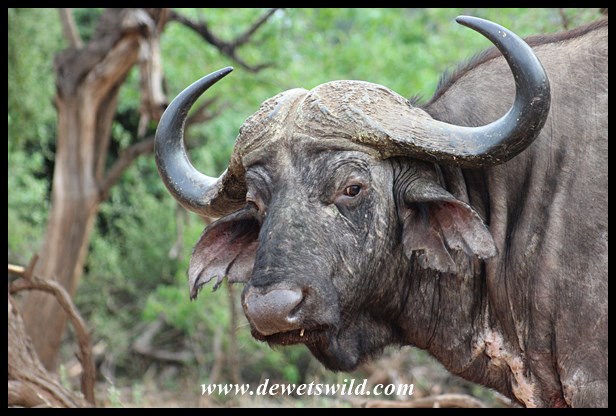
Buffalo

Young nyala ram

Nyala female

Buffalo

Nile crocodile

Warthog

Buffalo bull

Nyala bull

Water monitor

Hippos

Plains zebra

Where there’s this much life, death is never far away
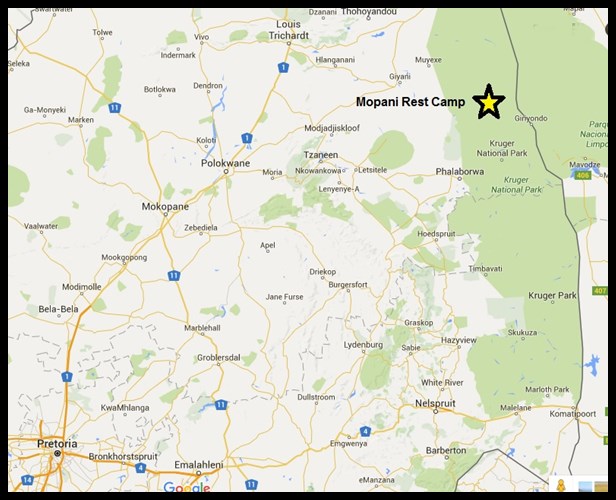
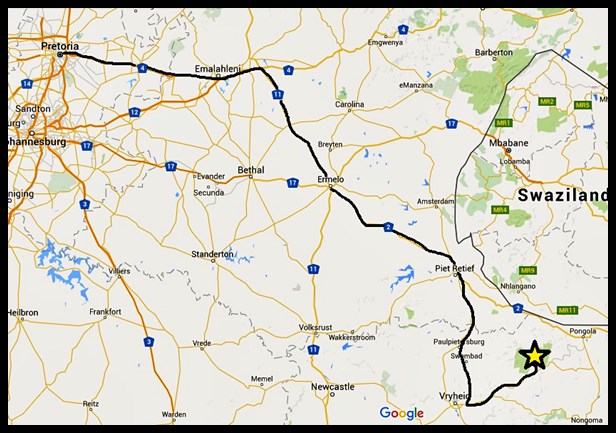
Come 1 November 2015, this new destination, hard not to describe in superlatives and quite literally a stone’s throw away from the border post into Mozambique, will open to its first official guests. We recently had the immense pleasure and privilege to spend two nights at Pafuri Border Camp while the finishing touches were being made to the accommodation. It is sure to prove very popular with nature lovers and history buffs from all over the world. Bookings for Pafuri Border Camp is through South African National Parks. Via the N1 highway and Kruger’s most northern entrance, Pafuri Gate, the camp is located approximately 620km from Pretoria.

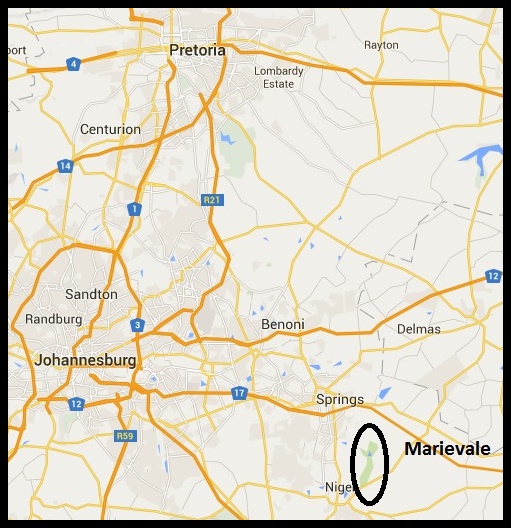
(Google maps)