Author Archives: DeWetsWild

Unknown's avatar

About DeWetsWild

Nature and wildlife enthusiast and tour guide, based in Pretoria, South Africa.

Limpopo Ramble 2022: Yellow-spotted Rock Dassie

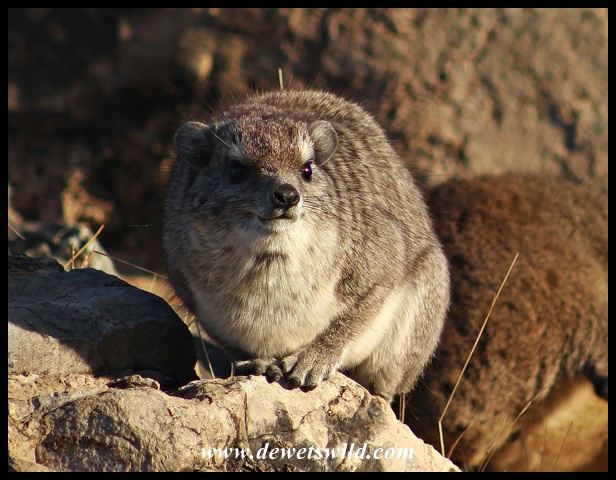
A fact that is not well-known, even among South Africans, is that our country is home to two different kinds of Dassie, or Hyrax, that live mainly in rocky terrain. We’ve already featured the species most people are acquainted with, the Rock Dassie (Procavia capensis), which is widely distributed throughout all our provinces. By contrast, in this country the Yellow-spotted Rock Dassie occurs only in our northernmost province, Limpopo, and often in mixed communities of both species numbering from a few to more than a hundred. The rugged Mapungubwe National Park is an excellent place to see them.

Heterohyrax brucei

Like their better known relatives, Yellow-spotted Rock Dassies are herbivores that feed on a wide variety of plant material, with leaves forming the bulk of their diet. They are fairly independent of drinking water. Yellow-spotted Rock Dassies are also diurnal and love basking in the sun. They’re excellent at climbing around in trees, which they do mostly for feeding as they’d usually take cover among the rocks in case of danger. One of the group is always on sentry duty while the rest feed.

The basic social unit of a colony of Yellow-spotted Rock Dassies consist of a dominant, territorial male with a harem of adult females and their young. They breed throughout the year, females usually giving birth to 2 babies. Adult Yellow-spotted Rock Dassies weigh between 1.5kg and 3.5kg and measure between 30cm and 50cm in length. They seldom live to older than 11 years in the wild, and usually much shorter.

With its distribution extending northwards well beyond Limpopo Province all the way to Sudan, the IUCN considers the Yellow-spotted Rock Hyrax to be of least concern.
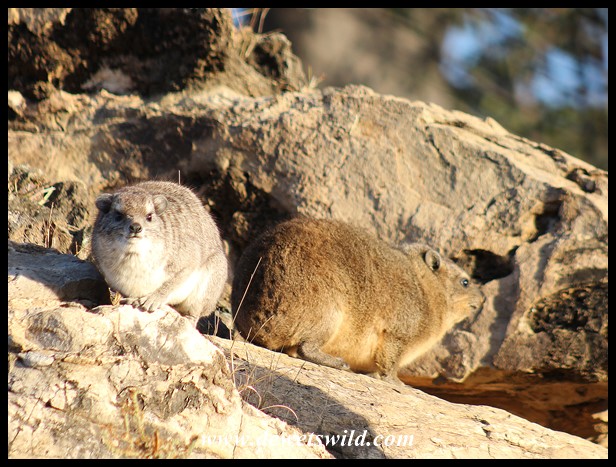
Yellow-spotted (left) and Rock Dassie (right) sharing the sun in Mapungubwe
Limpopo Ramble 2022: Eastern Rock Sengi

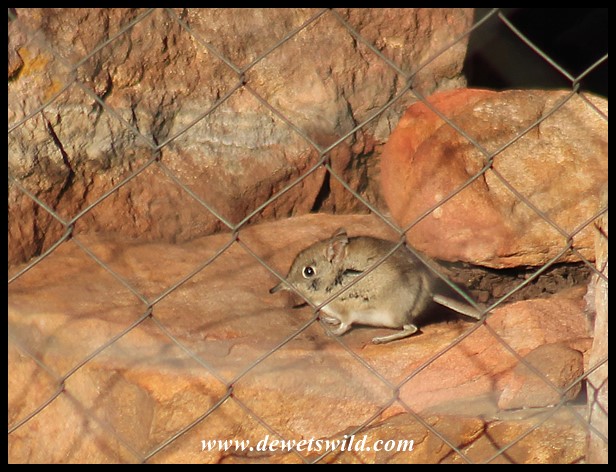
During our recent visit to Marakele National Park, while enjoying the magnificent view from the Lenong Viewpoint, we spied a little Eastern Rock Sengi basking in the early morning sun – a habit they are particularly fond of – behind a fence surrounding one of the communication towers also built atop the mountain. While the fence is a rather irritating obtrusion in these photo’s of ours, it is probably because of it that the Sengi felt comfortable enough to be out and about, safe in the knowledge that neither us humans nor any other predator could reach it!

Elephantulus myurus

The Sengis, or Elephant Shrews, (order Macroscelidea) are a family of 20 small, insectivorous mammal species occurring only in Africa. While they’re superficially very shrew-like they are in fact not related to shrews at all (and they are in fact more closely related to elephants, even if their “trunks” aren’t nearly as long and prehensile), which is why the scientific community is trying to move away from the old moniker in favour of Sengi, a name based in indigenous African languages.

The Eastern Rock Elephant Shrew, or Sengi then, occurs widely in South Africa’s northern and eastern provinces and throughout Zimbabwe, extending into portions of Lesotho, Eswatini, Botswana and Mozambique south of the Zambezi. The IUCN considers it to be of least concern.

As suggested by its name, the Eastern Rock Sengi is always found in close association with rocky areas where they hide in cracks and tiny caves among the boulders. Here they subsist on a diet that consist of insects (mainly ants and termites) and other invertebrates, though they will also eat seeds. They are diurnal, very rarely venturing out in the dark. They are also very alert and nervous, usually dashing for cover at the slightest disturbance.

Eastern Rock Sengi’s are mainly solitary and seen in pairs only while they breed during spring and summer. Females usually give birth to twins after a two-month long gestation. The young are very well developed and can move around with their mother soon after birth. Fully grown, Eastern Rock Sengi’s measure about 26cm long (of which the tail is more than half) and weigh approximately 60g. They have a very short lifespan and may live to only around 18 months of age in the wild.

Limpopo Ramble 2022: Royal Welcome at Marakele

Scarcely half-an-hour after arriving at Marakele National Park on the 29th of June, while making our way between reception and our allocated tent at Tlopi Tented Camp, we were met by this beautiful male lion, out patrolling and marking his territory. It really is nice to have your arrival acknowledged by the local royalty, don’t you think?

Limpopo Ramble 2022: Taking our Elephant for a walk

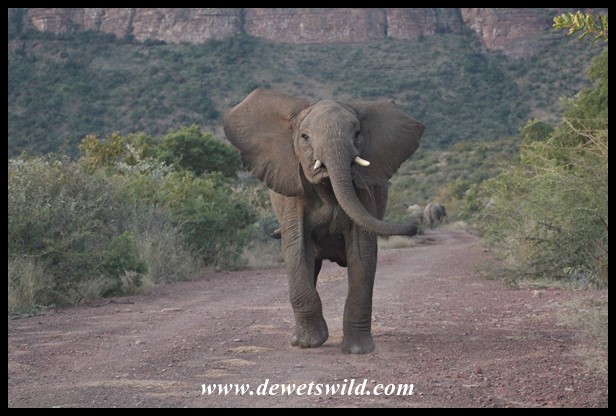
Late one evening as we were slowly heading back to Marakele National Park’s Tlopi Camp with a few minutes left before gate closing time, we found our way blocked by a big herd of elephants, and I parked our vehicle a good distance away so that we could enjoy the sighting. While the herd were peacefully going about their business up ahead, suddenly a young elephant cow came charging at full tilt out of the bush right next to us!

I immediately turned the car around and drove off. After a few hundred metres I slowed down so that we could resume our more leisurely game-viewing pace, only to have the raging cow appear in the rear-view mirror again. This being repeated several times, it was startling to realise that she would not relent and in the end she chased us for over a kilometre – with Joubert snapping away these photographs – before she turned around.

Limpopo Ramble 2022: Tlopi Buffalo Pub

One afternoon during our recent visit to Marakele National Park, while relaxing on the deck of our safari tent and enjoying the serenity of Tlopi Camp, this sizable herd of buffaloes visited their local waterhole for a drink. Joubert is responsible for all these pictures.

Limpopo Ramble 2022: Marakele Birding

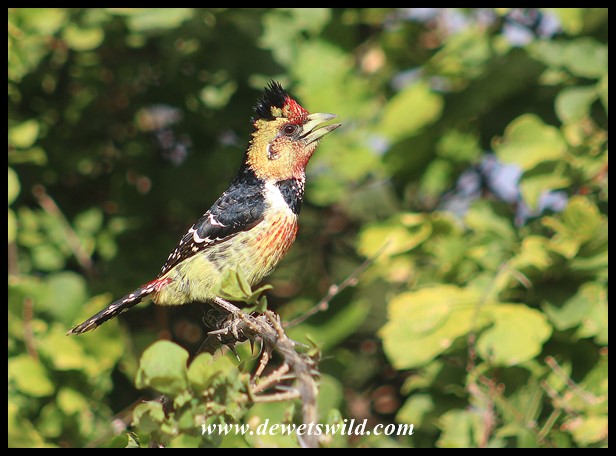
Following our time at Mapungubwe National Park we headed southwest for a further four nights at Marakele National Park. Here we had another productive period as far as bird watching is concerned, ticking 101 species of the 360+ that has been recorded in the Park to date.

Limpopo Ramble 2022: Mapungubwe Birding

Including the Pel’s Fishing Owl and the Verreaux’s Eagles at their nest, we managed to identify exactly 100 bird species during our 4 night visit to the Mapungubwe National Park in June 2022. With over 460 species recorded in the Park, many of which are summer visitors, we’ll just have to return again to build on our list. These are some that played along for a photo or two during our latest visit to Mapungubwe.

Limpopo Ramble 2022: Verreaux’s Eagle Nest in Mapungubwe

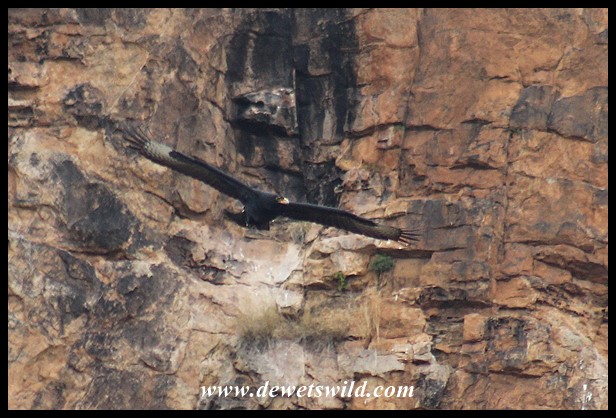
On a sheer rock face in the Mapungubwe National Park, we found a pair of Verreaux’s Eagles attending to their chick at their nest. So large was the nest that we seldom got even a glimpse of the fluffy white chick, but it was wonderful nevertheless to see the majestic adults coming and going.

Limpopo Ramble 2022: Mapungubwe’s Treetop Walk

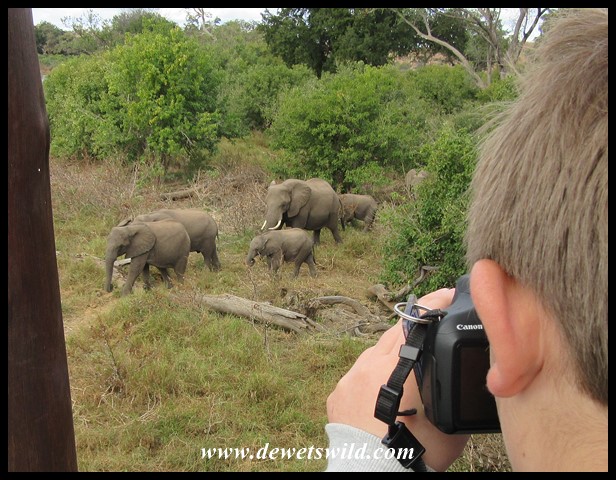
One of the real treats of a visit to Mapungubwe National Park is the Treetop Walk through the riverine forest on the South African bank of the Limpopo River (Botswana is on the opposite side). Sadly the length of the elevated boardwalk was trimmed significantly by recent floods, but it still offers a wonderful glimpse into life in the tree canopy and an amazing opportunity to watch elephants from above if you are lucky to be on the treetop walk when a herd moves through on their way to the water.

Limpopo Ramble 2022: The Kingdom of Mapungubwe

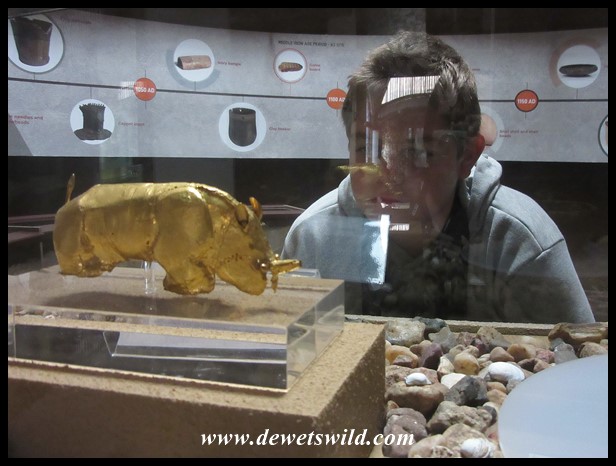
Mapungubwe Hill and the valleys around it, today part of the Mapungubwe National Park and World Heritage Site, was the seat of a powerful African Kingdom that ruled between 1,100 and 700 years ago. Mapungubwe Hill is by far South Africa’s most important iron age archeological site and can be visited on guided tours.

The Interpretive Centre at Mapungubwe, itself an award-winning architectural marvel, provides a fascinating glimpse into the daily lives of the people who lived in the Kingdom of Mapungubwe. Royalty ruled from atop the hill, with their subjects living below. The Kingdom’s riches were based on gold and ivory, traded with cultures from as far afield as Persia and China through a trade route leading through the east coast of Africa. Mapungubwe means  “Place where rock turns into liquid” in reference to the smelting of gold practiced by the country’s citizens.

The rich archeological treasures of Mapungubwe were re-discovered in 1933. Having been recognised formally as a National Monument in 1984, the Mapungubwe Cultural Landscape was inscribed as a Unesco World Heritage Site in 2003.