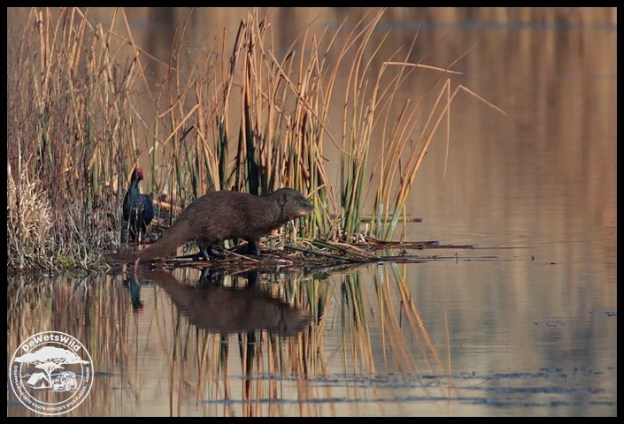
Atilax paludinosus
As you’d probably guess from its name the Marsh, or Water, Mongoose is closely associated with densely vegetated wet habitats like river and stream courses, floodplains, wetlands, estuaries and the like. Similarly its diet consists mainly of aquatic fare, like crabs, frogs, fish and molluscs, though they will also prey on birds and small mammals and are particularly fond of crocodile eggs. They are excellent swimmers and easily mistaken for otters.
Marsh Mongooses are nocturnal and only rarely venture out in daylight. They’re solitary animals and any group you encounter is likely to be a mother with her latest offspring, numbering as many as 4 per litter. The young are usually born just before the start of the rainy season and are weaned at about 2 months of age. They’re fully grown at about a year in age and adults weigh about 2.5kg.
With the exception of the driest parts the Marsh Mongoose is found throughout sub-Saharan Africa and is considered to be of least concern, although loss of habitat is probably causing a decline in numbers and range.
We spotted this Marsh Mongoose on a recent bird photography excursion at Marievale Bird Sanctuary.


