Tag Archives: travel

A Quick Nature Fix at Rietvlei

Our local Rietvlei Nature Reserve is often just what the doctor ordered when I need a quick nature fix. Located just 13km from our home, with a very fair rate of admission (R50 for adults currently, roughly $3.50), decent facilities, an extensive road network and an amazing diversity of wildlife, Rietvlei never fails to recharge the batteries! A week or so ago, in serious need of getting my head cleared following a few health worries, that’s exactly where I headed for a solo trip.

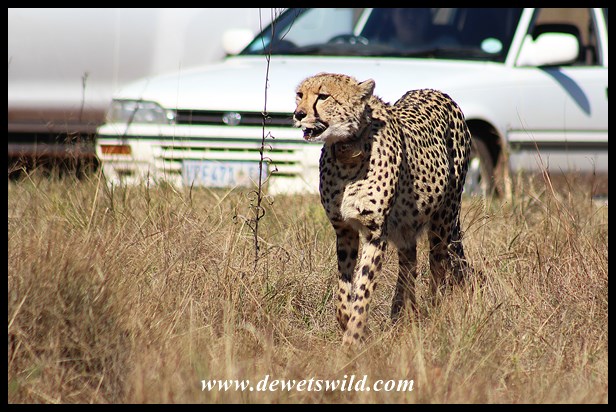
In all the years we’ve been visiting Rietvlei the reserve’s cheetahs have always eluded us – these large spotted cats are experts at hiding! I therefore felt extremely pleased when at long last I encountered a female with her three cubs, just after they had their fill of a freshly caught blesbok. I returned to the site several times later during the day, hoping that the family might still be in the vicinity, only to find the remains of the carcass variously attended by nervous black-backed jackals and pied crows squabbling over the left overs.

At one of the bird-viewing hides I had another encounter that will live in my memory forever. A reedbuck ewe hid her young lamb in a dense stand of reeds nearby, which is quite normal behaviour for the species. The curious (or should that be naughty?) youngster however did not want to stay put where his mom told him to, and quite unafraid approached me where I was sitting flat on the ground taking photos of him from a distance. Eventually he got so close that I had to get up and walk away, afraid that if he was to rub up against me his mother might catch my scent on him and abandon him. If I was pleased after the earlier cheetah sighting this experience really had me feeling utterly blessed!

Winter is getting a firm hold on South Africa’s Highveld now and early morning at Rietvlei is a pleasure to behold as mist rises from the waterways and the rising sun starts to thaw the frost covering the grass and trees.

For a reserve almost entirely surrounded by urban sprawl and industries, Rietvlei harbours an impressive collection of large and easily visible mammalian inhabitants. My sightings included black wildebeest, blesbok, buffalo, eland, meerkat, plains zebra, hartebeest, springbok, waterbuck, white rhinos and yellow mongoose (as well as the already mentioned cheetahs, jackals and reedbuck).

I also managed to identify 55 different kinds of birds in the few hours I spent at Rietvlei!

All in all a very pleasant day’s outing; one that certainly got my head back in the right place!
Camping fest at Satara

At the end of April, we had the privilege of visiting the Kruger National Park with a wonderful group of friends; altogether 21 adults and children from 5 families and by far the biggest group we’ve ever accompanied to the Park! Our base for the four nights was the camping area at Satara Rest Camp, allowing us to introduce our friends to many of our favourite places in the central section of the Park.

A wonderful group of friends enjoying the scenery at Nwanedzi

Our previous visit to the Satara area was in the winter holidays of 2016, at the height of one of the worst droughts on record in South Africa. What a pleasure seeing the region transformed into a sea of lush green vegetation now at the end of the summer rainfall season, and experiencing a few of the final showers rolling over the Lowveld before winter sets in!

Of course the dense vegetation made game-viewing very tricky, and in stark contrast with our visit last year when there seemed to be predators resident at every one of the few remaining pools of water, we really had to work hard to find the meat-eaters for which Satara is so famous on this visit. We don’t consider ourselves “Big-5” chasers, but when you’re introducing a couple of newbies to Kruger’s wonders you do want her to put her best foot forward, and luckily Satara remained true to her reputation as one of the best game-viewing areas in the Park. Even if the predators kept us in suspense at their appearance, there were still a myriad of other species of game to be found in good numbers and keeping us enthralled on our drives, and even in camp! Of course, we expected to find high concentrations of plains zebra, blue wildebeest and giraffe roaming the central plains, but we were very surprised to find so many elephants around Satara!

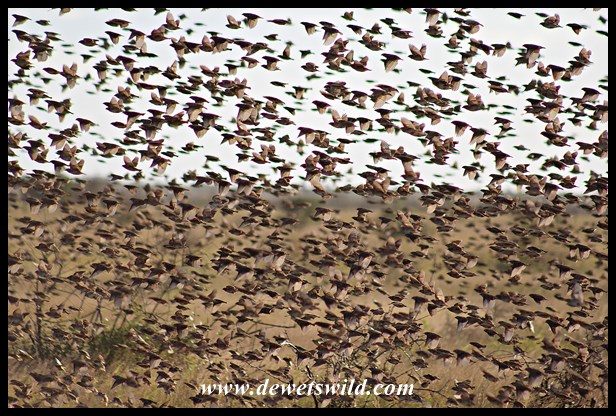
For anyone looking for birds, Kruger could never disappoint, however on this visit the Park seemed to be bursting at the seems with feathered inhabitants even more than usually. We’ve shown you the enormous flocks (rather swarms!) of queleas in an earlier post, but notably we’ve also seen bigger flocks of marabou stork and wattled starling on this trip than ever before – no doubt in response to an eruption of food in the form of grass-seeds and the insects that feed on it.

At the end of our stay we had to contend with every camper’s worst nightmare – having to break up camp in pouring rain! They say that any friendship that survives going on holiday together will remain standing come what may, and happily it seems despite the hardships of dripping wet, muddy bodies and thoroughly soaked camping equipment, our friendship with the Bernards, Krugers, Nels and Therons have come through the tribulations with flying colours.

Camping at Satara, Kruger National Park, April 2017 – click the image for an enlarged view

(If you’d like to find out more about Satara and surrounds, have a look at the dedicated blog post we published about this popular part of the Kruger National Park)

Red-billed Quelea

Quelea quelea

Some of the most impressive sights of our recent visit to the Satara area of the Kruger National Park was the enormous flocks of Red-billed Quelea occupying the grasslands of the central plains. Following the good rains that bought respite from an awful drought, the savannas are heavy with a rich harvest of seeding grasses, and literally millions of the little birds are making the most of the abundant foodsource. When their population reaches a peak, as it currently has, there could be as many as 33-million Red-billed Queleas swirling in cloudy swarms over the Park!

The Red-billed Quelea is a small (20g) seed-eating sparrow-like nomad inhabiting grasslands and grainfields (causing enormous losses to farming communities). Swarms that could number in the millions descend on watering holes at least twice daily. While feeding they “roll” over the grasslands in a wave-like motion, most impressive to witness! While seeds make up the vast majority of their diet they do catch small insects as well, especially when raising chicks.

Nesting occurs communally in the rainy months and hundreds, even thousands, of nests are woven per tree (prefers thorn trees) by the males. Breeding colonies could consist of more than 2 million monogamous pairs, and is a magnet for every imaginable predatory bird, reptile and mammal that is large enough to take adults and chicks. Clutches normally number three eggs and the female incubates them for only 12 days, whereafter the chicks fledge within another two weeks!

The Red-billed Quelea may well be the most abundant bird on the planet, with an estimated population as large as ten billion, and as such is considered as being of least concern by the IUCN. It occurs widely in the savannas of Sub-Saharan Africa and can be found in every one of South Africa’s provinces, where it must number in the hundreds of millions.

(The photos in the following gallery were taken on visits to the Kruger Park and elsewhere)

de Wets Wild turns five!

We’re fresh back from a wonderful breakaway in the Kruger National Park, and of course have lots to share with you from our latest trip to the bush, so stay tuned!

Today also marks the fifth birthday of de Wets Wild – Thank you to everyone who has supported and encouraged us along the way!

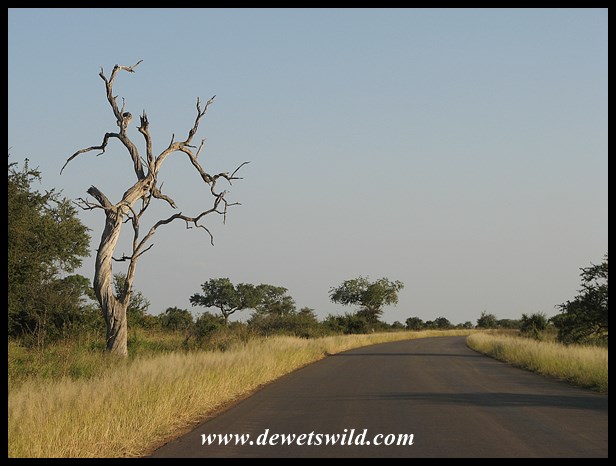
Sunset at Satara


A special time at the Giant’s Castle

Spending Easter in a beautiful natural location is almost a given for the de Wets. Our original plans for this particular long weekend was to visit the uKhahlamba Drakensberg Park, and specifically the Cathedral Peak area, but a last minute change in reservations had us heading for the Giant’s Castle area of the Park instead. A special place to celebrate a special holiday!

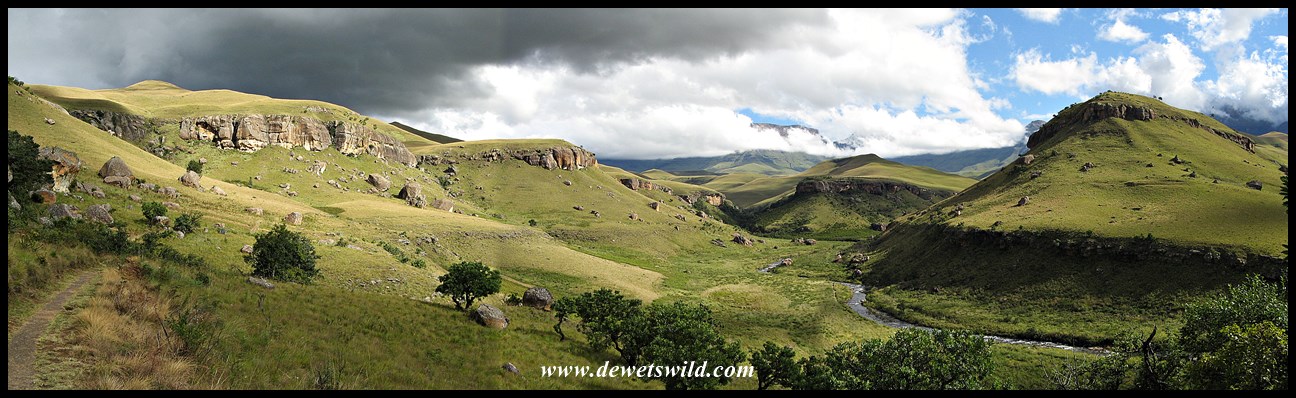
While we had only three days to spend at Giant’s Castle, the weather made sure we experienced almost every climatic experience the Drakensberg mountain range can conjure (with the exception of snowfall). Dark thunder clouds one day gave way to heavy fog and a constant drenching drizzle the next, followed in turn by a day of glorious sunshine! Giant’s Castle must be one of the scenically most spectacular parts of the entire Drakensberg range, and you cannot help but stand in awe at the shear majesty of the landscape surrounding you.

Whether it rains or shines, Giant’s Castle’s grandiose scenery will keep your jaw dropping every so often. When that happens, and you bend down to pick it back up, take a moment to enjoy the magnificent juxtaposition of tiny beauties – pretty flowers, exquisite butterflies, delightful droplets, ornamental moss and lichens, and dainty insects – all around you!

It goes without saying that such a scenically attractive piece of earth wouldn’t be complete without a myriad of wildlife to round off the picture, even if, as at Giant’s Castle, they have to be content with taking a back seat to the surrounding landscape.

Giant’s Castle is one of our favourite destinations in the uKhahlamba Drakensberg Park, and we can’t imagine that we’d ever get enough of it (our previous visit was also over Easter, in 2014). Excellent amenities in the camp (managed by Ezemvelo KZN Wildlife) and a terrific network of short and longer walking trails ensures that every visit is a pleasant and fulfilling experience, one we can highly recommend!

Giant’s Castle Chalet #4, uKhahlamba Drakensberg Park, April 2017

Sitting pretty in the ‘Berg

Well, maybe not so much pretty as comfortably…

Wintry weather in the ‘Berg

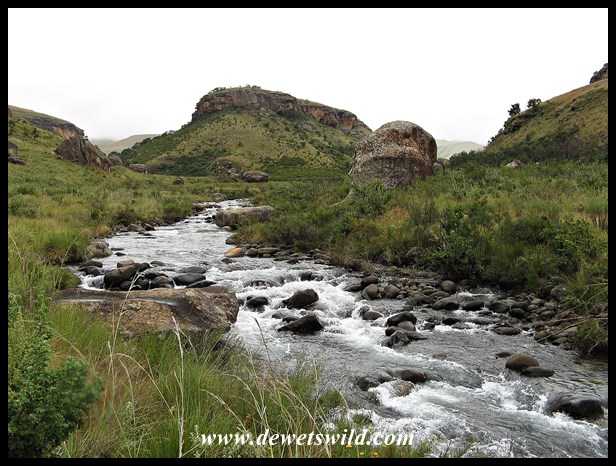
A cold, overcast and rainy day at Giant’s Castle allowed just a short walk along the Bushmans River this morning

Easter in the ‘Berg

We’re wishing you a blessed Easter from spectacular Giant’s Castle Game Reserve in the Drakensberg Mountains!

(Click on the image for a larger view)

Creatures Great and Small at uMkhuze

Despite the lush greenery making it a little more difficult than normal, we were treated to some amazing game-viewing at uMkhuze Game Reserve when we visited in March, and what better way to conclude our trip reports than with some photos of the “hairies and scaries” we encountered along the way?

With so many habitats, uMkhuze is home to an astounding variety of invertebrates, amphibians, reptiles and mammals (not forgetting the birds we showed you earlier), and the galleries to follow should give you some idea of what you could expect to see when visiting this wonderful place!

One would think that the bigger the animals the easier they are to see? Please go tell that to uMkhuze’s elephants, rhinos and lions that kept so well hidden during our visit!? Jokes aside though, we reveled in some wonderful encounters with plains zebra, nyala, kudu, impala, hippos, grey duiker, baboons, vervet monkeys, spotted hyenas, buffaloes, blue wildebeest and giraffe.

The arrival of autumn heralds the start of the rutting season for many antelope, and it was hard not to notice the testosterone flowing strongly in many male nyalas and impalas as they established their place in the hierarchy and started herding together their harems!

uMkhuze Game Reserve has so much to offer, and with every visit we’re given only a little taste of it, just enough to keep us going back for more!

uMkhuze Birding

With a list of over 400 recorded bird species, the uMkhuze Game Reserve (part of the iSimangaliso Wetland Park) is one of South Africa’s most highly-rated birdwatching destinations. The reserve is home to many commonly seen and well-known species, both residents and summer migrants, but also hosts several species rarely encountered in South Africa – we, for instance, had our first ever sighting of the African Pygmy Goose at uMkhuze’s Nsumo Pan when we visited the reserve in March, though we sadly didn’t manage a photograph of it. This gallery however shows just some of the almost 100 species we managed to find during our three day visit!