And so on Sunday afternoon the time arrived. Ranger-guides Ronnie and Saul met us, and four fellow trailists, at the designated spot in Pretoriuskop for the start of our time on the Napi Wilderness Trail in the Kruger National Park. Excitedly we packed all our baggage into the trailer, ensuring that our cameras and binoculars stayed close at hand, and clambered into the open game viewing vehicle that would transport us into the Wilderness.
We had barely left camp when we encountered our first special sighting: a magnificent sable antelope bull – a prime specimen of one of the rarest species in Kruger! As good an omen as one could hope for at the start of such an epic adventure.
It took about an hour to reach the Napi Wilderness Trail’s base camp, our home for the next three nights. Located on a bend in the Biyamiti River between Pretoriuskop and Skukuza, the camp consists of four two-sleeper tents (with en-suite bathrooms!) with a central thatched “dining room” and cement slab for the obligatory nightly campfire. There’s no electricity (or cellphone reception) at the camp, with gas-powered geysers in the bathrooms and paraffin and solar lamps used for lighting. We also meet Armondo, the camp’s shy caretaker and talented cook.

In the vehicle, on the way to the Napi Wilderness Trail base camp

Sable Antelope

The turnoff into the wilderness

Tents at Napi Wilderness Trail Base Camp

Napi Wilderness Trail Base Camp Tent, August 2017

The hide in the Napi Wilderness Trail Base Camp

The hide in the Napi Wilderness Trail Base Camp

Napi Wilderness Trail Base Camp – view from behind our tent

The “dining room” in Napi Wilderness Trail Base Camp

The fireplace and view from Napi Wilderness Trail Base Camp

Sombre Greenbul in Napi Wilderness Trail Base Camp

View from Napi Wilderness Trail Base Camp
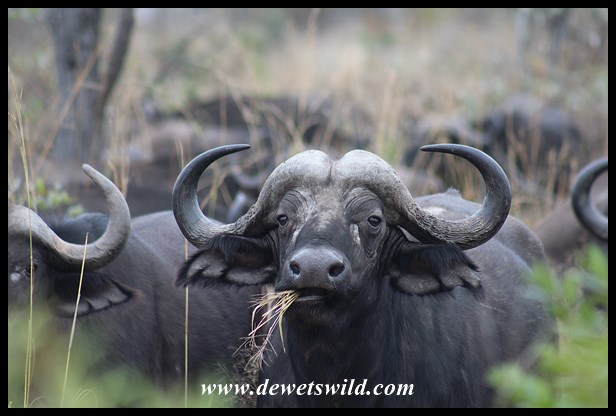
After a good night’s sleep we are guided out of camp by Ronnie and Saul just after sunrise (and a welcome rusk or two dipped in an even more welcome cup of coffee!). We cross a few dry stream beds, stand beside mud wallows and rhino dung middens, gape in awe at the enormous size of an elephant skull, watch astonished as Ronnie coax two dozen (maybe even more) tiny spiders from a communal nest, listen to him explain the intricacies of trapping egg-stealing snakes with the shell of a dead Giant African Land Snail and enjoy a picnic in the unexpected downpour of a winter rainstorm, all the while soaking in the Napi wilderness surrounding us. Heading back to camp we find our way blocked by a huge herd of one of Africa’s most dangerous animals; the African Buffalo, but under the safe guidance of the two rangers we’re free to admire these powerful creatures at close quarters until one cantankerous bull, separated from the herd and with the devil’s fire burning in his eyes, decides it is time for us to move on…

Walking into the wilderness

Elephant skull (died during the terrible drought last year)

A grindstone – indication of earlier human habitation

Little nest in a leafless shrub

Nest of communal spiders

Communal spiders

Shell of a Giant African Land Snail

An unexpected winter downpour caught us out in the wilderness

Wet picnic

Encounter with a big herd of buffalo

Encounter with a big herd of buffalo

Encounter with a big herd of buffalo

African Buffalo

African Buffalo

One angry African Buffalo bull

Dried up mud wallow, with Ronnie explaining how every animal that visits helps to enlarge it

Arriving back at Napi base camp
Relaxing back at home base we find out that the human guests are not the only ones waiting for Armondo to finish preparing lunch, as a pack of Dwarf Mongooses scurry around his kitchen hoping for a few scraps (that never came). We also find out that the camp is alive with birds and small reptiles, and that there’s also a wide variety of wildlife arriving at the small waterhole in front of camp to quench their first.

Dwarf Mongoose

Dwarf Mongoose

Dwarf Mongoose

Dwarf Mongoose

Bushbuck ram

Southern Boubou

Bushbuck ram

Freckled Nightjar

Freckled Nightjar

Hamerkop

Marico Sunbird

Immature African Fish Eagle

Southern Yellow-billed Hornbill

Striped Skink

Striped Skink
Our late afternoon is spent walking a short circuit around some of the enormous granitic outcrops, which is such a familiar sight in this part of the Kruger Park, before enjoying a glowing red African sunset from one of these special vantage points. Driving back to camp we pass the busy den of a clan of Spotted Hyenas, where the cute cubs have everyone on the vehicle smiling from ear to ear, and again find our road back in the darkness blocked by a herd of buffalo.

Setting off on our afternoon hike

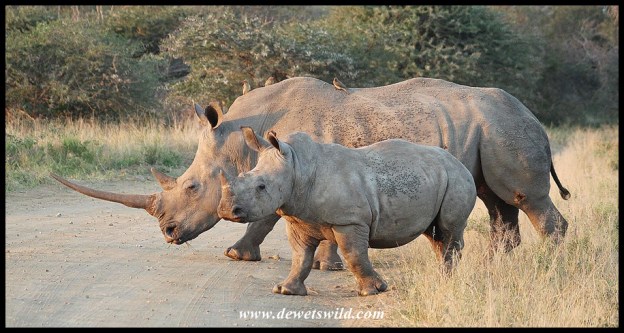
Approaching white rhino on foot

Approaching white rhino on foot

Climbing a koppie (rocky hill)

Blue wildebeest eyeing us from a distance

Sunset on the Napi Trail

Sunset on the Napi Trail

Sunset on the Napi Trail

Happy family: Napi Wilderness Trail with my mother, sister and brother

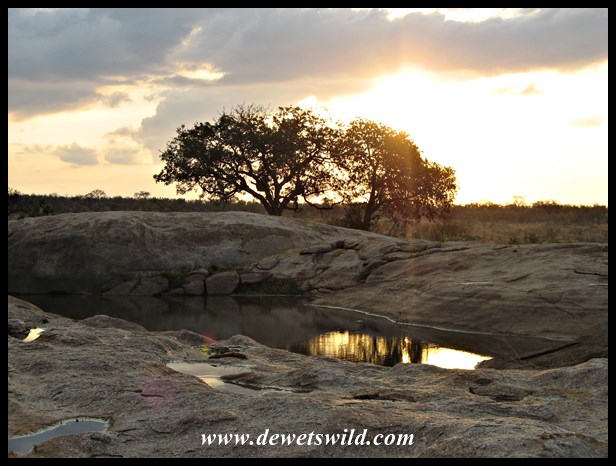
Huge natural rock pool

Spotted hyena cub

Spotted hyena cubs

Buffalo cow in spotlight

View from atop an enormous granite outcrop
At night there’s just as much life inside as outside the Napi Wilderness Trail’s base camp. At least three species of owl frequent the camp, their distinct calls punctuating our fireside conversations, and walking around with a spotlight is sure to show up some interesting nocturnal bugs!

African Scops Owl

Golden Orb Web Spider

Non-venomous Tree Creeper Scorpion (notice slender tail and large pincers)
We heard lions roaring during the night, but I didn’t expect that we’d come across their fresh tracks as close to camp as we did the next morning. Our ranger-guides tried their best to follow the big cats, but they must have been aware that we were tracking them and only led us in circles. This strategy did however bring us close to another enormous herd of buffaloes – likely the lions were stalking the same herd when they became aware of us. Ronnie and Saul brought us to a small termite mound where we could stand and watch as the herd approached closer and closer. Being confronted by a throng of bellowing buffaloes, hundreds strong in number and probably less than 30 meters from us by the time we moved out of their way, surely must be my favourite memory of the Napi Wilderness Trail.

Ronnie demonstrating another grinding stone we came across

Young kudu bull

Lion track!

More encounters with buffalo

African Buffalo

More encounters with buffalo

More encounters with buffalo

More encounters with buffalo

African Buffalo

Impressive buffalo bull

African Buffalo

African Buffalo

More encounters with buffalo

The group at a huge hamerkop nest

Bush picnic

Walking in the Napi Wilderness

Impala herd eyeing us nervously

Elephants near Napi base camp

Approaching camp from across the Biyamiti
Lunchtime in camp is just another excuse to appreciate the plethora of wildlife species both inside and outside the camp’s low perimeter fence from a more relaxed position, and although there isn’t much sitting going on once you start following birds between the tents trying for decent photographs of them, it is still an utterly relaxing exercise!

Elephant coming down into the Biyamiti River bed

Kudu seen from camp

Grey Go-away-birds

African Barred Owlet

Crested Barbet

Black-backed Puffback

Burchell’s Starling

White-bellied Sunbird

Green-backed Camaroptera

Long-billed Crombec

Little Sparrowhawk

White-throated Robin-Chat
Our final outing from the camp is a drive with expert guide Saul at the wheel to Transport Dam. We enjoy our sundowners in the presence of hippos, crocodiles and a menagerie of thirsty animals and birds before returning to camp, and a traditional braai (barbeque) prepared by Armondo, passing the hyena den again on the way.

Plains Zebra

Bushveld Pipit

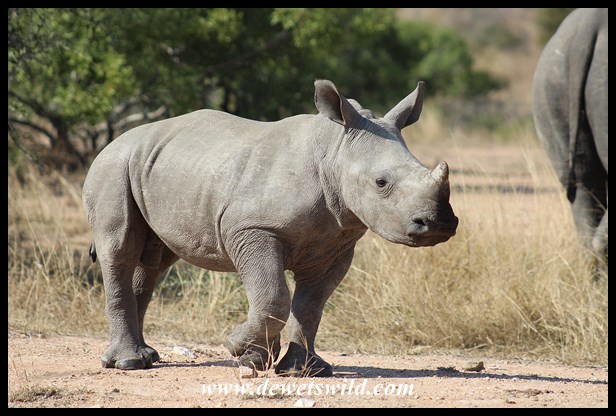
White Rhino calf

Sabota Lark

Warthog boar

Zebra crossing in Kruger!

Giraffe

Elephant road block

Lilac-breasted Roller

Waterbuck cow

Natal Spurfowl and chicks

Giraffe

Serrated Terrapin

Impala drinking at Transport Dam

Grey Heron

Hippo posturing

Hippo posturing

Single-striped Grass Mouse

Spotted hyena suckling cub
After dinner we go in search of the camp’s owls again, and while the Pearl-Spotted Owlets only serenaded us with their calls without posing for photos, the African Scops Owls and African Barred Owlets were much more accommodating.

African Scops Owl

African Barred Owlet
Come Wednesday morning and Armondo’s beating on his breakfast drum signaled that our time on the Napi Wilderness Trail has come to an end. After a hearty breakfast, with scrumptious freshly baked bread, we’re off back to Pretoriuskop and civilisation. Another sighting of a sable antelope and then a pride of lions feeding on a young buffalo helps to bring some consolation…

A final look at the Napi view, at sunrise on 9 August 2017

Sable Antelope

Lions feeding on a young buffalo, seen on our way back to Pretoriuskop at the end of the trail

Lions feeding on a young buffalo, seen on our way back to Pretoriuskop at the end of the trail

Lions feeding on a young buffalo, seen on our way back to Pretoriuskop at the end of the trail

African Green Pigeon

African Green Pigeon
The 60km drive from Pretoriuskop down to Malelane Gate went far too quickly for our liking. Lucky for my sister she could join up with her husband at Malelane Gate for four more nights’ stay in the Park, but for me, my mom and brother it was time to head back to hectic Gauteng.

Spotted hyena cub and mother

Red-crested Korhaan

White-backed Vultures
This was my third Wilderness Trail experience in the Kruger National Park; having previously participated in the Olifants and Sweni WIlderness Trails (follow the links to read about those trips). South African National Parks offers a total of seven Wilderness Trails and three Backpack Trails in the Kruger National Park, each three nights in duration and accommodating no more than 8 participants twice a week (commencing Wednesdays and Sundays), and guided by two knowledgeable rangers.











 DeWetsWild