Tag Archives: picnic spots

The magic of Nsumo Pan

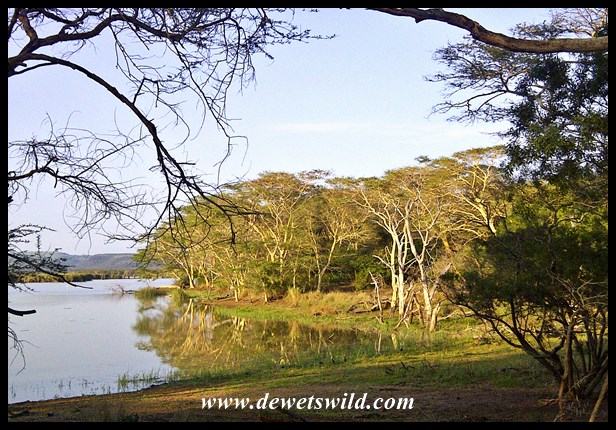
uMkhuze Game Reserve, in the iSimangaliso Wetland Park, has a lot to offer any nature lover, no matter where their interests lie. One of the reserve’s biggest drawcards is the Nsumo Pan, a large body of water fed by the Mkuzi River. Nsumo is home to breeding pink-backed and great white pelicans, hippos and crocodiles, among the huge variety of  birds and animals that live along its reed and fever-tree lined shores. The reserve authorities have made it really easy to enjoy Nsumo’s magic: a tar road skirts a part of its northern banks, there are two bird-viewing platforms at the water’s edge and a beautiful picnic site with clean ablutions and braai (barbeque) facilities.

We have lots more to share in upcoming posts about our December visit to uMkhuze Game Reserve 😀

Serenity

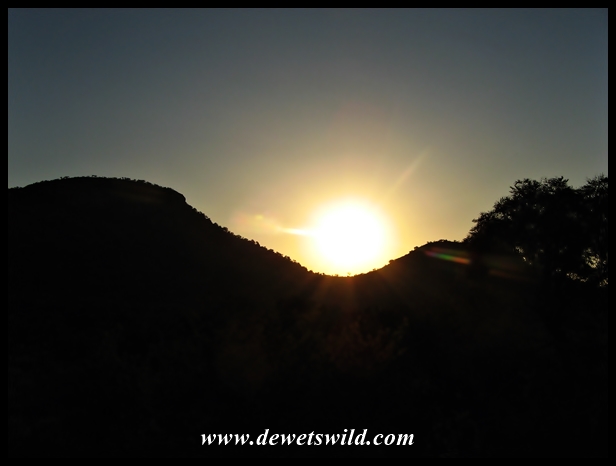
Sunrise over the Midmar Dam Nature Reserve in the Midlands of Kwazulu-Natal

Serenity

Serenity” is the theme for this week’s WordPress Photo Challenge.

A garden where the eagles soar

Jumping up from a picnic, while celebrating a special friends birthday, to take pictures of large eagles flying over a major metropolis is not a familiar scenario for the de Wets. And yet that seems to be par for the course at the Walter Sisulu National Botanical Gardens!

Opened to the public in 1987 as the Witwatersrand National Botanical Garden on land donated five years earlier by the town councils in Johannesburg’s western suburbs, the gardens were renamed after the ANC leader Walter Sisulu in 2004. The focal point of the garden is undoubtedly the Witpoortjie Waterfall, the source of the Crocodile River which flows through much of the garden. Apart from beautifully tended and themed plant displays, the grounds include large tracts of natural vegetation and ample lawns under shady trees, very popular for picnics. Several pathways and tracks provide access to various parts of the gardens, and the most challenging of these lead to the top of the cliff above the waterfall, a favourite spot for many photographers hoping for a special shot of the eagles soaring past.

The gardens are open daily from 08:00 to 17:00 and facilities include a restaurant, kiosk, several function venues, a concert stage, an environmental education centre, a curio shop and a nursery selling indigenous garden plants. Guided tours of the gardens can be arranged in advance. We like the garden’s policy of “picnic in, litter out” encouraging visitors to take all their garbage with them when they leave.

The gardens are a haven for a multitude of birds and small animals, many of which are quite tame and obviously used to the human presence.

It’s been more than thirty years since a pair of Verreaux’s Eagles (formerly known as Black Eagles) first took up residence at a nesting site next to the Witpoortjie Waterfall. The current pair had successfully raised a chick to sub-adulthood and at the time of our visit was just starting to let the youngster know that it has to start looking for lodgings of its own. This made for spectacular flying displays over the gardens and against the backdrop of the Roodekrans cliffs.

On the other side of the garden, a dam with a bird-viewing hide at its edge was just one more delightful feature to add to our reasons to return to the gardens (soon!). Here we found an extremely irritable Egyptian Goose laying claim to the body of water and intent on ridding it of anything else that seemed remotely like waterfowl! It probably had a nest or goslings hidden somewhere near.

This was our first visit to these beautiful gardens, and we were wonderfully surprised and delighted by what we found. We spent the entire day at the garden, from when the gates opened until they closed, and yet feel like we haven’t seen most of it. Couple that with a jolly time spent with good friends, we’re sure it won’t be long before we return.


—————————————————–

Please vote for de Wets Wild in the 2014 SA Blog Awards

If you enjoy de Wets Wild as much as we enjoy sharing our love for South Africa’s wild places with you, please vote for us in the 2014 SA Blog Awards by clicking on this badge. We’ve entered both the Travel and Environment categories, and you may vote for us in both.

Thank you for your support!

SA Blog Awards Badge

Angular

The Witpoortjie Falls, in the Walter Sisulu National Botanical Garden, where we spent several hours today enjoying the scenic surroundings, soaring eagles and the company of wonderful friends.

Angular

Angular” is the theme for this week’s WordPress Photo Challenge

Spring in Kruger: September 2014

Well, according to the calendar it should have been spring. But judging by the temperatures we experienced, it seemed the Lowveld had skipped that season all together. It was only late September, but daytime temperatures rose to the upper thirties. The land was parched and animals were congregating in numbers at the last remaining water sources. It made for thrilling game viewing and just reminded us again that every season holds its own special appeal in the Kruger National Park.

Over the last couple of weeks, we already shared with you some of our most memorable sightings of the trip. Finding five cheetahs moving along the Shingwedzi River was exciting in the extreme, we were enthralled watching the interactions of different species of game at marvelous Mooiplaas waterhole, we laughed for joy at the playful antics of baby baboons, our encounters with the elephants of northern Kruger kept us on our toes and we empathised with thirsty, tired buffaloes along the Mphongolo. Time to wrap up now, and what better way than with a gallery of images taken during our four night stay – one night in the Shipandani Hide (near Mopani), and three nights at special Shingwedzi Rest Camp.

Satara Rest Camp, Kruger National Park

Satara is unique among the Kruger National Park‘s camps. It is not situated on a serene river bank or atop a hill commanding views over the wilderness. Instead, it is located seemingly in the middle of a vast plain of flat grasslands and thornveld as far as the eye can see, inhabited by thousands of grazing animals and of course the predators that follow them. And that’s exactly the reason for Satara’s popularity; it probably has the highest density of large African predators in the entire Kruger.

Satara is a misspelling of the Hindi word “satrah”, meaning seventeen, and so named by a land surveyor and his Indian assistant measuring up this piece of the lowveld for farmland in the late 1800’s. Colonel James Stevenson-Hamilton appointed Tim Healy as the first ranger to the post at Satara in 1910, and he was followed by ranger W. Lloyd, who met an untimely death due to pneumonia and was buried by his wife and a servant in a coffin made from ceiling planks, just outside the present perimeter of the camp. By 1929, 3 years after the Kruger National Park was proclaimed, the first twelve huts at Satara were made available to overnight visitors, and by 1974, with the threat of malaria and soggy roads in the rainy season adequately under control, visitors could enjoy Satara all year round (instead of just during winter).

Today, Satara is the second biggest, and by far one of the most popular, rest camp in the Kruger National Park, offering a variety of accommodation and camping options to overnight guests, serviced by a restaurant, shop and filling station. Satara has a large amphitheatre where wildlife filmshows are presented in the evenings, and in the projector room is an interesting display about the camp and the Park’s wildlife. The camp also has a large swimming pool and play area for those hot summer days, and guests can join a variety of guided activities like walks and drives. Inside the camp a rich variety of smaller animals and birds are quite at home; Satara’s famous for its owls, badgers and wild cats.

Mention Satara, and anyone who has ever been there will likely immediately think about the S100; a gravel road leading to Nwanetsi Picnic Spot and the most popular drive in the Satara area. The S90, S100, S41 and H6 roads explore the game-rich area to the east of Satara and seldom disappoints. Nwanetsi has a cliff-top viewpoint overlooking a peaceful stretch of water, while the Sweni Hide nearby is probably the better option for serious photographers.

The most direct access to Satara is through Orpen Gate, about 50km to the west along the tarred H7-route. This road offers excellent opportunities for seeing the “Big 5“, especially near Nsemani Dam, or along the short detour to Girivana waterhole. In fact, we often end our time at Satara by spending our final afternoon at Girivana, enjoying the procession of animals and birds coming to slake their thirst in the golden light of the setting sun.

Two long but very rewarding gravel roads turn of the H7 about 20km from Satara: Turn north and you’ll be following the S39-road to the popular Timbavati picnic spot and Ratelpan Hide (and onwards to the Olifants River if you wish), or turn south and follow the S36-road towards the rustic, and much quieter, Muzandzeni and Nhlanguleni picnic spots. Over the years, we’ve had excellent sightings on both roads though the road towards Timbavati probably offers slightly more frequent encounters with Kruger’s big game. Along both routes there’s also turnoffs that will get you back to Satara quicker, if you find yourself pressed for time, and that also provide good game viewing opportunities.

The H1-3 road south to Tshokwane Picnic Spot, and the H1-4 northwards to the Olifants River, both passes several waterholes and often offers wonderful sightings of the big cats, especially in the early morning. It’s also worthwile taking a longer detour to the Lindanda Memorial, at the site where ranger Harry Wolhuter had his epic battle with a lion.

Satara’s an excellent choice for those hoping to see Africa’s big predators in abundance, but it has so much more to offer and enjoy. Spend a couple of hours at Girivana, soaking in the peace and quiet of a golden African sunset, and you’re sure to agree.


Skukuza Rest Camp, Kruger National Park

Kruger’s capital, and monument to a conservation stalwart.

Today, Skukuza Rest Camp is the biggest and busiest tourist facility in the Kruger National Park, the Park’s administrative headquarters and a world-leading centre of scientific research in the field of nature conservation. The rest camp has a long and rich history dating back more than a 100 years and it shares much of this history with one man, to whom more than any other should go the credit for the establishment of this world renowned Park.

At the end of the South African War, Major (later Colonel) James Stevenson-Hamilton was appointed to the position of warden of the Sabie Game Reserve; a loosely defined piece of land between the Sabie River in the North, the Crocodile River in the South, the foothills of the Drakensberg in the West and the Lebombo Mountains in the East that was proclaimed a game sanctuary by president Paul Kruger of the (then still independentZuid-Afrikaansche Republiek, some months before hostilities broke out with the British.

Stevenson-Hamilton, born in October 1867, arrived at his new station in July of 1902, soon setting up his office at Sabie Bridge, the place where the Selati Railway crossed the Sabie River. It was the local Shangaan population that gave Stevenson-Hamilton his nickname of “Skukuza“, meaning “he who sweeps clean” or “he who turns everything upside down“. Against considerable odds, piled up against him from politicians, mining houses and wealthy landowners, the plucky Scotsman managed to considerably enlarge the area under his jurisdiction, expand his powers of law enforcement, and won considerable support from the South African public, culminating in the proclamation of the Kruger National Park by Minister of Lands, Piet Grobler, on the 31st of May 1926.

The Kruger National Park was opened to the public in 1927, and by 1929 the first purpose-built accommodation facilities at Sabie Bridge, or “Reserve” as it became known, housed their first guests. The first hut, named the “Campbell Hut” after W.A. Campbell, a founding member of the National Parks Board, has been preserved as a tiny museum showcasing the early years of tourism in the Kruger Park, and is located near Skukuza’s restaurant. In those early years, visitors could enjoy (or dread) crossing the Sabie on a rickety pontoon, which was only replaced by a low-level causeway (still in use today) in 1937.

Campbell Museum Hut

Campbell Museum Hut

In 1936, the camp at Sabie Bridge / Reserve was renamed to Skukuza, in honour of Colonel Stevenson-Hamilton, then still firmly at the helm of the National Park he referred to as a “Cinderella” in his memoirs “South African Eden”. Stevenson-Hamilton retired from the position of Warden in April of 1946, at the age of 78 and after 44 years of dedicated service, leaving an enduring legacy enjoyed by millions of people from all over the world to this day. He passed away on the 10th of December 1957, aged 90. After the death of his wife Hilda, the couple’s ashes were strewn over the boulders at Shirimantanga, to the south of Skukuza at a place Stevenson-Hamilton chose himself, in April 1979. Today, Shirimantanga is a popular, if sombre, place to visit for many of the Kruger faithful.
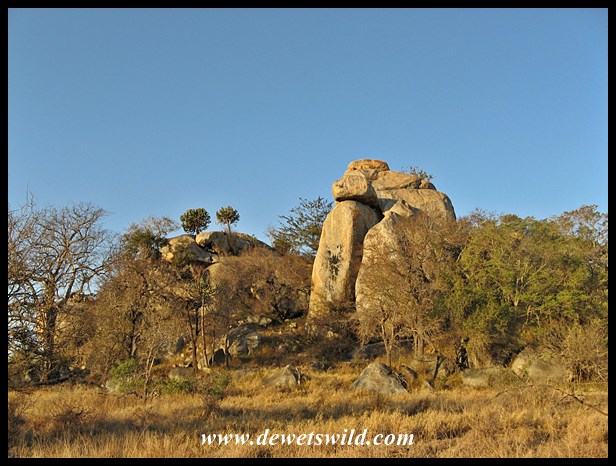
Shirimantanga Hill, final resting place of James and Hilda Stevenson-Hamilton
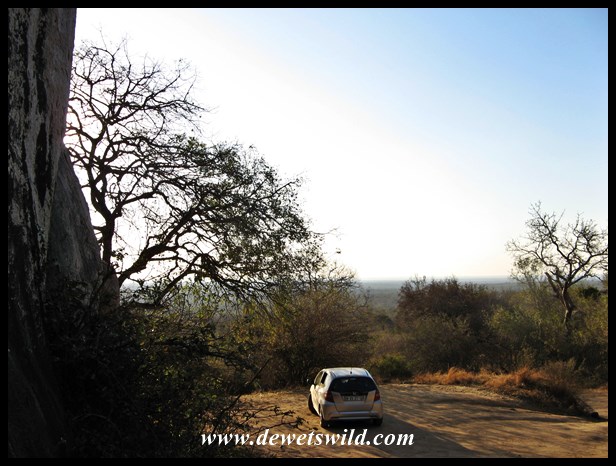
Shirimantanga Hill, final resting place of James and Hilda Stevenson-Hamilton

The view from Shirimantanga

The view from Shirimantanga

Stevenson-Hamilton would probably not recognise much of the modern Skukuza, the view of the majestic railway bridge over the Sabie probably being all that will seem familiar from his first years in the Reserve. In addition to a dormitory that can house dozens of learners and their teachers on educational visits to the Kruger Park, Skukuza can accommodate 745 guests in 240 accommodation units, as well as over 500 campers making use of their own tents or caravans. The camp has most of the facilities you’d expect to find in a medium-sized town, and then some. It is the scene for the annual Skukuza Half Marathon, one of the country’s most popular running events. Skukuza’s airport receives several daily flights to and from Johannesburg and Cape Town. The camp has a doctor, police station, church, shop, two restaurants, fuel station and vehicle repair facilities, a golf course with a club house serving light refreshments, a dedicated day visitors area (complete with picnic sites, swimming pool and kiosk), a primary school for staff children, and a nursery where indigenous plants are propagated and sold to visitors. The impressive main building, opened in 1989, houses the reception and reservation offices, car hire company, bank and post office, and many a family portrait has been taken in front of the sculpted faces of the Kruger Park’s “founding fathers” that adorn one side of the building.

The Nombolo Mdhluli Conference Centre is a state-of-the-art facility, named in honour of a man who joined Stevenson-Hamilton staff as a field ranger in 1919, only retiring 52 years later in 1971 and widely acknowledged as a treasure trove of information about Kruger’s formative years. The Kruger National Park Museum is housed in the Stevenson-Hamilton Memorial Library, built in 1961, and showcases many fascinating Kruger memorabilia, including the skin of the lion that attempted to kill Ranger Harry Wolhuter. The statue of Stevenson-Hamilton at the entrance was sculpted by his very artistic wife, Hilda. At the back of the library building stands another well-known Skukuza landmark, the clocktower erected in honour of H.B. Papenfuss, a staunch campaigner for the proclamation of the Kruger Park and also a founding member of the National Parks Board. Near the museum’s entrance the “Little Heroes Acre” is a collection of grave stones commemorating many of the dogs that faithfully served with several of the Kruger Park’s game rangers over the years.

As far as roads are concerned, it may seem that all roads in Kruger lead to Skukuza. The entire area around the camp is a game-viewers heaven (it is often mentioned that Skukuza has the highest density of leopard anywhere in Africa, and we’d certainly agree), and they are spoiled for choice when it comes to the routes radiating from the camp.
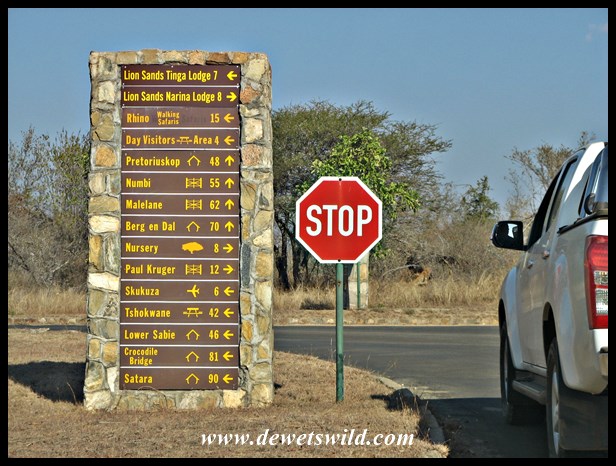
Road signpost at Skukuza

Road signpost at Skukuza

Heading northwards, the H1-2 route crosses first the Sabie and then the Sand Rivers, heading for Tshokwane Picnic Site and Satara Rest Camp (or Orpen Rest Camp, along the S36-gravel road), with the rest of the Kruger National Park lying beyond. Along the way, dont miss the chance to explore the Maroela Loop, where I had probably my best leopard sighting ever!

The H4-1 road to Nkuhlu Picnic Site and Lower Sabie Rest Camp to the south-east of Skukuza,  following the course of the Sabie River, is by far the most popular route in the entire Park (it’s along this stretch of road that we enjoyed our marvelous sighting of a large pride of lions during our August 2014 visit to Skukuza).

Towards the west, the roads head in the direction of three popular entrance gates into the southern Kruger Park, all allowing easy access to Skukuza. The H11 to Kruger Gate offers a worthwile deviation to the photographic hide at Lake Panic, the S1-tar road and S3-gravel roads lead to Phabeni Gate, and the H1-1 leads to Pretoriuskop Rest Camp and Numbi Gate nearby, past the well frequented (by humans and wildlife alike) Transport and Shitlhave Dams and the grand granite view point at Mathekenyane.

Finally, the H3-tar and S114 gravel roads, both with several interesting side loops (to Shirimantanga for example), take visitors to Afsaal Picnic Spot and the mountainous terrain around Berg-en-Dal Rest Camp and Malelane Gate.

To many people, Skukuza is simply too big and too busy to provide the escape “away from it all” they come to seek in the Kruger National Park. During the day, when the camp is positively vibrant with visitors from all over the world enjoying the excellent amenities and calming view over the Sabie River flowing in front of the camp, that may well be true. We’ve always found however that when dusk settles over Skukuza at gate closing time, so does the peace and serenity that’s become synonymous with Stevenson-Hamilton’s “South African Eden“…
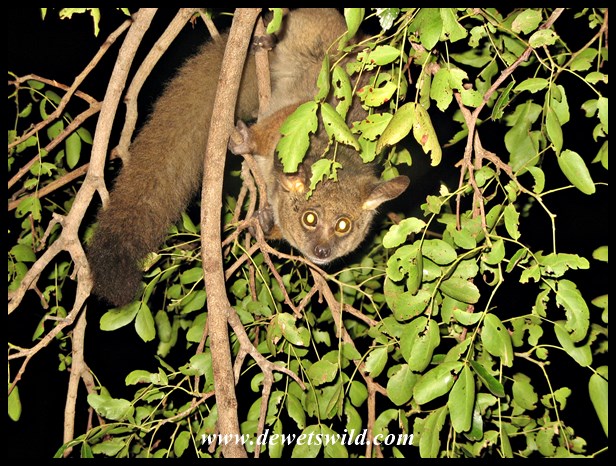
At night, Skukuza's bushbabies come out to play

At night, Skukuza’s bushbabies come out to play


Berg-en-Dal Rest Camp, Kruger National Park

Nestled along the Matjulu Spruit, in the mountainous south-western corner of the Kruger National Park, just 12km from the Malelane Gate, lies the aptly named and very popular Berg-en-Dal Rest Camp (Afrikaans for “Mountain-and-Valley”).

When it opened in February 1984, Berg-en-Dal’s face-brick architecture was a considerable departure from the “traditional” appearance of other Kruger camps. The camp’s buildings blend in perfectly with the mountainous surroundings and the small dam at the central visitor complex is a popular attraction to visitors who enjoy quietly watching a wide variety of game and birds come to the water.

The camp covers an area of approximately 24 hectares, in which the natural vegetation has been preserved as far as possible, providing both privacy and a closeness with nature to Berg-en-Dal’s guests. The camping area has space for up to 70 caravans and tents, and accommodation is available in 69 bungalows, 23 cottages and two luxury guest houses. Facilities available include a restaurant and take-away kiosk, shop, fuel station, conference facilities, laundromat, swimming pool and amphitheatre in which wildlife films are shown in the evenings. Guided game-viewing drives and bush walks (the only way to see some of the San rock art found in the area if you are not booked on the three-night Bushman Wilderness Trail) can be booked in advance or at reception. In the reception building, the information centre provides fascinating insights into the biology and conservation of the black and white rhino. A new picnic facility for day visitors has recently been opened just a short distance from the camp, on the way to Malelane Gate.

The Rhino Trail meanders from the dam at the restaurant along the camp’s fence for a total distance of over 2km, exposing guests to a wide variety of aromatic bushes and trees with frequent sightings of Berg-en-Dal’s avian inhabitants and sometimes even encounters with big game, safely on the other side of the electrified perimeter fence. The first part of the trail, about 600m in length, is made accessible to visually impaired nature enthusiasts by a guide rope linking displays and braille information boards.

Malelane is a small camp just 3km from the entrance gate with the same name, and 9km from Berg-en-Dal. The name means “out-of-sight”, referring to the outpost of warriors posted here to protect Swazi interests in the area in pre-colonial days. Agricultural and industrial development across the Crocodile River, which forms the southern border of the Kruger Park, unfortunately do detract from the visitor experience at this otherwise lovely camp and was a deciding factor in the National Parks Board opting to build Berg-en-Dal in the hills nearby. The Malelane of today is much smaller than the original camp, offering five bungalows and 15 campsites compared to the original camp of 25 huts and 30 camping sites, and does not offer any of the other amenities available at Berg-en-Dal.

Game-viewing in the scenic surroundings of Malelane and Berg-en-Dal can be a richly rewarding experience. Lion and hyena are often seen, but it is leopards and wild dogs that the area is renowned for. Kudu, giraffe and impala, being browsing animals, are frequently encountered, while elephant and buffalo are attracted to the area by the relative abundance of water. A firm favourite (late afternoon) destination with many visitors is the Matjulu waterhole just 4km from Berg-en-Dal, where they while away the last minutes of sunlight before heading back to camp before the gates close for the night. Further afield the H3 main road through to Afsaal picnic site, and the gravel roads to the east of it linking up with the gravel S114-road to the Biyamiti causeway (and onwards to Skukuza) and the S25 that leads to Crocodile Bridge, seldom fails to deliver something exciting.

At home in the Giant’s Castle…

If you are going to brave the Easter weekend traffic on South Africa’s roads you had better be heading to a very special destination. Giant’s Castle Game Reserve in the uKhahlamba Drakensberg Park is just such a place and that’s where the de Wet’s spent Easter 2014.

Arriving at Giant's Castle

Arriving at Giant’s Castle

Getting to Giant’s Castle is no problem. The road is clearly signposted from the N3 highway near Estcourt in the Natal Midlands. From there it is about a 60km drive on a narrow tar road, though beware the last eleven or so kilometres before the gate, which is badly potholed. You’ll be richly rewarded for the slow drive with tranquil rural scenes and waves from friendly locals.

GiantsCastleLandscape (2)

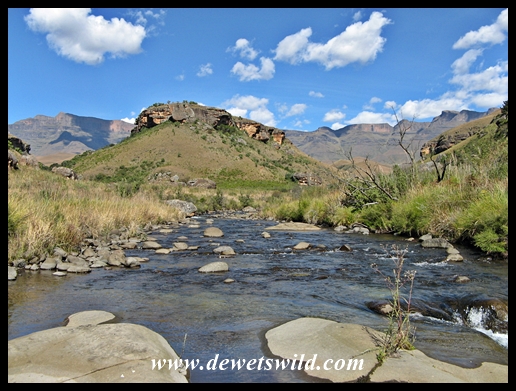
The 7km stretch of road leading from the gate to the hutted camp is an excellent introduction to the breathtaking mountain landscape. In the green valley far below flows the Bushmans River, with the high peaks of the Drakensberg Mountain Range forming a grand backdrop. Inside the reserve, altitudes range from 1,650m at the entrance to over 3,400m at the top of the escarpment and vegetation varies from grasslands to small patches of valley forest.

The reserve was first proclaimed in 1903 to protect the dwindling herds of eland, Africa’s largest antelope, and today these bulky animals are among the most frequently encountered animals in the Giant’s Castle Game Reserve. Over 340 species of birds and more than 50 species of reptile occur in the uKhahlamba Drakensberg Park.

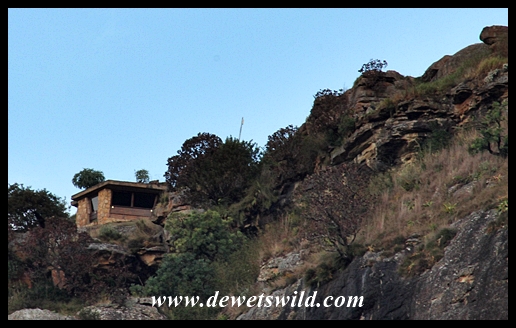
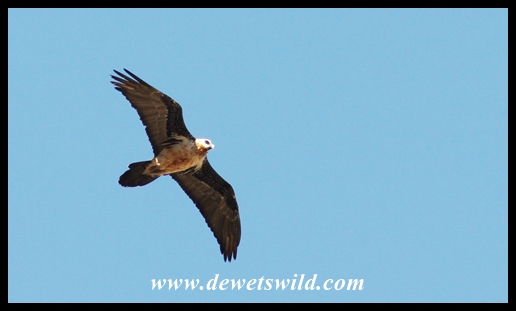
There’s also the cliff-top vulture hide, where photographers can stakeout a wide variety of  carrion-eating birds and animals. It is immensely popular and booked out months in advance, the big attraction being the chance of getting close-up shots of the endangered Bearded and Cape Vultures in their natural habitat.

Giant's Castle's vulture hide

Giant’s Castle’s vulture hide

Bearded vulture in flight

Bearded vulture in flight

Hiking in the mountains is a major activity at Giant’s Castle and there’s a number of trails of various lengths to undertake, ranging in time from a few hours to several days to complete. The most popular trail is the easy 45 minute walk to the Main Caves Museum – around a two-hour return trip if you include the guided tour of the museum. These mountains was once the home of the San people, though today the only proof of their erstwhile presence is the paintings they left on the walls of the many caves in the area, including the drawings on display at the Main Caves Museum.

Along the way back from the caves you can stop for a breather at “Rock 75”, a campsite of Col. Durnford’s 75th Regiment during the 1870’s Langalibalele Rebellion, and take in some more of the region’s rich history.

The hutted camp at Giant’s Castle is a very comfortable place to stay and an excellent base from which to explore many of the shorter trails in the area. The camp offers a good restaurant and small curio shop with a limited selection of groceries. Accommodation is available in two-, four- or six-sleeper, fully self-contained, chalets, each of them themed after a different flowering plant that occurs in the Drakensberg (more than 800 species of flowering plants occur in these mountains). Our unit, number 7 – “Gladiolus”, had a terrific view of the Giant and his Castle and was decorated with exquisitely detailed and annotated paintings of several different species of gladioli.

Crisp mountain air and mountain water so clear and cool that you can’t stop yourself drinking directly from the stream seems good enough reason to brave the Easter traffic, wouldn’t you agree?

GiantsCastleLandscape (9)


Threshold

At the threshold into a prehistoric world; the entrance to the Sudwala Dinosaur Park which we visited in March 2013.

Threshold

Threshold” is the theme for this week’s WordPress Photo Challenge