Tag Archives: nature

Grand

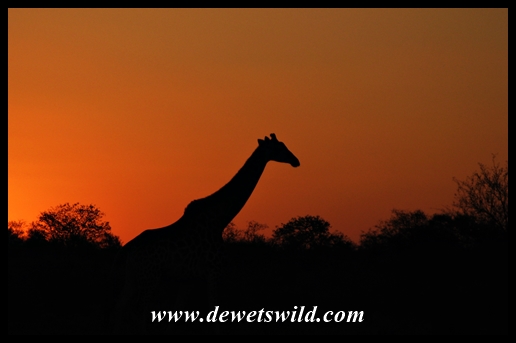
I don’t know of many scenes more grand than an African sunrise, or sunset.

Elephant sunrise, near Letaba in the Kruger National Park

Elephant sunrise, near Letaba in the Kruger National Park

Giraffe sunset, near Olifants in the Kruger National Park

Giraffe sunset, near Olifants in the Kruger National Park

“Grand” is the theme for WordPress’ latest weekly photo challenge.

Pilanesberg National Park, November 2013

Joubert and I spent last weekend (23 and 24 November) in the Pilanesberg National Park with my brother Niel.

Pilanesberg scenery

Pilanesberg scenery

Our weekend started early, leaving Pretoria at 03:00 in the morning in order to be at Kwa Maritane Gate before it opened. Shortly after entering we encountered a bunch of adorable, but shy, jackal puppies holed up in a culvert underneath the road. Not a kilometre further, we had an exciting sighting of a young male lion attempting to hunt, unsuccessfully, a group oz zebras and a lone wildebeest. An excellent start to the day, and our good luck continued as we slowly traveled through the reserve, notching up another lion sighting, herds of elephants, white rhinos and giraffes, a good variety of antelope, and several bird species before arriving at Bakgatla Resort, where we’d be camping for the night.

After setting up camp, we stretched our legs walking through the camping area, inspecting the facilities (none of which we could fault) and intent on buying an ice cream for Joubert, but unfortunately the tiny shop’s supply had already been sold out.

Red-billed hornbill in Bakgatla

Red-billed hornbill in Bakgatla

Camping in Bakgatla

Camping in Bakgatla

Leaving camp earlier than planned for our afternoon drive, we first headed to the Pilanesberg Centre, a historical building that served as the Magistrate’s Court before the Park’s proclamation but today is a popular little restaurant and shop well frequented by visitors, in the hopes of finding Joubert that ice cream he was craving so. Meeting with success on that quest, we set off again looking for Pilanesberg’s wild inhabitants, and again were not disappointed.

At the Fish Eagle Picnic Site we got a close-up glimpse into dung beetle life before spending some time at the photographic hide at Lake Mankwe, enjoying the cool shade and great photo opportunities.

Sunday morning we had a couple of hours to explore some more before having to head home. We explored the western sections of the Park and were struck by how exceptionally dry it still is. With summer being the rainy season, we hope the Park will soon see some good rainfall in order to replenish the dams and streams.

All-in-all a very enjoyable boys camping weekend at Pilanesberg, which we hope to enjoy again as soon as possible.

Golden Gate, 27 November 2013

I made a quick solo visit to Golden Gate Highlands National Park today for work, and of course the cameras went along! With summer now in full swing the Park is looking absolutely beautiful. You can click on any of the images to view them in a carousel gallery:

To read more about Golden Gate Highlands National Park, have a look at our special post on the Park’s 50th anniversary)

Gone camping at Pilanesberg

Joubert and I have just returned from  a most enjoyable weekend spent camping in the Pilanesberg National Park with my brother Niel. More about our trip in an upcoming installment of de Wets Wild!

Tonight we’re sharing this picture from our trip, taken at the Mankwe game-viewing hide, yesterday:

Pilanesberg_23112013


Crocodile Bridge Rest Camp, Kruger National Park

Crocodile Bridge

Almost right in the south-east corner of the Kruger National Park lies quaint Crocodile Bridge, which serves both as an entrance gate into the Park and a rest camp providing overnight accommodation and other amenities to visitors.

Crocodile Bridge sunset

Crocodile Bridge sunset

The first Europeans to set foot in what is today the Kruger National Park was a Dutch expedition from Delagoa Bay (today Maputo, Mozambique) in 1725, under command of Francois de Kuiper, who was forced to turn around at Gomondwane just north of Crocodile Bridge by antagonistic locals.

By 1894 work started on the railway bridge across the Crocodile River, an important section of the Selati Line.
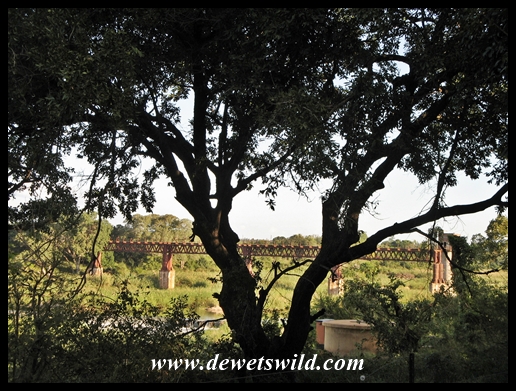
Crocodile Bridge railway bridge

Crocodile Bridge railway bridge

Crocodile Bridge was one of the first four ranger stations in the Sabie Game Reserve, which later became the Kruger National Park. The first stretch of road in the Park was built by ranger de la Porte from Crocodile Bridge to his post at Lower Sabie for use by his personal Model-T Ford, but it was too rough to be used by visitors and so had to be upgraded soon after the Park’s proclamation in 1926. The pontoon over the Crocodile River was in use until 1945, the last in the Park to be replaced with a low-level causeway.

Misty Crocodile Bridge sunrise

Misty Crocodile Bridge sunrise

In March 1929, the Crocodile Bridge area was the scene of one of the most notorious events in the young Park’s history. Two lorry loads of American tourists, visiting South Africa on a cruise ship tour, were driven into the Park on their way to Lower Sabie, when they were caught in a thunderstorm and decided to turn back. A dry stream they had crossed earlier was now in flash flood, but the drivers decided to cross it nevertheless, with dreadful consequence, as the first truck was summarily overturned by the raging water. Luckily no one was killed or seriously injured. When lions started roaring nearby, the soggy tourists climbed into the thorn trees and this is where the local ranger found them hours later; cold, miserable, wet, muddy and tattered. The subsequent reports all over the world describing the Park as a “death trap” lead to it being closed to visitors annually through the wet season, a ruling that was scrapped only in the late 1970’s.
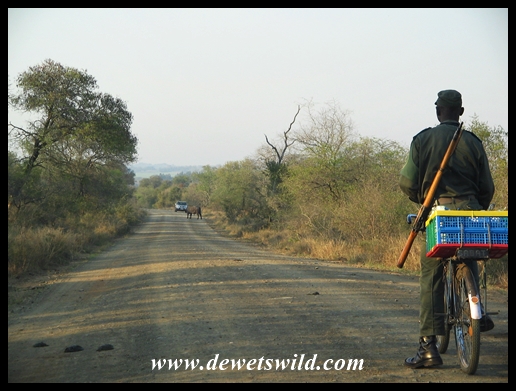
The perils of working as the ranger guide at the Hippo Pools - a herd of buffalo may just cause you to be late for work!

The perils of working as the ranger guide at the Hippo Pools – a herd of buffalo may just cause you to be late for work!

Today, the area around Crocodile Bridge is one of the most popular regions in the Park – little wonder considering that the immediate area around the camp supports large numbers of a huge variety of animals and birds. The tarred road leading to Lower Sabie carries most of the “traffic”, and so we prefer to travel on the gravel roads instead when we are in the vicinity. The S25 road that follows the course of the Crocodile River westwards towards Malelane is a particular favourite that often delivers sightings of predators. A short turn-off from this road takes you to the Hippo Pools, where an armed ranger escorts visitors to the river’s edge for a closer view of the hippos, crocodiles and riverine birds. The S28 Nhlowa Road is an alternative, and highly recommended, route through to Lower Sabie. Near camp, Gezantfombi Dam is just the place to enjoy that first morning coffee or to while away the last couple of minutes before the gates close for the night.

The camp lies on the bank of the Crocodile River and its shady grounds are frequented by a myriad of small animals and a rich birdlife – just keep a watchful eye on the little vervet monkeys who’ll part you from any food left in the open in the blink of an eye! Crocodile Bridge first opened to visitors in the 1930’s but was completely rebuilt in 1987. It offers twenty 3-bed bungalows with their own bathrooms and kitchenettes, eight safari tents that make use of communal facilities, and a small campsite (with plugpoints). The camp also has a small, but well stocked, shop and a fuel station.

It’s the family-friendly atmosphere that draws us to Crocodile Bridge most. The spacious, green, shady lawns of the camp, the game-rich surroundings and the peacefulness of it all will see us return again and again…
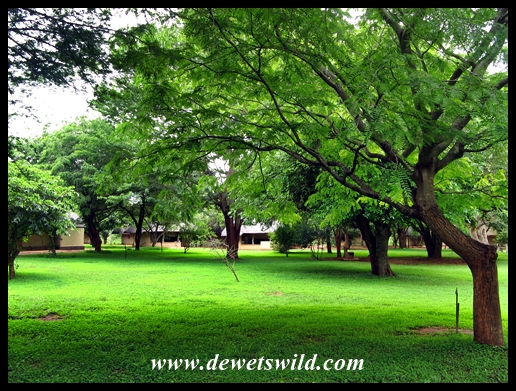
Crocodile Bridge

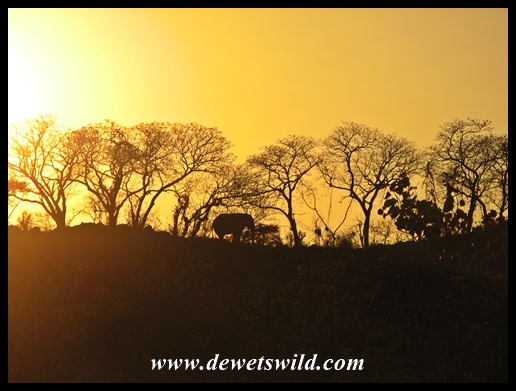
Crocodile Bridge

Unexpected

Finding a little bat in a corner of a kitchen at Shingwedzi Rest Camp, was definitely an unexpected, but not unwelcome, surprise.

Unexpected

Unexpected” is this week’s weekly photo challenge from WordPress.

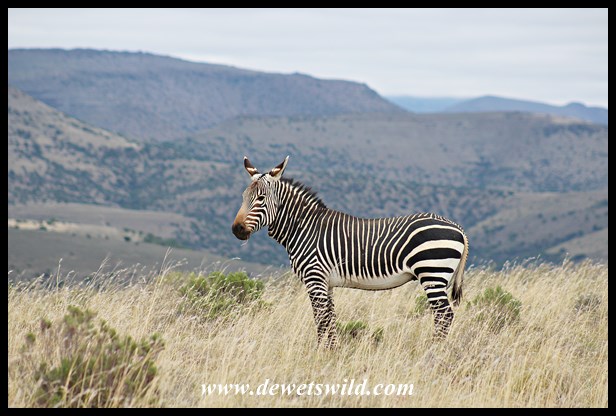
Cape Mountain Zebra

Equus zebra zebra

The Cape Mountain Zebra is a smaller, and much rarer, cousin of the better known plains zebra. It occurs naturally only in the southern provinces of South Africa and is considered vulnerable, though the population is increasing in size thanks to dedicated conservation work at especially the Mountain Zebra and Karoo National Parks, both of which offers an excellent chance of seeing these beautiful animals in their natural habitat.

Mountain Zebras occur in small family groups of up to 15 animals, led by a dominant stallion, while young stallions roam around in bachelor groups after being ejected from the groups they were born in. Adults of both sexes are extremely protective of their young.

Mountain Zebras inhabit, as their name suggests, dry, rocky, mountainous areas and the surrounding plains and valleys (the latter being important as hiding places against cold weather). They are almost exclusively grazing animals and can stay without water for up to three days, though they prefer to drink daily if surface water is available.

Mares give birth to a single foal at any time of the year. With an adult weight of around 250kg and shoulder height of 1.25m, the Cape Mountain Zebra is slightly smaller than the plains zebra.

Layers

For this week’s photo challenge, themed “Layers“, we’re taking you back to one of our all time favourite destinations, the Golden Gate Highlands National Park, where the layers of differently coloured sandstone cliffs are the Park’s most recognisable feature.

(click on any of the images to see them enlarged)

Face to face with nature…

Joubert and I spent the afternoon strolling through our local Moreletakloof Nature Reserve today, encountering a variety of animals along the way and accompanied by a most relaxing chorus of birdsong.

Face-to-face_Moreletakloof_20131109_3

Face-to-face_Moreletakloof_20131109_2

Face-to-face_Moreletakloof_20131109_1


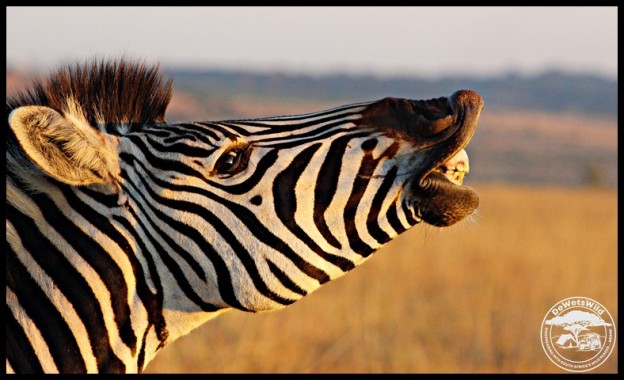
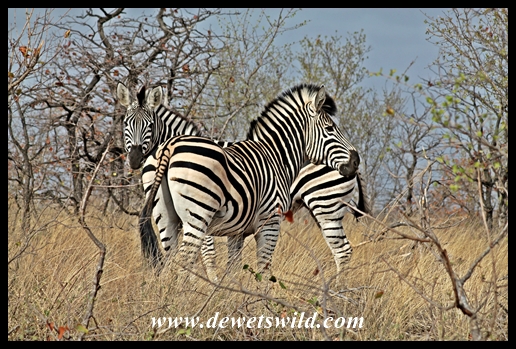
Plains Zebra

Equus quagga

Plains zebra_Kruger_9

The photogenic plains zebra is one of Africa’s most familiar and popular large game animals and they occur in good numbers in protected areas almost all over South Africa.

They occur in small and relatively stable family groups of up to 30 animals, consisting of a dominant stallion, up to nine mares and their foals of various ages. Young stallions are kicked out of their maternal groups at about the age of three years, and then band together in bachelor groups. Larger groups, that sometimes number into the thousands, are aggregations of these family and bachelor groups. Adults are normally very protective of the foals, though stallions will often kill foals when they take over a family group from another stallion.

Plains zebra inhabits open grasslands and bushveld and avoid densely vegetated areas. They are extremely dependant on water and need to drink daily, and subsists almost exclusively on a diet of grass.

Foals are born at any time of the year, though births peak around the start of the rainy season. The foals can stand and walk within twenty minutes of birth and are suckled until about 13 months of age. Adults weigh between 220 and 340kg (stallions being only slightly heavier than adult mares) and stand up to 1.4m high at the shoulder.

Zebras are a favourite prey of lions and spotted hyenas, and foals also often fall prey to leopards, cheetahs and wild dogs. As a result, their life expectancy in the wild is usually below 20 years.

One of the most inspiring conservation projects in South Africa is the breeding of zebras that resemble the extinct quagga (Equus quagga quagga), the southernmost subspecies of the plains zebra that was hunted to extinction in the late 1870’s, with the last specimen of this uniquely South African species of horse, a mare, dying in distant Amsterdam Zoo in 1883. Over a century later however it was realised, through DNA analysis, that the quagga was a localised race of the still extant plains zebra, and the Quagga Project came into being to try and bring them back through selective breeding. With each subsequent generation showing more and more quagga-like characteristics, one day we may again see true-to-form quaggas roaming their native country in vast numbers.