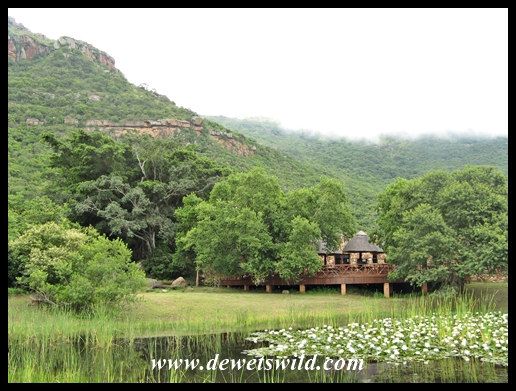
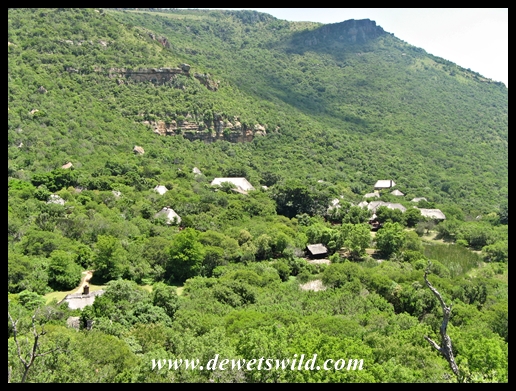
When visiting Ithala Game Reserve, it pays to spend some time strolling through Ntshondwe, the reserve’s award-winning main camp.
Ntshondwe’s excellent amenities all blend beautifully into the environment and despite offering all modern conveniences, one never feels cut-off from the natural beauty that surrounds you.
Ntshondwe reception
Ntshondwe Information Centre
Ntshondwe Information Centre
Ntshondwe’s shop
The conference and function venue
One of Ntshondwe’s chalets
Take one of the shady pathways that lead through the camp’s lush indigenous vegetation.
Ntshondwe pathway
Ntshondwe pathway
Ntshondwe pathway
Fig trees are popular with birds and animals alike
The flowers of the Sickle Bush
Stop and have a closer look at the variety of moss, toad stools and mushrooms that thrive in the dampness of the forest floor.
Fungal variety in Ntshondwe
Fungal variety in Ntshondwe
An easy-to-overlook patch of moss
Fungal variety in Ntshondwe
Fungal variety in Ntshondwe
Fungal variety in Ntshondwe
All around you you’ll notice little animals quietly going about their daily lives in the undergrowth – insects, spiders, frogs, toads, lizards and birds
CMR Blister Beetle
Bee and White Water Lily
Suspended spider
Eastern Olive Toad
Tiny Raucous Toad
Tiny Raucous Toad, no bigger than a pinkynail
Painted Reed Frog
Tree living agama lizard
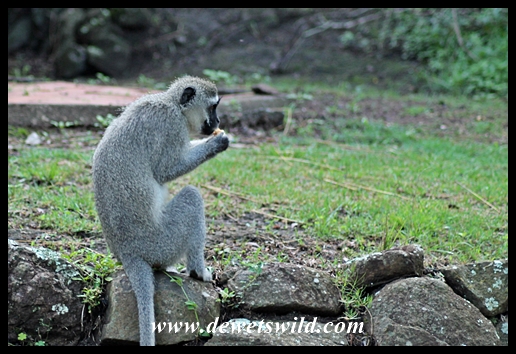
Even bigger animals – especially dassies, monkeys and bushbuck – are quite at home around Ntshondwe’s human visitors.
And then, to end your walk on a high, why not head onto one of the surrounding hills – easily accomplished along the well marked trails – for a breathtaking view over Ntshondwe and the reserve?
Suffering from extreme wilderness withdrawal symptoms – yes, we know we’re only back in the city for a week now 😉 – we headed to our local nature reserve, Moreletakloof, this afternoon for a bit of a “fix”.
Our 2013 December holidays kicked off at one of our favourite South African wild places; the scenically spectacular Ithala Game Reserve in the north of Kwazulu-Natal province.
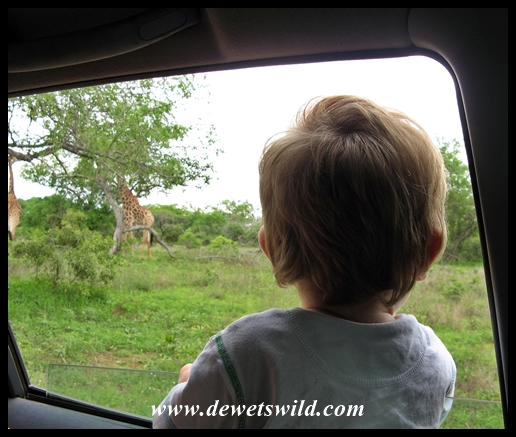
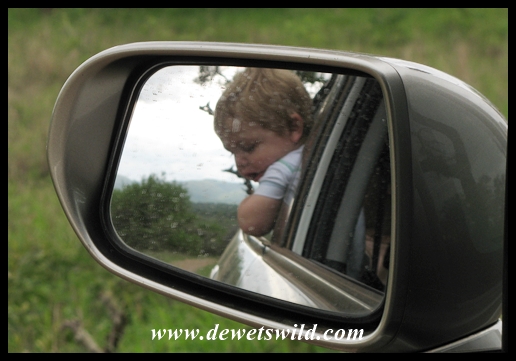
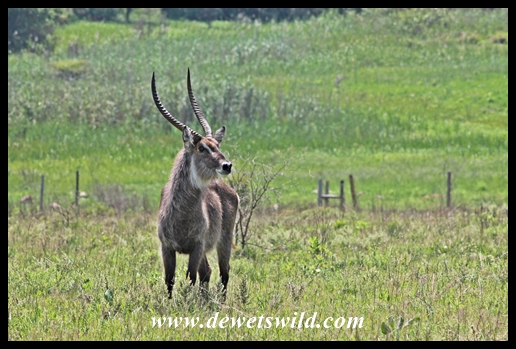
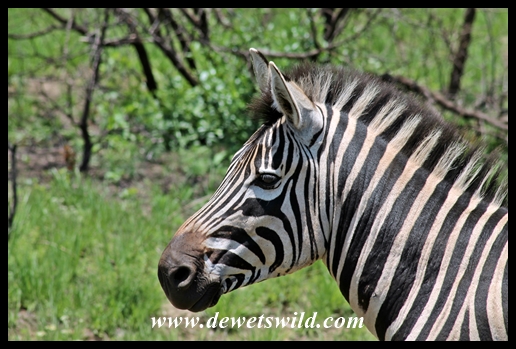
We’ve become accustomed to start seeing game as soon as we enter Ithala’s gates, and this visit was no different.
Waterbuck
Plains zebra
We were booked to stay in a self-catering chalet at Ntshondwe Resort, Ithala’s award-winning main camp, for four nights from the 14th of December (more about Ntshondwe here). I quickly had to leave the reserve to have a punctured tyre fixed in the nearby hamlet of Louwsburg while Marilize and Joubert settled in, and before long we set out on our afternoon drive. Inclement weather was setting in and while the animals were hiding away from the thunder and lightning the scenery more than made up for the sparse game viewing.
The rains are on the way!
The rains are on the way!
The rains are on the way!
Have a look at our “community photo challenge” post for other photos taken on our first day at Ithala, before the massive thunderstorm (that knocked out the electricity at camp for hours overnight) set in.
The next morning we went out early for a short drive before spending most of the day settling into the holiday groove in camp.
Orange-throated longclaw
Mushroom on rhino dung
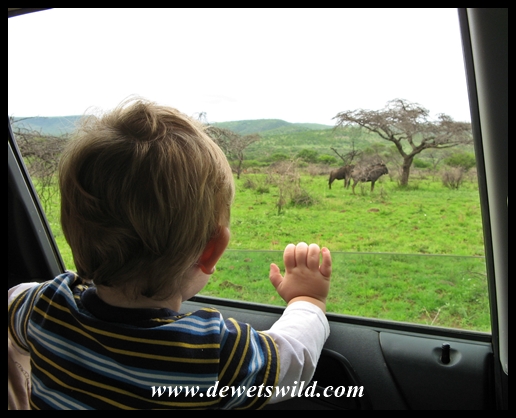
Whenever we visit Ithala we treat ourselves to a guided sundowner drive. Ithala’s one of the few game reserves that allow children as young as Joubert to participate in these open vehicle safaris, and he enjoys it tremendously (as does his parents). The guides share a wealth of knowledge about the reserve and its inhabitants, and the drive often takes in roads that are not open to the general public, thus exposing visitors to areas they would not have experienced otherwise.
Eland
White rhino and Ithala scenery
Mountain reedbuck
Plains zebra
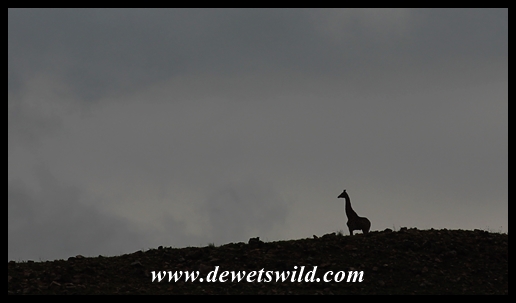
Giraffe
Half-way through the drive there’s time to stretch the legs and enjoy a cool drink
Giraffe after sunset
The setting sun illuminating the clouds from below
Grey duiker in the spotlight
Unfortunately the Dakaneni road down into the Pongola River valley, which is one of our favourites at Ithala, was rendered impassable due to the heavy rains the previous couple of days. While we couldn’t enjoy our traditional breakfast picnic beneath the massive trees at the river picnic site, we still had wonderful sightings on the roads that we could traverse. It is difficult to decide which was our most memorable experience of this visit: the excellent leopard sighting we had on the Ngubhu loop, or the number of close encounters we had with the magnificent and highly endangered black rhinos? Not to mention the inspiring scenery!
Leopard on Ngubhu Loop in Ithala Game Reserve
Eland on the way to Bergvliet
Black rhino pair
Black rhino in dawn silhouette
Red hartebeest
Blue wildebeest youngsters
Reedbuck males squaring off
Giraffe
Angry black rhino
White rhinoceros
Evidence of early human habitation
Ithala scenery
We try to visit Ithala at least once a year – in our opinion it is one of the most diverse and beautiful South African conservation areas and never as crowded as some of the more well-known reserves sometimes feel. The staff are always very hospitable and willing to assist with any issues and the facilities are all well maintained. If you’d like to read more about Ithala you can have a look at two previous detailed blog posts we published about the reserve: Ithala Game Reserve and Ithala Game Reserve – December 2012.
On our recent visit to Hluhluwe-Imfolozi Park the babies of a wide variety of animals and birds were much in evidence.
Many of the new arrivals were enjoying newly made friendships, like this warthog piglet and nyala lamb in Mpila camp:
Nyala and warthog playing in Mpila
Nyala and warthog playing in Mpila
Nyala and warthog playing in Mpila
The African bush is not by any means a child-friendly environment however, as this little Egyptian gosling’s experience illustrates. Newly hatched, it was following its parents to a pond somewhere in the wilds and was obviously struggling to keep up in the extreme December heat. Not off to an easy start…
Tough beginning for an Egyptian gosling
Tough beginning for an Egyptian gosling
Tough beginning for an Egyptian gosling
You can click on the images above for a clearer view. This week’s photo challenge theme from WordPress is “Beginning“
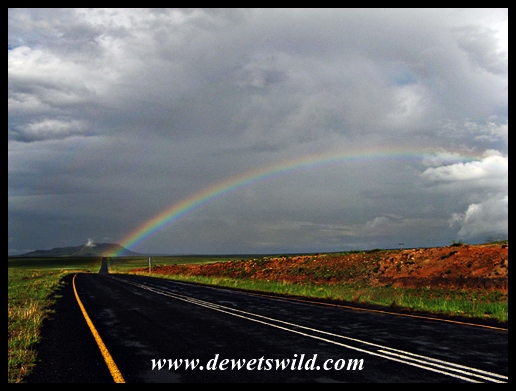
When surrounded by nature’s beauty, and with the end of the rainbow conveniently placed along the road you’re already traveling, who wouldn’t experience a feeling of extreme happiness!?
This photograph was taken this afternoon, here in the Golden Gate Highlands National Park, and we post it here in response to WordPress’ Weekly Photo Challenge, themed “Joy“.
Yes indeed, we’re back in the Golden Gate Highlands National Park, and yes, it is very difficult for us to stay away from this beautiful place for very long 😉
Minutes after we arrived and checked into our accommodation at Glen Reenen Rest Camp, a mighty mountain storm passed through, and following the deluge little waterfalls and small streams were in evidence all over the Park.
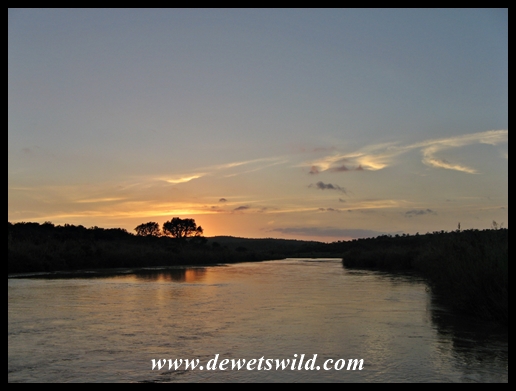
It was with heavy hearts that we departed from Hluhluwe-Imfolozi Park this morning, and the beautiful sunrise over the Black Mfolozi River did not make the parting any easier…
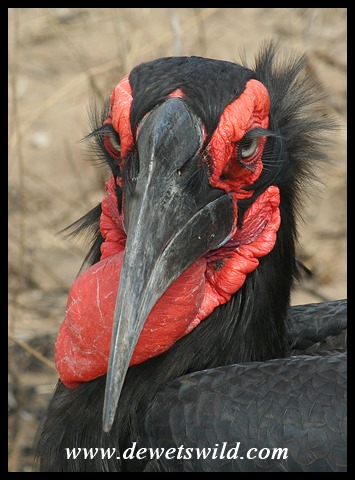
The Southern Ground Hornbill is an easily recognisable bird that occurs in the northern and eastern parts of South Africa. Turkey-sized, weighing up to 6 kilograms, very confident, and with the longest eyelashes imaginable, they make great photographic subjects.
Ground hornbills are mostly found in woodland or savanna with large trees used for roosting, and nesting in deep holes in often dead trees.
In the early morning, their booming, lion-like, calls can be heard up to 3 kilometres away. Groups of between 2 and 11 individuals occupy home ranges of about 100 square kilometres. These groups consist of a dominant alpha pair, the only ones in the group that breed, and their “helpers” of various ages. Though they lay clutches of two or three eggs between September and December and incubate the eggs for 45 days, only one hatchling is raised to fledging, the others either dying of neglect or being killed by their older sibling. The chick leaves its tree-hole nest at three months of age and is then cared for by its parents and their helpers for up to two years. This means that a pair of ground hornbills produce a maximum of one offspring only once in three years which is an exceptionally low rate of reproduction for a bird – some studies have found that only one chick every nine years reaches adulthood! Ground hornbills can live for up to 30 years in the wild.
Though they are quite capable flyers, you’ll mostly see them striding across the savanna – they can walk distances up to 11 km a day – searching for food. Ground hornbills are predators and their diet ranges from small fry like insects, snails, lizards and frogs to large snakes and mammals up to the size of hares! They’re often encountered near veldfires and on burned areas, searching for exposed prey fleeing the flames or scorched morsels ready for the picking. They’ve also learnt that visitors to game reserves often offer handouts of food from inside motor vehicles, a practice that should not be encouraged as it is detrimental to their health and negatively affects their natural behaviour.
Unfortunately, the Southern Ground Hornbill is an endangered species in South Africa. Having lost much of its habitat to farming practices and tree harvesting, they’re also targeted by poachers supplying the traditional medicine (or muthi) trade, in which their ground up bones are regarded as “protection” against lightning strikes. This, coupled with their slow reproductive rate, has pushed them to the brink of being wiped out. Today, the only place in the country where they can be found reliably is in the Kruger National Park, where the population stands at about 700 individuals. In an effort to boost their numbers, conservators often remove the second-laid egg from nests for hand-rearing and then later release the juvenile bird back into the wild, and in this way founder populations have been re-established at a handful of reserves from which they’ve disappeared.
Ground Hornbills at sunrise
Ground Hornbill in flight
Ground Hornbill
Ground Hornbill
Ground Hornbill feasting on termites
Ground Hornbill (photo by Joubert)
Southern Ground Hornbill
Ground Hornbill (photo by Joubert)
We didn’t expect to find a pair of Southern Ground Hornbills roaming the grasslands in the rain at Rugged Glen!
Ground Hornbill
Ground Hornbill juvenile
Southern Ground Hornbill
Southern Ground Hornbill
Southern Ground hornbill
Ground hornbill
Ground hornbill, S100
Ground hornbill
Ground hornbill
Southern Ground Hornbill
Southern Ground Hornbill
Southern Ground Hornbill (photo by Joubert)
Southern Ground Hornbills
Ground Hornbills striding past a young Nile Crocodile