Tag Archives: Kruger National Park

Hi from Kruger!

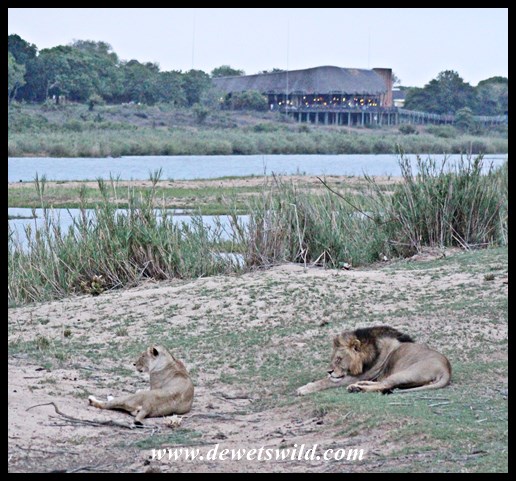
It’s the first day of the winter school holidays, and we find ourselves in the Kruger National Park again. Seems this lazy lion was as happy to see us back here as we were to see him!

25-June-2016

We’ll be spending the next few days at Satara, before moving on to Mopani, and hopefully we’ll have good enough signal to send a daily postcard from the bush.

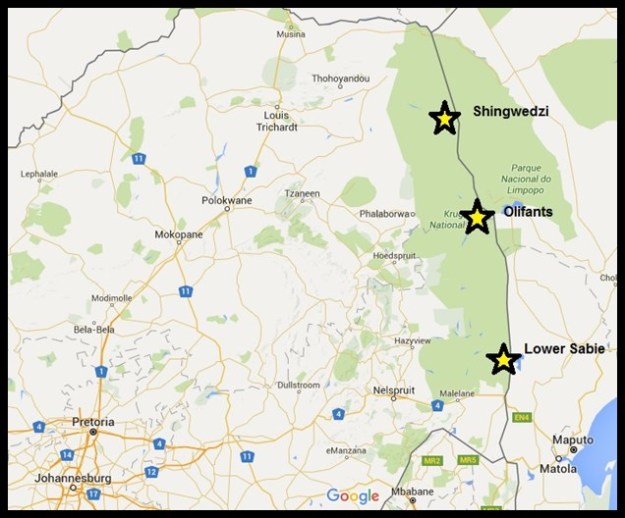
Never miss an opportunity to go back to Lower Sabie and Olifants!

There was a reason I dedicated the previous two posts on de Wets Wild to Lower Sabie and Olifants, two of the most popular camps in the Kruger National Park. That is because I had the opportunity to visit both camps again earlier this week, and now that you have been introduced to both destinations we can all just sit back and enjoy some photos from this latest trip. Here’s hoping you enjoy the gallery as much as I enjoyed putting it together!


Sweeping views over the Olifants

Olifants Rest Camp, Kruger National Park

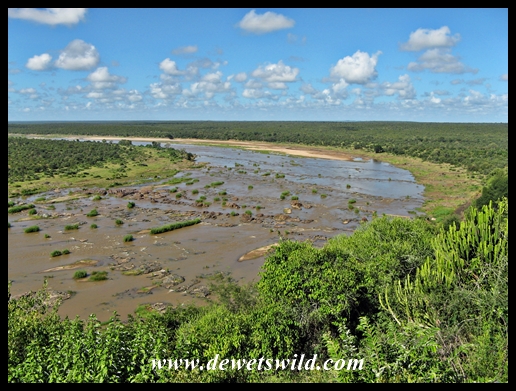
Olifants Rest Camp undoubtedly offers the best views of any of the Kruger National Park‘s camps, situated as it is on a cliff high above the Olifants River in the central regions of the Park. Many guests spend all day on their accommodation unit’s veranda, using their binoculars to scan the river below and the plains beyond for wildlife, or simply soaking in one of the grandest vistas in wild Africa.

Olifants was opened in June 1960, though it was closed for a 16 month period in the early 1970’s after a fire destroyed the reception, restaurant and shop. The cliff-top viewpoint near the restaurant is one of the most popular spots in the entire Park, and during the day is always packed with spectators enjoying the wildlife show along the river banks below. The camp offers guests a choice of 112 accommodation units, ranging from 2 and 3 bed bungalows to two luxurious and very exclusive guest houses that accommodate up to 8 guests each. Some of the accommodation units have been built right on the edge of the cliff, offering guests the most exquisite views, but you have to book a year in advance if you want to secure one of those. The two-bedroomed cottage number 14 is a personal favourite of ours. Olifants also offers guests a Mugg & Bean restaurant (itself with stunning views), a shop, filling station, small meeting room, swimming pool, picnic area for day visitors and guided activities.

Nearby, tiny Balule is a much more rustic camp offering accommodation in a small camping area and six very basic three-bed huts on the southern bank of the Olifants River. The huts were built in 1930 in the “Selby” style: a rondavel (round hut) without any windows, just a gap all around between the roof and wall for ventilation. The huts share a communal kitchen (with a paraffin freezer) and ablution block, and the same applies to the camping sites. Balule has no electricity and paraffin lamps are used to provide light at night. During the Apartheid years Balule was available only to non-white visitors.

Just outside Balule, a low level causeway crosses the Olifants River. The pontoon-crossing that operated over the river since 1929 was replaced by the causeway in 1937, but the old bridge was extensively damaged in the massive floods of January 2012 and had to be rebuilt. The high-span bridge across the same river, on the main tarred H1 route through the Park, lies about 5km due west from Balule and affords visitors the opportunity to stop and stretch their legs while enjoying the views up- and downstream. Both bridges are very popular with guests to Olifants, as they allow close-up views of so many of the river’s denizens.

South of Olifants, the roads initially follow the course of the river before leading down to the Satara-area. Nwamanzi offers more spectacular views over the Olifants, and the open plains south of the river host a huge number and variety of game and birds. Bangu waterhole and the Hlahleni stream crossing on the S90, as well as the Ngotso Weir on the S89, are especially rewarding spots to wait for the herds (and the predators that prey on them) to come and drink.

North of Olifants you enter the mopane-dominated northern plains of Kruger. There’s two general options of routes leading northwards from Olifants, both leading to Letaba Rest Camp. The quickest route follows the tarred H8 and H1-5 roads and is often very quiet game viewing-wise, especially once the road turns away from the river. The gravel S44, S93 and S46 roads follows the course of the Olifants and Letaba rivers through some very rocky terrain with several stream crossings and, apart from a lovely viewing point downstream from camp and the historic Von Wielligh’s Baobab, usually also offers lots more wildlife to see.

For scenic splendour alone, there’s no other camp in Kruger that can compete with Olifants. Combine that with the camp’s great facilities and excellent game viewing drives in the vicinity, and you’ll understand why it has become a firm favourite with many Kruger visitors.


Lower Sabie Rest Camp, Kruger National Park

Lower Sabie must be the most popular destination in the Kruger National Park. It is exceedingly hard to get a booking here if you don’t book a year in advance. In peak season, even just finding parking to visit the shop or restaurant can be a challenge, as visitors from all over the the southern sections of the Park flock to the camp. The camp’s location on the banks of the Sabie River, in an area of exceptionally high-quality grazing in the south-eastern corner of the Park, ensures that its surrounds is frequented by an astounding variety and number of herbivores and their attending predators, making for game-viewing heaven!

Lower Sabie (22)

The Sabie River got its name from the Shangaan word “saba” meaning fear, probably due to the large number of enormous crocodiles that call the river home. The dam in front of the camp came about after the causeway across the river was built in 1987 (it had to be rebuilt higher after the floods in February 2000).

The first tourist accommodation at Lower Sabie was a 5-bedroom house converted from ranger Tom Duke’s quarters in 1930, but this was demolished again just two years later after becoming dilapidated. The only access to Lower Sabie was via Gomondwane from Crocodile Bridge until the road from Skukuza reached it in 1931. The next attempt at providing guest accommodation at Lower Sabie then commenced in 1936, when three buildings, built in a u-shape and each housing six bedrooms, were erected – these units are still used as accommodation to this day, but has been extensively renovated since. Over the years, more accommodation and a camping site was added to the camp, leading up to an extensive project to revamp and enlarge Lower Sabie in the early 2000’s. Today the camp provides overnight accommodation in 117 huts, bungalows, cottages and safari tents and has space for 34 caravans and tents in its camping area. Lower Sabie’s restaurant (Mugg & Bean), with its deck overlooking the Sabie River, is especially popular. The camp has a well stocked shop for groceries and curios, a fuel station, swimming pool for overnight guests and a day visitors picnic area near the gate. Along the river, in front of the bungalows south of the restaurant, lush lawns and deep shade provided by enormous trees is just the place to spend a lazy afternoon, surrounded by Lower Sabie’s prolific birdlife.

We can certainly recommend joining at least one of the guided activities on offer from Lower Sabie, as excellent sightings are almost guaranteed.

Sunset Dam is a brilliant spot just a kilometer from Lower Sabie, and as its name suggests is very popular with visitors whiling away the last minutes before they have to get back to camp in the evening. You can park your vehicle right on the water’s edge, allowing excellent photographic opportunities of hippos, crocodiles, wading birds and herds of game coming to quench their thirst.

Heading north from Lower Sabie along the H10 tarred route to Tshokwane, you’ll encounter the first highlight of this route just minutes after leaving camp. The causeway across the Sabie River is a favourite spot for many visitors, who flock here to enjoy glorious sunsets and an abundance of game and bird species attracted to the water. The plains between Lower Sabie and Tshokwane is home to incredible herds of zebra and wildebeest at the end of winter, and is also an excellent place to look for reedbuck, one of the rarer antelope that occurs in Kruger. Of course, with so many herbivores roaming around it stands to reason that the predators are not far behind. If you, like us, enjoy your game viewing with as little other traffic as possible, try the gravel S29, S122 and S128 loops that turn off the main road as alternatives to explore this area. Two other beautiful places not to be missed is Mlondozi Picnic Spot, overlooking a large dam from Muntshe mountain, and Nkumbe Viewpoint, which offers an exceptional view over the open plains of Kruger.

The tarred H4-2 Gomondwane Road leading south to Crocodile Bridge is another very productive route for game viewing, though we personally prefer taking the gravel loops running roughly parallel to the main road (S28 Nhlowa Road, S82 Mativuhlungu Loop, S130 Gomondwane Loop and S137 past Duke’s waterhole) as these carry a little less vehicle traffic.

The H4-1 road between Lower Sabie and Skukuza carries more traffic than any other road in Kruger, and not without reason. There’s an excellent chance of seeing all the “big 5” game animals and so much more along this route, which follows the course of the Sabie River, on just one drive. The vegetation along the portion of this road nearer Lower Sabie is much more open than the stretch between Nkuhlu and Skukuza, making for even better game viewing. Keep your eyes open for lions and leopards at the rocks at the Lubyelubye stream crossing about 5km from Lower Sabie, as this is one of their most reliable haunts. Also, don’t miss the short S79 gravel loop that crosses the Nwatimhiri causeway, which is another favourite spot for feline predators. Nkuhlu Picnic Spot is a great place to get out, stretch the legs and have a bite to eat (though beware the monkeys and baboons that hang around here, as they will attempt to steal your picnic if they get even the slightest chance!). The gravel S30 Salitje Road along the northern bank of the river is a wonderful alternative route back to Lower Sabie.

If all these photos did not convince you, allow us to reiterate: Lower Sabie IS game-viewing heaven! Remember to book early if you also want to enjoy all it has to offer.

Summer heat at Shingwedzi

After three enjoyable nights in Olifants‘ spectacularly situated unit 14, we had only a third of our December holiday in the Kruger National Park left. Happily that didn’t depress our mood too much, as we would be spending the last three nights in our beloved Shingwedzi Rest Camp.

Soon after leaving Olifants, we came across a cantankerous hippo bull blocking the road to the north. While waiting for him to get out of the way, in his own time of course, a rustle in the dry mopane leaves beside the roads alerted us to a hyena that was also waiting for the traffic to clear…

Our plan was to stop at Mopani for brunch, so we only had a quick cup of coffee and a rusk or two at Letaba, no snakes in sight this time! On the way we couldn’t resist making a quick detour to marvelous Mooiplaas waterhole, as there is always something interesting to see there, and were handsomely rewarded with a couple of tsessebe sightings as well as a blue wildebeest that was having far too much fun rolling around in elephant dung to be considered sane…

Mopani was a delight of feathered friends, with there even being a pair of African Paradise Flycatchers nesting in a tree right between the shop and the Tindlovu restaurant (which serves delicious mince-meat jaffles by the way!)

The final stretch to Shingwedzi delivered special sightings of yet more mating lions, unfortunately spoiled by an idiot who got out of his car to try and get a better photo, as well as a beautiful old tusker.

Whenever we stay at Shingwedzi, there’s only one road we take for our first afternoon drive – a slow drive along the S50 gravel road that follows the river, offering ample opportunity to appreciate the diverse and abundant wildlife that congregate on the river bank. That’s exactly where we pointed the Jazz’s nose after checking into our cottage, number 29, donated by the Wildlife Society in the 1950’s.

Around Shingwedzi the best viewing is usually along the watercourses, which is why we decided on the S56-route along the Mphongolo River for our first morning drive from Shingwedzi.

That afternoon, Red Rocks and Tshange viewpoints to the southwest of camp beckoned.

One last guided nightdrive in search of nocturnal wildlife delivered much better sightings than the windy nightdrive we undertook from Lower Sabie a few days earlier.

By the time the sun rose over the horizon on our last full day in the Park, we were already travelling along the S50-route enjoying the Shingwedzi River’s abundant wildlife and awesome scenery before returning to camp and a late breakfast.

Shingwedzi was nice and quiet in the early morning, as most guests were still out on the road searching for game, giving us an excellent opportunity to amble through the camp.

With such a wide variety of bird and animal life around Shingwedzi it was a rather difficult decision which area we’d drive to on our final afternoon. In the end we opted for the Mphongolo Loop (S56) again, and what a great choice that was! We’ve already shown you pictures of the waterhole meeting between large herds of elephants and buffaloes we witnessed that day. Dodging a couple more elephant and buffalo herds along the way, navigating through several herds of antelope and scanning the landscape for new species of birds to add to our ticklist, we were thrilled that our afternoon was concluded with a leopard lying in wait at a small waterhole.

And so, our time at Kruger National Park has come to an end, for this visit at least as, of course, the next trip has already been booked. All that remained was to drive down to Phalaborwa Gate, from where Pretoria lay a hot six-hour drive away.


KNP Dec15


Summer heat at Olifants

After three nights at Lower Sabie it was time to move northwards to the central regions of the Kruger National Park. Just as we set off, a light drizzle started falling, and kept falling for the entire 50km or so distance between Lower Sabie and Tshokwane picnic site. While the low clouds meant that we could not enjoy the magnificent view from the top of Nkumbe mountain, we did not mind having a break from the previous few days’ oppressive heat! Pretty soon little puddles were forming on rocks and in the road, and while the shower would not have broken the drought, it would have brought a little bit of relief to the parched veld.

Between Tshokwane and Satara we encountered two more pairs of mating lions. While one couple moved away from the road for more privacy, the other was a lot more relaxed in the company of the few cars that had gathered to watch them. The prevailing drought makes catching prey much easier, and the way the lions are going on there will soon be many more young and hungry mouths to feed.

After lunch (take-away pizzas enjoyed in Satara‘s day visitors area) we tackled the final stretch of the long drive from Lower Sabie to Olifants Rest Camp. The plains between Satara and the Olifants River were positively teeming with wildlife of all descriptions.

Checking in at Olifants Rest Camp, we were given the keys to our cottage, number 14, one of the most popular units in the camp, and for good reason. The view of the wide bend of the Olifants River with its pods of hippos and lurking crocodiles far below, the endless wild plains beyond and the continuous stream of game and birds arriving to slake their thirst, is almost unrivaled anywhere on the continent, and you can take it all in from the comfort of a sofa on the wide veranda!

With the area around Olifants suffering from an extreme drought and intense heat, we thought it best to stick to the routes along the Olifants River and some of its tributaries that still held water for our afternoon drive. The high bridge and low-level causeway crossing the Olifants, and the weir at the Ngotso-crossing (on the S89 route) proved to be hot-beds of wildlife activity, though in the areas in between, away from the water, there were few animals to be found.

Next morning we were already waiting, with a few other cars, at Olifants’ gate for the 04:30AM opening – that’s the way to maximise your chances of encountering large predators on the prowl in the hot summer and we didn’t have to drive far before encountering two spotted hyenas just as first light started painting the African morning. Our drive took us along the Olifants and Letaba rivers, an area of rugged beauty, to Letaba Rest Camp, where we planned on enjoying our picnic breakfast. We didn’t however bargain that we’d be joined by a snake, even if only a slightly venomous Olive Grass Snake. Happily the snake was very well behaved and totally relaxed, and so he enjoyed the warm morning sun while we enjoyed our rusks and coffee…

Seeing as the Olifants river delivered such enjoyable sightings to us the previous day, we again focussed on the H1-5 tar road and the connecting S90, S91 and S92 gravel roads the following afternoon. This time we worked a quick detour to Bangu waterhole, some distance to the south of the river, into our drive as well – a well rewarded decision as we found a pair of black-backed jackals and flock of Temminck’s Coursers at the Xipembane stream, which still held a bit of water.

Driving up to Olifants two days earlier, the tremendous concentrations of game around Satara really drew our attention, and we decided that we had to explore that area a bit more on our final full day at Olifants. With the tarred road between Olifants and Satara carrying most of the tourist traffic, we opted to rather follow the gravel S90 “old main road”, past Bangu and Gudzani waterholes, to Satara, and then return to our lovely cottage at Olifants along the tar route when the day starts hotting up. Ticking excellent sightings along the way; a large pack of hyenas, showboating hippos, a rarely seen honey badger, two regal lions, more jackals and a quick view of a pair of cheetahs surrendering their kill to descending vultures, not to mention a huge number of more commonly seen birds and animals, and despite heavy cloud cover, a howling wind and the irritation of a punctured tire (quickly fixed at Satara’s car wash), you’ll appreciate that we were a very happy group when we arrived back at Olifants that morning!

After spending the hot midday hours in camp appreciating the enchanting view and the accompanying birdlife, it was time for our final leisurely afternoon drive along the Olifants and Letaba Rivers. While the drive wasn’t anywhere as exhilarating as our drive that morning, it did give us another opportunity to enjoy the rugged scenery of the valleys these rivers have carved over aeons through the Lebombo foothills.

We still had three nights left at Shingwedzi Rest Camp after our time at Olifants, and we’ll be telling you all about those next week. We’ll also be telling you more about Olifants and its environs in an upcoming edition of de Wets Wild.


Summer heat at Lower Sabie

We knew our December 2015 visit to the Kruger National Park was going to test our personal thresholds for high temperatures. It is general knowledge that South Africa’s Lowveld region has sweltering summers, confirmed by the weather forecasts in the week before our departure. On our early morning way, descending into the Lowveld along Schoemanskloof on the N4-highway, we were amazed at how quickly the outside temperature our car was registering was climbing upwards. By the time we arrived at Malelane Gate just after 08:00, we had reached 33°C, with the sun blazing down relentlessly. And yet, we couldn’t think of any place we’d rather be; we were back in South Africa’s flagship National Park, one of our favourite wild places, and we had ten days to explore the length and breadth of it to look forward to!

We were heading to Lower Sabie, and instead of following the tar roads via Skukuza we opted for the more direct route, along the gravel S25 and H5, from Malelane. Of course we had wonderful sightings along the way, most especially of some sleepy elephants! Early December is lambing season for the impalas, and each herd we passed had a few new members, all ears and long legs, to broaden our smiles.

By the time we checked in at Lower Sabie Rest Camp for our 3 night stay, the temperature had soared to a searing 43°C. Our cottage (unit 93), with a lovely view of the Sabie River in front of the camp and surrounded by huge, shady trees, provided welcome respite!

But of course no amount of heat was going to keep us indoors for long when there’s Big-5 country to explore outside! Our afternoon drive took in Gomondwane, Duke’s waterhole and a section of the Nhlowa-road to the south of Lower Sabie, after a quick visit to Sunset Dam just outside camp. Highlights of the drive included an unusually relaxed black rhinoceros, our best sighting ever of a side-striped jackal, and the cutest little warthog piglets you could imagine!

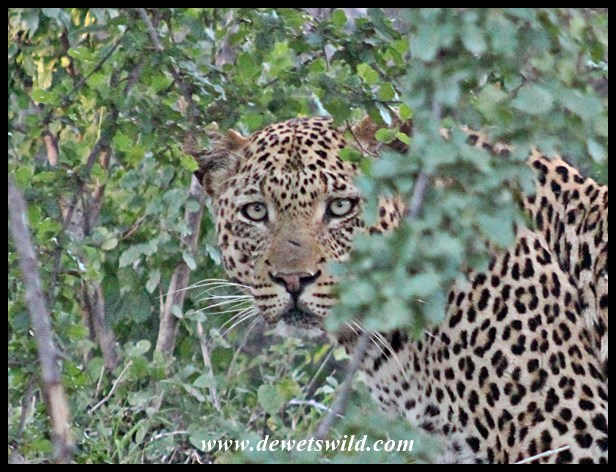
The itinerary planned for Sunday 13 December meant that we would be out of camp all day: a slow early morning drive (the camp gates open at 04:30 in high summer) to Skukuza along the Sabie River, visit with good friends at Skukuza over lunch, and then back to Lower Sabie via the Sand River, the Salitje road, Muntshe Mountain and Mlondozi Picnic Site. Covering that big an area is sure to deliver some unusual sightings; apart from a skittish leopard and all the more commonly seen game animals, we even found an African Rock Python along the way. Our final wildlife encounter of the day was with a pair of mating lions, within sight of Lower Sabie, resulting in sightings of all the Big-5 on a single day!

That wasn’t the end of the day however, as we were booked for a guided night drive after supper. Unfortunately strong winds sent the nocturnal animals into hiding, and the drive did not yield much more than a Verreaux’s Eagle Owl and enormous scorpion to get excited about.

We had one more day to explore the Lower Sabie area, and headed for Crocodile Bridge along the Nhlowa Road as soon as the camp’s gates opened. About halfway we met a large pack of hyenas at their den, and after spending some time with them our grumbling tummies told us that it was time to go enjoy our picnic breakfast at Croc Bridge. More great sightings on our way back to Lower Sabie along the Gomondwane Road, including a herd of elephants coming to drink from the Sabie River. We also noticed a male lion lying on the river bank and after slaking their thirst, the elephants started crossing the river. This was the lion’s cue to vacate his spot, and we were thrilled that he chose to head into the bush straight past our vehicle!

Lower Sabie is a wonderful place to while away the hot midday hours as there’s a constant stream of animals coming to drink from the river and birdlife abounds in the camp grounds!

There’s no better way to spend your last afternoon at Lower Sabie than slowly driving along the river, and spending some time at Sunset Dam. So that’s exactly what we did!

With that, our final night at Lower Sabie had arrived. Next morning we’d depart for Olifants Rest Camp, further north in the central regions of the Kruger National Park. We’ll share more about our time at Olifants next week, and will dedicate a special post in which we’ll tell you all about Lower Sabie and surrounds in an upcoming edition of de Wets Wild.

________________________

If you enjoy de Wets Wild as much as we enjoy sharing our love for South Africa’s wild places and their denizens with you, please vote for us in the 2015 South African Blog Awards.

We’ve entered the categories for “Best Travel Blog” and “Best Environmental Blog”, and you are allowed to vote for us in both. Clicking on the badge below will bring you to the voting site.

SA Blog Awards Badge

Thank you very much for your support!

Eye Spy

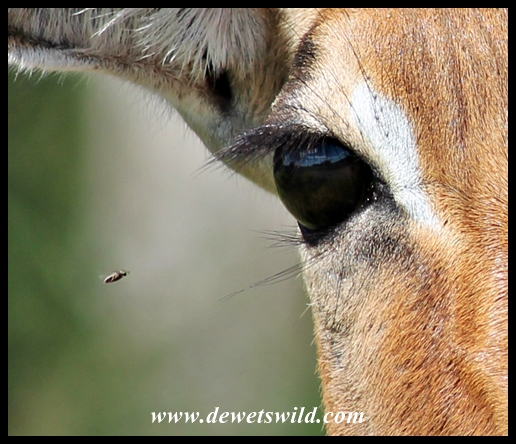
An irritating fly homing in on its target; the eye of an impala ewe in the Kruger National Park.

Impala being targeted by a biting fly

Impala being targeted by a biting fly

Eye Spy” is the theme for this week’s WordPress Photo Challenge

________________________

If you enjoy de Wets Wild as much as we enjoy sharing our love for South Africa’s wild places and their denizens with you, please vote for us in the 2015 South African Blog Awards.

We’ve entered the categories for “Best Travel Blog” and “Best Environmental Blog”, and you are allowed to vote for us in both. Clicking on the badge below will bring you to the voting site.

SA Blog Awards Badge

Thank you very much for your support!
Getting to Pafuri

Last week, we were so excited to tell you about our time at Kruger National Park’s newest accommodation offering, the Pafuri Border Camp, that we skipped over the part of our visit leading up to our time in the extreme Far North of the Park.

We’ll take this opportunity to rectify that now.

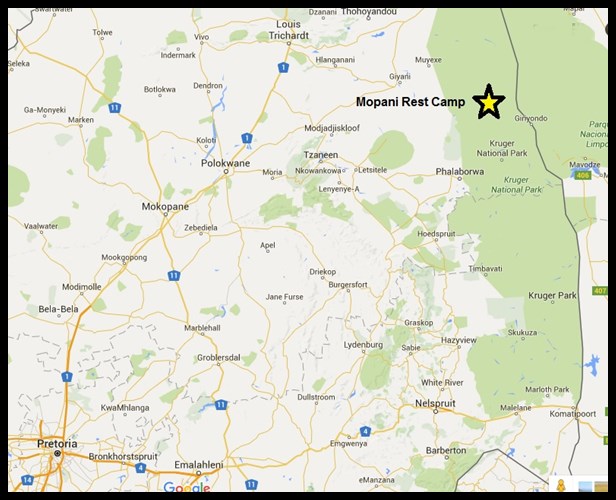
We arrived at Phalaborwa Gate on the Friday, early enough to allow a slow drive along the H14-road up to Mopani Rest Camp, where we were booked for a one-night stopover on the way to Pafuri Border Camp.

A quick afternoon sojourn past Mooiplaas, the Nshawu Vlei and Tinhongonyeni delivered no less than 6 tsessebe sightings, lots of energetic zebras, good numbers of other animals and birds, and a very dramatic storm brewing over the plains…

That evening we enjoyed a lovely meal at Mopani’s restaurant, the howling wind putting an end to any ideas we might have had of braaiing (the traditional South African barbeque) at our bungalow. Afterwards we searched for nocturnal animals among Mopani’s natural vegetation, and were not disappointed.

Leaving Mopani as soon as the gate opened Saturday morning, under heavy skies accompanied by a constant soft drizzle, we anticipated at least one good predator sighting. Sure enough, near Olifantsbadpan, we had a terrific encounter with two big female spotted hyenas and three of the cutest, most playful cubs you could imagine. Only afterwards did I realise that they were so close to our vehicle that I didn’t manage even one full body photo of them!

We expected to have good sightings of elephants around Shingwedzi, and our favourite rest camp delivered the goods just as we had hoped. It was still raining softly as we set of from Shingwedzi after breakfast, heading northward past Babalala Picnic Spot. The north of the Kruger Park is also well known for its exceptional birdlife and all these special sightings made the long road seem much shorter.

After a quick turn in Punda Maria for lunch, fuel and to stock up on some last minute goodies, we could tackle the last stretch of road to the magical paradise that is Pafuri.

Road to Mopani