Tag Archives: Kruger National Park

Focus

We encountered this male lion and his brother finishing off a wildebeest carcass near Crocodile Bridge in the Kruger National Park. His displeasure at being disturbed is clear to see…

Focus

This week’s WordPress Photo Challenge theme is “Focus

World Elephant Day 2013

World Elephant Day 2013 logo

Today, elephants in Africa and Asia are faced with the threats of escalating poaching, habitat loss and various other conflicts with humans. World Elephant Day was launched on August 12th, 2012, to bring attention to the plight of these iconic animals and will be observed for the second time this year.

World Elephant Day 2013

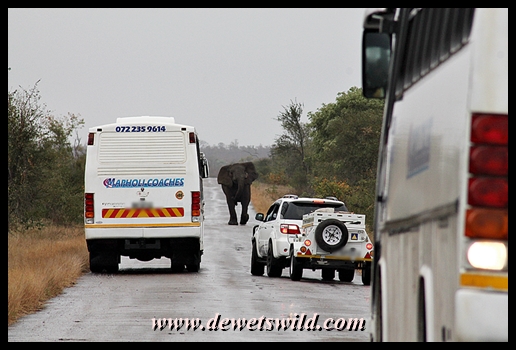
The African Elephant is one of our favourite species and every encounter with them is a moment to treasure. Shown here is a young bull crossing a road in the Kruger National Park, just south of Skukuza Rest Camp.

If you’d like to see some more of very special South African elephants, have a look here:

Isilo of Tembe

Kruger’s Big Tuskers

Masbambela

Masterpiece

Nature’s beauty is unrivaled.

Krokodilbrug_30042013

We’ve posted this picture, taken near Crocodile Bridge in the Kruger National Park earlier this year, before, but couldn’t resist posting it again in response to this week’s photo challenge.

Nostalgic: The Selati Line

Crocodile Bridge

On the 8th of November 1912 a railway line connecting the border town of Komatipoort with the gold fields at Tzaneen in the north-western Lowveld of South Africa, cutting across the Sabie Game Reserve for a distance of approximately eighty kilometres, was inaugurated. Known as the Selati Line, it played an immense part in the history of the Kruger National Park.

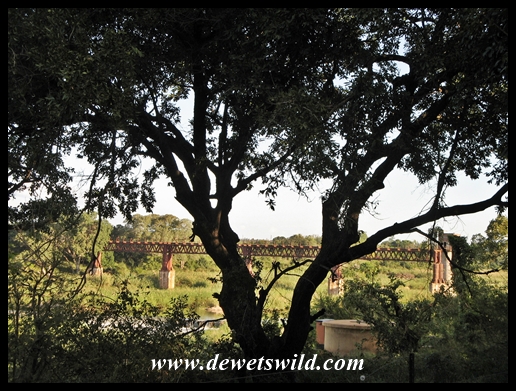
The railway bridge over the Sabie River, seen from Skukuza Rest Camp

In 1923 the South African Railways introduced a nine day train tour through the Lowveld, incorporating the “Reserve” halt at Sabie Bridge on the Selati Line, where the train would park for one night and depart again an hour after sunrise. The stopover in the game reserve quickly became the highlight of the tours (which also included the beaches and night clubs of Lourenco Marques in Portuguese East Africa (today Maputo, Mozambique)), swinging public opinion in favour of the protection of the reserve and its subsequent proclamation as South Africa’s first National Park in 1926.

SELATI_3158

Construction of a new railway line running around the borders of the Park commenced in the late sixties, as the number of trains passing through the Park – up to 250 a week – was causing a huge number of animals to be maimed and killed on the tracks. The last train steamed through “Reserve” siding in September 1973.

Skukuza station

Today, Sabie Bridge is called Skukuza, the Kruger National Park’s headquarters and biggest rest camp. The two metal train bridges across the Crocodile and Sabie rivers stand silent witness to a long departed era of Kruger Park’s history. In 1978 “The Railways” donated steam engine 3638, named “Skukuza”, to the then National Parks Board for permanent display at the replica station inside the camp. Hitched to “Skukuza” are three coaches that today serve as the Selati Restaurant – a unique and nostalgic dining experience in one of the world’s most famous conservation areas.

Steam engine "Skukuza"


This post was inspired by this week’s WordPress photo challenge: Nostalgic.

A big thank you to my sister Ansie for allowing us to include her great photos of the locomotive and the signs on the platform at Skukuza!

Biyamiti Bushveld Camp, Kruger National Park

Our most treasured memory of Biyamiti takes us back many years while visiting with our good friends, the Ristows. A pride of lions caught some hapless prey animal just after sunset in the riverbed in front of camp. Soon after, a pack of hyenas starting mobbing the kings of the jungle and tried taking over the kill, only to have their hysterical, blood-curdling giggling silenced in a most impressive fashion by the booming, window-rattling roaring of the lions. It was a night-time African symphony that will remain fresh in our memories forever.

Biyamiti_0434

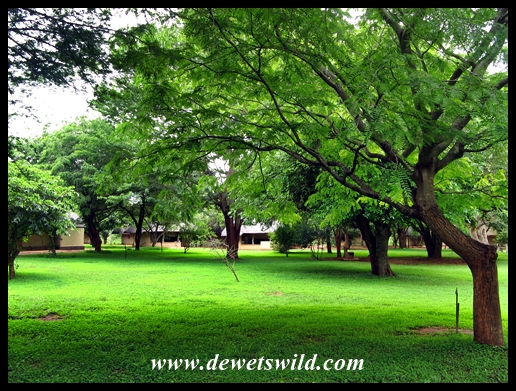
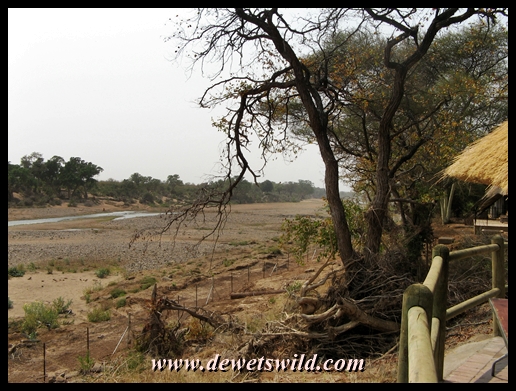
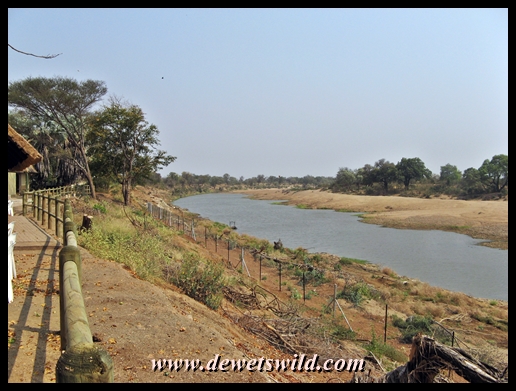
Biyamiti Bushveld Camp is beautifully located on the bank of the seasonal river of the same name, in the far south of the Kruger National Park. This is one of Kruger’s most popular camps, and it is often a hard task to book accommodation there even a year in advance. It’s a small camp, with only fifteen 4- or 5-sleeper, self-catered accommodation units, most offering a view over the river bed in front of the camp and all very privately situated. Bushbuck make themselves at home on the jackalberry-shaded lawns, and a wide variety of birds provide the background music throughout the day and night. There’s no restaurant or shop in Biyamiti, adding to the peaceful atmosphere.

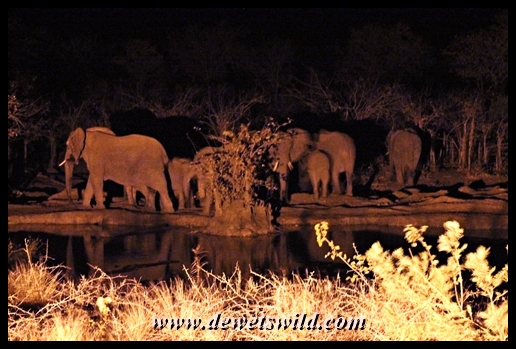
Herd of elephant in the Biyamiti River in front of the camp

Herd of elephant in the Biyamiti River in front of the camp

Biyamiti cottage

Biyamiti cottage

This is one of the Kruger’s most prolific game-viewing areas, and as an added bonus the 22 kilometres of riverine road that leads to Biyamiti is only accessible to guests actually staying in the camp, ideal for those who don’t like sharing their big-five encounters with throngs of other tourists all jostling for the best view. Additionally, guided walks and drives are available and the night drives especially come highly recommended.

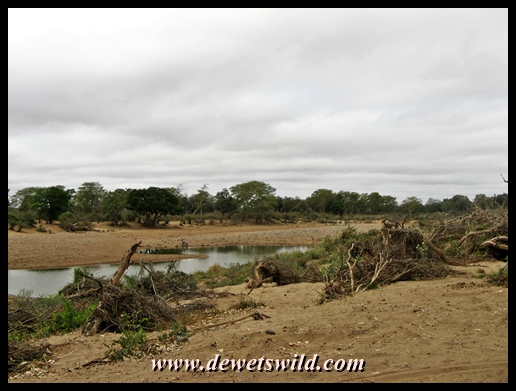
The Biyamiti-area has two very scenic highlights to offer. The first is the causeway over the Biyamiti river, on the gravel S114-road between Malelane and Skukuza, where a little weir and several rock pools ensures a reliable source of water year round to which a wide variety of birds, reptiles and big game is drawn throughout the day.

Biyamiti scenery

Biyamiti scenery

Biyamiti weir is a beautiful but dangerous place

Biyamiti weir is a beautiful but dangerous place

Biyamiti scenery

Biyamiti scenery

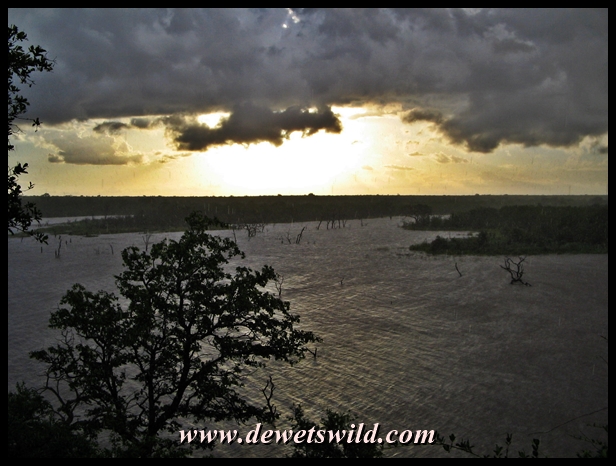
Another treasure is a hilltop viewsite, only about two kilometers from camp, providing a panoramic vista over a broad bend in the river below. This is an ideal place to breathe in a spectacular African sunset before taking a slow drive back to camp and still be in time for the gates closing.

Biyamiti viewsite

Biyamiti viewsite

Biyamiti viewsite

Biyamiti viewsite

Biyamiti is a tranquil slice of game-viewing heaven and certainly deserves its popular reputation.

The Biyamiti at its confluence with the Crocodile River

The Biyamiti at its confluence with the Crocodile River

Companion

Exploring South Africa’s wild places is always nicer when the experience is shared with good company!

Companion

Pictured here is Joubert and his friend Louw getting acquainted with one of the bushbuck that have found a safe, predator-free home inside Letaba Rest Camp, in the Kruger National Park.

“Companionable” is this week’s photo challenge from WordPress
Olifants Wilderness Trail, June 2013
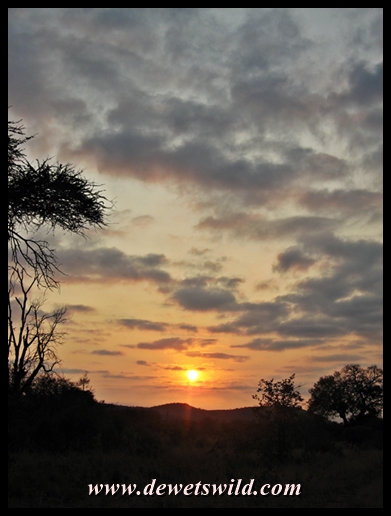
Through our eyes

A small group of people are inspecting a dung-covered thorn-bush out in the African wilderness, the sun having just peeked over the eastern horizon, listening enchanted to their guide explaining the scene: “Long ago, the hippo lived on land with the elephant, the rhino and the buffalo. But Hippo complained bitterly to the Creator that his skin was far too sensitive for the African sun and pleaded to be allowed to live in the water. Crocodile wasn’t at all pleased with this arrangement though, fearing that the bulky hippo would eat all the fish in the river. Hippo then promised to spread his dung with his tail so that Crocodile could check that there was no fish bones in it. But the crocodile was still not convinced, as he’d have to go onto dry land to check Hippo’s dung, so Hippo put Crocodile’s mind at ease by saying that the rangers would check the dung on his behalf. And this is what we’re doing now, just checking that Hippo is keeping to his agreement with Crocodile”

My brother Niel and I arrived early morning on Saturday 15th of June for our annual brothers-trip to the Kruger National Park. We’d slowly make our way up to Satara Rest Camp that day, before joining the Olifants Wilderness Trail on Sunday afternoon at Letaba Rest Camp. Lots of time for relaxed game-viewing and photography along the way, and Kruger delivered the goods as always.

At 15:00 our Trail Guides Aaron and Louis meet up with Niel and I and the six other participants with whom we’ll be sharing our much-anticipated wilderness experience for the next three nights. It’s a two-and-a-half hour drive to the base camp, with frequent stops to appreciate the scenery and rich bird and animal life for which the Kruger Park is so renowned, and by the time we arrive darkness had already engulfed the small rustic camp.

The unspoiled African wilderness quickly makes friends of strangers, and there’s nothing to help the process along like a camp fire – or bush TV as Louis describes it because it’s so hypnotic. In the light of the dancing flames and with the grunting of hippos in the background, Aaron explains our schedule for the next three days and goes through some basic safety pointers for walking among dangerous wild animals. There’d be two days of walking, each starting with an early wake-up, coffee and rusks before dawn. At first light we’d drive a short distance into the wilderness before setting off on foot, spending four to five hours in the veld and enjoying a light picnic breakfast at a scenic spot, before returning to base for lunch and some quiet relaxation. The afternoon walks would be at a slower pace, taking in the setting sun from a beautiful vantage point, where after we’d return to camp for dinner before relaxing around the camp fire again. We’re also introduced to Shadrack, the shy camp caretaker and the cook responsible for the hearty traditional South African meals we’d enjoy for the next couple of days.

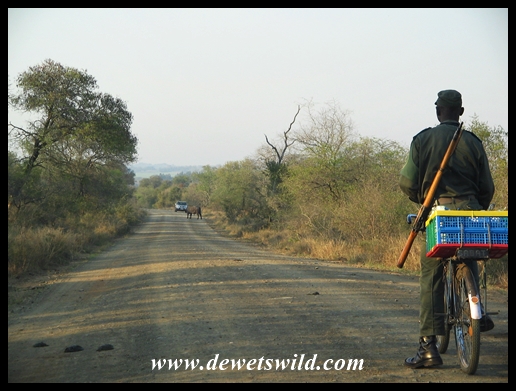
When walking in the bush, the focus shifts from the big hairy scary creatures to the smaller features that would normally go unnoticed while driving through the Park, although there’s always a good chance of encountering big game along the way. Easy to understand therefore why your heart would start racing when a scrub hare unexpectedly jumps up next to your feet while walking through the tall “adrenalin grass” next to the Hlahleni stream!

The Olifants Wilderness Trail has been running since 1979, and the little base camp is as rustic today as it was then. Four A-frame huts, each with two beds, provide accommodation to the trailists, who enjoy their meals and each other’s company at the communal boma and fireplace which has a commanding view over the Olifants River and the Lebombo Mountains. At the back of the camp are the pole-enclosed toilets and hot-water showers. There’s no electricity (or cellphone reception) at the camp, so in the evenings and early mornings paraffin lamps add to the camp’s peaceful atmosphere. This is wilderness at its uncluttered best, and a rich variety of birds and animals visit the camp and surrounds throughout the day.

Sitting atop a large boulder next to a deep river pool, watching the sun set over the Olifants while hippos are snorting and splashing just metres away, was the absolute highlight of our Olifants Wilderness Trail experience; an abiding memory that will remain with us forever.

All too soon the time came to return to civilisation. The mood on the vehicle was a lot more sombre on the way back to Letaba, and it was with heavy hearts that we said goodbye to Aaron, Louis and our fellow trailists.

Kudu calf

Kudu calf

Bateleur

Bateleur

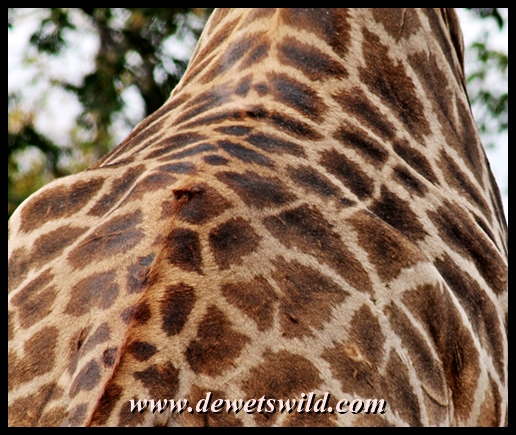
Giraffe bull

Giraffe bull

For Niel and I it was time to head back to the city, but Kruger had one more surprise in store for us on the way to Phalaborwa Gate. Masthulele, currently the biggest of Kruger’s Tuskers, accompanied by two younger bulls, was enjoying a drink from a pool in one of the dry river courses. How nice it was to bump into this familiar old friend!

Masthulele

Masthulele

Crocodile at Sable Dam

Crocodile at Sable Dam

The World Through Our Eyes

A spectacular view over the Olifants River as dawn breaks in the Kruger National Park, looking downstream from the Olifants Wilderness Trail base camp. What a beautiful country we live in!

Through our eyes

The world through your eyes” is this week’s WordPress photo challenge.

Curves

I took this photograph of an elephant bull with widely splayed tusks just outside of Letaba Rest Camp on our way out of the Kruger National Park yesterday, after my brother Niel and I had completed the Olifants Wilderness Trail (more on our fantastic trail experiences to follow later!).

Curves

“Curves” is the current photo challenge from WordPress

Camouflage

Thanks to their dappled coloration, lithe bodies and stealthy habits, leopards are supremely camouflaged, even when out in the open. We found this one lazing away the midday heat in a marula tree near Nhlanguleni, in the Kruger National Park.

Camouflage_leopard

We’re participating in the online adventure travel and photography magazine LetsBeWild.com‘s Wild Weekly Photo Challenge for bloggers. This week’s challenge is “Camouflage“.