Category Archives: South African Wildlife

The inhabitants of South Africa’s wild places

Gone, but not forgotten

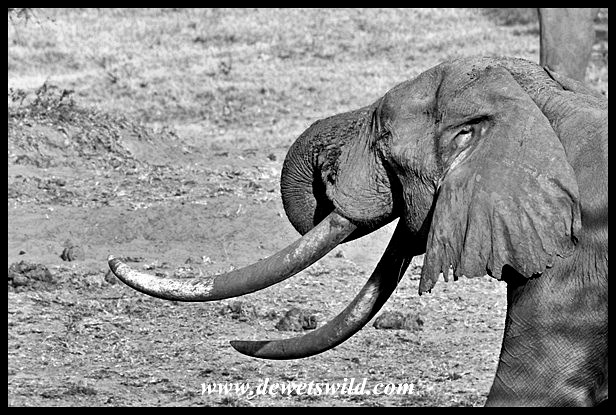
Dedicating this post to three of the most magnificent tuskers that roamed the Parks of South Africa and that we had the pleasure of seeing before they departed for heavenly pastures.

Gone, but not forgotten“is the theme for this week’s WordPress Photo Challenge


—————————————————–

Please vote for de Wets Wild in the 2014 SA Blog Awards

If you enjoy de Wets Wild as much as we enjoy sharing our love for South Africa’s wild places with you, please vote for us in the 2014 SA Blog Awards by clicking on this badge. We’ve entered both the Travel and Environment categories, and you may vote for us in both.

Thank you for your support!

SA Blog Awards Badge

Signs

Finding and interpreting the signs of the wild can be just as fascinating and rewarding as watching the actual wildlife that were responsible for it!

Signs” is the theme for this week’s WordPress Photo Challenge

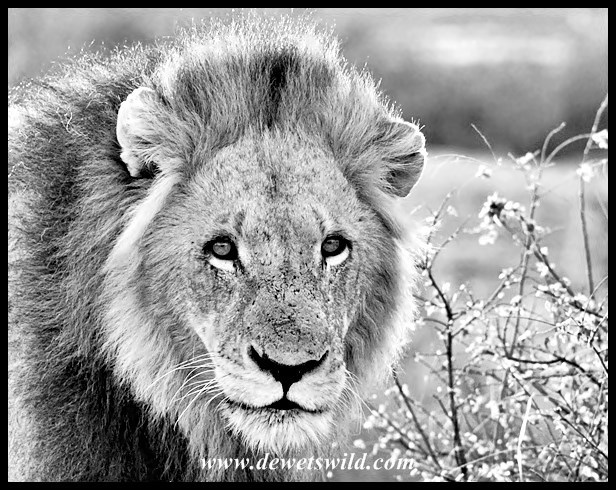
The second male to appear was a beautiful specimen

Memorable lion sighting near Skukuza, 3 August 2014

It was late afternoon on the 3rd of August, and the sun was slowly setting on our first day back in the Kruger National Park. We were enjoying a leisurely drive along the Sabie River, taking in the deep calming atmosphere that comes with sunset in a magnificent natural setting like this, about 5km from Skukuza Rest Camp.

Unexpectedly, a young elephant ran across the road towards the river, trumpeting loudly and shaking his ears and trunk around, clearly extremely agitated. From a short side loop, we watched as he flushed a pride of lions from the reeds, quite some distance from the road.

The young elephant that started the show

The young elephant that started the show

Noticing that the lions will now be making their way towards the road, we anticipate where they’ll be moving out of the river bed and position our vehicle in that spot. We have to wait only a minute or two before noticing the first feline shapes appearing among the riverine vegetation, much closer to the road already. The lions are coming, and they are heading straight for us!

One by one, the entire pride of about fifteen animals, including three magnificent males, pass right beside us, crosses the road and moves into the bush on the opposite side. We watch enthralled from inside our vehicle as the big cats move by close enough to stroke (though of course, that would be very foolish to even attempt!).

(You can click on the photos to view them in a gallery, for a bigger view – we’re sure you won’t be sorry that you did 😉 )

Kruger welcomed us back in the most emphatic way imaginable. What else did it have in store for us in the nine days ahead? We hope you’ll join us again to find out!


Lion

Panthera leo

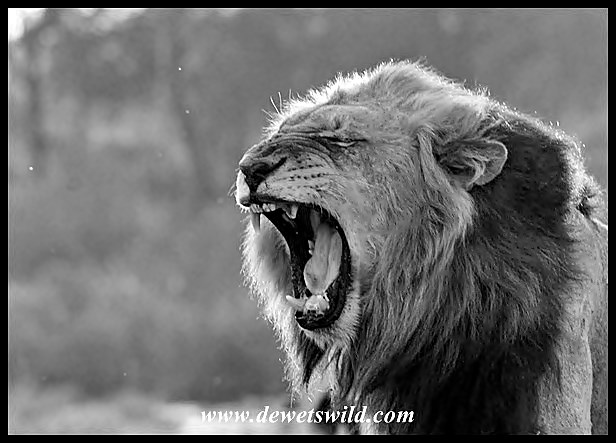
The lion. Such a short name for such a magnificent creature.

Leeu (18)

If there’s one animal that draws people from all over the world to our country’s wild places more than any other, it has to be the “King of the jungle”.

The lion is Africa’s biggest cat; males weighing over 200kg and standing up to 1.2m high at the shoulder.

They’re very adaptable creatures, inhabiting almost any habitat where there’s enough prey to sustain them. They’ll prey on anything from insects to crocodiles, buffaloes, rhinos, hippos and even elephants, and can consume up to 40kg of meat in a single sitting. And despite their association with royalty, they’re not above stealing carcasses from other predators, or taking carrion. They’ll drink regularly if water is available, but otherwise can go without it for extended periods.

It is well known that lions are the most sociable of cats, living in prides that can number over 30 animals where food is abundant. These prides are controlled by single or coalitions of up to 6 adult males, defending territories in which the core of the pride, the adult females, can safely raise their cubs. The strength of the pride lies in the defending of territory, hunting of large prey animals, and communal care of the cubs. Depending on the availability of food, the territories can cover areas as large as 2000 square kilometres, scentmarked by animals of both sexes and loudly proclaimed by their distinctive roaring. Neighbouring prides will get involved in serious fights over territory, and when new males take over a pride it is seldom a bloodless affair, more often than not killing the cubs sired by the ousted males (who themselves are lucky if they escape alive). All in all, the life of a lion is not an easy one, and their lifespan is limited to only 12 to 15 years in the wild, if they reach adulthood at all.

Today, despite all the reverence afforded to it through the ages as a symbol of nobility and bravery, the lion is a species under threat. Ever increasing human populations, and their accompanying livestock, is shrinking the habitat and prey available to these powerful cats by the day. They are being persecuted as livestock killers. They’re being poached for their skin and heads as trophies, and for their bones, used in traditional Asian “medicine”, “tiger wine” and “love potions”. There’s many so-called “captive-breeding facilities” where lions are exploited for the same purposes. To top it off, the dwindling populations are susceptible to disease and inbreeding. Though estimates range widely, there’s probably no more than 30,000 wild lions remaining in Africa (maybe as few as 10,000), and perhaps 400 in India. In South Africa, there’s sizable populations finding protection in the Kruger National Park and the Kgalagadi Transfrontier Park, with smaller numbers in several other reserves, including Pilanesberg, Hluhluwe-Imfolozi, iSimangaliso, Tembe, Mapungubwe, MarakeleAddo, Karoo and Mountain Zebra.

The 10th of August has been designated World Lion Day; “An independent campaign working to highlight the importance of the lion globally and to raise lion conservation awareness worldwide

Leeu (19)

Baobab

Adansonia digitata

African legend has it that God got upset with the baobab and kicked it out of heaven. It smashed into the earth upside down, with its roots sticking into the air.

Baobab, Mapungubwe (1)

Due to its size, an adult baobab cannot be mistaken for any other tree. They reach heights of over 20m, with trunks sometimes more than 10m in diameter. Trees this size are estimated to be between 2000 and 4000 years old and have served as landmarks in the vast African wilderness for centuries.

Baobabs are deciduous trees, covered in dense green leaves during summer and completely devoid of their foliage in winter. The wood is very soft, and when the tree dies disintegrates quickly into a heap of fibres.

Unfortunately, elephants have a particular fondness for the baobab and especially the bark, often causing the death of the trees by their very destructive feeding habits. Several other animals, including baboons, monkeys, birds, and predators use the tree for food or shelter.

The baobab has many traditional uses: the fruit can be used to make a most refreshing cooldrink with water or milk, the seeds roasted as a coffee substitute, the roots can be used to make a kind of porridge, young leaves cooked like vegetables, and the fibrous bark, apart from being used in traditional medicine, can be woven into mats used to build shelter or as floor covering.

In South Africa, the baobab occurs naturally only in the extreme northern and eastern parts of the Limpopo Province, with magnificent specimens to be found in the Kruger and Mapungubwe National Parks.

Contrast

African Buffalo

The pugnacious African buffalo, Africa’s only extant species of wild cattle, is a worthy member of the elite “Big-5” group of animals. Though they can appear very docile, buffalo are extremely dangerous, especially when threatened or wounded; they’ve even been known to circle back around hunters tracking them to launch unexpected attacks on their persecutors from behind.

You wouldn't want to find yourself on foot in thick vegetation like this when buffalo are around...

You wouldn’t want to find yourself on foot in thick vegetation like this when buffalo are around…

These bulky animals weigh in between 500 and 900kg, with adult bulls being much larger than the cows.

African buffalo inhabit a wide range of habitats, ranging from open grassy plains to dense rainforest, their most important requirements being an ample supply of fresh grazing, regular access to drinking water, and cover in which to evade (or ambush) predators.

Buffalo are gregarious animals, congregating in herds that may number into the thousands. Encountering one of these huge herds is among Africa’s most memorable experiences.

Old bulls that cannot keep up with the breeding herds become loners or join “bachelor” groups. It is these old “dagga boys” that have the worse reputation of being overly aggressive and extremely dangerous, probably due to being easier targets for hunters and predators than members of the well-protected herds where there’s safety in numbers.

Calves are normally born during the rainy season, and can keep up with their maternal herds within hours of birth. Buffalo of all ages are a favourite prey of lions, and large herds are often followed by prides of lion that specialise in taking down these powerful animals, despite the good chance that they’ll pay with their lives for their boldness. Buffalo are also susceptible to a wide range of diseases and parasites, and have a natural life expectancy of between 15 and 30 years.

Today, the buffalo remains one of Africa’s most numerous game species, with the IUCN estimating that a population of around 830,000 roam the continent, despite the pressures of hunting and habitat loss. In South Africa, large populations can be found in the Kruger National Park, Addo Elephant Park, Hluhluwe-Imfolozi Park and iSimangaliso Wetland Park.

Be afraid, be very afraid...

Be afraid, be very afraid…

Common Eland

Tragelaphus (Taurotragus) oryx

The common eland is the biggest antelope occurring in South Africa. Eland are bulky animals, the bulls weighing up to 950kg and standing over 6 feet (1.8m) high at the shoulder. Cows weigh up to 700kg. Eland differ from their close relatives – the kudu, nyala and bushbuck – in that both sexes carry horns and not only the males.

Eland occur in an extremely wide variety of habitats, from high mountains to the arid extremes of the Namib and Kalahari deserts. They are herbivorous, browsing and grazing on a huge assortment of plants, and are able to forego drinking water for extended periods.

They are social animals, keeping in mixed herds numbering from three to several thousand. The bigger herds form mainly during the wet season and when the animals migrate, sometimes over vast distances. Despite their hefty physiques, eland are surprisingly agile, with even the biggest bulls easily managing to jump fences two to three meters in height.

Single calves are born mostly just before or during the rainy season, and have a life expectancy of between twelve and twenty years.

The IUCN estimates the total population of the common eland at about 136,000 and regards it to be safe (“least concern”) in conservation terms. In South Africa, we consider the Golden Gate Highlands National Park and the Giant’s Castle Game Reserve among the most reliable places to see these incredibly big antelope in their natural habitat.

Bushbuck

Tragelaphus scriptus

As its name suggests, the bushbuck is a denizen of densely vegetated habitats, ranging from riverine woodland and thickets in mountain valleys to the deepest jungles of tropical Africa.

They live mostly solitary lives, or in small and very unstable groups of ewes and lambs, and often associate with baboons and monkeys to take advantage of any fruits dropped by the foraging primates (their diet consists mostly of leaves and succulent shoots though).

Small it may be , but the male bushbuck is a tenacious fellow and rather dangerous when wounded, as several hunters and their dogs have found out to their detriment.

With a total population estimated at well over a million animals, the bushbuck is one of Africa’s most wide-spread and numerous antelope. In our experience, the best places to see bushbuck in South Africa is at Cape Vidal in the iSimangaliso Wetland Park, at Letaba in the Kruger National Park, and at Swadini in the Blyde River Canyon Nature Reserve.

The bushbuck is a smaller cousin of the kudu and nyala, with a shoulder height of only 60 to 100cm and an average weight of less than 50kg.

Doesn’t it look just like the African version of Bambi!?

In northern Botswana and along the Zambezi River occurs the distinct subspecies T. s. ornatus, known as the Chobe Bushbuck.

Nyala

Tragelaphus angasii

The graceful nyala is one of our favourite antelope, and a close relative of the kudu. They occur naturally in the south-east corner of Africa, ranging from Malawi to South Africa’s eastern provinces.

To the uninitiated, the adult bulls in their dark, shaggy, coats and the ewes dressed in bright chestnut seem to be from two different species altogether. Bulls are almost double the size of the ewes, and can weigh up to 130kg.

Nyalas inhabit thickets and woodland near water, and will often forage in adjacent clearings. They’re mixed feeders, subsisting on a diet of leaves, succulent shoots and short grass.

Being social animals, nyalas occur in small groups consisting mostly of adult females and their offspring, with adult males tending to form bachelor groups. Lambs are born at any time of the year, though mostly in the wetter summer months.

The stiff-legged dominance display – you could even call it a dance! – of the adult bulls is one of nature’s most intriguing spectacles.

The bulls also have the curious habit of horning the ground at mud puddles, carrying the caked mud off with them on their headdress…

The IUCN consider the nyala’s conservation status to be of “least concern“, with a population of at least 32,000. The best places in South Africa to see these graceful antelope is the Kruger National Park (especially at Pafuri in the far north of the Park), Hluhluwe-Imfolozi Park, uMkhuze Game Reserve, and Tembe Elephant Park, though they occur in a number of other state and private reserves as well.

uMkhuze Game Reserve’s Kumasinga Hide is one of the very best places to watch Nyala behaviour.

Magnificent Kudu seen near Mavumbye

Greater Kudu

Tragelaphus strepsiceros

The striking kudu is one of the largest, and according to many nature lovers one of the most beautiful, of South Africa’s antelope.

Weighing up to 315kg and standing up to 1.6m high at the shoulder, kudu bulls are considerably bigger than the cows.

Adult bulls are solitary or move around in bachelor groups, associating with the herds of cows and their calves only during the rutting season. Though the bulls are not territorial, they do maintain a strict dominance hierarchy through fighting, sometimes leading to the death of one or both combatants through injuries or having their horns inextricably interlocked.

Kudu inhabit a variety of bush- and shrubland habitats, and, being browsers, subsists on an extremely wide variety of leafy vegetation, being particularly fond of the thorny Acacias. While they can survive for extended periods without water, they will drink daily if it is available.

In South Africa, most calves are born in the summer months between December and March. Newborn calves are kept hidden in thick vegetation for up to three months after birth, with the cows returning to them every couple of hours to nurse. They can live to the age of 18, but being a favourite prey item for all Africa’s large predators as well as being prone to drought and cold conditions, and susceptible to a range of diseases, few kudus wil reach that age in the wild.

Kudus occur widely across South Africa, both in and outside of formal conservation areas, and are still relatively numerous. The IUCN regards their conservation status to be of “least concern”, estimating the total population to stand at almost 500,000 individuals.