Category Archives: Mpumalanga Province

Our experiences in the reserves of Mpumalanga, South Africa

Swadini Reflections

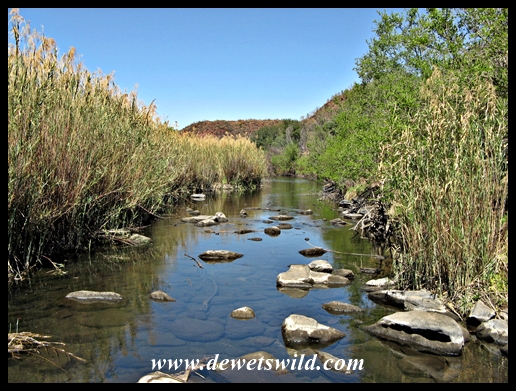
We spent the better part of today exploring the Blyde River Canyon Nature Reserve around Swadini, and came across this beautifully reflective pool along one of the walking trails.

Swadini 22Feb14

Tomorrow we’re heading back home to Pretoria after nine days exploring the north-east corner of South Africa. We plan to publish several posts about the places we visited in the coming weeks and hope we’ll see you around de Wets Wild again soon!

Three would have been a crowd…

We spent another day on the Kruger National Park today, entering for a day visit through the Orpen Gate.

Only a few kilometers into the Park, we met with the King and Queen of the Beasts on their honeymoon…

Threes” is the theme for this week’s WordPress Photo Challenge

Blyde Canyon – Swadini (19/02/2014)

Today we moved westwards, out of the Kruger National Park and into the Blyde River Canyon Nature Reserve in the Drakensberg mountain range, on the border of the Limpopo and Mpumalanga Provinces. While exploring this scenic area we’ll be basing ourselves at the Forever Swadini Resort, located at the foot of a spectacular rock face.

Swadini 19Feb14

Our 2013 in pictures

As the year is rushing to its end, we’re looking back at all the wonderful places we stayed at in South Africa’s wild places during 2013:

Crocodile Bridge Rest Camp, Kruger National Park

Crocodile Bridge

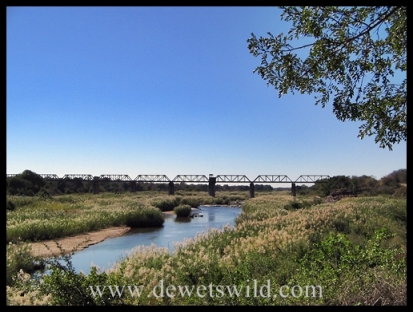
Almost right in the south-east corner of the Kruger National Park lies quaint Crocodile Bridge, which serves both as an entrance gate into the Park and a rest camp providing overnight accommodation and other amenities to visitors.

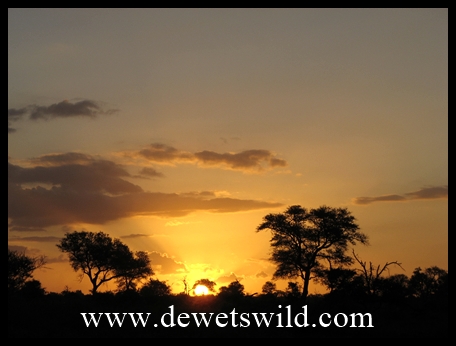
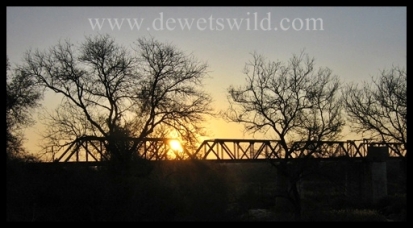
Crocodile Bridge sunset

Crocodile Bridge sunset

The first Europeans to set foot in what is today the Kruger National Park was a Dutch expedition from Delagoa Bay (today Maputo, Mozambique) in 1725, under command of Francois de Kuiper, who was forced to turn around at Gomondwane just north of Crocodile Bridge by antagonistic locals.

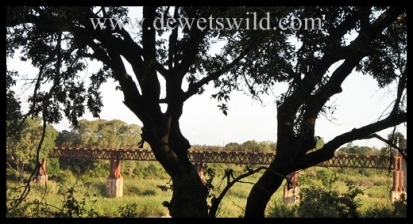
By 1894 work started on the railway bridge across the Crocodile River, an important section of the Selati Line.
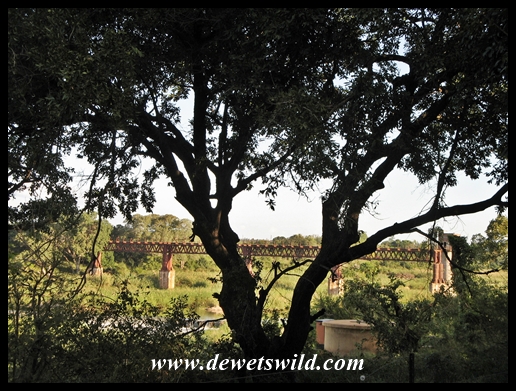
Crocodile Bridge railway bridge

Crocodile Bridge railway bridge

Crocodile Bridge was one of the first four ranger stations in the Sabie Game Reserve, which later became the Kruger National Park. The first stretch of road in the Park was built by ranger de la Porte from Crocodile Bridge to his post at Lower Sabie for use by his personal Model-T Ford, but it was too rough to be used by visitors and so had to be upgraded soon after the Park’s proclamation in 1926. The pontoon over the Crocodile River was in use until 1945, the last in the Park to be replaced with a low-level causeway.

Misty Crocodile Bridge sunrise

Misty Crocodile Bridge sunrise

In March 1929, the Crocodile Bridge area was the scene of one of the most notorious events in the young Park’s history. Two lorry loads of American tourists, visiting South Africa on a cruise ship tour, were driven into the Park on their way to Lower Sabie, when they were caught in a thunderstorm and decided to turn back. A dry stream they had crossed earlier was now in flash flood, but the drivers decided to cross it nevertheless, with dreadful consequence, as the first truck was summarily overturned by the raging water. Luckily no one was killed or seriously injured. When lions started roaring nearby, the soggy tourists climbed into the thorn trees and this is where the local ranger found them hours later; cold, miserable, wet, muddy and tattered. The subsequent reports all over the world describing the Park as a “death trap” lead to it being closed to visitors annually through the wet season, a ruling that was scrapped only in the late 1970’s.
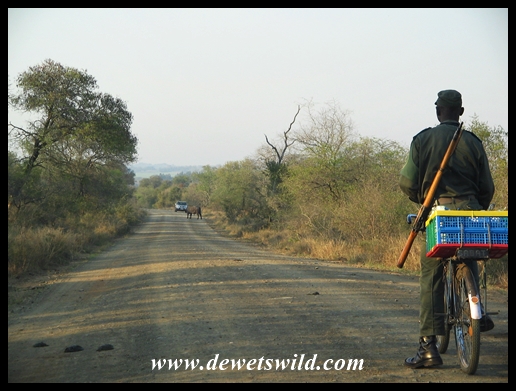
The perils of working as the ranger guide at the Hippo Pools - a herd of buffalo may just cause you to be late for work!

The perils of working as the ranger guide at the Hippo Pools – a herd of buffalo may just cause you to be late for work!

Today, the area around Crocodile Bridge is one of the most popular regions in the Park – little wonder considering that the immediate area around the camp supports large numbers of a huge variety of animals and birds. The tarred road leading to Lower Sabie carries most of the “traffic”, and so we prefer to travel on the gravel roads instead when we are in the vicinity. The S25 road that follows the course of the Crocodile River westwards towards Malelane is a particular favourite that often delivers sightings of predators. A short turn-off from this road takes you to the Hippo Pools, where an armed ranger escorts visitors to the river’s edge for a closer view of the hippos, crocodiles and riverine birds. The S28 Nhlowa Road is an alternative, and highly recommended, route through to Lower Sabie. Near camp, Gezantfombi Dam is just the place to enjoy that first morning coffee or to while away the last couple of minutes before the gates close for the night.

The camp lies on the bank of the Crocodile River and its shady grounds are frequented by a myriad of small animals and a rich birdlife – just keep a watchful eye on the little vervet monkeys who’ll part you from any food left in the open in the blink of an eye! Crocodile Bridge first opened to visitors in the 1930’s but was completely rebuilt in 1987. It offers twenty 3-bed bungalows with their own bathrooms and kitchenettes, eight safari tents that make use of communal facilities, and a small campsite (with plugpoints). The camp also has a small, but well stocked, shop and a fuel station.

It’s the family-friendly atmosphere that draws us to Crocodile Bridge most. The spacious, green, shady lawns of the camp, the game-rich surroundings and the peacefulness of it all will see us return again and again…
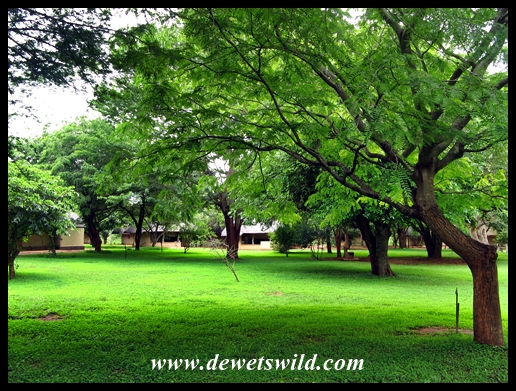
Crocodile Bridge
Crocodile Bridge

Ezemvelo Nature Reserve

We recently made our first visit to the privately owned Ezemvelo Nature Reserve, located just over 70 kilometres to the east of Pretoria, near the town of Bronkhorstspruit.

Ezemvelo entrance

Unfortunately the last twenty kilometres to the reserve’s entrance was a bone-shaking, teeth-rattling gauntlet along an extremely corrugated gravel road and we suspect many visitors turn around before they reach the reserve because of it. That’s a real pity, as we quickly found out that Ezemvelo is a gem of a place.

Ezemvelo scenery

The reserve protects a fairly sizeable piece (4000 hectares) of typical Highveld grassland vegetation interspersed with wooded “koppies” (hills), and is watered by the Wilge River and some of its smaller tributaries. This diversity of habitats allows Ezemvelo to host a wide variety of game, including leopard, brown hyena, and both black and blue wildebeest, and almost 300 bird species have been recorded here.

Visitors can take on one of the many walking trails or cycle around the reserve to their heart’s content. Guided horse trails and day-or night game drives can be arranged, but the reserve also has an extensive network of roads that you can traverse in your own vehicle (though some sections are more suited to vehicles with high ground clearance). A swimming pool, dam (for fishing), putt-putt course and picnic sites are all available for visitors’ enjoyment. Chalet accommodation and a very shady and inviting camping area are available near the main reception complex, which also has a little shop with limited supplies. The two rustic hiking huts are beautifully located below a cliff and overlooks a pool in a small stream that is obviously a popular watering hole for many animals, while the three family huts nearby are situated in a rocky environment high above the river course below.


On the whole we were very impressed with Ezemvelo Nature Reserve. It offers a relaxing atmosphere, great facilities, a variety of experiences, good sightings of a wide variety of birds and animals and inspiring scenery. We will definitely return (but next time we’ll just phone ahead to hear what condition the access road is in).

Ezemvelo scenery

Focus

We encountered this male lion and his brother finishing off a wildebeest carcass near Crocodile Bridge in the Kruger National Park. His displeasure at being disturbed is clear to see…

Focus

This week’s WordPress Photo Challenge theme is “Focus

World Elephant Day 2013

World Elephant Day 2013 logo

Today, elephants in Africa and Asia are faced with the threats of escalating poaching, habitat loss and various other conflicts with humans. World Elephant Day was launched on August 12th, 2012, to bring attention to the plight of these iconic animals and will be observed for the second time this year.

World Elephant Day 2013

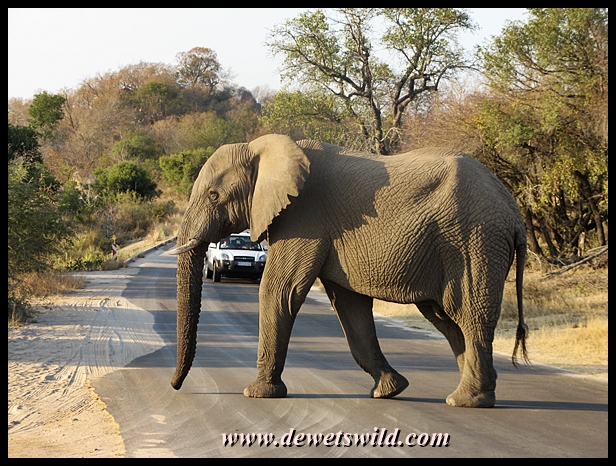
The African Elephant is one of our favourite species and every encounter with them is a moment to treasure. Shown here is a young bull crossing a road in the Kruger National Park, just south of Skukuza Rest Camp.

If you’d like to see some more of very special South African elephants, have a look here:

Isilo of Tembe

Kruger’s Big Tuskers

Masbambela

Masterpiece

Nature’s beauty is unrivaled.

Krokodilbrug_30042013

We’ve posted this picture, taken near Crocodile Bridge in the Kruger National Park earlier this year, before, but couldn’t resist posting it again in response to this week’s photo challenge.
Nostalgic: The Selati Line

Crocodile Bridge

On the 8th of November 1912 a railway line connecting the border town of Komatipoort with the gold fields at Tzaneen in the north-western Lowveld of South Africa, cutting across the Sabie Game Reserve for a distance of approximately eighty kilometres, was inaugurated. Known as the Selati Line, it played an immense part in the history of the Kruger National Park.

The railway bridge over the Sabie River, seen from Skukuza Rest Camp

In 1923 the South African Railways introduced a nine day train tour through the Lowveld, incorporating the “Reserve” halt at Sabie Bridge on the Selati Line, where the train would park for one night and depart again an hour after sunrise. The stopover in the game reserve quickly became the highlight of the tours (which also included the beaches and night clubs of Lourenco Marques in Portuguese East Africa (today Maputo, Mozambique)), swinging public opinion in favour of the protection of the reserve and its subsequent proclamation as South Africa’s first National Park in 1926.

SELATI_3158

Construction of a new railway line running around the borders of the Park commenced in the late sixties, as the number of trains passing through the Park – up to 250 a week – was causing a huge number of animals to be maimed and killed on the tracks. The last train steamed through “Reserve” siding in September 1973.

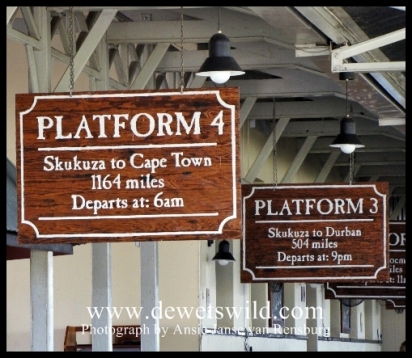
Skukuza station

Today, Sabie Bridge is called Skukuza, the Kruger National Park’s headquarters and biggest rest camp. The two metal train bridges across the Crocodile and Sabie rivers stand silent witness to a long departed era of Kruger Park’s history. In 1978 “The Railways” donated steam engine 3638, named “Skukuza”, to the then National Parks Board for permanent display at the replica station inside the camp. Hitched to “Skukuza” are three coaches that today serve as the Selati Restaurant – a unique and nostalgic dining experience in one of the world’s most famous conservation areas.

Steam engine "Skukuza"


This post was inspired by this week’s WordPress photo challenge: Nostalgic.

A big thank you to my sister Ansie for allowing us to include her great photos of the locomotive and the signs on the platform at Skukuza!