Category Archives: Memorable sightings

African Bullfrog

Pyxicephalus edulis

While I doubt it reached proportions that would convince the Pharaoh to allow the Israelites to leave Egypt, the “eruption” of little froglets we saw at uMkhuze Game Reserve during our recent visit was quite fascinating. Rain or shine, literally hundreds (if not more) of tiny frogs could be seen jumping around on the roads all over the reserve, making driving quite tricky if you didn’t want to squash them under the vehicle’s wheels.

Thanks to the help of the iSimangaliso Wetland Park the little ones were identified as juvenile African Bullfrogs (also known as Edible or Lesser Bullfrogs), a species that occurs over wide areas of Eastern, Central and Southern Africa, and indeed is eaten by humans in many countries where they occur. Though these newly metamorphosed juveniles were only about the size of a thumbnail, the African Bullfrog can grow to 12cm in length.

African Bullfrog

They can be found in seasonally flooded savannas and grassy woodlands, remaining dormant underground for most of the year (up to 10 months) and emerging only when sufficient rain has fallen for breeding to commence. During the breeding season males act very aggressively towards one another and will even kill each other. Eggs are laid in well vegetated, shallow, seasonal bodies of water where the males guard the eggs and tadpoles against other males and predators. Interestingly, when the tadpoles’ pools start drying up the males will dig channels to deeper pools. African Bullfrogs feed on a variety of invertebrates and small vertebrates, including other frogs, and feature in turn in the diets of various species of birds, reptiles and mammals (humans included).

During a visit to the Kruger National Park in December 2019 we witnessed the breeding habits of the African Bullfrog following a few days of continuous rain.


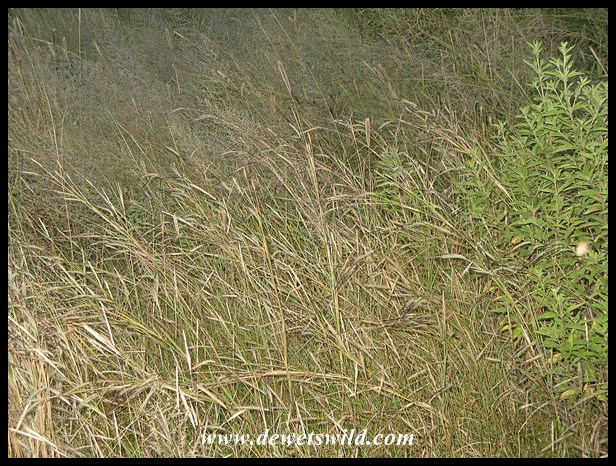
Playing hide-and-seek with a leopard

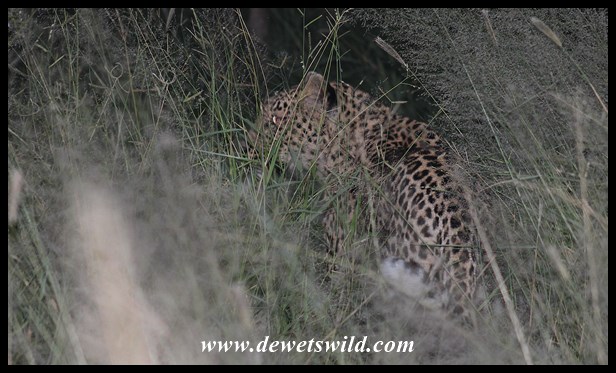
Believe it or not, but in the middle of this picture there’s a leopard hidden in the grass. Don’t worry; If I didn’t see her walk in there I wouldn’t have known it either.

Luckily she grew tired of her hiding spot, got up and walked into even denser vegetation, allowing just one quickly fired shot as proof…

This leopard was lying not two meters from our car and was totally invisible – what wonderful camouflage these cats have!

(Seen along the H3-road just south of Skukuza on Friday last week as we were departing from the Kruger National Park)

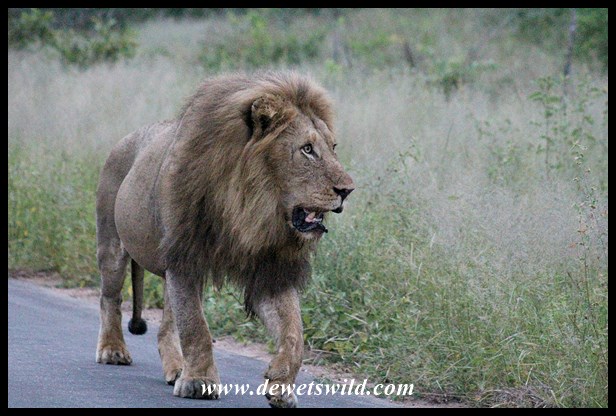
Alone time with the King of Beasts

A week ago, on an early morning drive along the Sand River near Skukuza in the Kruger National Park, this magnificent male lion popped out of the thickets to patrol and mark his territory along the road.

After spending quite a bit of time with him as he walked at pace along the river road, mostly within arm’s length of the vehicle, another car arrived on the scene, and I drove off in order to allow them the thrill of some alone time with The King as well.

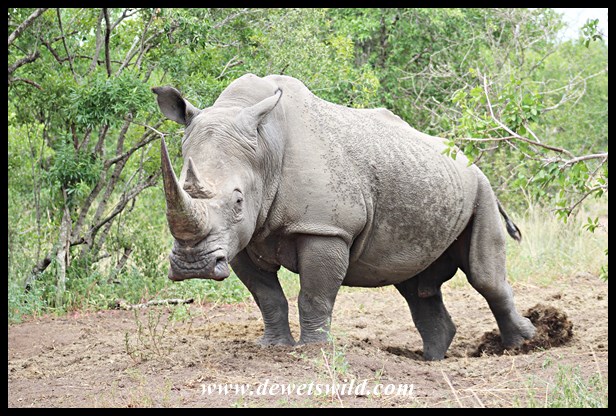
Rhino Social Media

White rhino bulls use dung middens to communicate their presence and demarcate their territories. They’ll also kick around in the middens to transfer the scent onto their feet and then spread it throughout their stomping grounds, communicating their ownership to interlopers.


Encounters with Cheetahs at Imfolozi

Many of our friends here at de Wets Wild are great fans of cheetahs, so they especially would be thrilled to know that we had three wonderful encounters with these lithe cats during our December visit to Hluhluwe-Imfolozi Park.


Monkey Cuteness

This tiny vervet monkey, playing with his toes and being amazed by the things he sees around him in the Hluhluwe-Imfolozi Park’s Hilltop Camp, must be one of the cutest things I’ve seen in a long time!

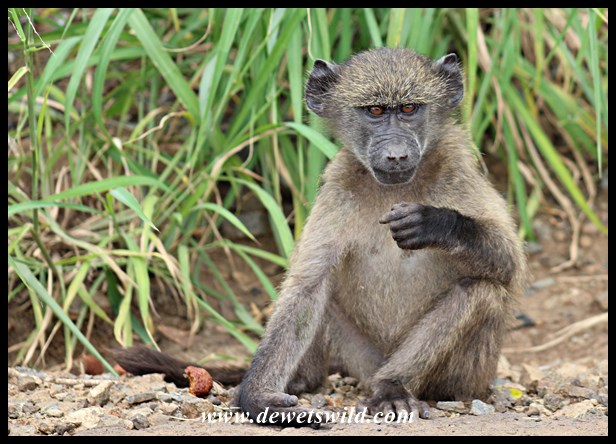
This baboon youngster on the other hand reminds me of that evil doll Chucky

evil-looking-baboon

Nest Building Secretarybirds

A pair of Secretarybirds had just started building their platform-nest on top of a small tree near the Hluhluwe-Imfolozi Park’s Cengeni Gate when we visited in December. It was quite interesting to watch them searching the surrounding area for sticks and twigs to use in the construction.

Caterpillars and Cocoons at our Chalet

It appeared our accommodation unit (#21) at Mpila (Hluhluwe-Imfolozi Park) in December was some kind of magnet to some very large and very hairy caterpillars intent on spinning their cocoons in any available nook or cranny. We didn’t mind, of course, as the whole process is just so darn interesting!


Bush Blackcap

Lioptilus nigricapillus

Our December 2016 visit to Thendele in the Royal Natal National Park afforded us our first opportunity to photograph the Bush Blackcap, a rarely seen endemic South African bird with a very limited distribution along the Eastern Escarpment.

These small birds occur singly or in pairs in the dense canopy of mountain forests and their verges, moving down to coastal forests (and lush gardens) during winter. Breeding takes place in summer. They feed on fruits, berries and insects. The IUCN considers them “near threatened” due to a small population size (estimated at most around 5,000) and threats to their forest habitat.

Squatters at the lodgings

From the moment we arrived at chalet 27 in Thendele Camp in the Royal Natal National Park in December, we just loved the unit’s setting. And we were not the only ones, as a pair of Greater Striped Swallows were diligently building their mud-walled nest on the veranda, quite unconcerned about the humans sitting below them and watching them go about the task.