Category Archives: Limpopo Province

Our experiences in the reserves of Limpopo, South Africa

Elephant mayhem at Mooiplaas

Marvelous Mooiplaas

There’s several waterholes in the Kruger National Park that have delivered us consistently good wildlife sightings over the years. One such drinking place is Mooiplaas, an artificial waterhole supplied by a borehole and windpump, adjacent to a natural wetland, about 5km to the south of Mopani Rest Camp. Directly translated from Afrikaans, Mooiplaas means “pretty farm”. The waterhole undeniably lives up to its name both in scenery and for the constant stream of birds and animals moving from the surrounding mopane vegetation to slake their thirst.

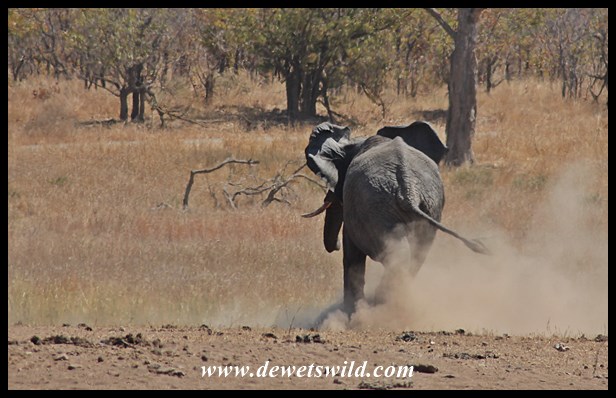
We visited Mooiplaas again on Heritage Day (24th September) while on our most recent visit to the Park. We arrived in the heat of the day, and found the place brimming with animals. Elephants, tsessebe, zebras, wildebeest, ostriches and a lone kori bustard were milling around, and from their behaviour we deduced that there must be predators around. Sure enough, in a clump of mopane shrubs, we saw two lions hiding from the heat; the female just out in the open enough to get photographic proof. It was obvious that these lions were not interested in hunting, and the animals could safely venture to the water for the moment. A young elephant bull caused a bit of an uproar among the plains game when he caught the lion’s smell on the wind, and started running around wildly, kicking up dust as he went.

After checking in for our night at Shipandani Hide, we decided to stop by Mooiplaas again in the late afternoon, and found that the lions had still not moved from their shady hideout. A group of elephant bulls were drinking from the reservoir, and a variety of birds were searching for food in the dust, but there was no sign of the large herds of zebra and antelope that frequented the area earlier in the day. Perhaps they understood that the lions would not be resting for much longer…

Throughout the night in the hide we could hear the lions roaring towards Mooiplaas, and of course that’s where we headed as soon as the gates opened. If the lions had made a kill during the night, the carcass wasn’t anywhere we could see it, and we had to be content with a far-off sighting of two large males lying in the grass some distance from the otherwise deserted waterhole.
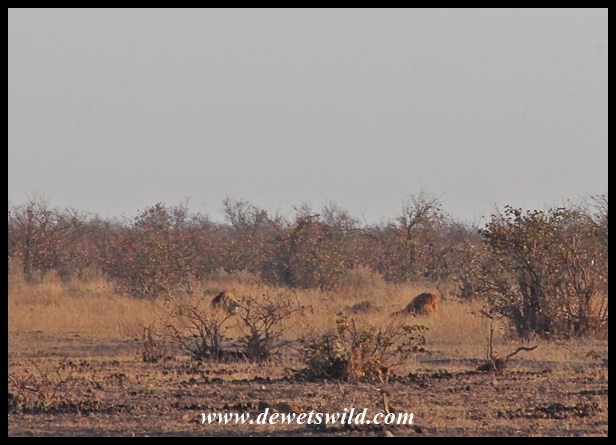
Mooiplaas_25Sep2014

All too soon we had to leave, as we were heading for Shingwedzi and still had to return the keys for the hide to the reception at Mopani. Leaving Mooiplaas behind, we knew there would be more wildlife spectacles unfolding there that day. And we knew we’d return to Mooiplaas again as soon as we have the chance…


Memorable sighting: Cheetahs near Shingwedzi, 27 September 2014

At the end of a hot Lowveld afternoon, we’re enjoying a slow drive along the Shingwedzi River, as has become our habit every time our visits to Shingwedzi Rest Camp come to an end. This route, the gravel S50, is our absolute favourite road in the Kruger National Park and we’re taking in as much of the magical wilderness atmosphere as we can. After enjoying snacks and a cold drink in deep, cool, shade next to the Tshilonde waterhole, it’s time to head back towards camp.

Only minutes later, turning a corner near the Ntsumaneni Spruit crossing, we spy a feline shape next to the road… We’re thrilled to find two cheetahs waiting by the roadside, and our excitement grows tenfold as a third, fourth and then fifth make their way out of the mopane bushes towards us. With no other cars around, we find ourselves in the company of what we assume is a female with her four almost fully-grown cubs, a rare sighting indeed. The cheetahs seem nervous, constantly staring back towards the vegetation they emerged from, and do not hang around very long before crossing the road and heading into the bush again, disappearing from sight. We may have spent only a few minutes with these lithe cats, but it is another Kruger memory we’ll cherish for as long as we live.

(You may click on any of the images to view them in bigger resolution)

The Endangered Wildlife Trust in conjunction with the SANParks Honorary Rangers, is conducting a census of Kruger Park’s cheetahs and wild dogs, and inviting visitors to contribute to the project by submitting photos of these species they encounter between September 2014 and June 2015. Of course, we’ve already sent in our submission!

Five days later…

We’re back in Pretoria after five wonderful days in the Kruger National Park, and we’re praying with this buffalo that it won’t be too long before we go back 😉

Please let the de Wets come visit us again soon?

Please let the de Wets come visit us again soon?

We’ll share some more about this latest trip to the Kruger Park in upcoming editions of de Wets Wild, soon.

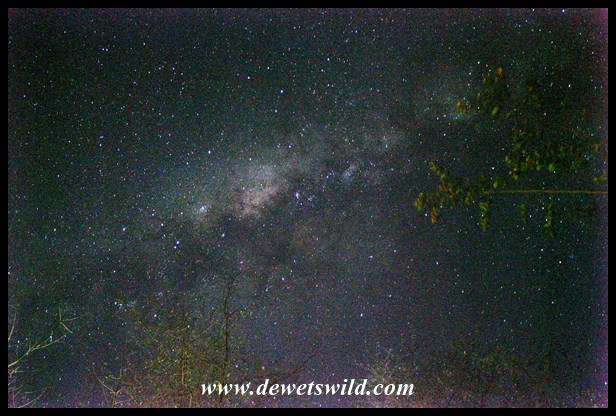
Nighttime

This was the scene above our heads after darkness fell over Shingwedzi in the Kruger National Park last night.

Milkyway above Shingwedzi

Milkyway above Shingwedzi

Nighttime” is this week’s WordPress Photo Challenge

In the company of cheetahs!

The Kruger is always full of surprises.

We thought we’d take a leisurely drive along the Shingwedzi River this afternoon,our last of this trip, not expecting to see much more than herds of elephants, buffalo, giraffe, antelope, and so on. And then, coming around a corner we unexpectedly found ourselves in the company of a mother cheetah with her four almost-grownup cubs.

Isn’t this just the best place on earth!?

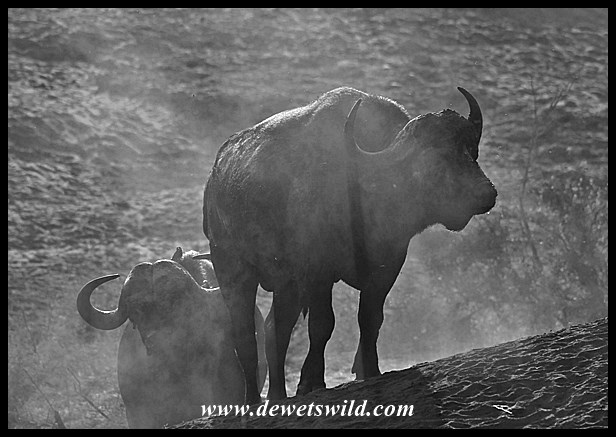
Sunset, dust and buffaloes

Late this afternoon we encountered a massive herd of buffalo, making their way one-by-one, along a sandy ridge, out of the bed of the Mphongolo River. The climb was clearly tough on many of the animals, and the dust rising into the glaring sunlight added nicely to the fatigued feeling of the scene unfolding before us.

Laid back at Shingwedzi

We’ve arrived at Shingwedzi Rest Camp, in the far northern Kruger National Park. We’ll be taking this baboon’s attitude to heart in the next few days as we explore what the Kruger still has in store for us

Heritage Day in Kruger

South Africa celebrates the 24th of September as Heritage Day, a public holiday. Of course, South Africa’s natural heritage is very close to the de Wets’ hearts, and so we’ve headed back to our beloved Kruger National Park for a few days (as if we needed an excuse 😉 )

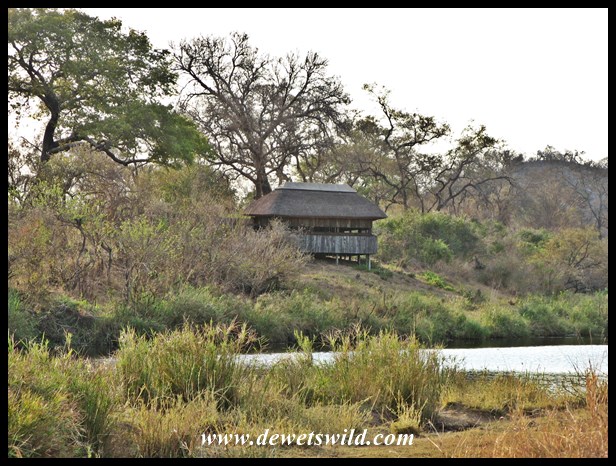
The three of us are spending the night in Shipandani Hide, next to a tranquil pool in the Tsendze River, and kilometres away from the nearest other humans. As I’m typing this, Marilize and Joubert have already been lulled to sleep by the symphony of the wild African night; hippos bellowing metres away from the hide, scops owls hooting for attention, lions roaring in the distance and a myriad of crickets, frogs and bats chiming in.

Heaven.

KNP 24Sep2014

Shipandani Hide

Adventure!

The de Wet clan exploring the wilderness of the Kruger National Park on foot (and safely guarded by two experienced, and armed, rangers).

Adventure” is the theme for this week’s WordPress Photo Challenge

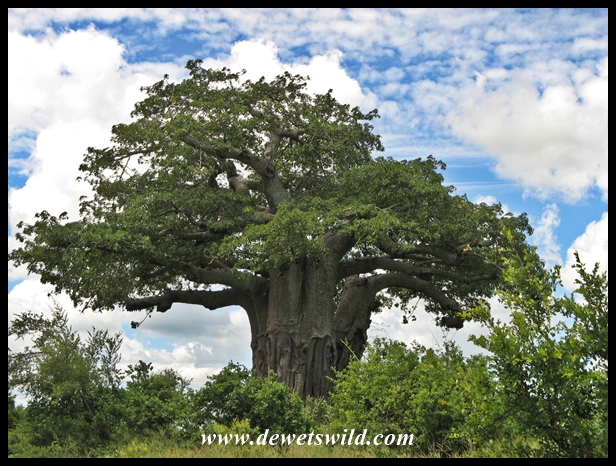
Baobab

Adansonia digitata

African legend has it that God got upset with the baobab and kicked it out of heaven. It smashed into the earth upside down, with its roots sticking into the air.

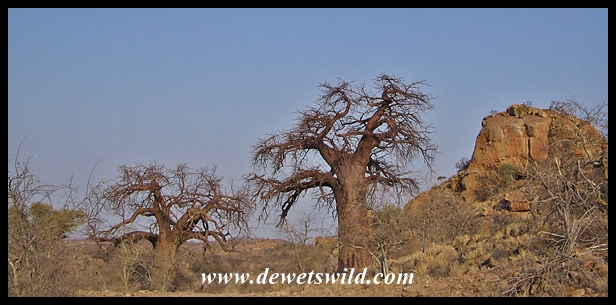
Baobab, Mapungubwe (1)

Due to its size, an adult baobab cannot be mistaken for any other tree. They reach heights of over 20m, with trunks sometimes more than 10m in diameter. Trees this size are estimated to be between 2000 and 4000 years old and have served as landmarks in the vast African wilderness for centuries.

Baobabs are deciduous trees, covered in dense green leaves during summer and completely devoid of their foliage in winter. The wood is very soft, and when the tree dies disintegrates quickly into a heap of fibres.

Unfortunately, elephants have a particular fondness for the baobab and especially the bark, often causing the death of the trees by their very destructive feeding habits. Several other animals, including baboons, monkeys, birds, and predators use the tree for food or shelter.

The baobab has many traditional uses: the fruit can be used to make a most refreshing cooldrink with water or milk, the seeds roasted as a coffee substitute, the roots can be used to make a kind of porridge, young leaves cooked like vegetables, and the fibrous bark, apart from being used in traditional medicine, can be woven into mats used to build shelter or as floor covering.

In South Africa, the baobab occurs naturally only in the extreme northern and eastern parts of the Limpopo Province, with magnificent specimens to be found in the Kruger and Mapungubwe National Parks.

Contrast