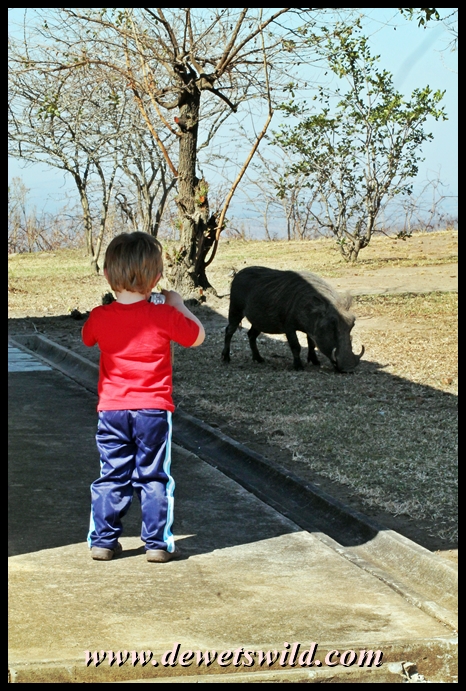
Our little wildlife photographer working hard for a warthog portrait at Mpila, in the Hluhluwe-Imfolozi Park

“An unusual point of view” is this week’s photo challenge from WordPress
Our little wildlife photographer working hard for a warthog portrait at Mpila, in the Hluhluwe-Imfolozi Park

“An unusual point of view” is this week’s photo challenge from WordPress
The Karkloof has a long and rich history. Having once been on the main wagon trail linking Natal and the old Transvaal it is named for an overturned ox-wagon that became a landmark along the route in the mid-1800’s.

Karkloof Conservation Centre
In modern times, local farmers, foresters and other landowners have joined hands to manage this beautiful piece of land in harmony with nature, establishing the Karkloof Conservancy in 1998.The conservancy covers an area of 40,000 hectares and protects wetlands, grasslands and natural forests and all manner of associated wildlife, including all three of South Africa’s endangered crane species, among a patchwork of scenic farmlands and plantations.
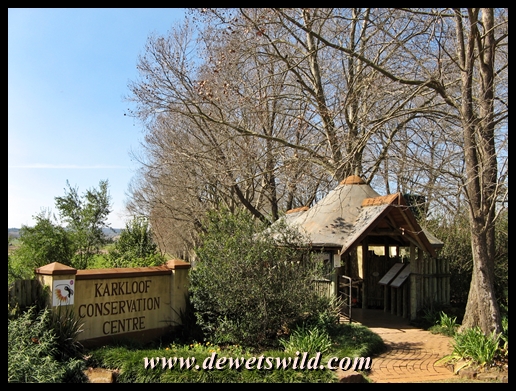
Karkloof Conservation Centre
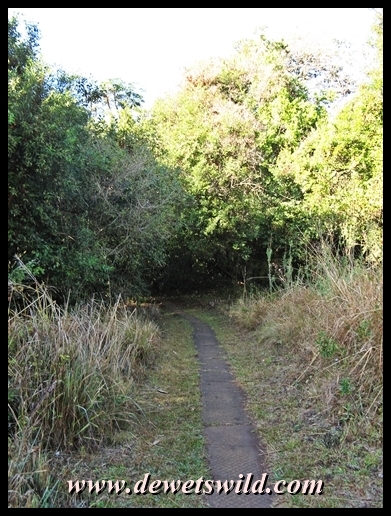
The farmers here pride themselves on their environmentally friendly farming practices and, realising the need for and value in greater public awareness of the work of the Karkloof Conservancy, a centre dedicated to the message of conservation, education and tourism was created and officially opened in October 2007. The Karkloof Conservation Centre is located at the entrance to Gartmore Farm, 15km to the north of Howick in the Natal Midlands. Gartmore and neighbouring Loskop are working dairy farms and here, among the beautiful green pastures, two bird-viewing hides overlook natural wetlands frequented by over 180 bird species (including the blue, crowned and wattled cranes) and a variety of naturally occurring small game animals. A small picnic site is available at the entrance, from where it is a short walk along a tree-lined path to the two hides.
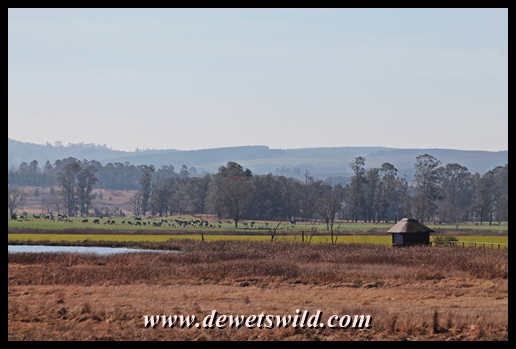
Gartmore Hide

Gartmore Hide
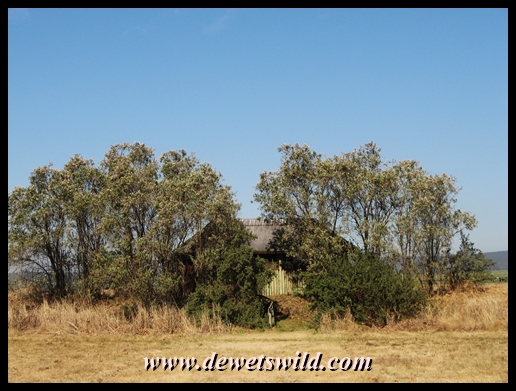
Loskop Hide

Loskop Hide: pied kingfisher

Loskop Hide: sacred ibis, spoonbill and yellow-billed ducks
Even a short visit to the Karkloof Conservation Centre will have you excited in the realisation that humans and nature can co-exist to the benefit of both, and perhaps you will be lucky, as we have, to get a glimpse of some of South Africa’s rarest birds as a bonus.

Crowned Cranes in a patch of long grass
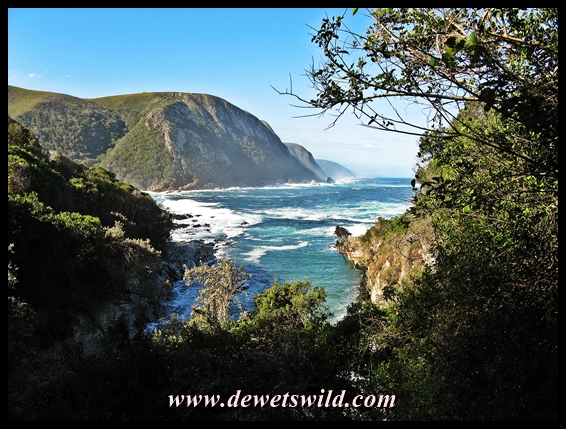
Summer’s heading our way here in the southern hemisphere, and many South Africans are looking forward to their holidays at the seaside. The rugged, rocky coast at the Storms River Mouth, in the beautiful Tsitsikamma section of the Garden Route National Park, is a particularly popular destination for many.

“Sea” is the theme for the Weekly Photo Challenge this week
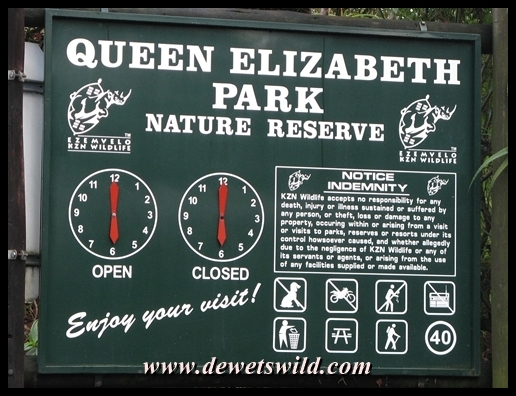
Queen Elizabeth Park Nature Reserve is located in the hills in the northern suburbs of the city of Pietermaritzburg, the capital of KwaZulu-Natal Province, and about eight kilometres from the city centre. It serves as the location for the head office of the provincial conservation agency, Ezemvelo KZN Wildlife, world renowned especially for their achievements in saving the white rhinoceros from extinction.

Queen Elizabeth Park
Entrance is free and a short drive into the reserve provides access to three shady picnic areas and the self-guided iDube trail. There’s no accommodation available inside the reserve.

The road through the reserve

One of the picnic spots

iDube Trail
Several game species (including plains zebra, bushbuck, dassie and the rare blue duiker) and a wide variety of birds occur in this small nature reserve, established in 1960 and only 93 hectares in extent, which protects a surprising diversity of habitats ranging from grassland to forest surrounded by a sea of urbanisation.

Chorister Robin-Chat

Bushbuck

Drongo

Forest patch

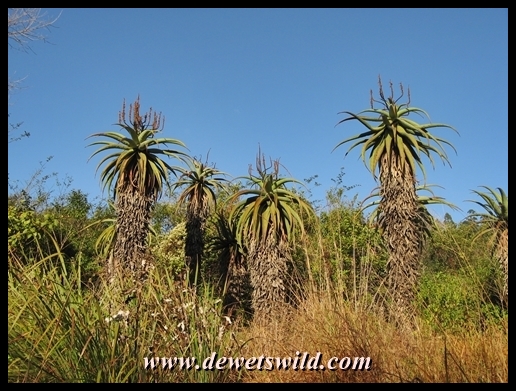
Aloes

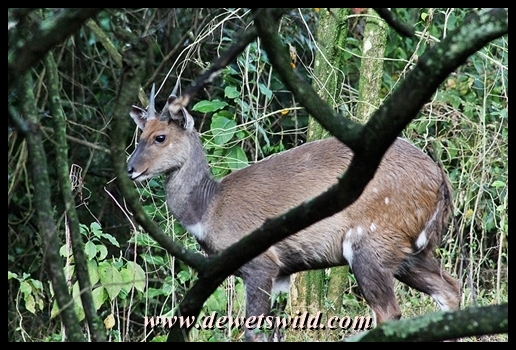
Bushbuck ewe
The Queen Elizabeth Park Nature Reserve is a fantastic asset to the people of Pietermaritzburg and especially those in search of some respite from the hustle and bustle of city life. It is a good thing though that we aren’t employed at the Ezemvelo KZN Wildlife headquarters, because we won’t ever be in the office!
We encountered this male lion and his brother finishing off a wildebeest carcass near Crocodile Bridge in the Kruger National Park. His displeasure at being disturbed is clear to see…

This week’s WordPress Photo Challenge theme is “Focus“
We recently had another opportunity to visit our much loved Golden Gate Highlands National Park again, having also been there just two weeks prior. This week we’re offering a gallery of photographs taken during our latest sojourn to this spectacular mountain park in early August.
(Click on any of the images for a clearer view, if you’d like)
We also posted a couple of pictures while we were there, if you’d like to see some more:
Back at Golden Gate: 2 August 2013
SANParks’ half-price special is still available until the end of September, and we’re planning to make use of the discount at least once more 😉
Carefree… Exploring the dunes at Cape Vidal, in the iSimangaliso Wetland Park.

Carefree is the theme for this week’s photo challenge from WordPress
Today, elephants in Africa and Asia are faced with the threats of escalating poaching, habitat loss and various other conflicts with humans. World Elephant Day was launched on August 12th, 2012, to bring attention to the plight of these iconic animals and will be observed for the second time this year.

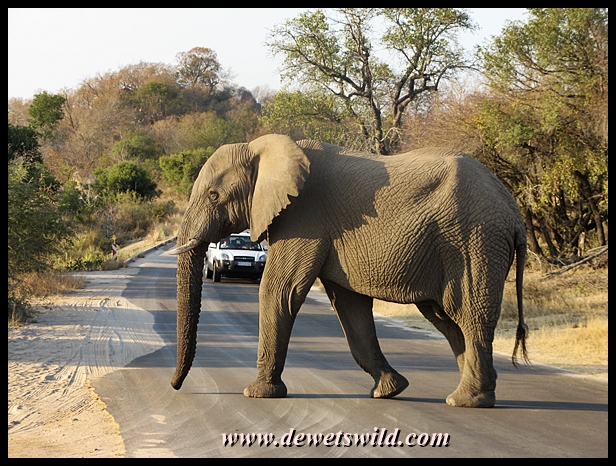
The African Elephant is one of our favourite species and every encounter with them is a moment to treasure. Shown here is a young bull crossing a road in the Kruger National Park, just south of Skukuza Rest Camp.
If you’d like to see some more of very special South African elephants, have a look here:
The sun is setting on a most enjoyable weekend in the Natal Midlands…

We encountered this bushbuck ewe this morning in the Queen Elizabeth Park Nature Reserve – the headquarters of Ezemvelo KZN Wildlife – in the city of Pietermaritzburg.


“One Shot, Two Ways” is this week’s photo challenge from WordPress