Tag Archives: wildlife

Satara Summer – Day 9 (2019/12/13)

Another lovely day out exploring the Satara area of the Kruger National Park – overcast start to the morning with the clouds dissipating during the course of the day; as I am typing this we’re viewing the almost-full moon rising beautifully over the savanna.


Satara Summer – Day 7 (2019/12/11)

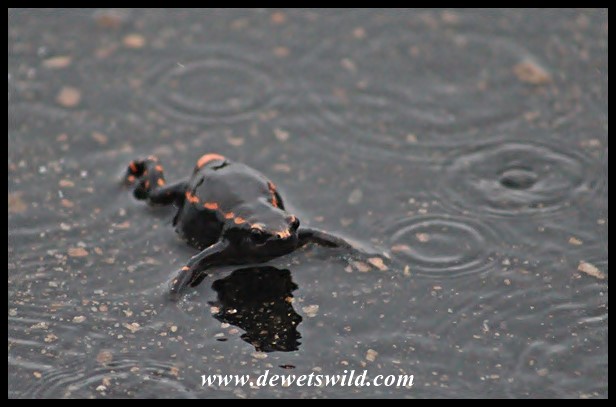
The first week of our summer at Satara in the Kruger National Park concluded with the sun finally putting in an appearance again after four days. All kinds of insectivorous birds and animals feasted on emerging termite and ant alates, while many different kinds of frogs were jumping at the opportunity to mate in newly formed pools of water and we de Wets took the opportunity to take part in a guided night drive.

Satara Summer – Day 6 (2019/12/10)

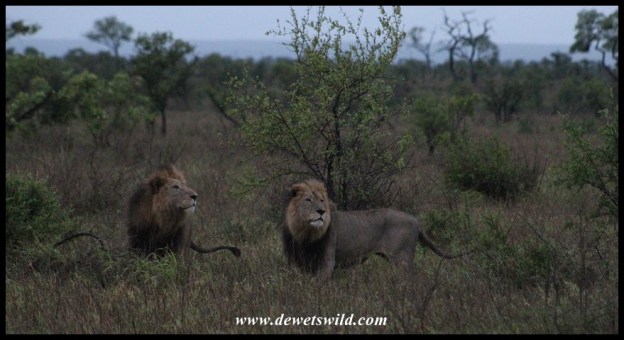
It’s the third day of unrelenting rainfall at Satara in the Kruger National Park, and it’s still pouring down cats and dogs. Well, cats anyway. Big cats! And lions to be precise.

Satara Summer – Day 5 (2019/12/09)

The inclement weather persisted today, and brought with it unseasonably cold weather – sending the Kruger’s reptiles, birds and mammals into hiding. Still, it is wonderful to be here in this weather; you can almost hear the grass and leaves growing!

Satara Summer – Day 4 (2019/12/08)

A soggy day in the Satara area today, but still the Kruger National Park dished up the magic – from terrapins and frogs on the wet roads to different birds feasting on them and emerging termites, to every member of the famed Big Five!

Satara Summer – Day 3 (2019/12/07)

Out Satara’s gates at 04:30 this morning, we didn’t have to wait too long before finding a mating pair of lions right in the road. Our afternoon drive didn’t yield the same results, mostly due to a very welcome drizzle setting in. We were however welcomed back to camp by Satara’s habituated African Wild Cat.

Satara Summer – Day 2 (2019/12/06)

Early this morning, to be precise as soon as the gates opened at 04:30, we departed from Tamboti and headed for Satara, the second biggest of the Rest Camps in the Kruger National Park. It took us about 2-and-a-half hours to drive the 50km distance, making frequent stops for such amazing sightings as a lazy leopard, playful painted wolves and a bloodthirsty Burchell’s starling killing a hapless Alpine Swift, and much, much more.

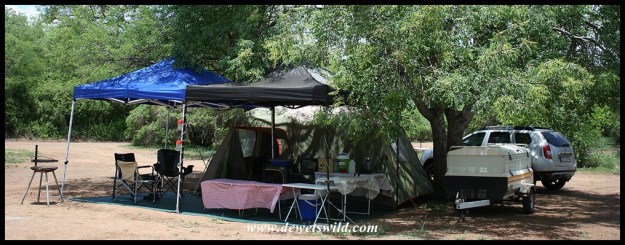
We took our time setting up camp – this will be “home” for the next month!
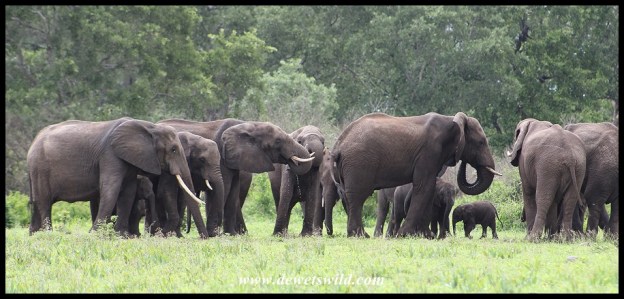
When exploring the bush we have a few of our own traditions, and one of those is that whenever we are at Satara the first road we take on our first afternoon drive is always the S100 to Nwanedzi.

This evening, Marilize and Joubert’s special birthday treat for me was a scrumptious dinner at Satara’s restaurant. While there, we spied a couple of Thick-tailed Bushbabies looking for dinner of their own in the branches of a Fever Tree.
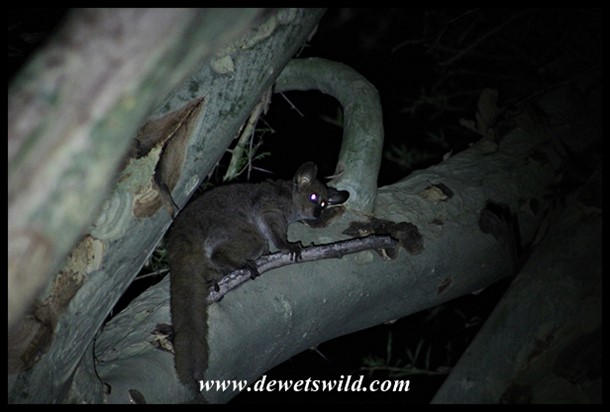
Thick-tailed Bushbaby high in a Fever Tree

 

Satara Summer – Day 1 (2019/12/05)

It’s time for our long-awaited month of summer holidays at Satara, in the Kruger National Park. We set off from Pretoria at 10am, drove 80% of the way in drenching rain – much appreciated in our drought stricken country – and finally arrived at Orpen Gate about an hour before the gates closed, just enough time to reach Tamboti Tented Camp, where we spent our first night in the bush.

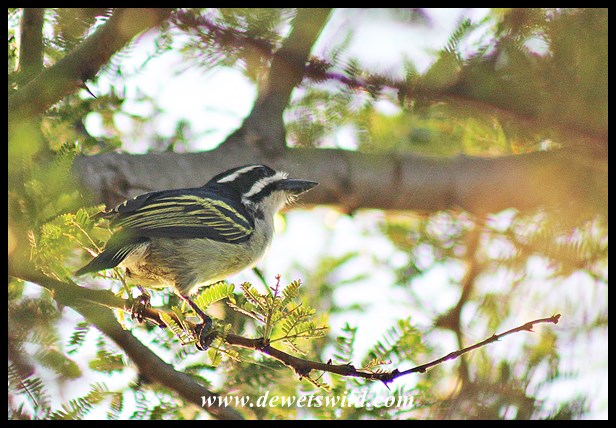
Yellow-rumped Tinkerbird

Pogoniulus bilineatus

The Yellow-rumped Tinkerbird is a denizen of densely vegetated woodlands and forests, where it feeds on fruits (especially of wild figs) and berries, and occasionally the odd insect, in the middle to upper stories. Its call is an often-heard sound of the dense habitats it frequents. Yellow-rumped Tinkerbirds are usually encountered singly or in pairs and breed throughout the year with a peak in the summer months, excavating nesting holes in the underside of a dead branch or stump. Clutches usually number between 2 and 5 (usually 3) eggs, incubated by both parents for about 2 weeks. The chicks leave the nest at about 3 weeks old. Adults measure only about 11cm in length and weigh a mere 15g or so.

The Yellow-rumped Tinkerbird is considered of least concern by the IUCN. It occurs in the forests of West and Central Africa, through the wetter parts of East Africa and along the Indian Ocean coast to South Africa, where it is found along the coast and adjacent hinterland of Kwazulu-Natal and the Lowveld and Escarpment of Mpumalanga.

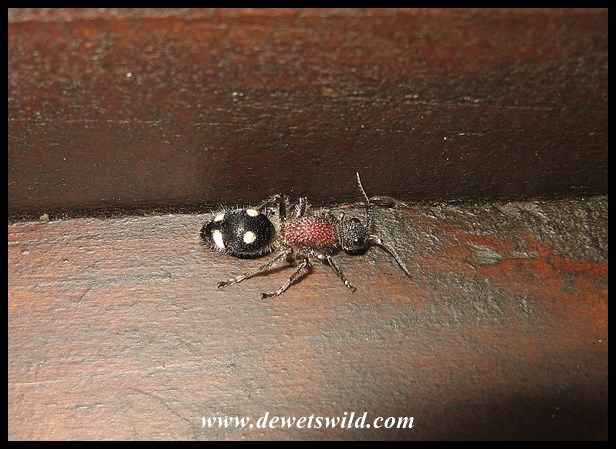
Velvet Ant

Mutillidae

There are several species of “Velvet Ant” (family Mutillidae) wasps in South Africa. If you’ve had a run-in with the female of this solitary wasp, like I have, you’d definitely agree that their sting is among the most painful of any insects, although not considered particularly toxic. Females are flightless and mimics foraging ants while the winged males on the other hand frequent flowers, and are stingless. They deposit their eggs on the larvae or pupa of other wasps and bees, on which their own young then feed and grow.