Having long been the exclusive hunting ground of Zulu royalty, including the legendary Shaka, and thus conferred protection under traditional laws even during those pre-colonial times, the Hluhluwe-Imfolozi Park is one of the oldest officially declared conservation areas in Africa. From the mid 1800’s the area was heavily exploited by European hunters and explorers, resulting in the once prolific herds of game being decimated within a few decades. In 1894 the shooting of six southern white rhinoceros in Zululand, when it was realised that the area at the confluence of the Black and White Mfolozi Rivers held the last remaining few on the planet (it is estimated only between 20 and 50 animals remained), resulted in an outcry from citizens that prompted the colonial government of Natal and Zululand into proclaiming the Hluhluwe and Umfolozi Game Reserves on 30 April 1895, together with three other areas.
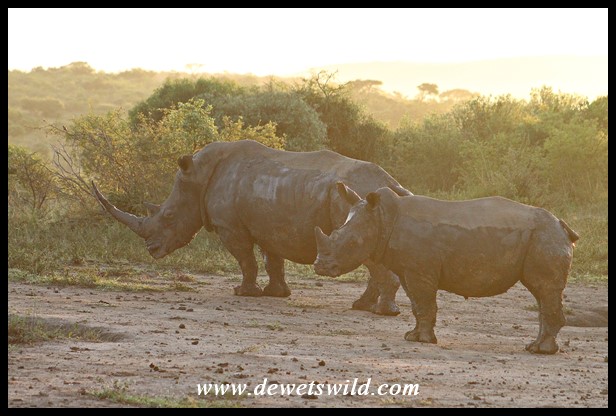
White Rhino
The reserves’ formative years were not rosy, however, and campaigns to eradicate the tsetse fly, carrier of the cattle disease nagana, saw the Umfolozi Reserve temporarily deproclaimed twice between 1929 and 1947 and over 100,000 head of game was destroyed. Only the rhinos were spared. The entire area, including Hluhluwe and Umfolozi, was then subjected to extensive spraying with insecticides which only stopped once the war against the tsetse fly and nagana was considered won in 1951. The reserves were then transferred to the control of the newly formed Natal Parks Board in 1952 but no detailed ecological study of the damage done by the nagana campaigns were ever conducted.

Golden sunrise over Imfolozi (photo by Joubert)

Chistmas sunrise over Hluhluwe-Imfolozi

Imfolozi sunrise

Sunrise over Imfolozi with a Marula in silhouette

Sunrise over the Black Mfolozi River

Imfolozi Sunrise

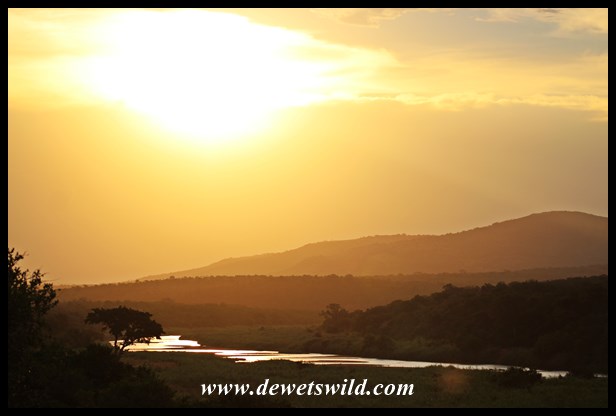
Imfolozi sunset

Imfolozi sunset

Sunset west of Mpila

Umfolozi sunset
The so-called “Corridor” between these two reserves, whilst only officially conferred conserved status in July 1989, was managed for a long time as a single unit together with its two more famous neighbours, first as the Hluhluwe-Umfolozi Complex and now as the Hluhluwe-Imfolozi Park. The Corridor Reserve contributed 216km² to the conserved area of the Park, and combined with the 256km² put up by the old Hluhluwe Game Reserve and the 478km² covered by the old Umfolozi Game Reserve today the Hluhluwe-Imfolozi Park covers 950km² – one of the largest and ecologically most intact state-managed conservation areas in South Africa. It took 12 years – completed in 1979 – to fence the entire Park with a fence high and strong enough to keep in predators, rhinos, buffaloes and elephants. Still the reserve has many modern-day challenges to contend with, ranging from a booming human population all along its borders from where subsistence and commercial poachers operate, two open cast coal mines within sight of its south-eastern fenceline with plans for a third, poor agricultural practices upstream drying up and silting up its rivers, and a busy public road carrying traffic straight through the middle of it to name but a few.

Marula tree

Hluhluwe-Imfolozi Corridor’s rolling hills

Scenery in Hluhluwe-Imfolozi

Can you spot the lions? 😀

Heavy clouds threatening to dampen Christmas

Hluhluwe River

The hills of Hluhluwe

Mphafa stream

Bhekaphansi Pan after good rains

Summer sunrise over the Black Mfolozi
The Hluhluwe section in the north of the reserve is hilly, ranging in elevation from 80 to 540m above sea level, and is drained by the Hluhluwe River and its tributaries. This part of the Park receives far higher rainfall than the southern Imfolozi-section (annual average of around 985mm vs 650mm) and is covered by semi-deciduous forests, dense bushveld and sour grasslands. Imfolozi by contrast is dominated by undulating thorny savanna and open broad-leaved woodland covering mostly lower hills and wider valleys, with scattered pockets of riverine thickets along the courses of the Black and White Mfolozi Rivers which have their confluence near the south-eastern boundary of the Park. More than 1,250 plant species occur naturally within the Park’s borders.

Hluhluwe scenery

Hluhluwe scenery

Hluhluwe scenery

Hluhluwe scenery

A wide bend in the Black Mfolozi

A view over the hills of the Hluhluwe section

Umfolozi sunrise

Mkhaya vista

Black Mfolozi

White Mfolozi River

A view over a section of Hluhluwe

A view over the White Umfolozi River with a herd of buffalo on the banks
Hluhluwe-Imfolozi Park is world renowned as the place where the southern white rhino was saved from extinction. By 1960 the population had grown from that tiny founder population of between 20 and 50 individuals to a point where the Park was reaching its carrying capacity, and the Natal Parks Board realised that it was unwise and impossible to keep all the animals in a single confined area. Operation Rhino was set into motion and over the years since several thousand white rhino have been translocated from Hluhluwe-Imfolozi to other reserves in South Africa and other African countries and to zoos all over the world. Sadly today the Park’s rhinos are again suffering the effects of illegal hunting to feed demand for rhino horn from Asian markets.

White Rhino

White Rhinos

White Rhino drinking

White Rhino Territorial Demarcation

White Rhino

White Rhinos

White Rhino calf playing in mud

White Rhinos crossing a river

White Rhino

White Rhino

The tiniest baby rhino we’ve ever seen

I’m coming for you!

White Rhinos – Hluhluwe-Imfolozi Park
The reserve also protects a valuable population of the even more endangered black rhino.

Black rhino at a mud wallow

Black rhinos in an aggressive mood

Black Rhino
After being hunted to local extinction in 1890, elephants were reintroduced from Kruger National Park starting in 1981 and is today one of the most successful species in the Park, with numbers having grown to almost 800.

Elephants crossing the White Mfolozi

The day of the elephants

Elephants claiming the right of way

Elephants walking from the water after drinking their fill

Big elephant herd feeding in a reedbed

Big Old Bull

Small group of elephants claiming an island in the Black Mfolozi

Elephants in the bed of the Black Mfolozi

Elephant herd on the move

He has had enough of us! (photo by Joubert)

Elephant drinking at Bhejane

Master of all he surveys

Elephant bull

Sunset on the Black Mfolozi

Elephant bull

Elephant herd crossing the Black Mfolozi
Currently numbering around 4,500, the African buffalo is the most numerous and most frequently encountered mega-mammal in the Park.

Buffalo mud-wallow

Huge herd of buffalo heading for a pool in the Black Umfolozi

Buffaloes always look ready for a fight!

Buffalo cows eyeing us with suspicion

Lord and Lady Syncerus

Herd enjoying a mud spa

Buffalo family?

Buffalo bull (photo by Joubert)
The last lion in the area covered by the Park today was shot in 1915, but in 1958 a lone male made his own way back to the Umfolozi Reserve – from where is anyone’s guess. Reserve management introduced a further two females and three cubs six years later, and today Africa’s biggest cat well and truly rules again over the Hluhluwe-Imfolozi Park.

Not scared of heights!

Beautiful male lion

Beautiful male lion (photo by Joubert)

The King and Prime Minister of Imfolozi

Young male lion on the move

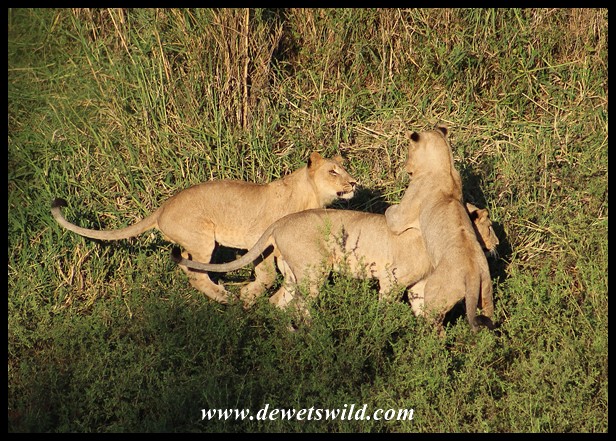
Playful lions along the Hluhluwe River

“How you doin’?”

Lioness

Light-maned Lion
The smallest member of the “Big 5“, the leopard, is also the most elusive and any encounter with these cats in Hluhluwe-Imfolozi is a rare and special treat.

Leopard camouflage in a thicket

Leopard female calling for her cubs
African wild dogs were reintroduced to the Hluhluwe-Imfolozi Park first in 1980 and again in 2002. Cheetahs were first reintroduced in the late 1960’s already but their numbers have been supplemented fairly regularly since with additional introductions, yet they remain rare. Spotted hyenas are the most numerous large predator in the Park.

Wild dogs on the hunt (Hluhluwe-Imfolozi 27122014)

African Wild Dog

African Wild Dog – Hluhluwe-Imfolozi Park

Sizing up a pair of zebras

Cheetah with a tracking-collar

Cheetah in the long grass

Cheetah – Hluhluwe-Imfolozi Park

Cheetah

Hyenas come into camp every night. This one we saw at Masinda Lodge, a short distance from Mpila, one morning

Spotted hyena sniffing the breeze

Cooling down on a hot day

Spotted Hyena attending a barbeque in Mpila Camp
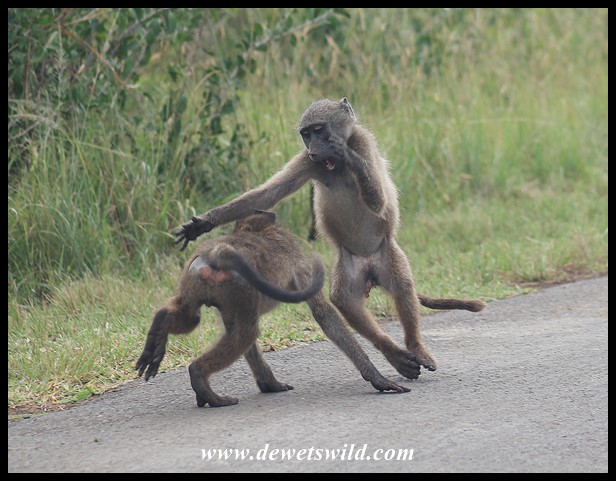
Most of the 96 species of mammal that occurs in Hluhluwe-Imfolozi Park are various kinds of bats and rodents and very secretive, and visitors will find it much easier to see a variety of antelope (most notably blue wildebeest, impala, steenbok, red and common duiker, kudu, nyala, bushbuck and waterbuck) as well as warthogs, plains zebras and giraffes. Hippos occur in both the Hluhluwe and Imfolozi sections, but are seen infrequently. Four of South Africa’s five indigenous primate species are at home here: Chacma Baboon, Samango and Vervet Monkey, and Thick-tailed Bushbaby.

Blue wildebeest

Blue Wildebeest

Munching Impala (photo by Joubert)

Impala

Grey Duiker

Red Duiker

Kudu

Young Kudu bull

Nyala Bull

Nyala Bull

Bushbuck

Waterbuck Bull

Baboon male

Chacma Baboon

Samango Monkey

Male Samango Monkey

Playful Vervet Monkey baby

The cutest monkey in Hilltop

I did it my way…

Warthog piglets suckling

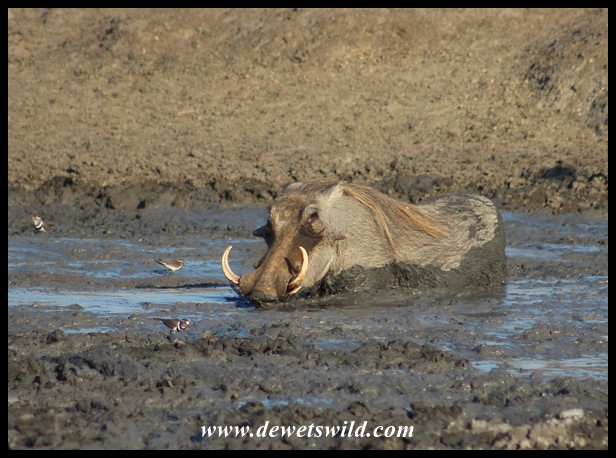
Warthog enjoying his turn in the mud

Playful warthog piglets at Mpila (photos of Joubert)

Giraffe and Imfolozi scenery

Giraffe

Plains Zebra mare and foal (with a photo-bombing cattle egret)

Plains Zebra and White Rhino sharing a waterhole

Zebras at sunrise

Waterbuck drinking at Zincakeni Dam

Hluhluwe-Imfolozi Park
There is a breeding colony of Southern Bald Ibis in the cliffs opposite the Siwasamikhosikazi Picnic Site. This is one of several rare and endangered South African birds that find refuge in the Hluhluwe-Imfolozi Park, others including the Southern Ground Hornbill, Saddle-billed Stork and White-backed, White-headed and Lappet-faced Vultures. Altogether more than 400 bird species have been recorded in the Park and it is recognized as an Important Bird and Biodiversity Area by the conservation organisation Birdlife.

Mocking Cliff Chat (male)

Yellow-billed Kite

White Stork

Tawny (front) and Wahlberg’s (back) Eagles sharing a tree

Spotted Eagle Owl (photo by Joubert)

Woolly-necked Stork

Mountain Wagtail

Ashy Flycatcher

Wire-tailed Swallow

Female Black Cuckooshrike

Bateleur

Female Chinspot Batis

Purple-crested Turaco

Red-billed Oxpecker (photo by Joubert)

Little Bee-eaters

Three-banded Plover

Steppe Buzzard

Black-bellied Bustard

Yellow-throated Longclaw

White-crested Helmetshrike

Trumpeter Hornbills

Lesser Spotted Eagle

Golden-breasted Bunting

Burchell’s Coucal

Lilac-breasted Roller

Orange-breasted Bushshrike (immature)

Red-capped Robin-Chat in Hilltop Camp

Yellow-fronted canaries searching for food in rhino dung

White-backed vulture
Rounding out the tally of vertebrate fauna that finds protection in the Hluhluwe-Imfolozi Park is 58 species of reptile, including the nile crocodile, 26 kinds of amphibians and 21 species of fish.

Variable Skink

Natal Hinged Tortoise

Nile crocodiles on a sandbank in the Black Umfolozi River

Raucous Toad

Giant Legless Skink

Common Dwarf Gecko

Striped Skink

Marsh Terrapins

Rainbow Skink

Leopard Tortoise hatchling, just a little bigger than a match box

Our best ever sighting of a wild python!

Our best ever sighting of a wild python!

Spotted Bush Snake inside our chalet at Mpila

Rock monitor
There are three access gates into the Hluhluwe-Imfolozi Park. Memorial Gate is close to the town of Hluhluwe and provides the easiest access to the north of the Park. Nyalazi Gate is located centrally and accessed from the town of Mtubatuba while Cengeni Gate lies on the western border on the road leading from Ulundi.

Nyalazi Gate

Memorial Gate

Sign at the entrance to the Hluhluwe-Imfolozi Park
Hilltop, the Park’s main rest camp, is located atop Ngalonde Hill in the Hluhluwe section, high enough to be several degrees cooler than the river valleys below on a hot summers day and high enough that on a sunny day the dunes along the Indian Ocean to the east is clearly visible. The first tourist accommodation was erected at Hilltop in 1933 and today the camp offers a wide range of accommodation options that can accommodate from 2 to 8 guests. Hilltop has a restaurant and bar as well as a small curio shop. Accommodated guests have use of a swimming pool and the Umbhombe Trail leads through a section of the forest below the camp. Guests are also able to book to join guided walks and drives from Hilltop.

Hilltop

Hilltop reception

Hilltop restaurant’s terrace

Chalet at Hilltop

View from Hilltop Chalet 47, Hluhluwe-Imfolozi Park, March 2022

Hilltop Chalet 47, Hluhluwe-Imfolozi Park, March 2022

Hilltop’s original Rondawels are still in use

Start of the Umbhombe Forest Trail

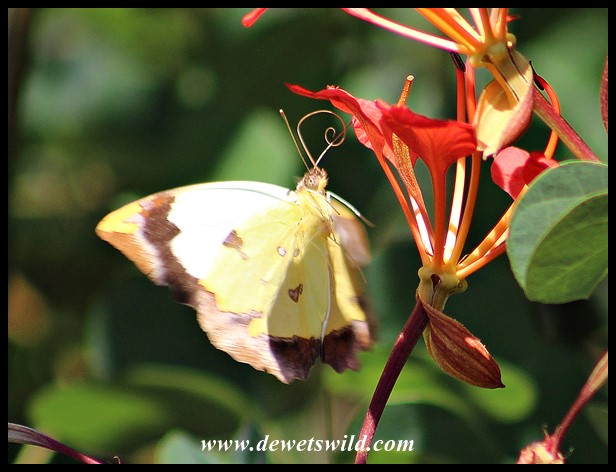
A Flying Handkerchief – the male Mocker Swallowtail – seen along the trail in Hilltop Camp

Red Duiker in Hilltop Camp
The unfenced Mpila Camp is the main accommodation option in the Imfolozi section of the Park and opened in 1958. Here guests have a choice of various cottages and safari tents. The camp has a small shop stocking only bare basics. Guided walks and drives are on offer here as well.

Welcome to Mpila

Welcome to Mpila!

Chalet 16, Mpila, Hluhluwe-Imfolozi Park, March 2022

Chalet 16 at Mpila in the Hluhluwe-Imfolozi Park, December 2018

Mpila #17, Hluhluwe-Imfolozi Park, July 2017

Mpila Chalet 21, Hluhluwe-Imfolozi Park, December 2016

Yes, that is lion scat lying in front of our veranda…

Mpila Chalet 21, Hluhluwe-Imfolozi Park, December 2016

Mpila cottage 17

View from our cottage

Mpila, Hluhluwe-Imfolozi, December 2014

Mpila (Hluhluwe-Imfolozi), December 2013

Mpila shop

Three-bedroomed cottage at Mpila

Safari Tent accommodation at Mpila

Mpila’s smaller cottages

Mommy’s responsible for lunch in Mpila
Several bush camps and bush lodges are located throughout the park and provide more exclusive and private accommodation options than is available at the main camps. In the Hluhluwe section these are Munywaneni and Muntulu, both overlooking the Hluhluwe River, while on the banks of the Black Mfolozi River guests can opt for Nselweni, Hlathikhulu and Gqoyeni. Masinda Lodge is located between Mpila and Nyalazi Gate. Reservations for Hilltop, Mpila and these bush lodges and bush camps are made directly with Ezemvelo KZN Wildlife.

Hlathikhulu Bush Lodge

Hlathikhulu Bush Lodge

Hlathikhulu Bush Lodge

Hlathikhulu Bush Lodge

Hlathikhulu Bush Lodge
Rhino Ridge Safari Lodge is a private concession operating in the Hluhluwe section of the Park offering luxury, full service accommodation. There are no options for camping with your own equipment within the Hluhluwe-Imfolozi Park, but the Nyalazi Campsite, fairly recently opened just outside the entrance gate of the same name, is getting very good reviews.
The Imfolozi Wilderness area covers most of the southern quarter of the Park, straddling the White Mfolozi River. No vehicular access is allowed into the wilderness area, the first to be designated in Africa, and rangers and visitors are only allowed into the area on foot or on horseback. The first trail in the iMfolozi Wilderness, led by Ian Player and Magqubu Ntombela, took place in March 1959 and to this day these trails remain very popular, with several options available from the Mndindini Base Camp throughout the year.
The Centenary Centre opened in 1995 near the site of the old Mambeni Gate to celebrate the 100th anniversary of the Park’s proclamation. The centre features a museum dedicated to the successes of the Natal Parks Board and its successor Ezemvelo KZN Wildlife in conservation and game capture and translocation. Due to the ongoing rhino poaching crisis tours of the actual game capture bomas have been suspended. A cafeteria provides simple sit-down meals, take-aways and cooldrinks.

Centenary Centre

Black rhino statue at Centenary Centre

Rhino skulls on display

Display depicting a rhino capture in the early days of Operation Rhino

Display depicting the uniform and gear of the rangers involved in rhino capture

Orphaned white rhino at the Centenary Centre game pens
The neighbouring community operate markets at Centenary Centre and Memorial Gate where authentic African curios can be purchased.
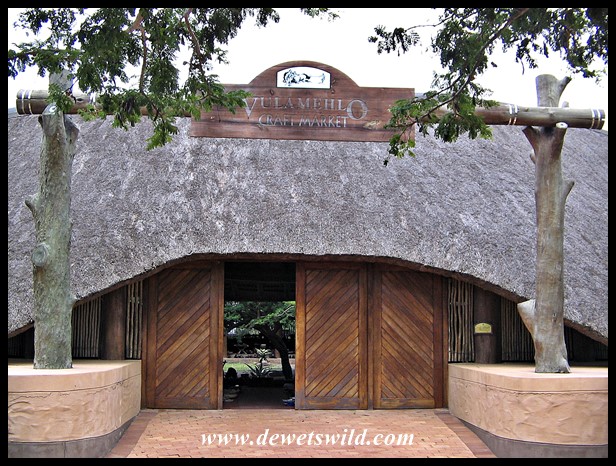
Vulamehlo Craft Market at Centenary Centre
The network of roads available to visitors stretch over 250km from Cengeni Gate in the west to Memorial Gate in the north-east, most of it good enough to traverse in any weather with only a few sections restricted to 4×4 vehicles. Diesel is available at Hilltop, while unleaded petrol can be purchased at both Hilltop and Mpila. Along these roads visitors will find three game-viewing hides (Mphafa, uBhejane and Thiyeni) and five picnic sites (Sontuli, Umganu, Umbondwe, Siwasamikhosikazi and Maphamulo) where they can stretch their legs. Hluhluwe-Imfolozi Park is in a low risk malaria area and precautions are advisable.

Beautiful Sontuli Picnic Spot on the banks of the Black Umfolozi

View from Siwasamikhosikazi picnic site

Siwasamikhosikazi picnic site

Mphafa Waterhole

Elephant bull walking along the main road

View of Hluhluwe Game Reserve along the Isivivaneni road

Having fun at Hluhluwe-Imfolozi Park

Hluhluwe-Imfolozi Park

Main road through the Hluhluwe-Imfolozi Park

Maphumulo Picnic Site

Maphumulo Picnic Site

Buffalo roadblock
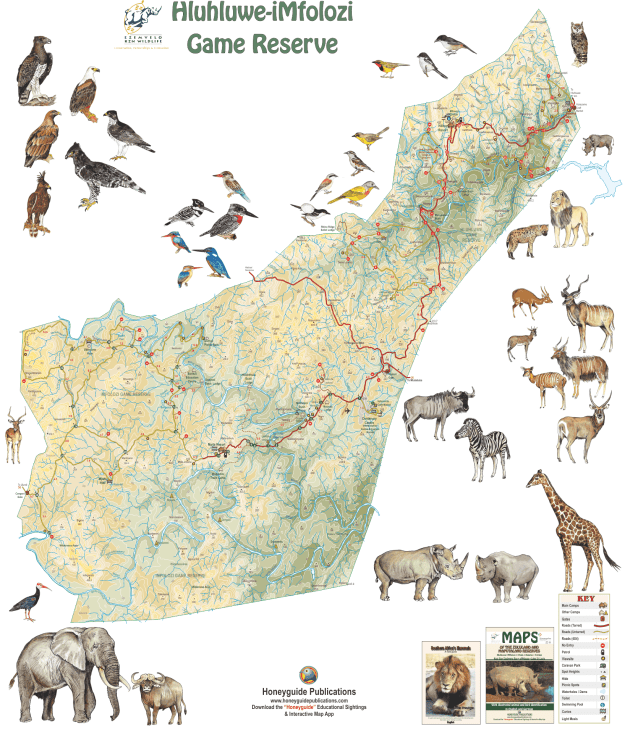
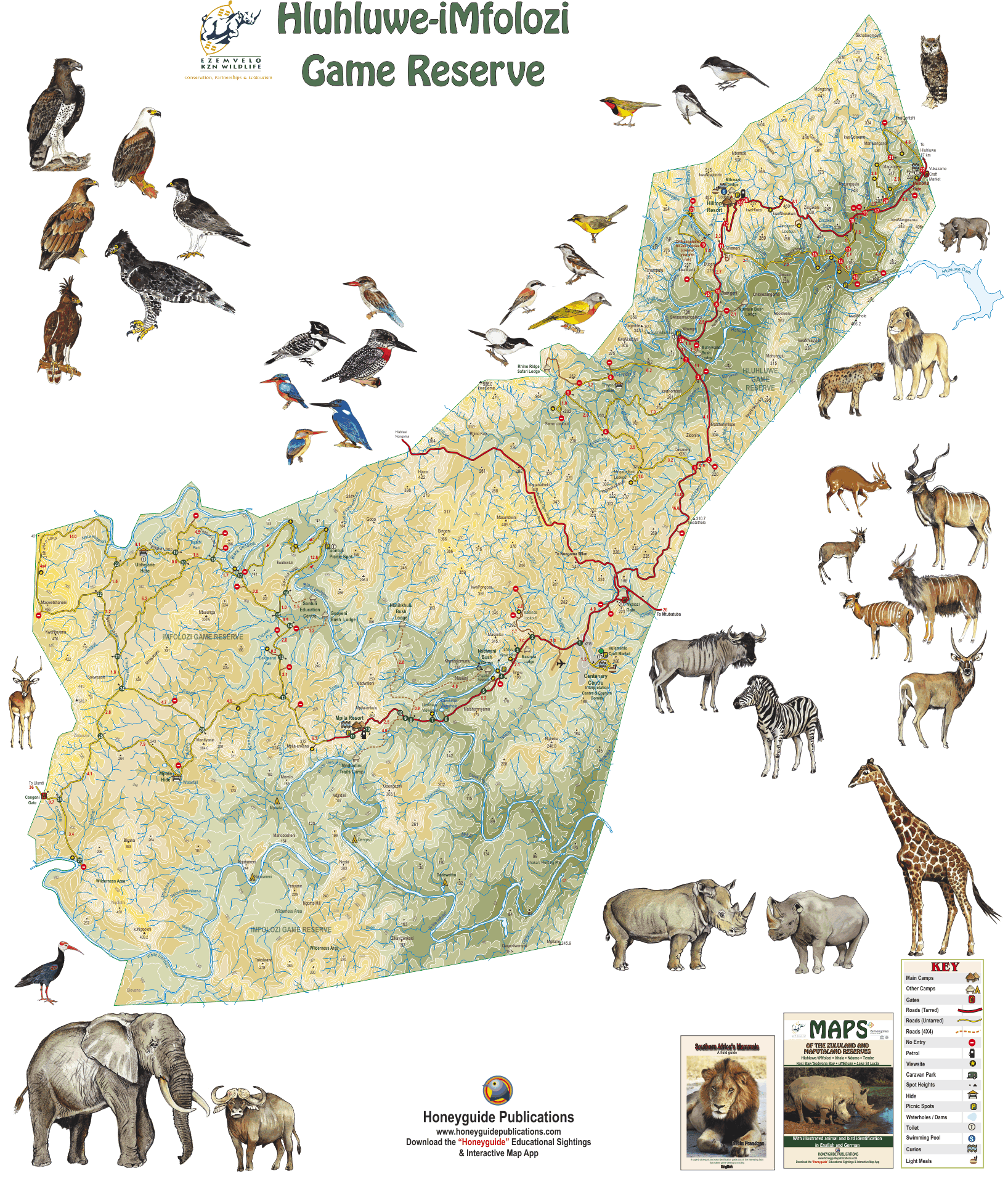
Honeyguide Publications Map of Hluhluwe-Imfolozi Park – Definitely get your copy when you visit the Park or order online before your trip!

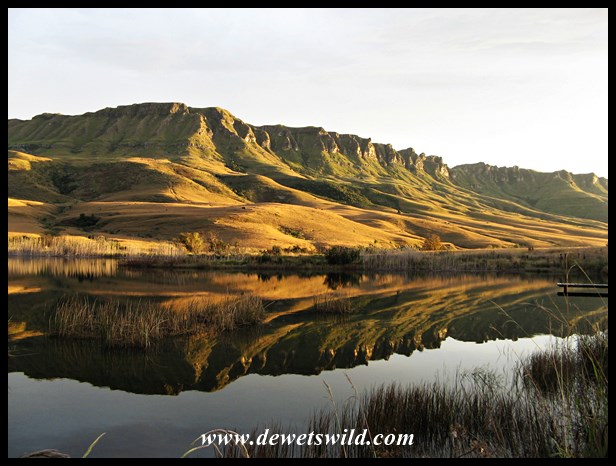











 DeWetsWild