Tag Archives: wildlife

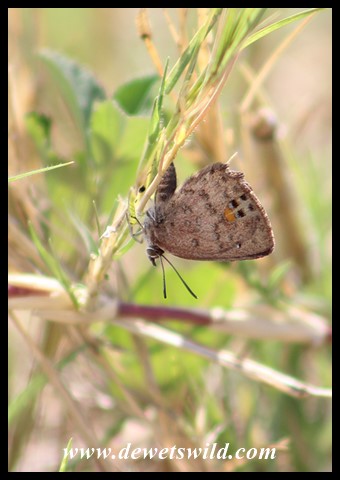
Dusky Copper Butterfly

Aloeides taikosama

The Dusky Copper is a small butterfly with a wingspan of only about 3cm which occurs from Kwazulu-Natal to North West through Mpumalanga, Gauteng and Limpopo where they inhabit grasslands and thorny savanna. They usually occur in small colonies and even when disturbed will not fly far from their colony. Adults are seen from September to May.

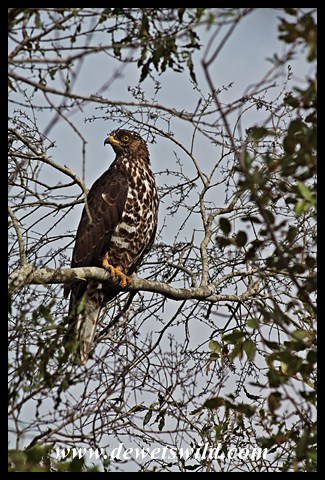
European Honey-Buzzard

Pernis apivorus

European Honey-Buzzards are rare visitors to South Africa during our summer months, arriving around November and departing again by May. While they’ve been recorded in all our provinces it seems most of the limited sightings are in and around Gauteng. Their breeding range stretches from western Europe to central Asia, migrating to sub-Saharan Arica when the northern climes get chilly. The IUCN considers it to be of least concern, with an estimated population of between a quarter- and half-a-million.

European Honey Buzzards are insectivorous and have a particular liking for wasp and bee larvae and pupae, even digging up nests from underground. They are usually encountered in densely vegetated habitats, like forest, woodland, plantations and gardens. They’re about 55cm long and weigh approximately 750g.

Pill-millipede

Genus Sphaerotherium

54 species of Pill-millipede from the genus Sphaerotherium are known from Southern Africa, and coastal Kwazulu-Natal Province is especially rich in the number of species found there.

South Africa’s largest species, the Giant Pill Millipede, can grow to 5cm in length and is the size of a ping-pong ball when it is curled up. This habit of rolling into an impenetrably tight ball when threatened is probably the most endearing characteristic of these fascinating creatures. Another unusual trait of Pill-millipedes is that the males intent on breeding can produce a sound by stridulation – rubbing modified back legs against ridges on the final segment produces a vibrating sound, unique to each species, that the female picks up and then allows the male to mate with her.

Pill-millipedes live in the moist leaf-litter on forest floors, feeding on decaying leaves, fruit and wood, and thus perform a vital ecological function by recycling nutrients. They’re mostly active at night.

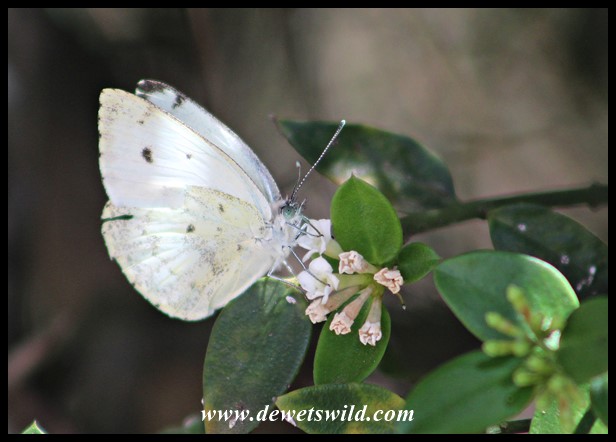
African Small White Butterfly

Dixeia charina

One of the smaller species of the family, with a wingspan ranging only up to 4cm, the African Small White has a limited distribution stretching from the Garden Route to the southern Lowveld where they inhabit coastal, montane and riverine forests and dense woodlands. Larvae feed on the leaves of caperbushes. Adults fly year-round, reaching peak numbers towards the end of summer.

Redbreast Tilapia

Coptodon (Tilapia) rendalli

A popular angling species, growing to a weight of about 2.5kg and a length of roughly 45cm, the Redbreast Tilapia prefers still, well-vegetated waters in rivers and marshes and thrives in dams. Water plants and algae form the bulk of their diet, but they will also eat invertebrates and even small fishes.

When breeding, which occurs in summer, the pair clears a nest up to a meter in diameter among the plants in shallow water in which they protect the eggs (up to 8,000!) and the fry, until these are between 1 and 2cm long. They can live for up to 7 years.

Redbreast Tilapia are found naturally from the DRC southwards, and have been introduced to a number of other African countries where they’re valued in aquaculture. In South Africa they occur naturally in the east-flowing rivers from the Limpopo-system in the north to the Tugela-system in the south, but there have also been some introductions to waters outside of this area. According to the IUCN, this species is of least concern.

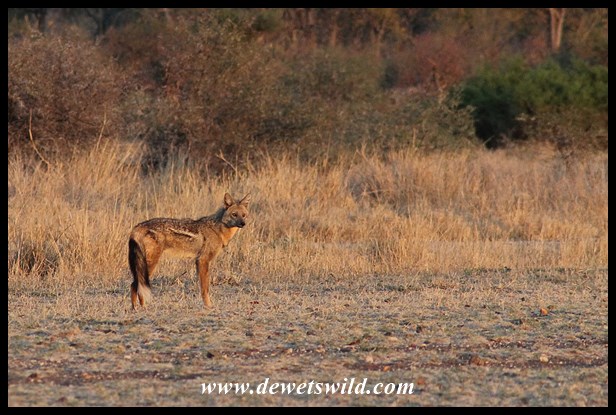
Side-striped Jackal

Canis adustus

The Side-striped Jackal is the lesser known of South Africa’s two jackal species and far less common than the Black-backed Jackal.

Side-striped Jackals are mainly nocturnal, active from dusk to dawn, and by day they den in burrows, rocky outcrops or thickets. They hunt small mammals, birds, reptiles and invertebrates, will eat fruit and berries and will also consume carrion if it is available. They are usually seen singly, in territorial pairs or in family groups.

Female Side-striped Jackals have litters of 2-6 puppies, usually during spring and summer in South Africa, after a 2 month gestation. The male of the pair will bring food back to the den for the female and puppies. The young ones are weaned before they’re 3 months old, but stay with the parents for almost a year. Fully grown, Side-striped Jackals weigh about 10kg and stand about 45cm high at the shoulder. They have a life expectancy in the wild of 10 to 12 years.

Although Side-striped Jackals usually occur at low densities, they’re not endangered and according to the IUCN is of least concern. They’re found throughout the moist savanna habitats of sub-Saharan Africa, from West Africa to Ethiopia, and southwards as far as Angola in the west and South Africa in the south-east. In our country they used to be found only in the north of Kwazulu-Natal and the Lowveld of Mpumalanga and Limpopo, but it appears that they are expanding their range of late. The South African population is estimated at a maximum of around 9,000.

Brown Pansy Butterfly

Junonia natalica

The Brown Pansy, or Brown Commodore, is a medium-sized butterfly with a wingspan of around 5cm. It lives in coastal and riverine forests and dense savannas, where it flies low and slow through open areas. They settle often, being attracted to flowers and puddles, slowly opening and closing their wings, but are also restless and easily flushed. Adults fly year round, with numbers peaking in spring and summer. in South Africa, Brown Pansies occur through much of Kwazulu-Natal and into the Lowveld and escarpment of Mpumalanga and Limpopo.

Great Spotted Cuckoo

Clamator glandarius

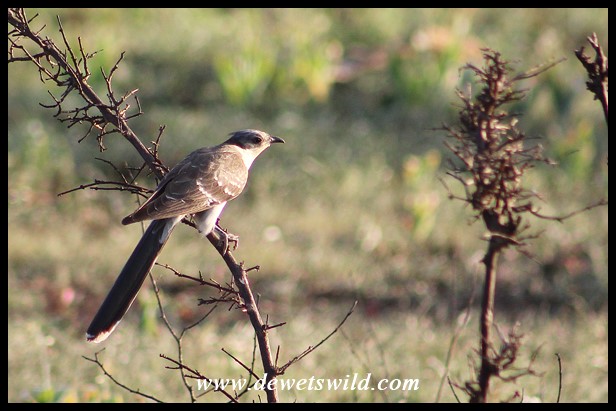
The Great Spotted Cuckoo is another summer visitor to South Africa, with birds arriving here from the Mediterranean and equatorial Africa in September and staying until April or May. While here they have a rather patchy distribution, with concentrations in the Lowveld and northern Gauteng.

Great Spotted Cuckoos live in grasslands, savannas and open woodlands. They feed mainly on a wide range of invertebrates, especially caterpillars.

Like others of their kind, Great Spotted Cuckoos are brood parasites, with this species targeting crows and starlings for the raising of their chicks. Females lay between 1 and 4 eggs, usually 2, in the host nest, and as many as 23 eggs in a season. The chicks don’t usually kill their adoptive siblings but will peck at them. The chicks leave the nest between 3 and 4 weeks after hatching. They grow to 39cm in length and weigh about 130g.

With a population estimated at at least 3-million, the IUCN considers the Great Spotted Cuckoo to be of least concern.

Weeping Wattle

Peltophorum africanum

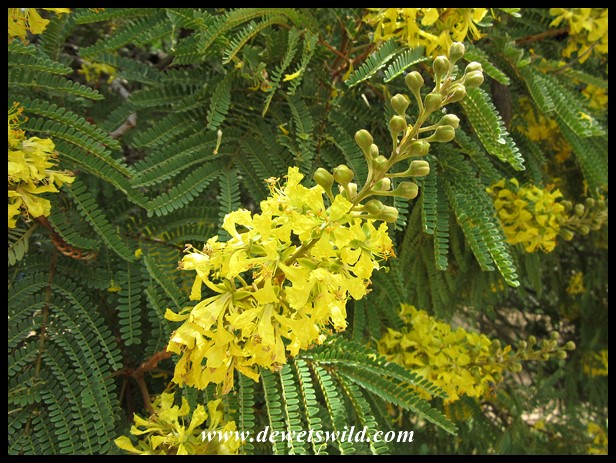
The Weeping Wattle gets its intriguing name from spittle bugs, sap-sucking insects, that live in large numbers on its branches and excrete substantial quantities of almost pure water that continuously drip from the tree as if it is crying, especially in spring.

A semi-deciduous and rather untidy tree that can grow up to 15m high, the Weeping Wattle has a wide range of uses, from being fodder for livestock and popular with honey farmers to being used for furniture manufacturing and as an ingredient in traditional medicine.

Weeping Wattles grow in savanna-associations, often in sandy soils, and in South Africa occurs in Kwazulu-Natal, Mpumalanga, Limpopo, Gauteng and North West.

Zebra White Butterfly

Pinacopteryx eriphia

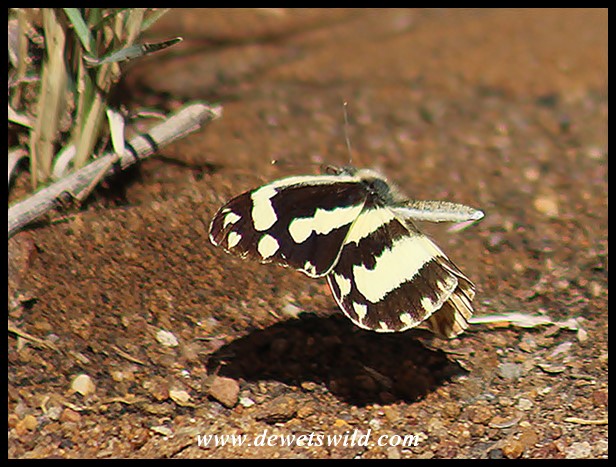
The Zebra White is another butterfly that is distributed over much of South Africa, and is found in pockets of all our provinces. It doesn’t appear to be numerous anywhere though. It inhabits arid scrub and thickets, warmer grasslands and savanna habitats. Adults have a wingspan of between 4 and 5cm and can be seen throughout the year. They usually fly slow and very close to the ground but can accelerate very quickly to escape danger when required.