Tag Archives: wildlife

As cute as monkey business can be!

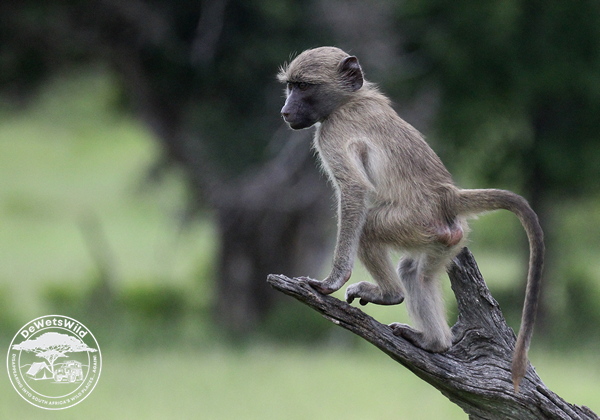
These two baby Vervet Monkeys, seen near Skukuza in the Kruger National Park on a recent tour, were most endearing – it was rather disappointing when their mothers decided it was time to get moving into the bush, as it was great fun watching their antics!

I am a fully accredited and legally registered tour guide (with all the necessary insurance, professional drivers license and first aid certification) – don’t hesitate to reach out if you’d like me to arrange a guided tour of beautiful South Africa and all her natural wonders, like the Kruger National Park, for you as well, or even just to assist with your holiday reservations for our national parks and nature reserves throughout the country.

Greater Honeyguide

Indicator indicator

Famous for its habit of leading humans to beehives – bees, their larvae, honey and wax making up the bulk of its diet – the Greater Honeyguide is one of those birds that people find very interesting. The symbiotic relationship with a mammalian creature that’s brave and strong enough to open up a beehive for it was honed over millennia and is a powerful reminder that humans are supposed to be part of the ecology and not separate from it. The call it uses when leading a human to a beehive is very different to the song it uses to communicate with others of its species. There is a superstition in the bush that, if you’re not going to help the honeyguide get its meal this time next time it will lead you straight to a dangerous predator as punishment.

Greater Honeyguides live in a wide range of habitats, from fynbos to woodland and riverine forests and even plantations of exotic trees. They are brood parasites, meaning that the female sneaks a fertilised egg into the nest of a different species of bird (and destroys any of the host’s eggs in the process) so that they can raise the chick. This usually happens from early spring to mid-summer, during which time the honeyguide female can lay as many as 21 eggs in separate nests, with almost 40 kinds of host birds recorded in southern Africa alone. The honeyguide chicks usually depart their adoptive family at about 2 months of age.

Although they’re not common the Greater Honeyguide has a wide distribution across most of South Africa and beyond our borders inhabit most of sub-Saharan Africa, with the exception of deserts and the equatorial forests. The IUCN considers it to be a species of least concern.

Just look at those teeth!

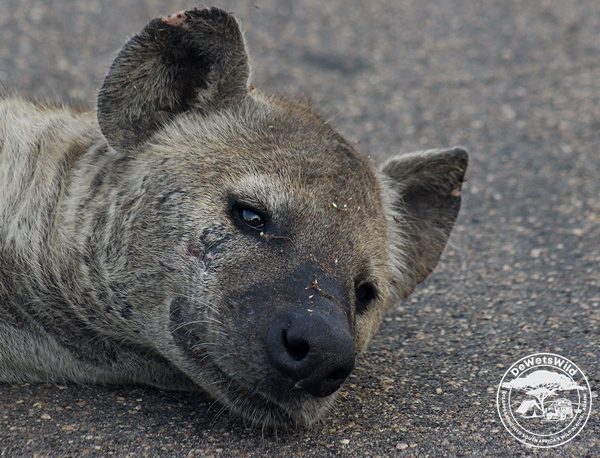
This vicious looking snarl, photographed on a recent tour of the Kruger National Park, is actually just a Spotted Hyena yawning. The jaws of a spotted hyena are extremely powerful and its dentition specifically adapted to be capable of crushing the long bones of even giraffe and buffalo carcasses.

Just to remind us that Spotted Hyenas are actually very interesting animals that certainly don’t deserve the bad PR they’ve been getting, here’s a photograph of two very cute cubs taken on the same trip.

Cute Spotted Hyena cubs

I am a fully accredited and legally registered tour guide (with all the necessary insurance, professional drivers license and first aid certification) – don’t hesitate to reach out if you’d like me to arrange a guided tour of beautiful South Africa and all her natural wonders, like the Kruger National Park, for you as well, or even just to assist with your holiday reservations for our national parks and nature reserves throughout the country.


Southern African Vlei Rat

Otomys irroratus

The Southern African Vlei Rat is found in South Africa, Lesotho, Eswatini, Zimbabwe and Mozambique. The species is closely associated with wet and marshy areas in grassland and heathland, often on mountains and hillsides, feeding mainly on fresh shoots of grasses, reeds and sedges. Like others of the family the Southern African Vlei Rat is diurnal and move along singly or in family groups using well worn pathways radiating from their nest, built in a thicket using a variety of plant materials.

The Southern African Vlei Rat is extremely fertile and females may have up to 7 litters of as many as 7 babies each in a year. The babies are weaned by the time they’re between 2 and 3 weeks old and females are sexually mature before they’re 3 months of age. Fully grown adults weigh around 120g and measure about 25cm in length (including their tail). They have a life expectancy of less than 2 years in the wild and are a favourite prey of a wide range of predatory mammals and birds.

Toad Tree

Tabernaemontana elegans

The Toad Tree gets its name from its characteristic warty green fruit’s superficial resemblance to the amphibian. They’re usually found in the form of a shrub or small tree up to 5m tall, growing along riverbanks in the Lowveld or the coastal forests of Kwazulu-Natal. Toad Trees flower in our summer months. The ripe fruit, often still on the plant, split open to reveal the pulp inside, which is eaten by a range of animals and birds, including people and black rhinos. Most browsing animals will also feed on the leaves. Other parts of the plant is sometimes used in traditional medicine though some of these have been found to be toxic.

Peregrine Falcon

Falco peregrinus

The Peregrine Falcon is a cosmopolitan bird, found on every continent except Antarctica. According to the IUCN the species is growing in number and therefore considered to be of least concern. Though widely distributed in South Africa they’re not common here. Most local birds are resident throughout the year, though some migrants join them during our summer months.

Peregrine Falcons are fond of mountainous areas, where they breed on the cliffs. In urban locations city skyscrapers are useful alternatives to cliffs and as a result they can be a very effective biological control agent of pigeon population in city centres, as Peregrine Falcons feed mainly on birds caught and killed in flight – in a dive they can reach speeds of 300km/h, usually killing their prey instantly when striking it with their talons at high speed.

Peregrine Falcons form permanent monogamous pairs, building a stick platform nest on a ledge or cavity (natural or man-made) in which they usually lay a clutch of 1-4 eggs at the end of winter or early spring. The female is mostly responsible for incubating the eggs over a 5 week period, while the male will provide food for her at the nest. The chicks make their first flight at about 7 weeks of age but only become independent at about 4-5 months old.

During a visit to the Dullstroom Bird of Prey and Rehabilitation Centre in September 2020 we were treated to a display of the Peregrine Falcon’s prowess in the sky by Charlie, a hand-raised bird being cared for at the centre.

Charlie the Peregrine Falcon

A Waterbuck’s end and a Crocodile’s fortune

On a recent tour of the Kruger National Park my guest and I were treated to this amazing sighting. We were following the course of the Olifants River when we saw a downed Waterbuck bull splashing in shallow water. How the Waterbuck ended up there is open to speculation, though it appeared to have a wound in its stomach and one of the other bulls standing on the riverbank might have had something to do with that. In any event the Waterbuck was not able to get back up and it didn’t take long for its splashing to attract a Nile Crocodile. It was extremely interesting to see how gingerly the Crocodile dealt with the Waterbuck, even after the antelope drowned itself, and this is likely due to the distasteful oily secretions that covers its coat.


July ’25 update from Rietvlei Nature Reserve

June and July was busy months for me and there wasn’t much opportunity to guide walks and drives at Rietvlei Nature Reserve the past two months. Still, on the few occasions I could, we had marvelous sightings even if the winter weather was bitterly cold!

If you’d like to join me on a guided tour of Rietvlei – on a hike or on an open vehicle drive – you can book through melanie@rietvleicoffee.co.za / +27(0)74-820-9926.

List of birds seen at Rietvlei Nature Reserve during June & July 2025:

Scientific Afrikaans English
Acridotheres tristis Indiese Spreeu Common Myna
Acrocephalus gracilirostris Kaapse Rietsanger Lesser Swamp Warbler
Afrotis afraoides Witvlerkkorhaan Northern Black Korhaan
Alopochen aegyptiaca Kolgans Egyptian Goose
Amandava subflava Rooiassie Orange-breasted Waxbill
Amblyospiza albifrons Dikbekwewer Thick-billed Weaver
Anas erythrorhyncha Rooibekeend Red-billed Teal
Anas undulata Geelbekeend Yellow-billed Duck
Anhinga rufa Slanghalsvoel African Darter
Anthus cinnamomeus Gewone Koester African Pipit
Ardea melanocephala Swartkopreier Black-headed Heron
Ardeola ralloides Ralreier Squacco Heron
Astur melanoleucus Swartsperwer Black Sparrowhawk
Bostrychia hagedash Hadeda Hadeda Ibis
Burhinus capensis Gewone Dikkop Spotted Thick-knee
Butorides striata Groenrugreier Green-backed Heron
Centropus burchellii Gewone Vleiloerie Burchell’s Coucal
Ceryle rudis Bontvisvanger Pied Kingfisher
Chroicocephalus cirrocephalus Gryskopmeeu Grey-headed Gull
Circaetus pectoralis Swartborsslangarend Black-chested Snake Eagle
Cisticola fulvicapilla Neddikkie Neddicky
Cisticola tinniens Vleitinktinkie Levaillant’s Cisticola
Colius striatus Gevlekte Muisvoel Speckled Mousebird
Corvus albus Witborskraai Pied Cow
Corythornis cristatus Kuifkopvisvanger Malachite Kingfisher
Crinifer concolor Kwevoel Grey Go-Away Bird
Crithagra mozambica Geeloogkanarie Yellow-fronted Canary
Curruca subcoerulea Bosveldtjeriktik Chestnut-vented Warbler
Dendrocygna viduata Nonnetjie-eend White-faced Whistling Duck
Dendropicos fuscescens Kardinaalspeg Cardinal Woodpecker
Dessonornis caffer Gewone Janfrederik Cape Robin-Chat
Dicrurus adsimilis Mikstertbyvanger Fork-tailed Drongo
Elanus caeruleus Blouvalk Black-winged Kite
Estrilda astrild Rooibeksysie Common Waxbill
Euplectes orix Rooivink Southern Red Bishop
Euplectes progne Langstertflap Longtailed Widowbird
Fulica cristata Bleshoender Red-knobbed Coot
Gallinago nigripennis Afrikaanse Snip African Snipe
Gallinula chloropus Grootwaterhoender Common Moorhen
Icthyophaga vocifer Visarend Fish Eagle
Jynx ruficollis Draaihals Red-throated Wryneck
Lamprotornis bicolor Witgatspreeu Pied Starling
Lamprotornis nitens Kleinglansspreeu Cape Glossy Starling
Laniarius atrococcineus Rooiborslaksman Crimson-breasted Shrike
Laniarius ferrugineus Suidelike Waterfiskaal Southern Boubou
Lanius collaris Fiskaallaksman Common Fiscal
Lophoceros nasutus Grysneushoringvoel African Grey Hornbill
Macronyx capensis Oranjekeel Kalkoentjie Cape Longclaw
Megaceryle maxima Reusevisvanger Giant Kingfisher
Microcarbo africanus Rietduiker Reed Cormorant
Mirafra africana Rooineklewerik Rufous-naped Lark
Motacilla capensis Gewone Kwikkie Cape Wagtail
Netta erythrophthalma Bruineend Southern Pochard
Numida meleagris Gewone Tarentaal Helmeted Guineafowl
Passer diffusus Gryskopmossie Southern Grey-headed Sparrow
Passer melanurus Gewone Mossie Cape Sparrow
Phalacrocorax lucidus Witborsduiker White-breasted Cormorant
Phoenicopterus roseus Grootflamink Greater Flamingo
Phoeniculus purpureus Rooibekkakelaar Green Wood-hoopoe
Platalea alba Lepelaar African Spoonbill
Ploceus capensis Kaapse Wewer Cape Weaver
Ploceus velatus Swartkeelgeelvink Southern Masked Weaver
Prinia flavicans Swartbandlangstertjie Black-chested Prinia
Prinia subflava Bruinsylangstertjie Tawny-flanked Prinia
Psittacula krameri Ringnekparkiet Rose-ringed Parakeet
Pternistis swainsonii Bosveldfisant Swainson’s Spurfowl
Pycnonotus tricolor Swartoogtiptol Dark-capped Bulbul
Saxicola torquatus Gewone Bontrokkie African Stonechat
Sigelus silens Fiskaalvlieevanger Fiscal Flycatcher
Spilopelia senegalensis Rooiborsduifie Laughing Dove
Streptopelia capicola Gewone Tortelduif Cape Turtle Dove
Streptopelia semitorquata Grootringduif Red-eyed Dove
Struthio camelus Volstruis Common Ostrich
Tachybaptus ruficollis Kleindobbertjie Little Grebe
Tadorna cana Kopereend South African Shelduck
Telophorus zeylonus Bokmakierie Bokmakierie
Threskiornis aethiopicus Skoorsteenveer African Sacred Ibis
Turdoides jardineii Pylvlekkatlagter Arrow-marked Babbler
Turdus smithi Geelbeklyster Karoo Thrush
Vanellus armatus Bontkiewiet Blacksmith Lapwing
Vanellus coronatus Kroonkiewiet Crowned Lapwing
Vanellus senegallus Lelkiewiet Wattled Lapwing
Zapornia flavirostra Swartriethaan Black Crake
Zosterops virens Kaapse Glasogie Cape White-eye

List of mammals seen at Rietvlei Nature Reserve during June & July 2025:

Scientific Afrikaans English
Alcelaphus buselaphus Rooihartbees Red Hartebeest
Canis mesomelas Rooijakkals Black-backed Jackal
Ceratotherium simum Witrenoster White Rhinoceros
Connochaetes gnou Swartwildebees Black Wildebeest
Cynictis penicillata Witkwasmuishond Yellow Mongoose
Damaliscus pygargus Blesbok Blesbuck
Equus quagga Bontsebra Plains Zebra
Hippopotamus amphibius Seekoei Hippopotamus
Hydrictis maculicollis Kleinotter Spotted-necked Otter
Kobus ellipsyprymnus Waterbok Waterbuck
Sylvicapra grimmia Grysduiker Common Duiker
Syncerus caffer Buffel Cape Buffalo
Taurotragus oryx Eland Eland


A Giraffe with a bone to pick

While on a recent tour of the Pilanesberg National Park we came across this Giraffe comically sucking on an old bone it picked up in the veld. Osteophagia – the behaviour in which herbivorous animals chew on bones – is thought to be a way for these animals to supplement the calcium and phosphate levels in their bodies, especially during the dry season when their usual fodder – leaves, in the case of giraffes – may not be adequately providing in their needs.

A hard day’s work in Dinokeng

Last week we had opportunity for a quick day visit to the Dinokeng Game Reserve and thankfully the chilly winter weather let up for a little while, allowing us to spend the day in the great outdoors, exploring the only game reserve where the “Big 5” roam freely within our home province of Gauteng, while also getting a bit of work done.

The reason for our trip to Dinokeng Game Reserve was an introductory visit to Ngata Safari Lodge, the newest addition to DeWetsWild’s portfolio of wild destinations that we offer a reservation service for and that we can use as base for our guided tours. Ngata is a small venue  inside the reserve and less than an hour’s drive from our home in Pretoria, offering safari-style tents with en-suite bathrooms – the epitome of “glamping” – and breakfast included in the rate. There is also camping sites where you can pitch your own tent or caravan and use either private or communal ablution blocks. On site there is a restaurant, function venue, boma and swimming pool. We were very impressed with Ngata’s facilities and personnel and if you’d like to book a visit don’t hesitate to reach out – you will probably run into us there one day soon!