Tag Archives: wildlife

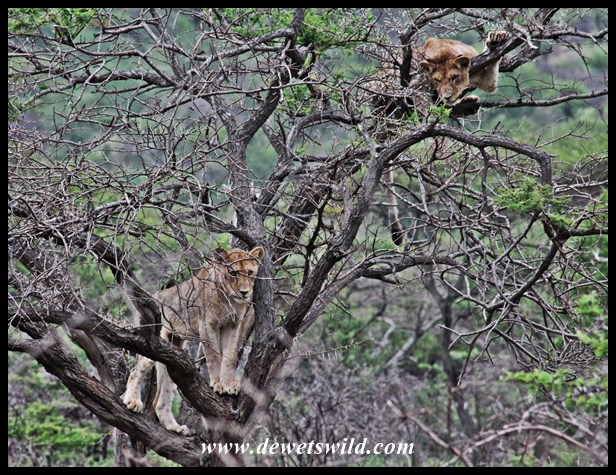
Hluhluwe-Imfolozi’s tree climbing lions

Lions are not generally known for their tree-climbing abilities, and there’s only a handful of prides on the African continent that seem to have this skill and regularly use it. We’ve often heard of Hluhluwe-Imfolozi‘s lions‘ tree-climbing tendencies, but we never saw this for ourselves, despite visiting the Park frequently and enjoying many sightings of these regal cats there.

That is until early morning on Boxing Day 2014, and what an unbelievable sight! We found a lioness (on the ground) with two rather large cubs in a small thorn tree. I did not think that something as big as a lion could get so high up in a flimsy-looking thorn tree, and then be so well camouflaged at that!

Remembering a special lion sighting

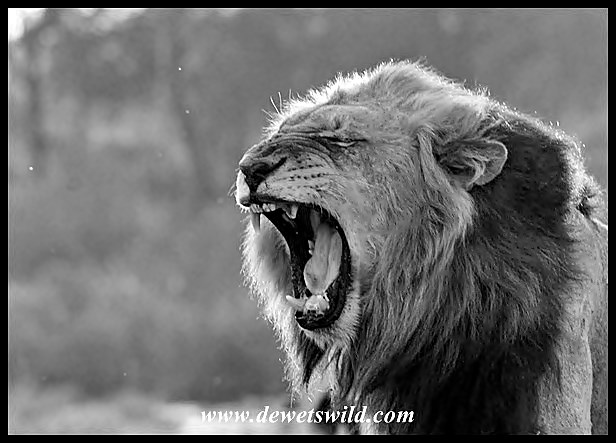
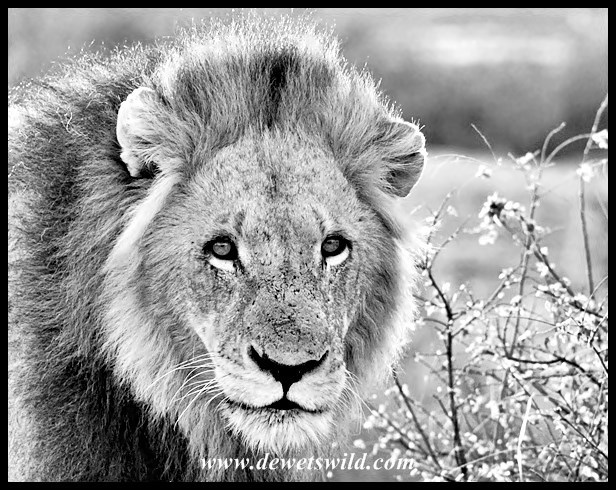
We took these photographs at a memorable lion sighting we told you about last year, almost seven months ago (it still feels like yesterday, so vivid is the memory!), though we’ve now converted them to black-and-white for a new challenge we’re taking part in.

1b

We’ve been invited by Jane (Just Another Nature Enthusiast) to join the 5 Day Black-and-White Photo Challenge. Jane cares a whole lot about what we’re doing to our planet, both good and bad, and if you share her love for nature, as we do, you”re sure to enjoy what she has to share.

There are only two rules for this challenge:

1. On 5 consecutive days, create a post using either a past or recent photo in B&W.
2. Each day invite another blog friend to join in the fun.

For this first of our posts, we’re throwing the ball to AJ Vosse, the expat South African talent behind “Ouch!! My back hurts” and a long time supporter of de Wets Wild. We hope you’ll find the time to join the challenge, AJ, and look forward to your contributions!

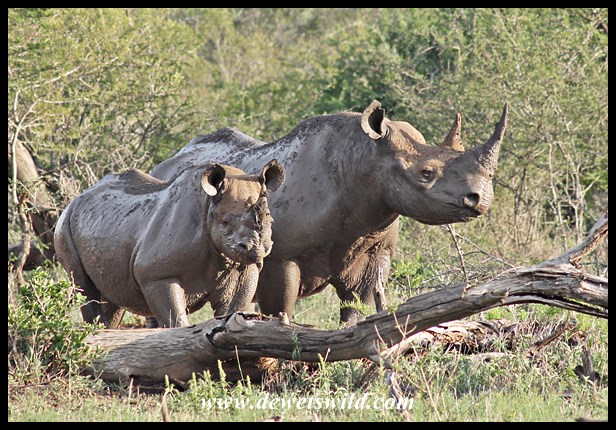
In the rhinos’ home at Hluhluwe-Imfolozi

Hluhluwe-Imfolozi Park is the place where the southern white rhino was saved from the brink of extinction in the previous century, by legendary conservationists like Ian Player. Today, the white rhino, and it’s smaller but much more aggressive cousin the black rhino, still find protection in this beautiful reserve, one of the oldest on the continent, where a force of dedicated rangers face a daily onslaught from armed poachers on their behalf.

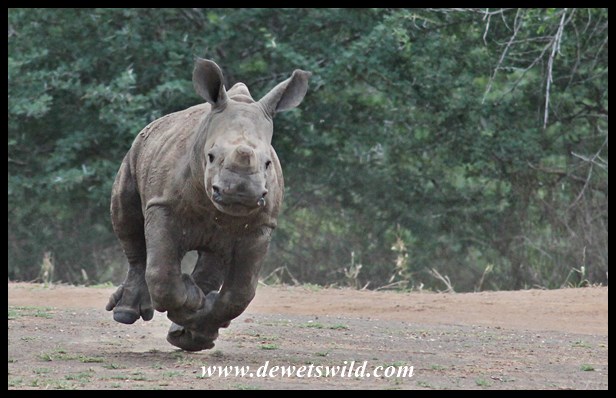
During our December visit to Hluhluwe-Imfolozi, we enjoyed some wonderful rhino sightings, not least of which the cute and playful little white rhino calf we told you about earlier in the week.

This little fellow, one of the tiniest baby rhino we’ve ever seen and probably not much older than a few weeks, gives us hope that the hard-work of Hluhluwe-Imfolozi’s ranger-corps will not be in vane.


The exuberance of youth

We had plenty of wonderful sightings during our recent three week long holidays in the bush – we already shared much of it with you, and there’s yet more to come in the next few weeks – but this was probably the biggest highlight of the trip!

Late in the afternoon of Christmas Eve, in the Hluhluwe-Imfolozi Park, we encountered a white rhino cow and her small calf just where the road goes into and through a thicket of thorny trees. We followed slowly behind as they ambled along, until eventually there was a clearing in the vegetation, just at the spot where there’s also a broad bend in the road. Mom started grazing on the roadside, while her little one decided it was time for some fun. He started running like crazy, at times flying with all four feet off the ground, running circles around his mother and us, then slamming on the brakes in a cloud of dust. Several times he’d charge directly at our vehicle, stopping a meter or two in front of us, only to spin around again, running away at breakneck speed, likely hoping that our silver-grey Jazz was a playmate he could chase and be chased by. Of course, with mom keeping an eye on his antics from close-by, there was no way we could join him for playtime. But inside the car we were laughing out loud in sheer delight.

Eventually he realised that his mom has disappeared around the corner, and he hightailed it to catch up. As we rounded the bend ourselves, we found him next to mom, totally breathless.

We were in awe of the fantastic Christmas present Hluhluwe-Imfolozi had just gifted us.

(you may click on the photos below to view them all in a carousel gallery)

Symmetry

The markings on the buttocks and tails of impalas, resembling the logo of a well-known fast food chain, serve both to keep the herd together when they’re fleeing, and to confuse the pursuing predators, preventing them from singling out a specific individual.

symmetry

Symmetry” is the theme for this week’s WordPress Photo Challenge

Southern Reedbuck

Redunca arundinum

As its name suggests, the reedbuck is an antelope with very special habitat requirements; occurring in reedbeds and areas of long, often flooded, grasslands, always within easy reach of a permanent water source.

Reedbuck (8)

Rams are slightly larger than the ewes, standing approximately 90cm high and weighing as much as 80kg. Only the males carry horns, that normally reach lengths of around 38cm.

Reedbuck live alone, in pairs or in small family groups within a territory defended by a mature ram, while the ewes dictate where and when the group moves. They graze mostly from dusk to dawn, preferring to hide in shady reedbeds and patches of long grass during daylight hours. They are not very fast nor agile, and rely heavily on camouflage to evade predators (all of Africa’s large meat-eaters prey on reedbuck). Ewes give birth to single lambs, mostly in the rainy season, and hide them away for two to four months before joining up with the family group again.

In South Africa, the reedbuck occurs mostly in the wetter eastern part of the country. While there’s a small population of reedbuck in the Kruger National Park (sightings there are special treats), the country’s (and probably the continent’s) biggest concentrations can be found along the shores of Lake Saint Lucia, in the iSimangaliso Wetland Park in Kwazulu-Natal Province. We’ll share some photos from our December visit to the Western Shores of Lake St. Lucia with you in our regular Friday post this week.

Reedbuck (2)

Summer at uMkhuze

uMkhuze Game Reserve, in the iSimangaliso Wetland Park and World Heritage Site, was the third destination of our epic summer 2014 bush holidays. We arrived at uMkhuze’s western gate, Emshopi, on the 18th of December, after an easy 164km drive from Ithala Game Reserve. Our reservation was for three nights in an extremely spacious cottage at Mantuma Rest Camp. When we say “extremely spacious”, we are not lying; you could have held a dance in the lounge!
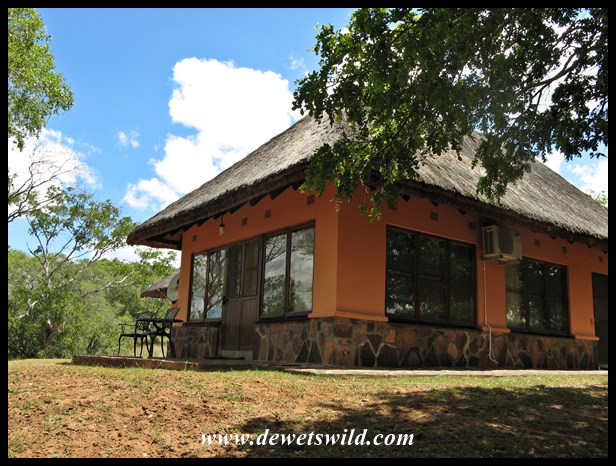
Mantuma, uMkhuze, December 2014

Mantuma, uMkhuze, December 2014

We’ve already shared with you our experiences at two of uMkhuze’s biggest attractions, the Nsumo Pan and Kumasinga Hide, and in this post we’ll focus on some of the things we saw in the rest of this unique reserve.

Nsumo magic

Nsumo magic

Zebra reflections

Zebra reflections at Kumasinga

Of the bat, it has to be said that uMkhuze is one of South Africa’s best known birding destinations. The variety of birds is absolutely staggering, thanks to the diversity of habitats the reserve protects, and we were lucky to add a couple of new “lifers” to our birding tick list.

uMkhuze protects a sizable piece of sand forest, a very rare plant community in South Africa. An equally rare little antelope, the suni, lives only within this habitat. We had several sightings of them, but getting even a half-decent photograph of these shy creatures proved very difficult!
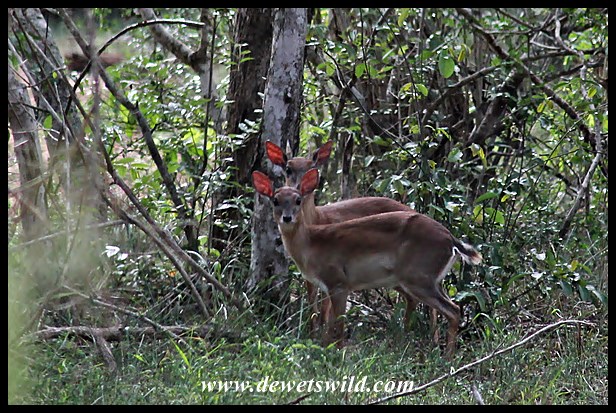
A pair of suni in the sand forest

A pair of suni in the sand forest

We also had our first sightings of large predators (on this trip) at uMkhuze. Lions were reintroduced to the reserve a year ago, and we were thrilled to find two females during a guided night drive. On our last afternoon at uMkhuze, we found a very shy spotted hyena lurking in the bush.

uMkhuze protects large populations of other well-known African mammals and they certainly were not shy to show themselves!

uMkhuze has its fair share of creepy-crawlies too!

I’ve already mentioned what a diverse reserve uMkhuze is, and there’s no better place to see this than from the top of the observation tower just a few kilometers south of Mantuma Rest Camp.

uMkhuze really is a gem in the crown of South Africa’s wild places, and we always enjoy visiting here. Leaving through the Ophansi Gate on uMkhuze’s eastern boundary we felt like we should have stayed a bit longer still, thankfully we could console ourselves by thinking about the great destinations that were still waiting for us on our summer trip to the bush!

Driving through the riverine forest at Ophansi Gate

Driving into the riverine forest at Ophansi Gate
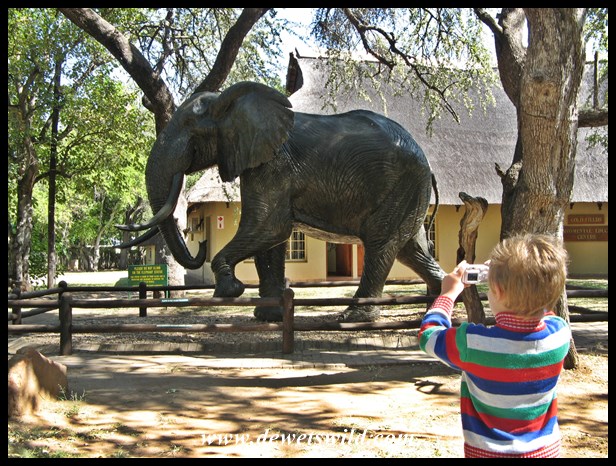
Scale

The Elephant Hall in Letaba Rest Camp, in the Kruger National Park, allows a deeper appreciation of just how big the African elephant really is…

Scale” is the theme for this week’s WordPress Photo Challenge

In the pound seats at Kumasinga

The fantastic Kumasinga Hide is one of the uMkhuze Game Reserve‘s major attractions. The hide is built in the middle of a natural-looking waterhole and offers uninterrupted views and excellent photographic opportunities right around. During our visit to uMkhuze in December 2014 we spent several hours every day at the hide, enthralled by the spectacle of literally hundreds of animals and birds making their way to the water to slake their thirst in the oppressive summer heat.


We have lots more to share from our uMkhuze visit, so please join us again next week!

The magic of Nsumo Pan

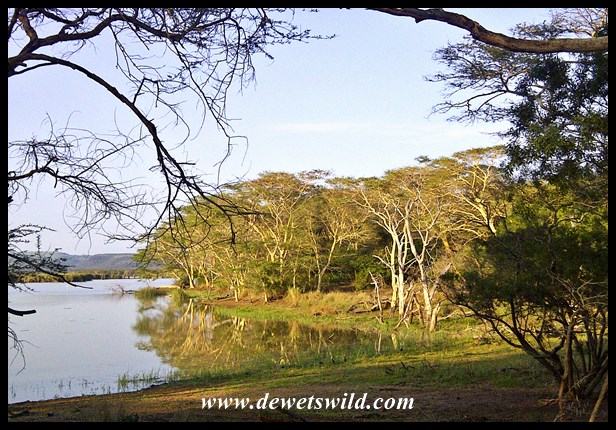
uMkhuze Game Reserve, in the iSimangaliso Wetland Park, has a lot to offer any nature lover, no matter where their interests lie. One of the reserve’s biggest drawcards is the Nsumo Pan, a large body of water fed by the Mkuzi River. Nsumo is home to breeding pink-backed and great white pelicans, hippos and crocodiles, among the huge variety of  birds and animals that live along its reed and fever-tree lined shores. The reserve authorities have made it really easy to enjoy Nsumo’s magic: a tar road skirts a part of its northern banks, there are two bird-viewing platforms at the water’s edge and a beautiful picnic site with clean ablutions and braai (barbeque) facilities.

We have lots more to share in upcoming posts about our December visit to uMkhuze Game Reserve 😀