Tag Archives: wildlife

From Every Angle

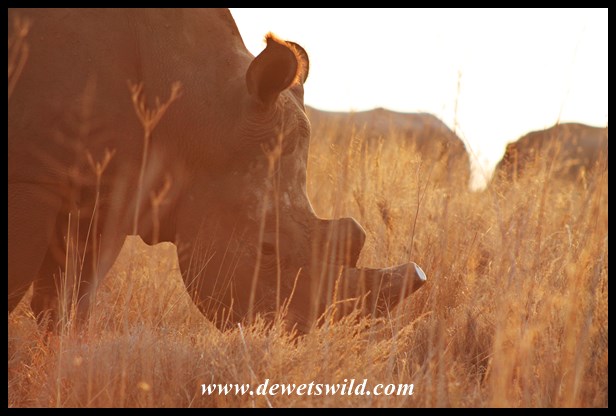
We’ve shown you this exuberant baby white rhino, that ran circles around us in the Hluhluwe-Imfolozi Park on Chrismas Eve 2014, before. This series of photos is just such a perfect fit for this week’s WordPress Photo Challenge, “From Every Angle“, and the little rhino just so darn cute, that we’re sure you won’t mind having another look?


Sweni Wilderness Trail

It is Sunday afternoon and we’re standing around in the parking area of Satara Rest Camp, in the Kruger National Park. My sister Ansie and I have already enjoyed two wonderful days exploring the southern part of the reserve, and now we’re very excited to depart on the next part of our visit – the Sweni Wilderness Trail. Having been introduced to our lead ranger Ndou and the six kind ladies we’ll be sharing the experience with, and with all the baggage packed into the trailer, it is time to get into the open game viewing vehicle and head into the wilderness.

We drive southwards, and apart from Ndou having to admonish a group of tourists for getting out of their vehicle among a herd of giraffe, enjoy sightings of kudu, waterbuck, more giraffe, impala, elephant, blue wildebeest and steenbok. Just across the bridge over the Sweni Spruit, Ndou turns left onto a no-entry road, reserved to access the base camp of the Sweni Wilderness Trail. Soon after, we have our first tastes of what makes the Sweni such a hugely popular trail: two separate sightings of lion males, first an old loner and then two beautiful specimens in their prime. It is a vehicle filled with some very excited trailists that arrives at the Sweni Trails Camp late that afternoon!

The base camp has four small A-frame huts that accommodate two guests each, and as the camp has no electricity we quickly settle into our units while there’s still daylight left. We are introduced to Rhulani, Ndou’s assistant ranger, and James, the very experienced camp caretaker and cook. The conversation around the Sweni dinner table that evening centered on the collective nouns used to describe various groups of animals – a business of mongoose, a tower or caleidoscope of giraffe, a parliament of owls.

“You’ve got the watches, we’ve got the time”. Ndou’s speaking as we sit around the camp fire after dinner, the camp entirely immersed in the darkness of the African night. He’s making the point that there’s a different pace to the wilderness and that we should let go of our own perceptions of time and distance in order to fully take in the wilderness experience. He and Rhulani goes through the “programme” of the days ahead, ensuring that we understand the rules necessary to our safety while walking out in the wilderness among some of Africa’s most dangerous animals.

Most of the group opt to turn in early, leaving three of us to enjoy a last cup of coffee at the fireside. A rustle in the grass followed by an enormous splash has us grabbing for a spotlight, illuminating an impala ewe standing knee-high in the shallow pool in front of camp. We watch as she gets out of the water, and walks along the water’s edge. She disappears from sight for a second as she passes behind the trunk of a big tree next to the camp fence. Just then, there’s another tremendous splash from the water, and as the spotlight finds the impala again it is abundantly clear that her situation has turned for the worse. There’s a frantic scene playing out just meters in front of us and no one thinks to pick up a camera! A medium-sized crocodile has her body firmly in its mouth, and a hyena (or was it two?) is running up and down along the water. We watch in dumbfounded awe as the struggling impala disappears below the water, a string of bubbles rising to the surface signalling that she breathed her last. Five minutes later, the crocodile surfaces again with his now drowned prize, just for a few seconds, her eyes still open and eerily reflecting the light from our torch. We speculate that the hyenas must have chased the impala into the water the first time, and that the opportunistic crocodile then grabbed her as she walked along the pool. However it came about, the excitement of what we’d witnessed and the sounds of the crocodile thrashing in the water as it enjoyed its meal while baboons scream in horror from the trees nearby kept me awake for quite some time that night.

Sweni Trail July 2015 (10)

The drowned impala brought to the surface for a few seconds

James provided an early morning wake-up call for those finding it hard to rise Monday morning, and all of us enjoyed the coffee and rusks before heading out for our first hike. Ndou and Rhulani chose to go walking in an area known as Milaleni, a short drive into the west of the Sweni Wilderness. Our walk started off shrouded in dense mist, which only lifted much later in the morning. Regular sightings of game and birds kept our senses peaked while Ndou and Rhulani astounded us with their tracking skills and shared their extensive knowledge of the bushveld. They chose a rocky outcrop as a picturesque picnic spot before leading us back to the vehicle along the course of the Sweni.

We arrived back at camp to the smells of a delicious brunch, expertly prepared by James while we were out walking. Meals are enjoyed under a large thatched roof, with a view over the Sweni stream, the crocodile pool below the camp and the muddy waterhole on the opposite bank. There’s a constant stream of wildlife heading to the water, and combined with the wide variety of birds and small animals in the camp it is very difficult to go and enjoy a siesta after brunch, for fear of missing out on any of the action!

The afternoon outings take in a spot from which to enjoy the beautiful sunsets that the Lowveld is famous for. Heading eastwards to the Lebombo Mountains on Monday afternoon we spotted a selection of plains game and several species of birds – the Greater Painted Snipe we flushed as the vehicle crossed the Gwini stream causing much excitement in particular for the “twitchers” in our party. The sunset spot Ndou and Rhulani brought us to is known as Ted’s Place – a site high on a cliff in the Lebombos with the mostly dry bed of the Sweni far below and the plains of central Kruger stretching as far as the eye can see. In the distance a herd of elephant were kicking up dust on their hurried way while baboons and impalas foraged on the river bank, unworried by our presence high above them. There’s a calmness that settles over you at sunset in South Africa’s wild places, and it is easy to see why ranger Ted Whitfield enjoyed this tranquil spot so much.

That evening James had a delicious pot of stew waiting for us back at camp, and what better way to end a memorable day out in the bush than with good company and intelligent conversation around the campfire.

Sweni Trail July 2015 (43)

It’s another early wake-up accompanied by coffee, rusks and birdsong on Tuesday morning. Our ranger-guides drive us out to the Gwini-stream area again, where we’d concentrate our walking along the stream in the hopes that we’ll find the snipes again.  The area literally teemed with animals and we often found ourselves among mixed herds of wildebeest, plains zebra, giraffe and impala. Rhulani pointed out a well camouflaged rock monitor lizard, hibernating high in the branches of a fever tree, and then later explained to us why the weeping wattle is also known as the “toiletpaper bush” (if you chew on the branches of this tree you’ll soon find a need for its soft leaves 😉 ).

For a long stretch of our walk we were accompanied by the shrill chattering of a Greater Honeyguide. Ndou related the local belief that if you don’t reward the honeyguide with a piece of the spoils after it has guided you to a beehive, the next time it will lead you into danger. Shortly after, with this warning still fresh in our minds, the recently placed tracks of lions we came across made us hope that Ndou and Rhulani didn’t owe this honeyguide anything!

We had our picnic rest-stop near Kally’s Fountain while curious giraffes peered at us from close by. Considering that it was the middle of a rather dry winter season the amount of water simply flowing out of the muddy soil at this spot was astounding and from the tracks in the area it was clear that it was also a favourite drinking and wallowing place for the area’s wildlife.

It was not long after picking up our backpacks again and continuing along the stream that we passed a herd of giraffe that seemed less worried about us and more concerned with something else moving through the savanna on their other side. Walking into a clearing, we were thrilled to see three lionesses and about a dozen tiny cubs heading towards a thicket some 200m ahead of us. We enjoyed the sighting from a safe distance, as lion mothers are notoriously aggressive and extremely dangerous. They quickly rushed the cubs to the safety of the thicket and Ndou and Rhulani then steered us in the direction of the vehicle. While we didn’t see the lions again I’m sure they kept a watchful eye on us as we walked past!

Back at camp it was time for another scrumptious brunch and then more opportunities to enjoy the real-life wildlife documentary playing out around the waterhole. The satiated crocodile was baking in the sun at one end of the pool while Egyptian Geese were noisily laying claim to the other. All around us tiny birds were flitting about the branches while wildebeest, zebra, giraffe, bushbuck, kudu and impala put in appearances at the water’s edge. In the late afternoon a big herd of elephants came to slake their thirst from the pool in front of camp, and it was a difficult decision whether to stay in camp enjoying their antics or to head out into the wilderness for one final sundowner walk.

I am glad everyone decided to go out for that last walk in the wilderness with ranger guides Ndou and Rhulani, as it turned out to be the absolute highlight of an already memorable wilderness trail. We drove to the Milaleni area again, to enjoy a short walk to a waterhole in the bed of the Sweni before returning to a low rocky ridge from where we could appreciate another spectacular sunset.

We spotted the agitated elephant bull on the opposite bank of the Sweni as we got off the vehicle, but it seemed he was moving off and we weren’t too perturbed. Not ten minutes later, we had spotted another pride of lions, more relaxed and with slightly older cubs than those we saw that morning. With our attention focused on the lions as we crossed over to the other bank, we didn’t immediately notice that the elephant bull was still in the area and quite close (I’m sure the rangers knew he was there though). With head held high he was making it clear that we shouldn’t follow. And so we found ourselves between a huge and unfriendly elephant bull and a large pride of lions. Eventually the lions realised that we had seen them and the adults moved to cover, while the curious cubs did a poorer job at hiding. The elephant at our back had also moved on and satisfied with our viewing we moved away from the scene as well.

Ndou found a Magic Guarri bush and was busy telling us about how it could be used for anything from a useful toothbrush and fire-fighting tool, its uses in traditional medicine and how it wards of ghosts from your home, when the sounds of hippos rushing to water had us all alert. It seemed hippos have taken up residence at the waterhole to which we were heading and to add to the gravity of the situation Rhulani also reported that a herd of elephant was feeding around the waterhole. Our rangers then explained the dangerous situation in which we found ourselves as we had to pass the waterhole to get back to our vehicle at the sundowner spot. With the sun setting fast, we couldn’t wait the situation out and with the wind against us we couldn’t go back past the lions along the track we came. Having reminded us of the rules and what they expected from us, the rangers lead us closer to the pool.

Peering through the bush we could see a huge hippo bull standing tall in the water as Ndou took up position in the stream bed, facing Africa’s most dangerous mammal. There was simply no time for photos as Rhulani led us behind Ndou and up onto the opposite bank of the river. At this point, the herd of elephants became aware of our presence and sounded their dissatisfaction. Some of the herd, mostly cows with calves, thundered away while especially the younger males gave impressive threat displays. We in turn were following Rhulani in single file heading straight back to the vehicle at brisk pace as Ndou caught up from behind. What an adrenalin rush! Pretty soon a couple of jackals started yelping, probably complaining that the lions, elephants and hippos failed to deliver them some tasty morsels!

It was a supercharged group of trailists that clambered onto that rocky ridge that evening. The show however was not over. As we unpacked our snacks and opened our drinks, we all found a spot from where we could take in our final Sweni spectacular. With the glowing red of an African sunset surrounding us, the lions started roaring. You could feel their booming voices resonating in your chest. From a distance more lions started roaring, moving closer at speed. Must be the males coming to join the rest of the pride! Through binoculars in the fading light we could make out their shapes as they moved up the opposite bank. Every now and then a hippo would chime in with a grunt or an elephant’s trumpeting would silence the almost constant calling of the jackals. The sweet whistles of a fork-tailed drongo coming from a knob-thorn just behind us provided such contrast to the bellowing of the big mammals. And then, the rasping roar of a leopard, very close but out of sight, provided the closing notes to the African symphony. The curtains were drawn on one of the most memorable experiences I’ve ever had in South Africa’s wild places.

That night, after a delicious traditional meal of pap-en-braaivleis (barbecued meat with maize meal porridge) we reflected around the campfire about the experiences we shared the last couple of days, the professionalism and extraordinary knowledge of the two rangers that guided us, safely, through the Sweni wilderness, and the way the wilderness makes friends of strangers.

WIth heavy hearts we had to vacate the Sweni Trails Camp on Wednesday morning, to be delivered back to Satara and civilisation. A honey badger came to wish us goodbye at the camp, and after savouring James’ home-baked bread for the last time we’re on our way.

At Satara it is time to bid farewell to rangers Ndou and Rhulani and to newly made friends Verna, Sinmarie, Shareen, Hanneli, Ronel and Cerita. Four of the group would have a few more days in the Park, four of us (including Ansie and me) were headed to Orpen Gate and back to Pretoria, and the two rangers would that afternoon take a different group back with them to the wonderful Sweni Wilderness Trails Camp. How we envied those lucky souls!

Sweni Trail July 2015 (100)

Orpen Gate, and Sweni Wilderness Trail, to Pretoria via Lydenburg (map drawn with Google Maps)

The Sweni Wilderness Trail is one of seven operated by SANParks in the Kruger National Park.

The story of our three magical days on the Sweni trail is a perfect fit for the WordPress Weekly Photo Challenge “Today was a Good Day

Creepy

Africa’s scavenging animals; vultures, hyenas and jackals, never topped any list of the most popular animals, despite the crucial ecological function they perform.

Creepy” is the theme for this week’s WordPress Photo Challenge.

African Elephant

Loxodonta africana

The African elephant is one of our favourite animals, and every encounter we have with them is special and memorable. There’s just something so majestic in the confident swagger of the big bulls, so tender in the loving care of the cows and so playful in the antics of the calves.

Mature bulls weigh up to 6000kg and stand as high as 4m at the shoulder, while cows measure up to 3.4m high and weigh up to 4000kg. The forest elephant of Central Africa, a different race to those occuring here in South Africa, are much smaller.

The herd is the core of elephant society, and comprises an older, experienced, dominant female or matriarch, her sisters and daughters, and their calves of varying ages. Sometimes these smaller family units join up with others to create massive congregations of 200 or more animals. Elephants are active throughout the day and night, resting in the shade only during the hottest hours of the day, usually near water. Their intelligence is legendary and the close bonds between herd members, who look after their sick and dying kin as much as they can, has always been an inspiration to humans.

Mature bulls are mostly solitary, or accompanied by younger bulls known as “askaris”, and maintain a dominance hierarchy through threat displays and fights that would sometimes lead to the death of one of the combatants. After being forced from their maternal herds at the onset of puberty, around 15 years of age, bulls will only join up with the breeding herds again temporarily to mate.

Elephants are able to inhabit any habitat that has sufficient food, water and shade – they occur from the Namib Desert to Africa’s equatorial forests. They are big ecological drivers and a crucial component of the ecosystems in which they occur, having an immense impact on their environment. Their seemingly destructive feeding habits serves to prevent bush encroachment and provides niche habitats for a wide variety of smaller fauna. Consuming up to 300kg of plant material per day, the copious amounts of dung (about 100kg of dung per animal per day!) they produce provide an important source of food for a myriad of small animals, birds and insects. Elephants are not particularly fussy about what they eat and include herbs, grass, reeds, leaves, seeds, pods, bark, roots and branches in their diet, but they are rather fond of mopane trees and mlala palms.

During times of drought, elephants will dig wells in apparently dry river beds, thus providing water not only for themselves but also for all other wildlife in the vicinity. An adult elephant requires between 150 and 300 liters of drinking water daily. After years of continuous use, elephant mudbaths are enlarged and transformed into pans and waterholes that hold water for extended periods into the dry season. Several of South Africa’s passes were built along tracks used by countless generations of elephants to cross our mountains.

Elephant cows give birth to single calves (twins are extremely rare) at any time of year, after a 22-month gestation period. The calves weigh about 120kg at birth an can stand within an hour of being born. They are weaned at the age of two years, by which time they’ve become quite adept at using their trunks to feed and drink water.

South Africa’s wild places is home to several “Big Tuskers“; elephant bulls carrying exceptionally long and heavy ivory. Many of them are named, and become tourist attractions in their own right; living monuments to South Africa’s proud conservation history. The longest tusks recorded in South Africa, 3.05m and 3.17m, belonged to Shawu, a tusker from the Kruger National Park that became famous as one of the “Magnificent Seven” in the 1970’s and ’80’s. The heaviest belonged to Mandleve, who died in 1993 and was also from Kruger, with a combined weight of over 142kg.

Being one of Africa’s famed “Big 5“, elephants are a sought-after species for anyone visiting wildlife reserves where they occur. However, elephants are extremely dangerous and should be treated with the utmost respect. They can charge at speeds of between 40 and 50km/h, much faster than any human can run. Bulls in musth, a heightened state of aggressiveness fueled by elevated testosterone levels that drives their urge to mate and fight for dominance, are very irritable and will charge without much provocation. Mothers are extremely protective of their calves and you should never find yourself between a cow and her offspring. It is always best when viewing elephants to give them plenty of space and pay attention to any warning signs they may give: a head held high, ears held wide open, trunk tucked under the body, shaking the head and ears are all signs that you are too close and need to move away fast.

Adult elephants have little to fear from other animals, and lions and spotted hyenas are the only predators that realistically pose a threat to calves and juveniles. Most elephants succumb to fights, sickness, drought or old age. Old elephants spend most of their time feeding on green, soft vegetation along watercourses, due to them having worn our their last set of molars at about the age of 55 years, finding it increasingly difficult to feed on harder plant material. They then eventually die in these areas, possibly giving rise to the myth of an elephant graveyard.

Trio of pied kingfishers sharing an elephant bone

Trio of pied kingfishers sharing an elephant bone

The Kruger National Park protects South Africa’s biggest elephant population, and they are also a familiar sight in the Addo Elephant National Park, Hluhluwe-Imfolozi Park, Mapungubwe National Park, Pilanesberg National Park and Tembe Elephant Park. Smaller populations have also been established on several other state and private reserves. The tiny population in the Knysna Forests in the Garden Route National Park has fascinated South Africans for decades, with lots of speculation and theories about just how many continue to roam there.

Today, elephants in Africa and Asia are faced with the threats of escalating poaching, habitat loss and various other conflicts with humans. With an estimated 100 African elephants killed daily for the illegal ivory trade in Asian markets, their population is in rapid decline. World Elephant Day was launched on August 12th, 2012, to bring attention to the plight of these iconic animals, and has been observed annually since.

WORLD ELEPHANT DAY LOGOS CIRCLE_2015 V2-1

World Lion Day

The 10th of August has been designated World Lion Day; “An independant campaign working to highlight the importance of the lion globally and to raise lion conservation awareness worldwide“.

These regal creatures are under immense threat, highlighted by the recent “hunting” of Cecil, a Zimbabwean lion known around the world and one of the subjects of a lion research project that’s been running for many years. Sadly, Cecil’s death was not an isolated incident and many more of his species die in this fashion daily. Hopefully, the quite justified uproar over the killing of this specific individual will result in change for the better, ensuring a brighter future for Africa’s biggest cat.

It will be a sad day indeed when the lion’s roar no longer rumbles across Africa’s wild places.

Last year we dedicated a special blogpost to the lion on World Lion Day.

World Lion Day

Winter in Southern Kruger

My sister, Ansie, and I headed to the Kruger National Park for a 5 night visit in the early morning of Friday 17th July. After our latest trip to Hluhluwe-Imfolozi Park, Marilize had business to attend to and Joubert had to be back at school the following Monday, as the winter school holidays had come to an end. This therefore was a great opportunity for some sibling bonding in a place where we’d spend many wonderful days together growing up. Just a few hours easy drive along the N4-highway got us safely to Malelane Gate, on the southern border of the reserve, at around 08:30.

KNP July 2015 (1)

Malelane Gate, always a welcome sight after the drive from Pretoria

The route from Pretoria to Malelane

The route from Pretoria to Malelane, approximately 380km (drawn with Google Maps)

Just a few minutes spent getting our entry permit issued and to send a few quick text messages to let the loved ones back home know we arrived safely, before setting off into the Park. Our route took us along the S25 Crocodile River drive to Lower Sabie Rest Camp, where we’d booked the next two nights in a safari tent on the bank of the Sabie River.

After checking into our accommodation and unpacking the luggage and supplies, it was time to get back on the road again for our afternoon drive. We opted for just a short drive past Duke’s waterhole and Nthandanyathi Hide to the south of camp, and spent the last few minutes before the gates closed enjoying a magnificent sunset from the causeway over the Sabie just outside camp.

We awoke early on Saturday morning, eagerly anticipating what Kruger would have in store for us that day. We decided to stay out all day, and were one of the first vehicles waiting at the camp’s gates to open at 06:00. Lower Sabie’s renowned for predator sightings, which explains why it is so popular among visitors and often fully booked months in advance. Not long after leaving camp we encountered a pride of lions near Lubyelubye, keeping Lower Sabie’s reputation intact. After being robbed of our breakfast rusks by a big baboon at Nkuhlu Picnic Spot, we continued along the Sabie and onwards to Transport Dam via the S65-route. From there we had to get past a considerable traffic jam (where two lionesses, apparently with well-hidden cubs, were baking in the sun on a rocky outcrop), to get to Skukuza, where we enjoyed a picnic-lunch at the day visitors area near the Selati railway bridge. To get back to Lower Sabie, we chose the S21 Nwatimhiri Road, a gravel route that follows the course of the mostly dry stream of the same name. We were one of the first cars out that morning and one of the last to return to Lower Sabie that evening, just minutes before the gates closed at 17:30 – a long but very rewarding day in the wilds of the Kruger National Park.

After dinner, it was time to take our usual stroll through the camp, taking some night time photos along the way, before turning in.

Sunday was another early start to the day – we had to pack and head to Satara Rest Camp, northwards from Lower Sabie. We detoured to Mlondozi Picnic Site for breakfast, and ticked a quick leopard sighting (no photos unfortunately) about half-an-hour after leaving camp, completing the Big-5 for the trip less than two days into our visit. A quick pit-stop at Tshokwane and then arrived at Satara just in time for lunch, under the watchful eye of several of the camp’s feathered inhabitants.

Satara is the departure point for the next part, and undoubtedly the highlight, of this particular trip to Kruger – the Sweni Wilderness Trail. I’ll be telling you all about this incredible experience soon, in another installment of de Wets Wild.

Inspiration

It probably comes as no surprise that we’re inspired by the beauty of a tranquil South African sunset, like this one over the Sabie River near Lower Sabie Rest Camp, in the Kruger National Park.

Inspiration

Inspiration” is the theme for this week’s WordPress Photo Challenge

World Ranger Day

The 31st of July is set aside as World Ranger Day, a day to appreciate the work these dedicated people perform on behalf of humanity, to celebrate their successes and commemorate those that laid down their lives in the line of duty.

Ranger Day

Having just spent three days with two exemplary rangers on the Sweni Wilderness Trail in the Kruger National Park, it became as clear as ever just what an incredible debt of gratitude we owe the men and women protecting our natural heritage.

Ranger Day 2

Imfolozi, in the middle of a dry spell

In the 20 years that I’ve been visiting the Hluhluwe-Imfolozi Park, I’ve never seen the Black Umfolozi River bone-dry at the bridge on the way to Mpila Camp. That changed when we visited in July 2015. A drought has the north of Kwazulu-Natal Province in its firm grasp and it is evident that the Park is unfortunately not escaping its ravages.

Travelling south-west after entering at Memorial Gate, through the Hluhluwe-section of the Park, we couldn’t help noticing how parched even this normally lush area has become, a marked contrast from when we visited in December 2014. Game-viewing was easy going, as animals were congregating in their numbers around the remaining water sources and the denuded vegetation provided little cover. After checking in at Mpila, we headed for Sontuli Loop, our favourite drive in the reserve.

The next morning saw us out exploring Imfolozi at the break of dawn. The animal population seems to be coping well with the harsh conditions and we had good sightings of several species of birds, mammals and reptiles. Unseasonably hot weather, in the low 30’s Celsius, saw us return to Mpila for a siesta during the midday heat before taking our afternoon drive to Ubhejane Hide .

Overnight a cold front accompanied by strong gusts of wind passed over the Park, seeing temperatures drop to less than half of what they were the previous day and overcast conditions prevailing throughout. This allowed us to stay out exploring for most of the day, visiting the Centenary Centre for lunch (we can highly recommend the ostrich burgers sold at the take-away kiosk!). A drive out to the extreme south-west corner of the reserve that afternoon put our minds at ease with the knowledge that the White Umfolozi River, that runs through the Park’s wilderness area, is still flowing, albeit only a trickle compared to the normal situation.

More of the same wintery weather greeted us as we woke on our last full day in the Park, and the hot cup of coffee and rusks we enjoyed that morning at Ubhejane Hide was indeed very welcome. By now we knew the few remaining pools at the viewpoint over the Black Umfolozi (near point 17 on the Park map) was like a magnet to wildlife, and finding three big male lions there guarding one of them was no surprise. The band of brothers remained in the same spot all day, doing what lions do best – sleeping! As for the de Wets, we headed for Sontuli Picnic Site for a lovely braai (South African barbeque) and then enjoyed our traditional last slow drive along Sontuli Loop at dusk before heading back to camp.

It’s unbelievable how quickly time passes when enjoying South Africa’s wild places. Leaving the Park on the morning of the 15th of July, we were concerned about the effects a prolonged drought would have on the Park’s vegetation and wildlife. Recent news about good rains falling in the area therefore was extremely welcome. It might not break the drought, but it will replenish the waterholes and hopefully carry the wildlife through to summer when (hopefully) more rain should come.

HIP 15Jul2015

————————————————————————————————————————————–

For our July 2015 visit, we opted to enter and exit the Hluhluwe-Imfolozi Park at Memorial Gate, in the north of the reserve (a 7-hour, with stops, 570km drive from our home in Pretoria), and spent four nights at wonderfully wild Mpila Camp in the Imfolozi-section of the reserve.

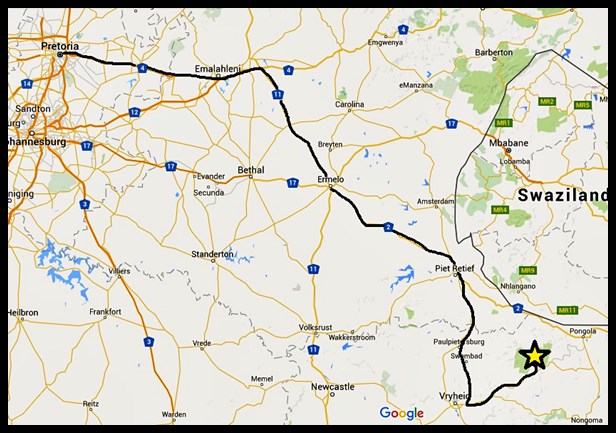
The route from Pretoria to Memorial Gate  (drawn with Google Maps)

The route from Pretoria to Memorial Gate
(drawn with Google Maps)

Sadly the Hluhluwe-Imfolozi Park is under threat; if a proposed coal mine on the southern border of the reserve gets given the go-ahead it will mean the end of the reserve’s renowned wilderness area and much of its, and the Isimangaliso Wetland Park’s, ecological integrity. Visit “Save our Imfolozi Wilderness” if you’d like to add your voice in opposition to this unnecessary and unwelcome development.

Close Up

This toad was waiting for us at the back door of our cottage in Mantuma Rest Camp at uMkhuze Game Reserve, in the iSimangaliso Wetland Park, when we visited in December 2014.

Close Up

Close Up” is the theme for this week’s WordPress Photo Challenge.