Tag Archives: vacation

A day in Pilanesberg: Hour 4

Mankwe Dam, a large man-made impoundment that holds water throughout the year and that’s a veritable magnet for wildlife, is located in the heart of the Pilanesberg National Park. On its banks you’ll find the Mankwe Hide, very popular with photographers and recently rebuilt after being destroyed in a veld fire. That is where we are headed next.

Back in the hide’s parking area this southern masked weaver is enjoying a bath in a small puddle- as if he is too scared to go swimming in the big pool on the other side!

Almost immediately after driving out of the parking area at the hide, we come across a pair of lions – our second lion sighting of the day and less than 200 steps from where we were standing outside our vehicle just a few seconds ago! Luckily, being a mating pair, their attentions are focused on satisfying other base instincts than finding food. Our day just keeps getting better!

Leaving the lions to their honeymoon, we head north along Kgabo Drive and take a left into Tlou. Along the way we add further to our list of birds seen, including this rufous-naped lark singing its lungs out from a prominent perch.

Rufous-naped Lark

Just as we get to the junction of Tlou and Thuthlwa drives we find another brown hyena, walking quite purposefully away from an old elephant carcass with a large chunk of bone in its jaws. We follow alongside until it disappears into a thicket, its destination remaining a mystery to us but we like to think that it is headed to a den with hungry youngsters waiting.

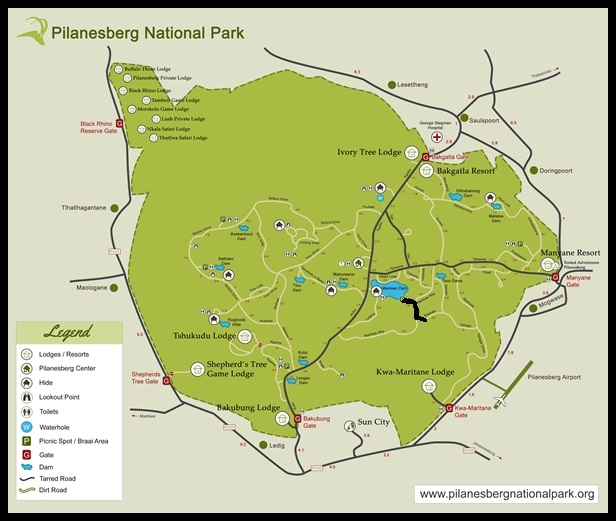
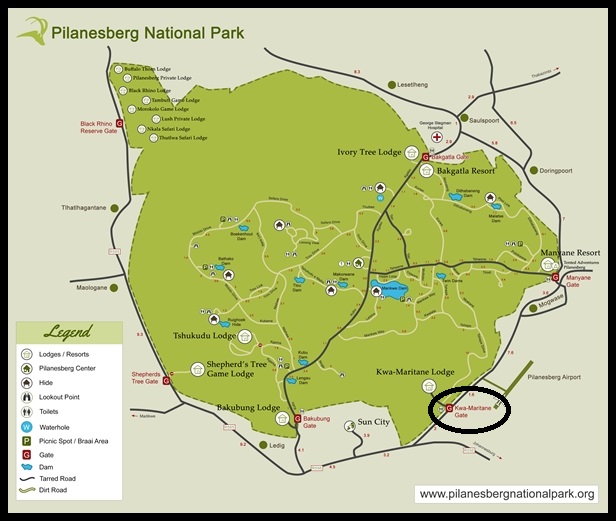
If you’d like to follow along as we explore the Pilanesberg, a map may come in handy (for a large format version click here)

Mankwe Hide to Tlou Drive

If you need to catch up on our drive through the Pilanesberg National Park, you can read all the previous posts here.

To be continued tomorrow.

A day in Pilanesberg: Hour 3

As we’re driving away from the sight, and smell, of Mavuso’s carcass we find ourselves on Mankwe Way, one of the most productive game-viewing routes in the Pilanesberg National Park. And today this scenic road certainly lives up to its reputation. What is it that Joubert has in his sights?

What is Joubert photographing?

Yes, our first lion encounter of the day. Why exactly this female chooses to lazily lie down out in the pouring rain is anyone’s guess. At one point she gets up and we’re relieved that finally she had some sense infused, but she only wants to turn around… Perhaps she thought it rude to be lying with her back to us?

Eventually we move off again, leaving the lioness to her shower. It continues to rain softly as we drive along Mankwe Way and Letsha Drive, spying kudu, zebra, wildebeest, impala and several kinds of birds on our way towards Mankwe Dam in the centre of the Park.

If you’d like to follow along as we explore the Pilanesberg, a map may come in handy (for a large format version click here)

Mankwe Way and Letsha Drive

If you need to catch up on our drive through the Pilanesberg National Park, you can read all the previous posts here.

To be continued tomorrow.

A day in Pilanesberg: Hour 2

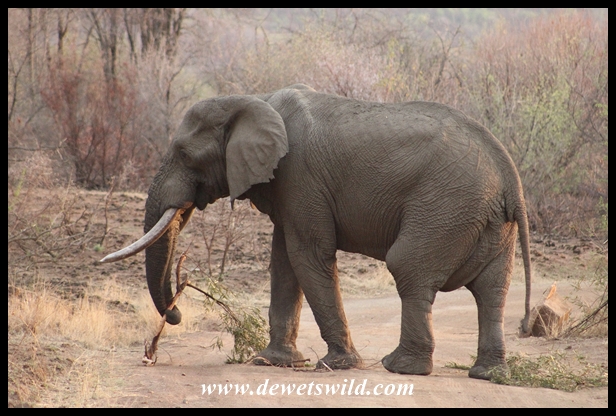
We pick up our recollections of our day trip through Pilanesberg National Park at the the junction of Kwalata Road and Mankwe Way which was, on the 28th of August 2020, the scene of a deadly battle between two elephant bulls. Sadly Mavuso – a dominant bull that was brought to Pilanesberg National Park from the Kruger National Park back in 1999 and estimated to be around the mid-50’s in age – was killed in the fight. We were fortunate to have seen the gentle giant during a previous visit in November 2018.

Pilanesberg’s late tusker Mavuso, seen in November 2018

Mavuso’s massive carcass has been a magnet for scavengers since the unfortunate end to the fight, and it is amazing to think that even now six weeks later there’s still ample carrion available to attract the attention of black-backed jackals and brown hyenas. Apart from quickly popping in at the Fish Eagle Picnic Site for a body-break and a freshly made mug of coffee we spend almost an hour at the carcass watching the fascinating interaction between the scavengers. The pictures are gory, but trust me when I say that the smell is even more so!

If you’d like to follow along as we explore the Pilanesberg, a map may come in handy (for a large format version click here)

Kwalata to Fish Eagle and back

If you need to catch up on our drive through the Pilanesberg National Park, you can read yesterday’s post covering the stretch from Kwa Maritane Gate to Kwalata Road here.

To be continued tomorrow.

A day in Pilanesberg: Hour 1

We’ve just entered the Pilanesberg National Park through the Kwa Maritane Gate and following Tshepe Drive deeper into the Park.

As happens more often than not, the first animals we encounter are impala, followed soon after by a small herd of blue wildebeest. We notice that the winter fire season burned large tracts of land, but take heart from the flush of new green shoots poking through the blackened earth, and have no doubt that the continued drizzle we were driving through would boost the new growth enormously. Next sighting is the first of Africa’s “Big Five“: a nice big elephant bull and, not half-a-kilometre further, three more. Before we reach the junction of Tshepe Drive with the Nkakane road, 10km from the gate, a small herd of plains zebra, mixing with more impala, is our next “tick” before seeing yet another elephant, this one scaling a rocky hillside some distance from the road.

It’s a further 3km to the left turn into the Kwalata road, during which we’re not only excited by beautiful scenery (despite the gloomy weather), lots of birds beginning to appear and the sight of a small herd of rare tsessebe but also by fresh lion tracks appearing in the wet sand on the road every so often. This particular lion however did not want to be seen…

As we’re merrily driving along Kwalata road, enjoying each other’s company and regular sightings of more impala, we’re flagged down by the driver of a safari vehicle with some very wet tourists in the back. He wants to know whether we’ve come from Kwa Maritane’s side. “Yes”, we answer. “Any cats?” he asks, obviously desperate to make his shivering clients’ ordeal worth their while (and money). “Not yet!”, we answer. Turns out all he should have done was to follow Joubert and me around the rest of the day…

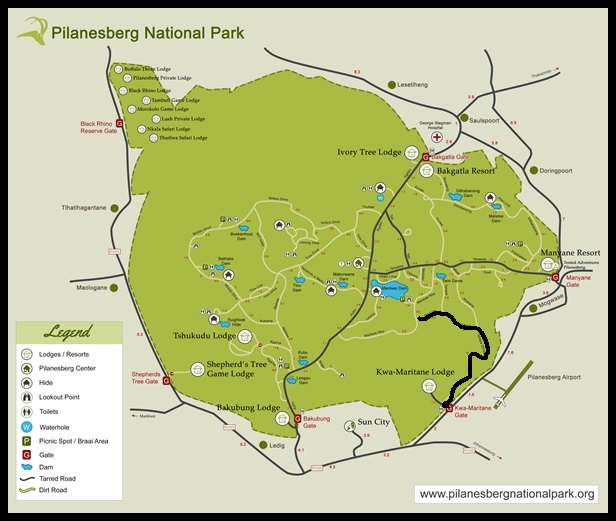
If you’d like to follow along as we explore the Pilanesberg, a map may come in handy (for a large format version click here)

Kwa Maritane Gate to Mankwe Way via Tshepe and Kwalata

To be continued tomorrow.

A day in Pilanesberg: Before we set out.

Our day trip to Pilanesberg National Park on Tuesday (06 October, 2020) was just so full of exciting and beautiful sights and experiences that we’ve decided to do a series of posts over the next two weeks to tell you all about it.

The trip has been a few weeks in the planning, and finally a week or so ago we identified an opportunity to visit the Park on the 6th of October. As the date got closer and closer the weather forecasts for the day grew ever more rainy, until the evening before it was clear and certain that the first decent rainfall of spring arrived in northern South Africa – very welcome indeed. Not being the sort to let a little wet weather dampen our exploring spirits we were not deterred, although wet weather usually doesn’t bode well for good sightings of animals or birds.

Due to the COVID-19 lockdown, South Africans are not presently allowed on the roads before 04:00 am unless to provide or receive an “essential service”. This meant that we couldn’t leave Pretoria earlier, which we would’ve preferred to do given the 160km of wet roads ahead following good overnight rainfall. Thankfully there was very little traffic on the road, and with ten minutes left before the gates opened at 06:00 am, we pulled into the parking area at Kwa Maritane Gate on the south-east border of the Pilanesberg National Park. That’s just enough time to fit lenses to cameras and pay our entrance fee.

It is 06:02 when we drive through the gate into the Park along the gravel Tshepe Drive.

If you’d like to follow along over the next few days, a map may come in handy (for a large format version click here)

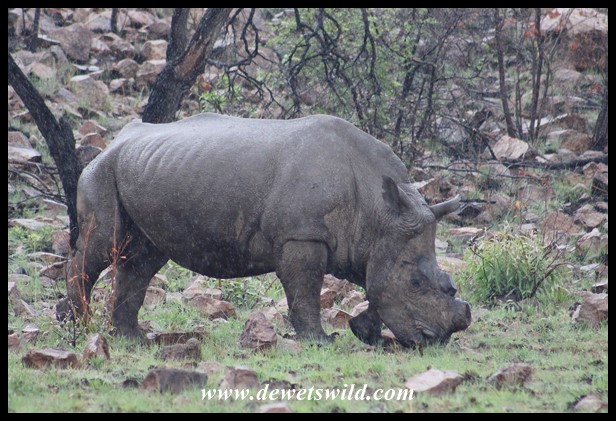
Oh, before we drive further and I forget: Pilanesberg National Park is home to healthy populations of both black and white rhinos, but due to the continued threat posed by armed poachers we are sharing the photos we got of them on this trip to Pilanesberg here in the opening post, so that we don’t give away the location of our sightings (even if their horns have been removed by rangers to deter the poachers).

Mountain folk

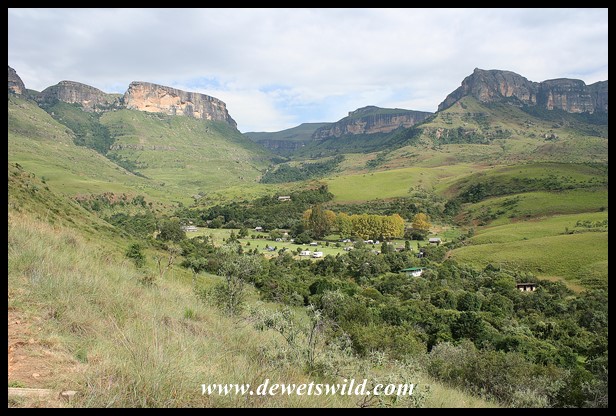
There’s so much more animal life occurring in the mountainous habitats of the Royal Natal National Park than the butterflies we’ve already shown you, many of them wonderfully adapted to the harsh environmental extremes at these altitudes.


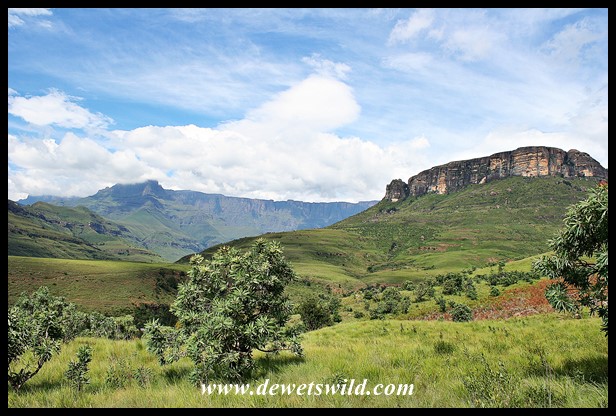
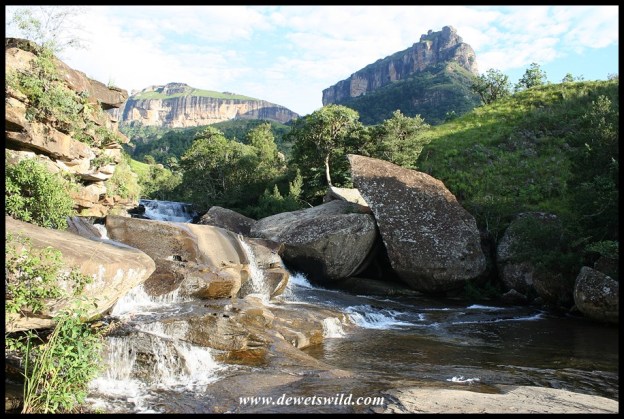
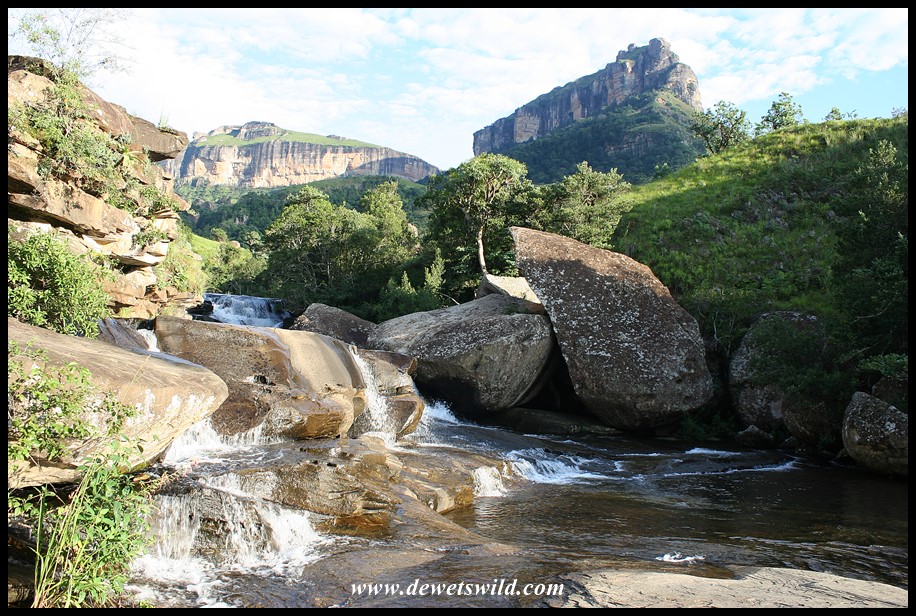
Feeling small in the Drakensberg

This mountain, the arched back of the earth risen before us, it made me feel humble, like a beggar, just lucky to be here at all, even briefly.” (Bridget Asher)

Do the mountains have the same profound impact on you as it does for us?

These mountains, which have seen untold sunrises, long to thunder praise but stand reverent, silent so that man’s weak praise should be given God’s attention.” (Donald Miller)


A bouquet from the ‘Berg

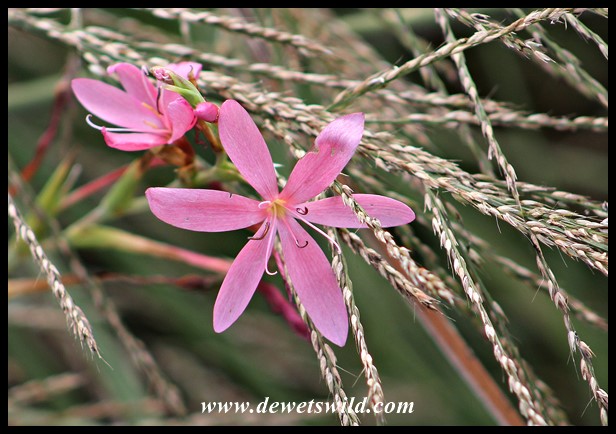
The mountainous grasslands and forested riverbanks around Mahai in the Royal Natal National Park are adorned by the most beautiful, though hardy, plants – a treat to even the most amateurish of botanists like me; so if you can help with identifying most of these beauties I’d be forever in your debt (I know at least that mushrooms aren’t plants, strictly speaking…)


Picturesque Camping at Mahai

Mahai is the larger of the two camping areas at Royal Natal National Park, and there aren’t very many camping sites that can compete with it for scenic beauty!

Isolation, the way we like it…

With South Africa preparing for a nationwide “lock-down” of a minimum three week duration in the face of the global pandemic, we’ve returned from the Drakensberg grateful for having had a chance to recharge our batteries in beautiful natural surroundings. We’ll be sharing many more photos from our latest trip in days to come and hope that they’ll bring you as much joy as the memories will for us in these trying times.

God bless you and keep you.