Tag Archives: vacation

Manyeleti Magic 2025: Day 1 (12 June)

At long last our 2025 Manyeleti Magic photographic safari and workshop, hosted in conjunction with Hannes Rossouw Photography, was about to start. A year of planning finally culminating in us and our guests meeting at the entrance gate to Manyeleti Nature Reserve at the agreed time of 11:30 on the 12th of June.

Entry formalities completed we set off for Buffelshoek Camp. Given that Buffelshoek is located in a remote corner of Manyeleti it would take us at least an hour to get there, soaking in the wonderful Lowveld atmosphere again while keeping a lookout for game and birds along the way.

Guests can arrive at Buffelshoek from 13h00, which allows ample time to settle into your tent before lunch is served an hour later. Buffelshoek is entirely off-the-grid and very comfortable despite its rustic nature, with the 5 guests tents – with en-suite bathrooms! – spaced well apart from each other for privacy and to allow animals to move through the unfenced camp unhindered (over the next few days we’d have elephants, hyenas, impalas, giraffes, jackals and hares in our midst, and those are just the ones we saw!).

After lunch we excitedly set off on our first drive, with expert tracker Elvis showing the way while Hannes gave photography tips to our guests and I explained the finer details of the environment and wildlife we encountered. We had regular encounters with various kinds of animals and birds, including some elephant bulls that came very close to our vehicle.

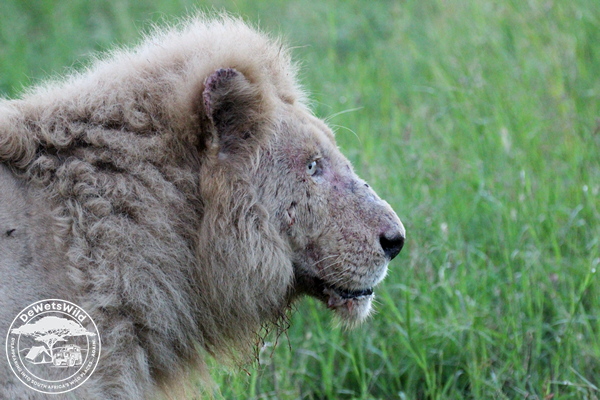
The highlight of our first afternoon drive was an encounter with two beautiful male lions just as the “golden hour” descended on Manyeleti. At first they were very lazy but thankfully one of the males – the one with the darker mane – decided to give us some nice poses and scary stares. What a highlight on our first day!

Heading back to camp in the dark showed us many fiery-necked nightjars in the road. We also stopped so that the photographers could try their hand at shooting the moon in the dark of night (though my own attempt was a mess it was still great fun to hear everyone’s excitement when Hannes’ suggestions gave them results they could proudly show off).

In the next post we’ll show you everything we encountered on day 2 of our 2025 Manyeleti Magic photo-safari and workshop. The 2026 dates are yet to be confirmed, but do get in touch with us if you’d like us to keep a spot for you!


Fresh back from Manyeleti Magic!

I’ve just returned from our 2025 Manyeleti Magic photographic safari and workshop, proudly presented in conjunction with Hannes Rossouw Photography. Here’s a quick gallery, of some pictures I took while we were out exploring with our guests, to tide you over until I can post the complete feedback of a most amazing long weekend in the Manyeleti Nature Reserve.

Join us on our 2025 Sweni Wilderness Photographic Safari!

Elevate your photography skills in the African wilderness! Join our expert-led 2025 Sweni Wilderness Photo-safari and Workshop for unique opportunities to capture stunning images. Technical guidance, unique access, and unforgettable experiences await serious wildlife photography hobbyists!

Cuckoo Finch

Anomalospiza imberbis

The Cuckoo Finch is an uncommon and highly nomadic bird in South Africa, with a patchy distribution across parts of Gauteng, Limpopo, Mpumalanga and Kwazulu-Natal, and a much sought-after tick on the list of many avid local birdwatchers. These seed-eaters may migrate widely in response to rainfall and are usually seen in small flocks of between 8 and 50, though sometimes up to a thousand may move together. They’re also found over much of sub-Saharan Africa, though in a similarly patchily distributed and nomadic fashion.

Cuckoo Finches inhabit moist grasslands and wetlands and get their name from their habit of laying their own eggs in the nests of species of Cisticola and Prinia. Females lay up to 30 eggs during the summer season, leaving a single egg per nest after removing all the host’s own eggs from it. The chick hatches within two weeks and, being fed insects by its adoptive parents, grows quickly to the point where it is able to leave the nest before it is 3 weeks old. Its host parents will take care of it for several more weeks before it joins up with a flock of other Cuckoo Finches.

The IUCN lists the Cuckoo Finch as being of least concern.


Spike-heeled Lark

Chersomanes albofasciata

Spike-heeled Larks are nondescript little birds that inhabit open grasslands and scrublands, feeding on a wide variety of insects and other invertebrates. They move around in groups of up to 10 individuals and prefer areas with natural vegetation and seldom venture into cultivated or otherwise disturbed land.

Spike-heeled Larks nest in a scrape on the ground, usually made at the base of a grass tussock or shrub but in more arid areas even a pile of stones or sticks will do, as long as it provides some shade during the hottest hours of the day. It appears that they breed in response to rainfall and clutches may number up to 5 eggs, though 2 or 3 is the norm. The female incubates the eggs which hatch within 2 weeks, but both parents take responsibility for feeding the chicks until they leave the nest – sometimes even before they can fly. The chicks become independent at less than a month old.

Despite noting that their populations are probably declining due to expanding agriculture, the IUCN lists the Spike-heeled Lark as being of least concern. The species is found in parts of every South African province with its core distribution extending into neighbouring Botswana, Namibia and beyond into Angola, with isolated populations in the DRC and Tanzania.

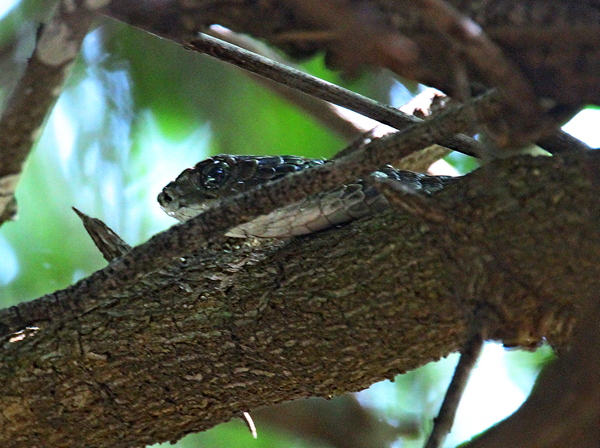
Common Brown Water Snake

Lycodonomorphus rufulus

The Common Brown Water Snake is a small snake that on average grows to about 60cm in length, adult females being considerably larger than males. It is of no danger to anything except the small frogs, tadpoles and fish it feeds on, being as its name suggests closely associated with watery habitats where it is an excellent swimmer. The Common Brown Water Snake is non-venomous and kills its prey by constriction. It is placid by nature and rarely bites when handled. Females lay between 10 and 20 eggs in the summer months, with the babies hatching about 2 months later.

We have Joubert’s sharp eyes to thank for seeing this beautifully camouflaged specimen at a stream in the Mountain Zebra National Park. The sighting was rather unusual as these snakes are usually active at night.

More snaps from our summer days in the Mountain Zebra National Park

For the majority of local and international tourists the Mountain Zebra National Park is probably one of the country’s most underestimated protected areas. Conservationists and those visitors who have fell under its spell, however, can’t praise the place highly enough. But don’t give away the secret – we love Mountain Zebra National Park for its untrammeled wilderness feeling far from the madding crowds!

During our visit earlier in January I posted a few photographs on a daily basis to give those following along on our travels a glimpse of what we were experiencing. Let’s start this recap with those.

Of course, pride of place goes to the population of Cape Mountain Zebra, as saving these beautiful creatures from extinction was the reason behind the Park’s proclamation almost 90 years ago.

But of course, Mountain Zebra National Park is also home to an amazing variety of other wildlife that also finds a home in this beautiful landscape.

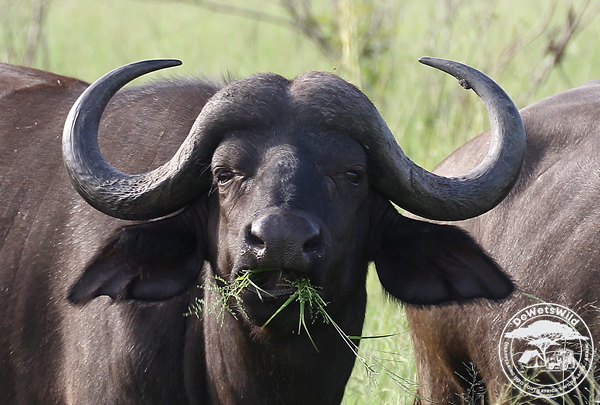
One of the most exciting sightings of our entire trip occurred early morning on our last full day in the Park, when we came across a herd of buffalo anxiously milling on the road at a precarious downhill stretch on the Kranskop Loop, just where it crosses a small stream. Only after some of the herd passed us, nerve-wreckingly due to the steep slope next to us parked off to the side of the very narrow roadway, we could go around the corner and saw the reason for the buffaloes’ distress – they were being stalked by two lionesses! The cats never went into a full blown attack while we were watching but seemed content to keep following the buffaloes and working on their nerves.

We ended our visit to Mountain Zebra National Park with a night drive. The Park is renowned for the quality sightings of otherwise rarely seen nocturnal creatures and our drive certainly did not disappoint!

DeWetsWild is proud to be a contracted reservations agent for the Mountain Zebra National Park, so whether you’d like us to assist you with a reservation to visit on your own or would like us to include the Park in a guided tour arranged specifically for you, please don’t hesitate to reach out!

More snaps from our summer days in the Addo Elephant National Park

The Addo Elephant National Park is one of South Africa’s most visited wild places, and not without reason. The Park has a wealth of habitats and a wonderful array of wildlife, not least of which is the elephants that were the original reason for Addo’s proclamation. Furthermore it is such an easy destination to visit, with an excellent network of roads, conveniences like a shop and restaurant, and comfortable accommodation options for visitors.

During our visit earlier in January I posted a few photographs on a daily basis to give those following along on our travels a glimpse of what we were experiencing. Let’s start this recap with those.

There’s no denying that Addo’s Elephants are the stars of the show – rightly so, considering how close the population were to being wiped out when the Park was proclaimed – but national parks like Addo conserve so much more than just the big, charismatic African fauna. Addo is richly endowed with various kinds of smaller, often less noticeable, plants and wildlife, and visitors who take care to look for them will find their visits endless enriched.

Addo is also a haven for a wide variety of birds – we managed to identify 81 species during our four day visit.

Of course a national park on this continent will never grow famous if it isn’t home to a wide variety of charismatic mammals, and here Addo certainly ranks among the best of the best. Lions, hyenas, jackals, zebras, antelope, buffaloes and warthogs can pop out around any corner and are usually quite comfortable around humans in their vehicles, making for great photographic opportunities.

And then, of course, there’s the elephants. Addo’s elephants are more relaxed than most other populations in the country and, if you are as enthralled with these beautiful animals as we are, you will enjoy the many up-close encounters Addo delivers with the giant pachyderms.

DeWetsWild is proud to be a contracted reservations agent for the Addo Elephant National Park, so whether you’d like us to assist you with a reservation to visit on your own or would like us to include the Park in a guided tour arranged specifically for you, please don’t hesitate to reach out!

DeWetsWild adds CapeNature to our portfolio!

DeWetsWild is proud to announce that we can now assist with reservations at CapeNature reserves in the Western Cape, and also use these as bases on our bespoke guided tours!

The new reserves in our fold are:

Anysberg Nature Reserve in the Little Karoo
Cederberg Wilderness Reserve
Gamkaberg Nature Reserve in the Little Karoo
Goukamma Nature Reserve on the Garden Route
Grootvadersbosch Nature Reserve in the Overberg
Keurbooms (Whiskey Creek) Nature Reserve on the Garden Route
Kogelberg Nature Reserve in the Overberg
Limietberg Nature Reserve in the Winelands
Marloth Nature Reserve in the Overberg
Robberg Nature Reserve on the Garden Route
Rocherpan Nature Reserve on the West Coast
Vrolijkheid Natue Reserve in the Winelands

You are welcome to email us on dries@dewetswild.com with your request or alternatively complete the following form if you would like DeWetsWild to take care of your next holiday reservation in one of the CapeNature Reserves listed here (the more detail you provide us, the better service we can provide to you):

Go back

Your message has been sent

Warning
Warning
Warning
Warning
Warning
Warning
Warning

Warning.


Cango Caves

Located in the southern foothills of the Swartberg mountain range just 29km from the town of Oudtshoorn, the Cango Caves is considered to be South Africa’s oldest tourist attraction, with increasing visitor numbers and resultant damage to the formations requiring special regulations to be gazetted as early as 1820 to protect the caves from damage by indiscriminate collection of souvenirs. The caves, formed about 20 million years ago as a result of a geological fault, were rediscovered in 1780, but evidence suggests that parts of the cave system was inhabited by humans since the middle stone age. The caves have been explored to a distance of 4km underground, of which about a quarter is accessible to visitors on guided tours (the adventure tour takes in some challenging, narrow tunnels requiring visitors to crawl, climb and slide and takes longer than the standard tour, which is much easier going)

Facilities at the caves are rounded off with an interesting interpretive centre, curio shop and restaurant. The Cango Caves is a national monument and administered by the municipality of Oudtshoorn. DeWetsWild will be glad to include the Cango Caves on a bespoke guided tour of the South Africa arranged specifically to your requirements.