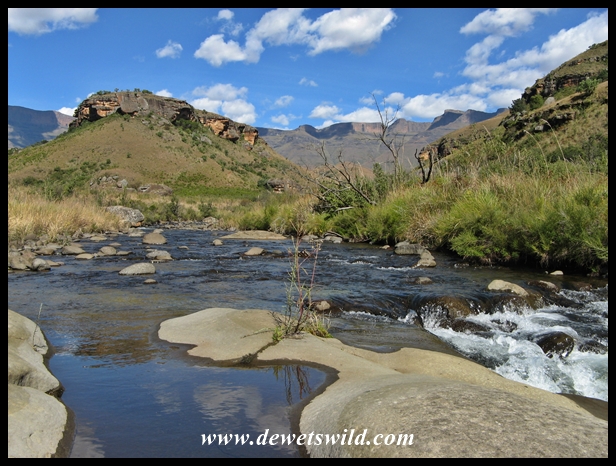
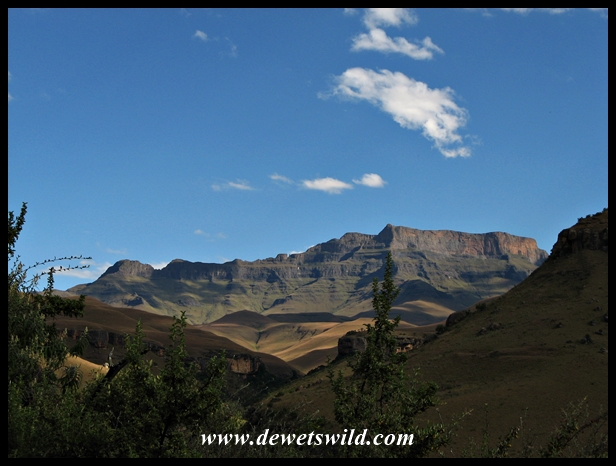
If you are going to brave the Easter weekend traffic on South Africa’s roads you had better be heading to a very special destination. Giant’s Castle Game Reserve in the uKhahlamba Drakensberg Park is just such a place and that’s where the de Wet’s spent Easter 2014.
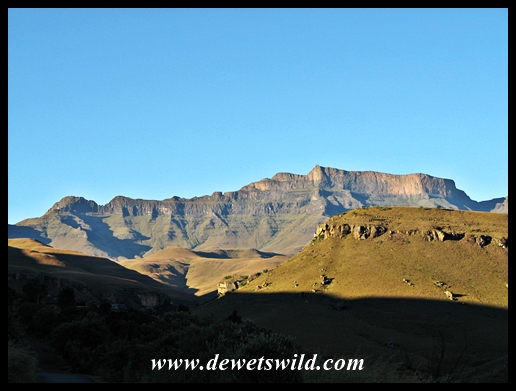
Arriving at Giant’s Castle
Getting to Giant’s Castle is no problem. The road is clearly signposted from the N3 highway near Estcourt in the Natal Midlands. From there it is about a 60km drive on a narrow tar road, though beware the last eleven or so kilometres before the gate, which is badly potholed. You’ll be richly rewarded for the slow drive with tranquil rural scenes and waves from friendly locals.
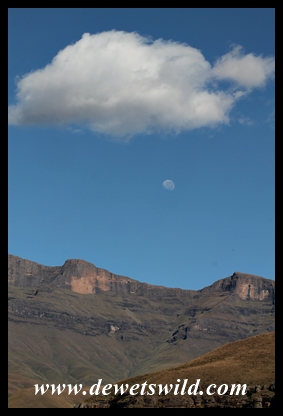
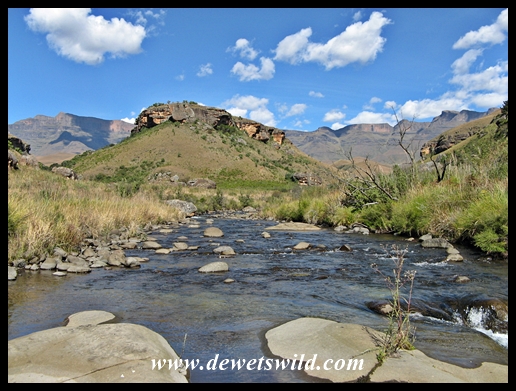
The 7km stretch of road leading from the gate to the hutted camp is an excellent introduction to the breathtaking mountain landscape. In the green valley far below flows the Bushmans River, with the high peaks of the Drakensberg Mountain Range forming a grand backdrop. Inside the reserve, altitudes range from 1,650m at the entrance to over 3,400m at the top of the escarpment and vegetation varies from grasslands to small patches of valley forest.

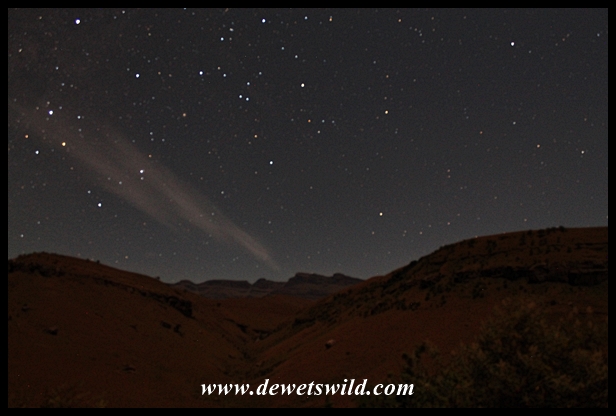
Clear night skies at Giant’s Castle

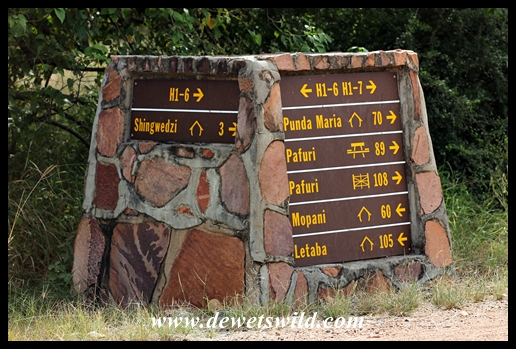
Which way do we go?

Dainty mountain flowers

Rich autumn colours in the picnic site at Giant’s Castle

Giant’s Castle scenery

Giant’s Castle scenery

Giant’s Castle scenery

Giant’s Castle scenery

Giant’s Castle scenery
The reserve was first proclaimed in 1903 to protect the dwindling herds of eland, Africa’s largest antelope, and today these bulky animals are among the most frequently encountered animals in the Giant’s Castle Game Reserve. Over 340 species of birds and more than 50 species of reptile occur in the uKhahlamba Drakensberg Park.

Black-backed jackal

Red-necked spurfowl

Black-backed jackal

Eland on a distant slope

Eland crossing the Bushmans River

Dassie (or rock hyrax) baking in the sun

Baboons are a common sight at Giant’s Castle

Red-necked spurfowl

Eland

Eland

Eland

Eland

Red-winged starling

Curious dassie

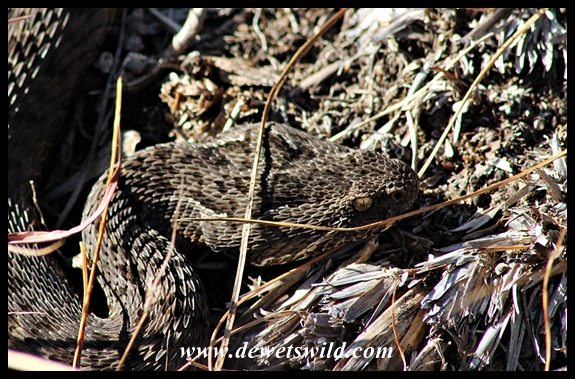
Berg adder
There’s also the cliff-top vulture hide, where photographers can stakeout a wide variety of carrion-eating birds and animals. It is immensely popular and booked out months in advance, the big attraction being the chance of getting close-up shots of the endangered Bearded and Cape Vultures in their natural habitat.
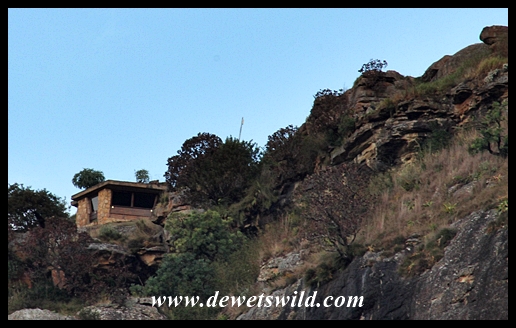
Giant’s Castle’s vulture hide
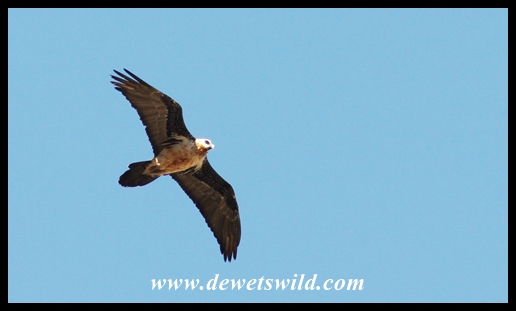
Bearded vulture in flight
Hiking in the mountains is a major activity at Giant’s Castle and there’s a number of trails of various lengths to undertake, ranging in time from a few hours to several days to complete. The most popular trail is the easy 45 minute walk to the Main Caves Museum – around a two-hour return trip if you include the guided tour of the museum. These mountains was once the home of the San people, though today the only proof of their erstwhile presence is the paintings they left on the walls of the many caves in the area, including the drawings on display at the Main Caves Museum.

On the trail to the Main Caves Museum

On the trail to the Main Caves Museum

On the trail to the Main Caves Museum

On the trail to the Main Caves Museum

On the trail to the Main Caves Museum

Crossing the Two Dassie Stream

Crossing the Two Dassie Stream

Crossing the Two Dassie Stream

Main Caves Museum

Main Caves Museum

Main Caves Museum

Main Caves Museum

Main Caves Museum

Heading back to camp

Heading back to camp
Along the way back from the caves you can stop for a breather at “Rock 75”, a campsite of Col. Durnford’s 75th Regiment during the 1870’s Langalibalele Rebellion, and take in some more of the region’s rich history.
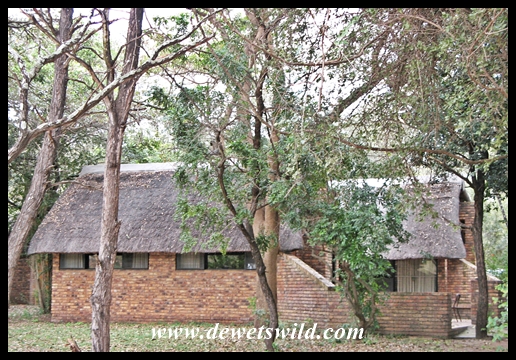
The hutted camp at Giant’s Castle is a very comfortable place to stay and an excellent base from which to explore many of the shorter trails in the area. The camp offers a good restaurant and small curio shop with a limited selection of groceries. Accommodation is available in two-, four- or six-sleeper, fully self-contained, chalets, each of them themed after a different flowering plant that occurs in the Drakensberg (more than 800 species of flowering plants occur in these mountains). Our unit, number 7 – “Gladiolus”, had a terrific view of the Giant and his Castle and was decorated with exquisitely detailed and annotated paintings of several different species of gladioli.

Peaceful gardens in the hutted camp

Chalet 7, “Gladiolus”

Chalet 7, “Gladiolus”

Chalet 7, “Gladiolus”

Chalet 7, “Gladiolus”

The view of the Giant and his Castle from Chalet 7
Crisp mountain air and mountain water so clear and cool that you can’t stop yourself drinking directly from the stream seems good enough reason to brave the Easter traffic, wouldn’t you agree?