Tag Archives: South African Butterflies

Guinea-fowl Butterfly

Hamanumida daedalus

The Guinea-fowl Butterfly occurs commonly from Kwazulu-Natal through Mpumalanga, Gauteng and Limpopo to the North West Province. They are also found through tropical Africa to Arabia, inhabiting savanna and forest habitats. Females lay single eggs on Combretum and Terminalia trees. Adults are on the wing year round, have a wingspan measuring between 5.5 and 8cm, and is attracted to rotting fruit. They fly slow and low, gliding over paths and bare patches, but are very nervous and will dart away at great speed when disturbed.

African Common White Butterfly

Belenois creona

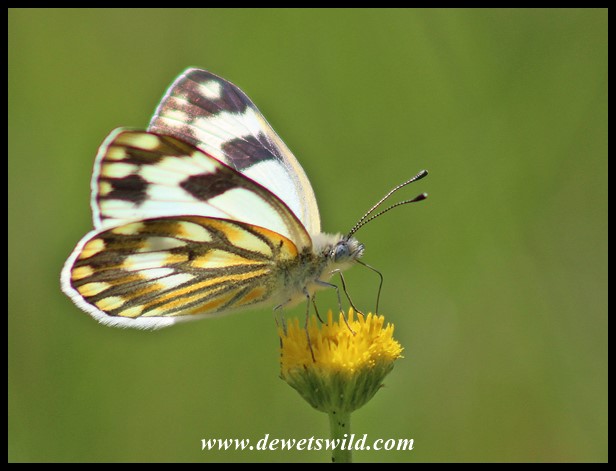
The African Common White is widely distributed on the continent south of the Sahara, extending into Arabia and also to Madagascar. In South Africa they can be found in the Eastern Cape, Kwazulu-Natal, Gauteng, Mpumalanga, Limpopo and marginally into the Free Sate and North West. This distribution reflects their preference for savanna habitats. Eggs are laid in clusters on plants from the closely related genusses Boscia, Capparis and Maerua which serve as larval food plants. Adults have a wingspan of around 4cm and can be seen year-round.

Layman

Amauris albimaculata

The sedate and elegant Layman inhabits forests, woodlands and savannas, occurring from the Eastern Cape through Kwazulu Natal into the Lowveld of Mpumalanga and Limpopo, and from there as far north as Cameroon and Ethiopia. They fly slow and high, descending only to feed on flowers and alkaloids seeping from damaged and wilted plants. Being a distasteful species, at least three other kinds of butterfly mimic the Layman’s colouration and patterns. Adult Laymans have a wingspan of 5 – 7cm and can be seen on the wing throughout the year. Females lay clusters of 3-40 eggs on the underside of the leaves of a wide variety of food plants.

Spotted Joker

Byblia ilithyia

The beautiful Spotted Joker is found in Africa and Asia. In South Africa they commonly occur in all our provinces with the exception of the Western Cape, inhabiting grasslands and dry, open savanna habitats. The larvae feed predominantly on plants from the genus Tragia, while adults gather on rotting fruit, faeces and mud. Adults have a wingspan measuring 4-6cm and are on the wing throughout the year.

Small Orange Tip

Colotis evagore

The Small Orange Tip butterfly has a patchy distribution in South Africa, being found in portions of the Eastern Cape, most of Kwazulu-Natal and Mpumalanga, all of Limpopo, North West and Gauteng, the western Free State and extreme eastern districts of the Northern Cape, preferring the drier, more open, savanna-type habitats. They’re also found over much of the remainder of the African continent and also occur in southern Spain and the Arabian peninsula. Females lay eggs singly on a wide variety of plants from the Capparaceae family. Adults have a wingspan of 3-4cm and can be seen at any time of year.

Common Meadow White

Pontia helice

The Common Meadow White is a common and widespread butterfly of grassy areas throughout South Africa, and is especially conspicuous on expansive lawns, meadows and sports fields where they are fond of resting on tiny weed flowers. Apart from South Africa they occur as far north as Kenya on the African continent. Common Meadow Whites may appear to be slow flyers but are capable of remarkable speed and are exceedingly difficult to catch. Adults have a wingspan of between 3.5 and 4.5cm and are on the wing throughout the year. Larvae subsist on a wide variety of food plants.

Common Hottentot Skipper Butterfly

Gegenes niso

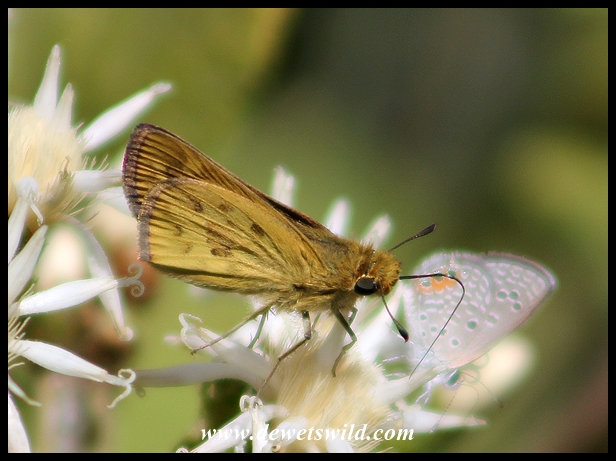
The Common Hottentot Skipper is a small (3cm wingspan) but lively butterfly, flying fast over short distances (hence the “skipper” name) and often coming to rest for short periods on flowers or grass stems and at mud puddles. They occur in grasslands and grassy patches in a wide range of other habitats, from the Western Cape through the Eastern Cape, Kwazulu-Natal and the Free State to Limpopo Province, and throughout most of the rest of sub-Saharan Africa. Males are territorial and fiercely aggressive to other males venturing into their space. Females lay single eggs on a wide variety of grasses, which the larvae uses as food. Adults can be seen right through the year.

Broad-bordered Grass Yellow

Eurema brigitta

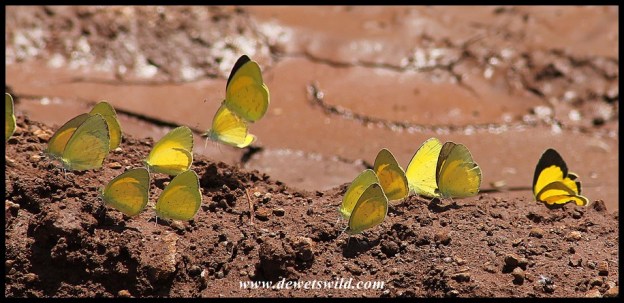
The Broad-bordered Grass Yellow is a very common butterfly in grassland and savanna habitats, occurring over all of South Africa with the exception of most of the Western and Northern Cape provinces. They’re also widely distributed over the rest of Africa, the islands in the India Ocean, India, south-east Asia, and  Australia. Adults can be seen throughout the year, flying low to the ground, perching on flowers and blades of grass and often congregating at muddy puddles. At rest they’ll often hang below small plants, looking like dead leaves moving in the breeze. Adults have a wingspan of around 3.5cm.

Common Orange Tip

Colotis evenina

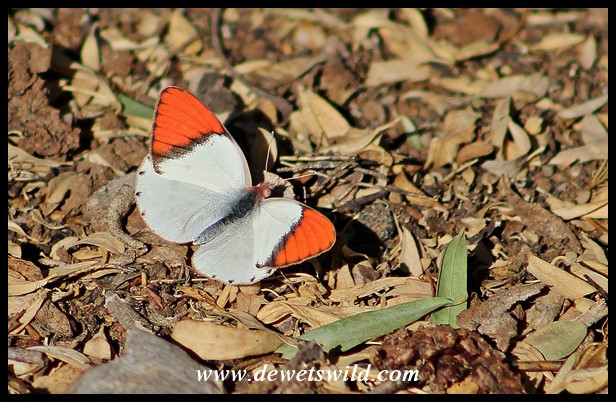
The Common Orange Tip is a common and widespread savanna butterfly, occurring in all South Africa’s provinces with the exception of the Western Cape and as far north as Ethiopia and Somalia. They are striking butterflies that fly low and fast, staying within close proximity to flowers. Eggs are laid singly on Boscia-plants (including the Shepherd’s Tree) and Caperbushes (Capparis-spp). Adults have a wingspan of 3.5 – 5cm and are on the wing throughout the year (though most numerous in late summer and autumn).

Gaudy Commodore

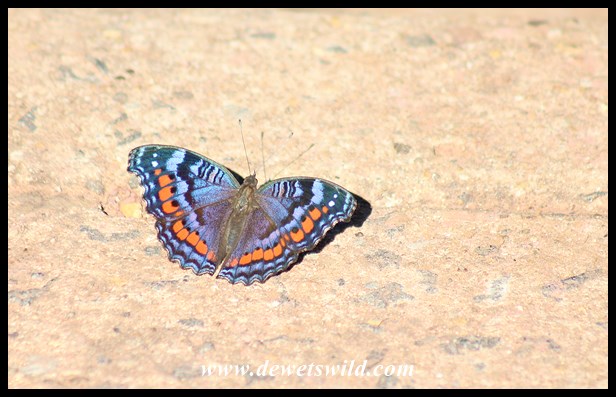
Precis octavia

The strikingly beautiful Gaudy Commodore inhabits rocky grasslands, savannas and gardens and in South Africa can be found from the Eastern Cape northwards to the Lowveld and Limpopo Valley. North of our borders they occur in similar habitats throughout sub-Saharan Africa. They are restless and fast fliers, often hiding in the shade along stream banks and earthen walls in winter though commonly encountered in the open on hilltops during warmer weather. Eggs are laid singly and the larvae is sustained by a wide range of food plants. Adult Gaudy Commodores have a wingspan of 5 – 6.5cm and can be seen throughout the year.