Tag Archives: picnic spots

A memorable encounter with Sable Antelope

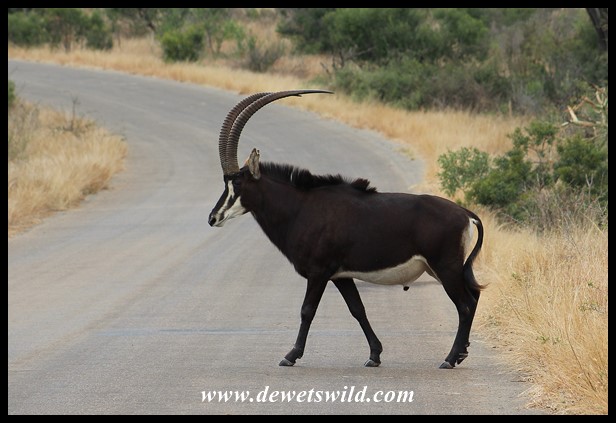
As mentioned in our previous post, the chief reason why Joubert and I decided to spend the first morning of our August trip to the Kruger National Park around Mlondozi Picnic Site was the recent sightings of a beautiful herd of sable antelope in that vicinity. Being one of our favourite antelope we couldn’t let the opportunity go by without going to see whether we can find the herd as well. Only on our second circuit around Muntshe Mountain and along the Mnondozi stream were we rewarded with the encounter we were hoping so dearly for. Without a doubt the best sighting I have had of Sable Antelope in over 30 years. As they crossed the road one-by-one we counted 25 individuals ranging from the magnificent bull to the long-eared calves.

On our way to the wilderness – day 2

Joubert and I were the first people out the gate at Skukuza on our first morning in the Kruger National Park when we visited last week. In the week before our arrival other visitors were bragging on the Park’s social media pages with their sightings of a big herd of sable antelope north of Lower Sabie, and as these rare and beautiful antelope are a favourite of ours, our route for the morning took us along the Sabie River and then in the general direction of the Mlondozi Picnic Spot. Along the way we had the joyful encounter with the young elephant knight we showed you two days ago.

By the time we reached Mlondozi, we hadn’t yet found the sables we came looking for. We were planning on having brunch at the picnic spot, but it was packed with other visitors and not a single table was available. We spent a few minutes enjoying the view, getting pictures of the birds and animals, and waiting for a table to clear, but eventually decided to rather move along.

We decided to use the extra time we had available due to the postponed lunch to do another circuit around Muntshe Mountain, and how wonderfully that turned out! We found the sables, and had probably the best sighting of these magnificent antelope I had in 30+ years! More about that soon, I promise.

Extremely satisfied with our morning, we headed for Lower Sabie where, just before the camp, we had a quick sighting of a leopard and enjoyed the abundant life that always congregate at the causeway over the Sabie River.

In contrast to Mlondozi, the picnic site at Lower Sabie was deserted, and Joubert and I could lunch in peace surrounded only by birds and butterflies.

By the time we finished lunch it was still too early to head back to Skukuza, so we drove south in the direction of Crocodile Bridge for a few kilometers along the main road, returning along the gravel Mativuhlungu Loop to Lower Sabie. Stopping at the causeway over the river again we were rewarded with a clear, though distant, view of an African Fish Eagle swooping down to snatch a catfish from the water. We’ll share that full sequence of pictures with you another day this coming week.

Just outside Lower Sabie, on the way to Skukuza, Sunset Dam is always a great place to stop and sit for a while, just soaking in the sights and sounds of the bush. On this occasion however the usual serenity of the place was shattered when a pair of teenage male baboons savagely attacked a much younger baboon at the water’s edge, seemingly intent on killing it. Baboons are always fascinating to watch, but I definitely have never experienced such a disturbing glimpse into their behaviour before. We’ll share some pictures from this harrowing sighting this coming Saturday, but please be warned!

It’s just a 45km drive, but with so much to see along the way it still took us 3 hours to get back to Skukuza and we made it back into camp with just a minute or two to spare before the gates closed. Our last sighting of the day was a pack of African Wild Dogs guarding the scraps of their kill against a bunch of vultures – what more could we ask for after such a wonderful day!?

Before ending off, I have to show you these photographs of a family of white rhinoceros we came across on day 2 of our trip to the wilderness. I won’t disclose when and where we saw them though so as not to tip off any poachers.


Surprise Weekend at Marakele; Sunday 13 June 2021

It was the morning after Marilize’s milestone birthday, which unfortunately coincided with South Africa experiencing a “third wave” of Covid-19 infections precluding any big commemoration with the extended family and friends. It was up to me and Joubert to make the event memorable, so we surprised Marilize with a weekend breakaway to Marakele National Park.

Having spent all day Saturday at our comfortable safari tent overlooking the dam at Tlopi Tented Camp, we decided to prolong our departure back home to Pretoria on Sunday by exploring the roads leading through the Marakele National Park before checking out. There were lots of animals and birds to be seen, but it is Marakele’s awe-inspiring scenery that steals the show every time!

Check-out time at Tlopi Tented Camp is at 10:00 in the morning. While I was packing the Duster, Joubert was keeping an eye out for thieving monkeys and getting some final photographs of life in and around Tlopi.

It was time to head for the gate. Along the way we detoured to the Bolonoto Pan and the graves of the Coetzee family, but no matter how we tried we just couldn’t stretch our weekend any further. Around midday we handed back the key for Tlopi unit 10 to the friendly reception staff and said our goodbyes to Marakele National Park, till next time.

Surprise Weekend at Marakele; Saturday 12 June 2021

Round about 04:45am on Saturday, the territorial rasping of a leopard really close lured Joubert and me out of our cosy tent into the cold winter morning air at Tlopi Tented Camp. Try as we might using our spotlight and headlamps the big cat remained unseen, so we warmed ourselves with hot drinks, waiting for the first rays of sunshine to appear. It was the morning of Marilize’s milestone birthday, and unfortunately this coincided with South Africa experiencing a “third wave” of Covid-19 infections precluding any big commemoration with the extended family and friends. It was up to me and Joubert to make the event memorable, so we surprised Marilize with a weekend breakaway to Marakele National Park

First light made an appearance around 06:20 and a stream of birds started arriving at the dam – first a few double-banded sandgrouse, then a hadeda and a pair of egyptian geese, waking up the arrow-marked babblers in the tree shading our tent. It was only at 08:10 that the sun first peaked over the cliffs of the Waterberg towering over Tlopi and started heating up the crisp air. Somewhere in between Marilize joined us on the deck of our safari tent.

Marakele_Jun21_D-PS (7)

One of the most active actors on the dam stage was a pied kingfisher that regularly made attempts at dive-bombing fish in the shallow water, and was very successful at it too, providing us excellent views and photographic opportunities from very early on in the day.

There appears to be a very healthy population of bushbuck in the thickets around Tlopi. They regularly ventured out into the open to drink and feed in and around the dam.

Throughout the day a family of tawny-flanked prinias put in regular appearances:

The vervet monkeys had us laughing. As soon as they spotted anything on our deck that appeared to be food they could steal – and seeing as we were celebrating a birthday it must have seemed like a feast to them – they’d arrive from all corners, including from across the dam, to come and try their luck, in vain.

There truly is no need to venture out of Tlopi Tented Camp to go and look for Marakele’s wild inhabitants – there is a constant queue of animals and birds arriving at the dam in front of the camp, and around your tented accommodation, that would keep any nature lover enthralled all day long.

From about 14:00 in the afternoon, two herds of elephants made their way past the camp to the dam. They spent quite a while enjoying the water and the greenery around the dam, allowing us to take photographs of them to our hearts’ content. The little ones were especially endearing. Be sure to catch our next post to see what drama erupted next to the dam thanks to the elephants!

At the end of a beautiful and happy day, with the sun setting to the west of Tlopi while the smoke from our evening braai (barbeque) wafted on the slight breeze, Joubert set up his camera for a few night shots after it went dark.

To be continued…

Surprise Weekend at Marakele; Friday 11 June 2021

This past weekend Marilize celebrated a milestone birthday, and unfortunately this coincided with South Africa experiencing a “third wave” of Covid-19 infections precluding any big commemoration with the extended family and friends. It was up to me and Joubert to make the event memorable, so we surprised Marilize with a weekend breakaway to Marakele National Park. We left Pretoria just after 1pm on Friday, routing through Bela-Bela (Warmbad) and Thabazimbi, and arrived at Marakele’s gate just before 4pm.

After performing all the requisite formalities, which these days include a questionnaire on the recent medical history of the entire family, we set off on the 17km drive to Tlopi Tented Camp in the golden glow of the bushveld sunset.

In our estimation Tlopi Tented Camp is Marakele’s most beautifully situated accommodation option, and we were very lucky to be allocated unit 10, “Loerie”, right at the far end of the camp. Tlopi looks out over a dam frequented by a large number of birds and mammals, and the mountains of the Waterberg beyond.

To be continued…

Autumn Mountain Moments (part 2)

We made it safely back to Pretoria and I think before anyone noticed we were missing. We enjoyed a glorious morning in the Golden Gate Highlands National Park, bringing to a close a wonderful, if whistle-stop, visit to one of our favourite destinations.

Autumn Mountain Moments (part 1)

Pssst…

We sneaked out of Pretoria at five this morning and headed for a quick weekend breakaway at the beautiful Golden Gate Highlands National Park.

Summertide Diary: Exploring iSimangaliso (part three)

19 January 2021

The Grassland Loop is the first turnoff from the main tarred road you reach after leaving Cape Vidal. And because we just love taking the backroads while exploring South Africa’s wild places that is invariably the route we opt for – it criss-crosses a variety of habitats (from forest to grassland to swamp) and skirts the shores of Lake Bhangazi, which always has something interesting to see.

This morning we were particularly lucky with what we found on the Grassland Loop – a pack of four Spotted Hyenas who showed just a mild interest in a few Plains Zebras and Blue Wildebeest grazing nearby.

The Grassland Loop completed and now heading to our breakfast spot, an extended family of Crested Guineafowl crossed our path – not something we get to see often and very excited at the pictures we got of them.

Passing through a forested patch we were entertained by a troop of Vervet Monkeys and, while watching them, a few other denizens of the forest also came into view.

We needed to stock up on our fresh food and drinking water supply today, so headed south to Bhangazi Gate and the holiday town of Saint Lucia.

Right at the Bhangazi Gate the Crocodile Centre is always a worthwhile place to stop and learn more about the Nile Crocodile – a key component of the ecosystem of Lake St. Lucia. The centre houses some really impressive specimens, many of them rescued from poachers’ traps or after becoming problematic in nearby communities, and their progeny are then released back into the wild. Furthermore there are two other species of crocodiles from equatorial Africa and American alligators on show, and a myriad of other animals and birds have also made themselves at home at the centre.

After a relaxed hour or so at the Crocodile Centre we tackled the 4km round trip hike from the parking area at Sugarloaf to the mouth of Lake St. Lucia. While the distance isn’t daunting at all the heat and humidity and trudging through the hot, deep sand proved more of a challenge than we anticipated, and the sight of a huge Nile Crocodile basking on a sandbank was all the convincing we needed not to dare cool our feet in the water. In the end the beautiful scenes we enjoyed more than made up for the heat-stroke risk though.

Our shopping completed we headed back to Cape Vidal. In the midday heat there wasn’t much to be seen along the way. Only mad dogs and Englishmen… and the de Wets… venture out in the midday sun. An outing to the beach was on the cards for the afternoon. Yellow-billed Kites flying overhead regularly swooped down to catch an unwary crab, but they knew better than to trifle with the bluebottles drifting in the waves.

Walking back to our cabin there was an enormous commotion in the tree-tops owing to screeching Vervet Monkeys and alarm-calling Hadedas. Looking up, we’re just in time to see a Crowned Eagle flying off with a large prize in its talons and an empty hadeda nest… We then noticed another Crowned Eagle surveying the area from high in a Cassuarina-tree and watched it until it flew off in the direction of the cabins. More about them tomorrow…


Map of the eastern shores section of the iSimangaliso Wetland Park (from https://isimangaliso.com/)

Summertide Diary: Exploring iSimangaliso (part one)

17 January 2021

It’s a cloudy start to the day at Cape Vidal and the route for our morning drive takes us along the Grassland Loop and then to the viewpoint at Catalina Bay on the shores of Lake St. Lucia. Recent rains have swelled the lake to proportions I don’t think we’ve seen on any of our numerous previous visits to the area.

We’re slowly making our way to the picnic site at Mission Rocks for breakfast.

On arrival at Mission Rocks we delay our breakfast of coffee-and-rusks just a little to first walk down to the rocky beach and look out over the ocean. But its windy and drizzly so we don’t stay at the seaside too long before going to hide in the forest, where the picnic tables are also frequented by some colourful birds with the same aching for something to eat that we had.

Driving further south the sun finally puts in appearance and the bush becomes alive as birds and animals come out of hiding.

We turn for camp at Amazibu Pan, where the hippos are kept from their sleep by a raucous assortment of birdlife.

Heading back to Cape Vidal there’s three short loop roads that offer an alternative to the busier tarred main road, and each of them offers a glimpse into a different ecosystem. The first of these is the Vlei Loop that passes several open pans where animals congregate to drink.

The Forest Loop passes the kuMfazana Hide, where we discover a butterfly paradise – more about that tomorrow!

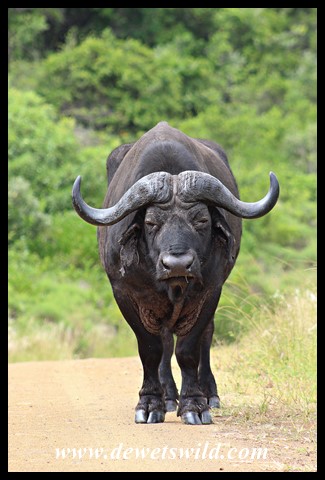
A turnoff from the Dune Loop leads to the Kwasheleni Tower – a new facility opened after our previous visit to iSimangaliso that we were very curious to see – but a sour old buffalo bull tried his best to keep us from reaching it.

Our patience paid off when the buffalo eventually relented and we could reach the viewing tower without further hindrance (unless you see the climbing up the dune and then the tower as an obstacle). The views afforded over Lake St. Lucia and the iSimangaliso Wetland Park from up the top of the tower was amazing.

Arriving back at Cape Vidal around the same time the clouds did, we nevertheless didn’t want to pass on the opportunity to explore the rock pools at low tide.

Having lunch on the deck of our log cabin we were visited by a variety of the local wildlife.

We didn’t take a very long afternoon drive, just a two-hour excursion along the Grassland and Dune Loops and back to camp.


Map of the eastern shores section of the iSimangaliso Wetland Park (from https://isimangaliso.com/)


Ghost Crabs

Subfamily Ocypodinae

The beach at Cape Vidal is alive with Ghost Crabs, a good indication as to the health of the intertidal ecosystem thanks to minimal human impact on this stretch of coast.

Ghost Crabs are omnivorous scavengers, living on any carrion, debris, and even small living creatures up to the size of turtle hatchlings that gets washed onto the beach.

Being semi-terrestrial and living in burrows they dig for themselves in moist sand, Ghost Crabs can breathe oxygen from the air through their gills, provided they can keep them wet which requires the crabs to scuttle into the waves every so often. However, they can’t stay in the water too long or they’ll drown.

This necessity for the Ghost Crabs to go into the water at regular intervals had us quite amused during our recent visit to Cape Vidal in the iSimangaliso Wetland Park. The crabs would run towards the approaching wave, stand their ground, get pounded, and then re-appear when the wave retreats, still standing in the same spot. Not once did we see one of the crabs loose its footing and get tossed around by the wave action!