Tag Archives: picnic spots

Morning coffee, with a view

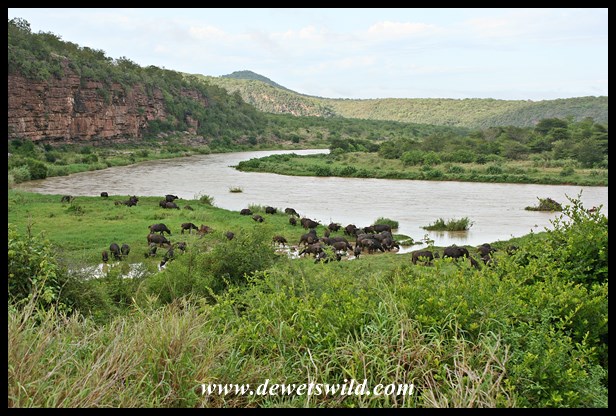
This was the scene we enjoyed our first cup of coffee, rusks and biscuits with this morning, here in Hluhluwe-Imfolozi Park.


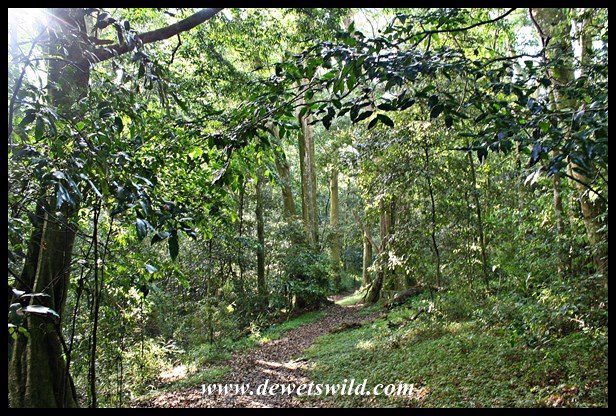
A morning in the Dlinza Forest

We spent the morning exploring the beautiful Dlinza Forest Nature Reserve in the town of Eshowe. This panoramic view awaits you at the top of the aerial boardwalk at Dlinza – an excellent way to experience the middle and upper stories of the forest that one doesn’t normally have access to – click on the image for a larger view. Of course we’ll share more about Dlinza when we’re back from holiday!

View from the Dlinza Reserve’s Aerial Boardwalk


In a forest of giants

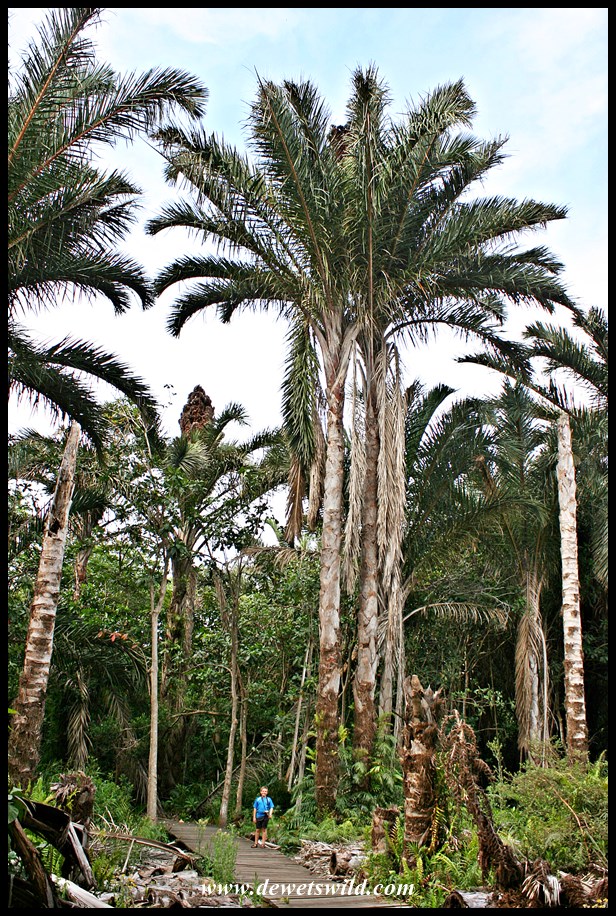
Today we spent some time exploring the Raphia Palm National Monument, quite literally one of the biggest attractions here at Umlalazi Nature Reserve. See if you can make out Joubert standing next to two of the towering giants.


Vacation Time!

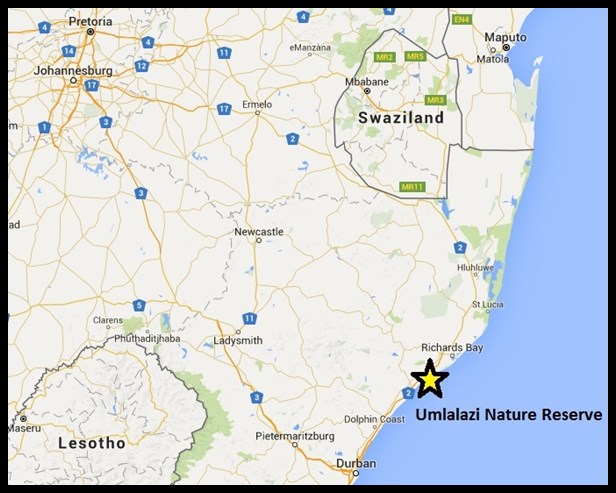
The time for our December holidays have finally arrived, and we kick of our summer vacation at beautiful Umlalazi Nature Reserve on the north coast of Kwazulu-Natal Province!


Boys Weekend in the Pilanesberg

Early on this past Saturday morning Joubert and I headed for the Pilanesberg National Park’s Kwa Maritane Gate. Our plan was to spend all of Saturday, most of Sunday morning and the night between in one of South Africa’s most easily accessible wildlife destinations, enjoying a bit of father-son company and shared hobbies in the beautiful surroundings far from the city’s distractions. When the Gate opened at 05:30 we set off, enjoying some thrilling encounters with the Park’s wildlife right from the start.

While we were enjoying the Pilanesberg’s sights and sounds from the coolness of the photographic hide at Makorwane Dam, Joubert suggested that we head for Bakgatla Resort to go setup camp before the day got any hotter.

With our tent pitched and our camping chairs unpacked, we could enjoy our lunch, a few glasses of cold drink and an ice-cream treat surrounded by a selection of Bakgatla’s permanent residents of the feathered variety.

The first stop on our afternoon drive was Rathlogo Hide, just a few kilometers from Bakgatla.

At Tilodi Dam we laughed at the antics of a male African Black Duck that was most impressed with himself for having chased off a White-faced Whistling Duck from “his” shoreline.

There was much more wildlife to be seen as we traveled through the southeastern portions of the Park.

At Lengau Dam a group of baboon youngsters were having great fun roughhousing in a dead tree and occasionally dropping into the water below – no doubt enjoying great relief from the oppressive heat but I was surprised that they weren’t more afraid of the crocodiles!

With the sun setting it was time to head towards Bakgatla.

On Sunday morning we packed up our camp and headed for the Lenong Viewpoint to enjoy our morning tea and rusks from a beautiful vantage point high on top of one of Pilanesberg’s mountains. The rest of the morning we spent visiting more of our favourite spots in the Park, until the day started getting really hot again. We enjoyed a quick lunch at Fish Eagle Picnic Spot and then headed for Kwa Maritane Gate and home…

Pilanesberg National Park is an easy 160km drive from our home in Pretoria.

Swinging into spring at the Botanical Gardens

With the spring season now in glorious swing here in South Africa we headed to the Walter Sisulu National Botanical Garden again for a jolly day out in nature this past Sunday. The recently fledged Verreaux’s Eagle chick and its parents were the stars of the show, as always, and yet again we were amazed at the variety of wildlife finding a home here in suburban Johannesburg. The gardens are hugely popular with the citizens of South Africa’s biggest city, and not without reason, as we hope these photos will convince.

Have a look here for all our posts on the Walter Sisulu National Botanical Garden if you’d like to learn more about this fantastic place.

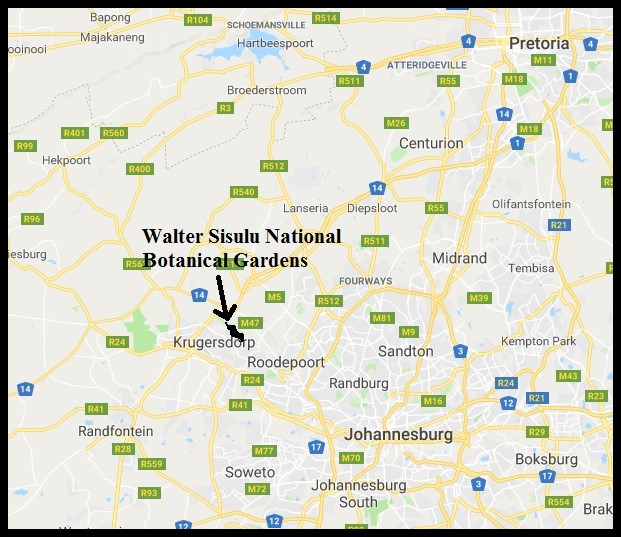
Walter Sisulu National Botanical Gardens is located on the outskirts of Johannesburg on the borders of Krugersdorp and Roodepoort

Celebrating our natural heritage

It is the Heritage Day long weekend in South Africa, and yesterday we packed the Duster with picnic baskets and grandparents and set out for a most enjoyable morning at our local Rietvlei Nature Reserve. Large sections of the reserve have recently received management burns to clear moribund grass cover (fire being an essential component of Africa’s grassland and savanna landscapes), and the first spring rains have spurred the growth of new grass, attracting a wide range of birds and animals to these areas.


Birthday celebrations at Rietvlei

Yesterday we celebrated Joubert’s ninth birthday at our local Rietvlei Nature Reserve, just a few kilometers from home. Combining family and friends, wildlife,  photography, a picnic and birthday cake just seems like the best way to celebrate the special day, don’t you agree?

Rietvlei is home to a small pride of lions housed in a 150-hectare enclosure in a corner of the reserve. Normally we wouldn’t support any “reserves” in which lions are kept in confined quarters nor any that offer “cub petting” as an attraction due to the very real possibility that these establishments are involved to a greater or lesser extent in the breeding of lions for the canned hunting and bone exporting business, despite their claims of “conservation” and “education”. Rietvlei’s lions however were rescued from exactly such circumstances, cannot be introduced to the wild and will live out their lives here. It was a special birthday treat for Joubert and his friends to visit Tau, Jarvis, Bassie and Tawane at their home.

High time we went back to Ithala!

This past Women’s Day long weekend afforded us the opportunity to make a long overdue return visit to one of our favourite South African wild places – the Ithala Game Reserve in northern Kwazulu-Natal. We’ve been singing the praises of this little known yet exceptionally scenic reserve for as long as this blog’s been running and if you’d like to see all our posts about Ithala and learn more about it please follow this link.

While the weekend’s weather ranged from cold, wet and blustery to glorious sunshine, that didn’t curtail our explorations in the least. How could it, when the majestic scenery is so rewarding!?

And, when the sun came out, so did the butterflies and various kinds of reptiles!

Ithala has a rich variety of bird species and many of them are easily seen and photographed in Ntshondwe, the reserve’s main camp.

And of course, what would a “game reserve” be without a rich assortment of large animals? Ithala never disappoints in its variety of mammals, and especially the giraffes (Ithala’s emblem) were out in force!

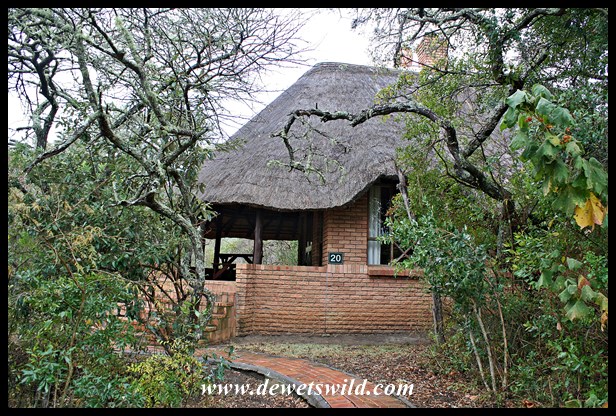
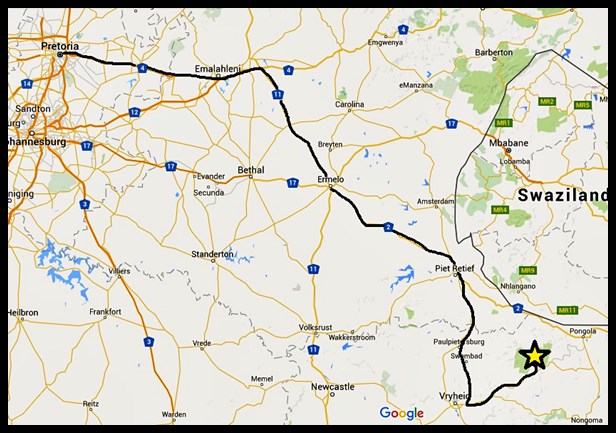
We spent three nights at Ithala, staying in comfort in Ntshondwe’s chalet #20. Ithala’s a relaxed 6 hour drive on good tarred roads from our home in Pretoria.

Ntshondwe Chalet #20, Ithala Game Reserve, August 2018

Pretoria to Ithala
(drawn with Google Maps)

Kgalagadi Transfrontier Park – History and Tourism

Wedged into a remote corner of South Africa’s Northern Cape, between Namibia and Botswana, lies a very special piece of the Kalahari Desert. Here a wilderness of dunes, pans and dry, sandy river beds is a safe refuge to a rich variety of natural life, and one of the last fully functional ecosystems remaining on earth. The beds of the Auob and Nossob Rivers very rarely boast flowing water – the Auob perhaps once in ten years, the Nossob only once or twice in a century.

When the First World War broke out over a 100 years ago, the British Colonial government of the Union of South Africa and British Bechuanaland considered the beds of the Auob and Nossob Rivers a strategic access into German South West Africa and started sinking boreholes in the rivers to supply advancing troops. After the war, the area was divided into farms by a Scotsman, Roger Jackson, explaining how many of the waterholes today carry very Scottish-sounding names. The newly settled farmers however found it tough going – the fascinating museum at Auchterlonie providing a glimpse into this hard life – and had to turn their rifles on the herds of game moving through the area in order to make a living.

With the game population falling drastically, and shortly after South Africa’s first national park was proclaimed (the Kruger in the then Transvaal) two influential men from the region invited then Minister of Lands, Piet Grobler, on a “hunting trip” in the Kalahari and deliberately took him to an area denuded of wildlife. So disturbed was the minister by the lack of game that he immediately set about the process of proclaiming the area between the Auob and Nossob Rivers South Africa’s second national park – the Kalahari Gemsbok National Park coming into official existence on 31 July 1931. Soon more land to the southwest of the Auob and its confluence with the Nossob were added, bringing the size of the Park to 9,600km². Then, in 1938 the government in neighbouring Bechuanaland (today Botswana) proclaimed an even bigger piece of land on the other side of the Nossob (the unfenced international boundary between the two countries) the Gemsbok National Park. Informally the two conservation areas were managed as a single unit ever since, but it wasn’t until 1999 when the leaders of the two countries signed a treaty to formalise the arrangement. The Kgalagadi Transfrontier Park, covering over 34,500km², was officially opened on 12 May 2000 and is one of the biggest, and most unspoiled, conservation areas on the planet.

On the South African side of the Kgalagadi Transfrontier Park guests have a choice of three “traditional” rest camps offering basic amenities like accommodation, camping, a shop, fuel station, swimming pools, and guided walks and drives. Twee Rivieren is the main entrance, biggest camp and administrative centre of the Park (it also has a restaurant and border control) and offered the first tourist accommodation in the Park in 1940, while Mata Mata (on the Auob River, opened 1955) and Nossob (on the Nossob River, opened 1966) lie deeper into the Park, about 120m and 160km away from Twee Rivieren respectively. Union’s End marks the point where the borders of South Africa, Botswana and Namibia meet and is one of 6 rustic picnic sites available on the South African side of the Park. Six smaller Wilderness Camps are also spread throughout the Park – these offer only accommodation to overnight visitors. Between Twee Rivieren and Mata Mata lie the Kalahari Tent Camp, Urikaruus and Kieliekrankie, between Nossob and Mata Mata is located Bitterpan while Gharagab and Grootkolk is located north of Nossob on the way to Union’s End. While there’s around 500km of prepared roads (very sandy and corrugated in places, not recommended for sedans) to explore the Park in relative comfort, there is also a selection of guided and self-guided 4×4 trails available.

Relative locations of Twee Rivieren, Mata Mata, Nossob and Union’s End in the Kgalagadi Transfrontier Park

The Kgalagadi Transfrontier Park must be one of South Africa’s most out-of-the-way tourist attractions, lying about 1060km from Pretoria and 1040km from Cape Town. The nearest major airport with daily flights is at Upington, about 250km away from Twee Rivieren.

The location of the Kgalagadi Transfrontier Park

In the next installment, we’ll be showing you the marvelous wildlife spectacle the Kgalagadi Transfrontier Park has to offer.