Tag Archives: outdoors

Summertide Diary: Butterfly Bonanza (and a few other insects too)

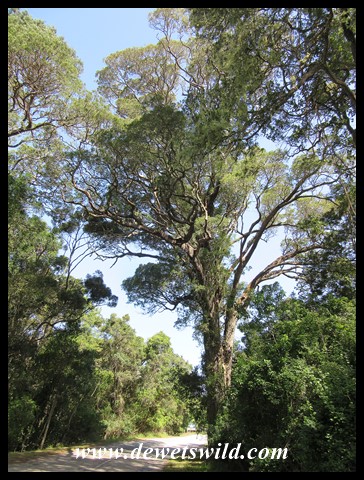
When we first walked to the KuMfazana hide on our recent visit to the iSimangaliso Wetland Park, we didn’t quite find what we expected. Normally, if the pans in front of the hide holds water, there are hippos and crocodiles and a myriad of water-dependent birds to keep visitors entertained for hours. This time however it was the walkway through the swamp forest to the hide that held us enthralled for hours, and not because of some “hairy and scary” creatures either…

We dubbed this stretch of the walkway to the hide at kuMfazana “Butterfly Glen”

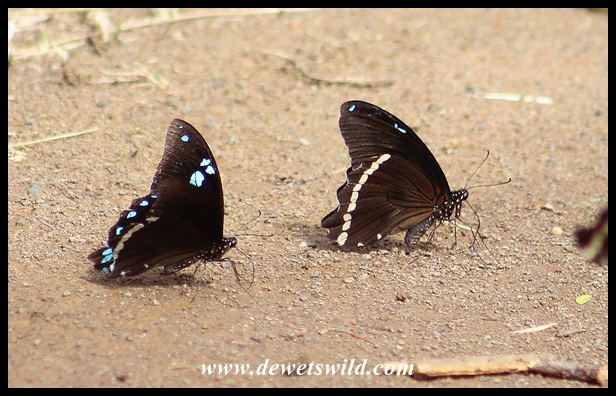
It was thanks to the sheer numbers and diversity of butterflies to be seen along this short walk that we visited kuMfazana almost daily for the week that we were at Cape Vidal in January 2021. Last time I saw anything like it was during a solitary autumn visit to the Kruger National Park in 2019. iSimangaliso’s rich plantlife and habitats supports an extraordinary list of butterfly species, each seemingly more beautiful than the one you’ve seen just before. Other spots in the Park, most notably at Cape Vidal and Mission Rocks, also contributed to the bounty but none so richly as kuMfazana. I really hope this gallery gives you an idea of what we experienced that week.

While not nearly as conspicuous as their butterfly cousins there also was a few eye-catching moths to be found.

The diversity of dragonflies on the eastern shores of Lake St. Lucia almost matches that of the butterflies, and I was frustrated at not being able to identify the species most of them belonged to. Realising how little I actually know about these often seen insects I’m determined to remedy that as soon as possible.

Insects of all kinds thrive in iSimangaliso’s sub-tropical climate. Regrettably that includes mosquitoes…

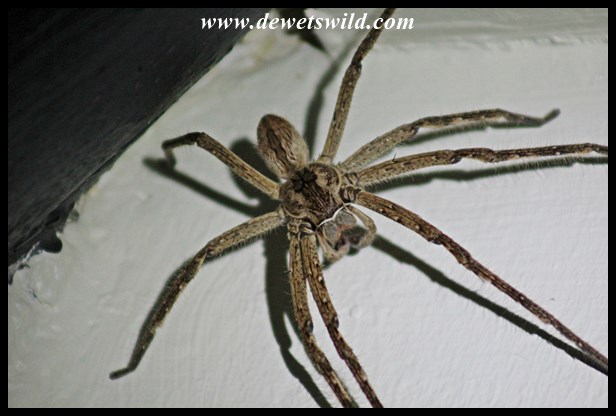
When we saw a spider-hunting wasp dragging a paralysed sac spider to its nest I must admit to getting a large dose of pleasure from the hapless spider’s predicament. Sac spiders are among the most venomous spiders in South Africa and responsible for most of the serious spider bites suffered in our country. They deliver a nasty bite of cytotoxic venom and the bite-site is prone to secondary infection. The reason for my schadenfreude? A sac spider bit a then infant Joubert resulting in a visit to the emergency room late night on a New Years eve a few years ago…


Summertide Diary: Exploring iSimangaliso (part one)

17 January 2021

It’s a cloudy start to the day at Cape Vidal and the route for our morning drive takes us along the Grassland Loop and then to the viewpoint at Catalina Bay on the shores of Lake St. Lucia. Recent rains have swelled the lake to proportions I don’t think we’ve seen on any of our numerous previous visits to the area.

We’re slowly making our way to the picnic site at Mission Rocks for breakfast.

On arrival at Mission Rocks we delay our breakfast of coffee-and-rusks just a little to first walk down to the rocky beach and look out over the ocean. But its windy and drizzly so we don’t stay at the seaside too long before going to hide in the forest, where the picnic tables are also frequented by some colourful birds with the same aching for something to eat that we had.

Driving further south the sun finally puts in appearance and the bush becomes alive as birds and animals come out of hiding.

We turn for camp at Amazibu Pan, where the hippos are kept from their sleep by a raucous assortment of birdlife.

Heading back to Cape Vidal there’s three short loop roads that offer an alternative to the busier tarred main road, and each of them offers a glimpse into a different ecosystem. The first of these is the Vlei Loop that passes several open pans where animals congregate to drink.

The Forest Loop passes the kuMfazana Hide, where we discover a butterfly paradise – more about that tomorrow!

A turnoff from the Dune Loop leads to the Kwasheleni Tower – a new facility opened after our previous visit to iSimangaliso that we were very curious to see – but a sour old buffalo bull tried his best to keep us from reaching it.

Our patience paid off when the buffalo eventually relented and we could reach the viewing tower without further hindrance (unless you see the climbing up the dune and then the tower as an obstacle). The views afforded over Lake St. Lucia and the iSimangaliso Wetland Park from up the top of the tower was amazing.

Arriving back at Cape Vidal around the same time the clouds did, we nevertheless didn’t want to pass on the opportunity to explore the rock pools at low tide.

Having lunch on the deck of our log cabin we were visited by a variety of the local wildlife.

We didn’t take a very long afternoon drive, just a two-hour excursion along the Grassland and Dune Loops and back to camp.


Map of the eastern shores section of the iSimangaliso Wetland Park (from https://isimangaliso.com/)


Ghost Crabs

Subfamily Ocypodinae

The beach at Cape Vidal is alive with Ghost Crabs, a good indication as to the health of the intertidal ecosystem thanks to minimal human impact on this stretch of coast.

Ghost Crabs are omnivorous scavengers, living on any carrion, debris, and even small living creatures up to the size of turtle hatchlings that gets washed onto the beach.

Being semi-terrestrial and living in burrows they dig for themselves in moist sand, Ghost Crabs can breathe oxygen from the air through their gills, provided they can keep them wet which requires the crabs to scuttle into the waves every so often. However, they can’t stay in the water too long or they’ll drown.

This necessity for the Ghost Crabs to go into the water at regular intervals had us quite amused during our recent visit to Cape Vidal in the iSimangaliso Wetland Park. The crabs would run towards the approaching wave, stand their ground, get pounded, and then re-appear when the wave retreats, still standing in the same spot. Not once did we see one of the crabs loose its footing and get tossed around by the wave action!


Summertide Diary: Arriving at Cape Vidal

16 January 2021

Thankfully our government didn’t opt to impose even stricter lockdown regulations following the festive season spike in covid-infections and so, after 13 days at home in Pretoria we could recommence our summertide rambles, this time heading to Cape Vidal on the eastern shores of Lake St. Lucia, in the iSimangaliso Wetland Park. After 7-and-a-half hours on the road we finally arrived in the holiday town of St Lucia and, after filling up on fuel and stocking up on eats and drinks we couldn’t wait to enter Bhangazi Gate for the 30km drive to Cape Vidal.

The Bhangazi gate into the Eastern Shores of Lake Saint Lucia lies roughly 610km South-East of Pretoria.
(Drawn using Google Maps)

This is one of our favourite destinations and sadly in the midst of South Africa’s first wave of the pandemic a booking we had to come to Cape Vidal in the winter holidays of 2020 had to be postponed. We were so grateful to be back now.

We were allocated log cabin #1 at Cape Vidal – although it’s the first unit as you drive into the accommodation area of the camp it was still very privately situated and surrounded by bush.

After settling into our accommodation there was only one place we wanted to go – the beach – even if by then some heavy cloud cover had started to move in from the Indian Ocean.


Map of the eastern shores section of the iSimangaliso Wetland Park (from https://isimangaliso.com/)


Summertide Diary: Departing Mountain Zebra

3 January 2021

Today we had to leave Mountain Zebra National Park early, for we had a long way to get back home to Pretoria and had to beat the government-imposed curfew at that. It may have been only 12km from the camp to the gate, but still there was loads to see!

Very near the gate there’s a nice waterhole where even this early in the morning a procession of game was already congregating. The serenity of the scene was shattered when a mountain zebra love triangle got out of hand, but calm soon settled again.

During our time in Mountain Zebra National Park we were very lucky to come across a Black Rhinoceros cow and calf. For their protection I won’t be able to share where or when it was that we saw them, but being able to see more of these magnificent creatures was a privilege we were very grateful for.

And with that our summertide ramble came to a halt, if temporarily, as I had important start-of-the-year work to attend to back in Pretoria. As it would be some weeks still before the schools were due to reopen we did have another reservation in the offing, but with South Africa in the midst of a serious second wave of COVID-19 infections we weren’t at all certain that we would be able to take it up…

We posted a special feature about Mountain Zebra National Park following a previous visit, if you’d like to learn more about this special destination.

Map of Mountain Zebra National Park from the SANParks website (https://www.sanparks.org/images/parks/mountain_zebra/mznp-map.jpg)


Summertide Diary: Exploring Mountain Zebra (part two)

2 January 2021

When dawn found the Mountain Zebra National Park under heavy skies this morning we were already underway along the Kranskop Loop.

When we arrived at the start of Rooiplaat Loop we found a male lion lying there, flat on its right-side. We sat there as the minutes passed, studying it through cameras and binoculars and finally coming to the sad conclusion that this lion was dead – there wasn’t even a twitch of an ear or any movement of its stomach to indicate a breath being taken. Disheartened, I started the car to drive off.

King Roy, fast asleep

The sound of the Duster’s engine had a miraculous effect. The lion lifted his head, sleepily. He rested his head on his paws for a while, then gave a mighty yawn before getting up, stretching his legs and then lying down again to look at us in irritation. He is magnificent, known as Roy, and despite his advanced age one of the ruling coalition of lion males here at Mountain Zebra National Park, along with Nomad whom we saw at a distance the day before .

When the next vehicle arrived at the lion sighting we moved of so that those visitors too could have a private audience with The King. The skies have cleared and it’s turning into a glorious day. On our way back to camp we passed Roy again, and he was fast asleep again.

With it being our last afternoon at Mountain Zebra we opted to visit all our favourite spots along the Ubejane and Rooiplaat Loops and the Link road between them again. There’s just something so indescribably peaceful about driving around wild Africa as dusk approaches.

We posted a special feature about Mountain Zebra National Park following a previous visit, if you’d like to learn more about this special destination.

Map of Mountain Zebra National Park from the SANParks website (https://www.sanparks.org/images/parks/mountain_zebra/mznp-map.jpg)

Summertide Diary: Bat-eared Fox puppies

Our new year got off to a great start when we encountered this lovely family of Bat-eared Foxes along the Link Road in the Mountain Zebra National Park on the 1st of January. At the den there were three very lively puppies and four adults who did everything they could to get the pups to hide away from the enamoured humans, without much success!

Summertide Diary: Exploring Mountain Zebra (part one)

1 January 2021

As soon as the gates opened on New Year’s Day we headed for the Rooiplaat Loop, the sightings board at reception having indicated that Lions and Cheetahs were seen there the previous day. And we did not wait long – right where the road skirts the Park’s boundary fence we came across a big male lion, known as Nomad, patrolling his territory.

We supposed that it was the proximity of the big predator that made these Black Wildebeest so jittery!

It’s early morning in the Mountain Zebra National Park and there’s so much to be seen!

It was on the link road between Rooiplaat and Ubejane Loops that we happened upon these cute little Bat-eared Fox pups and their elders. More photos of them tomorrow!

Bat-eared Fox pups

Along the main road, between the two junctions with the Ubejane Loop, we saw this pair of unusually tolerant Secretarybirds – they’re normally quite nervous and move away from the road the moment a vehicle approaches, so this was a great opportunity to watch them in action.

At the southern junction of Ubejane Loop with the main road there’s a small earth dam filled with rainwater. By the time we arrived there at mid-morning Cape Mountain Zebra families were arriving from all corners, along with some other wildlife, to slake their thirst and it was wonderful to watch their social interactions before heading back to camp.

Back at camp there was time to kill either side of lunchtime, and thankfully there’s very much of interest around the accommodation and camping area.

Our route for the afternoon would first take us into the mountains along the Kranskop Loop before taking another jaunt around the Rooiplaat Loop.

A real highlight of our afternoon drive was an encounter with a group of three Cheetahs – one adult and two youngsters – on the Rooiplaat Plateau, just half-an-hour before we had to be back in camp.


We posted a special feature about Mountain Zebra National Park following a previous visit, if you’d like to learn more about this special destination.

Map of Mountain Zebra National Park from the SANParks website (https://www.sanparks.org/images/parks/mountain_zebra/mznp-map.jpg)

Summertide Diary: Arriving at Mountain Zebra

31 December 2020

It’s a 210km drive from Addo‘s Main Rest Camp to the gates of the Mountain Zebra National park, and we arrive just after 13:00. The rest camp lies about 12km into the Park, but it’s hot and most animals are hiding from the midday summer sun and we don’t see much of them before reaching the camp.

After checking in we make our way to our allotted unit, cottage 20, and while Marilize and I unpack the car and settle into our accommodation Joubert is already out exploring and enjoying the birdlife in camp.

Time to go exploring as a family, and off we go to the Rooiplaat and Ubejane Loops before returning to camp three hours later.

2020 draws to a close with a beautiful sunset over the hills of the Mountain Zebra National Park

The last sighting of the year: a Raucous Toad next to the swimming pool in camp.

We posted a special feature about Mountain Zebra National Park following a previous visit, if you’d like to learn more about this special destination.

Map of Mountain Zebra National Park from the SANParks website (https://www.sanparks.org/images/parks/mountain_zebra/mznp-map.jpg)

Summertide Diary: Elephant Processions at Addo

One of the most wonderful experiences one could hope to have in the Addo Elephant National Park is to sit at a waterhole while a herd of elephants arrive, often passing so close to your vehicle that it will take your breath away.