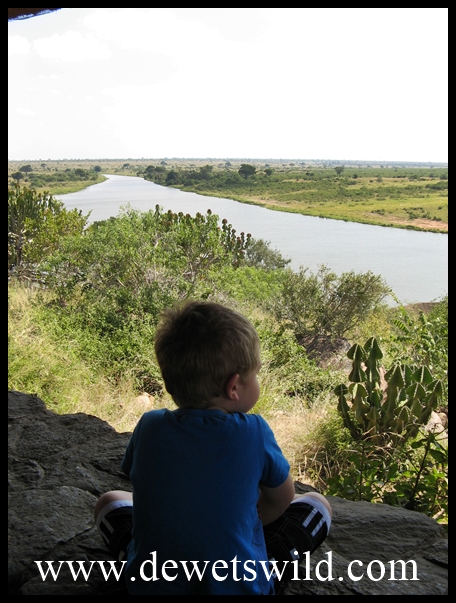
What a view!
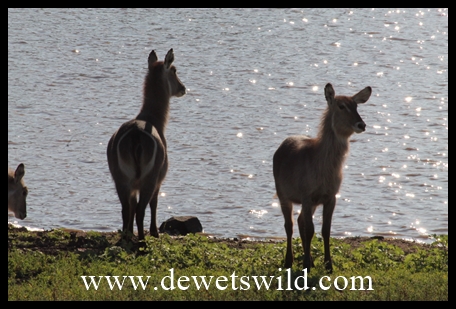
Today we enjoyed our lunch at the picnic spot high above the Mlondozi Dam, from where we could watch pods of hippos and herds of elephants mingle while enjoying a cool drink ourselves.

What a view!
Today we enjoyed our lunch at the picnic spot high above the Mlondozi Dam, from where we could watch pods of hippos and herds of elephants mingle while enjoying a cool drink ourselves.

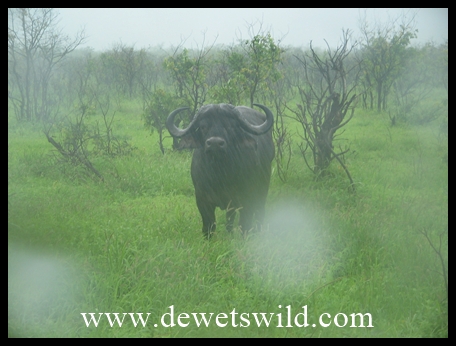
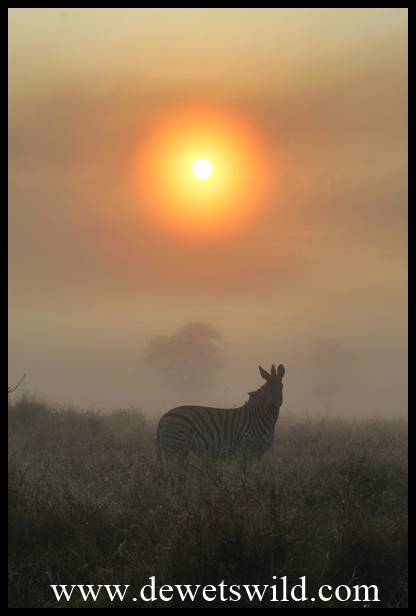
Thick mist blanketing the Crocodile Bridge section of the Kruger National Park this morning

Good evening everyone!
An overcast start to the day at Pretoriuskop, but the cloud cover dissolved soon enough to reveal another glorious lowveld day here in the Kruger National Park. We visited a couple of dear friends at Skukuza before making our way here to Crocodile Bridge Rest Camp, where we’ll be spending the next four nights.
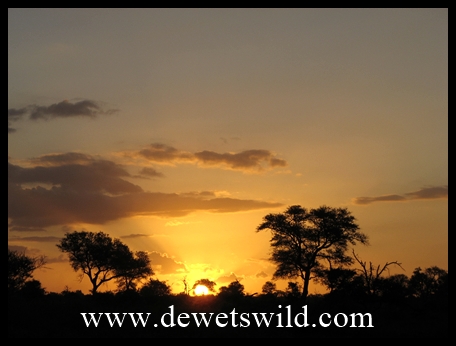
Crocodile Bridge Sunset (click on the image for a clearer view)
Yep, we’re back in the Kruger National Park – we simply cannot get enough of this paradise!
Tonight, we’re sleeping in historic Pretoriuskop Rest Camp. Depicted below is the nearby Ship Mountain (so named because it resembles the upturned hull of a ship) used as a landmark by transport riders and explorers more than a hundred years ago en route to Delagoa Bay (today’s Maputo in Mozambique).

If our internet connection allows, we’ll again try to post a picture or two on a daily basis while we’re in the Park, and there will definitely be a full report back when (unfortunately) we have to return to the city…
Back to the largest green canyon on earth

We headed for the Blyde River Canyon again over Easter 2013 and had a most enjoyable time, as always, being out in nature. In June 2012, we based ourselves at Forever’s Swadini Resort in the lowveld portion of this beautiful nature reserve, and so this time around we spent three very comfortable nights at their Blyde Canyon Resort up top on the escarpment. While the climate and surroundings of the two resorts differ markedly, both are well managed with good amenities and very definitely worth a visit.

Camping at Blyde Canyon

Comfortable chalets at Blyde Canyon
At Blyde Canyon Resort a number of hiking trails and viewpoints are available to enjoy the spectacular natural surroundings, offering chance encounters with small antelope and primates. During our visit the resort also arranged a very informative talk on snakes, including a number of venomous specimens being displayed, which turned all the more exciting when a live, wild juvenile cobra put in an appearance between the visitors lounging on the lawn – luckily the presenter was on hand to capture it for later release back into the wild.
The resort is an excellent base from which to explore other parts of the nature reserve, such as the Bourke’s Luck Potholes, named after a prospector who expected to find alluvial gold deposits there. Here, at the confluence of the Blyde (meaning joy) and Treur (meaning sorrow) Rivers, the force of the cascading waters carrying with it all sorts of debris have weathered away the bedrock to form a series of very interesting formations. A number of popular viewsites and the Echo Caves are additional attractions in the vicinity to consider.
On the way to Blyde Canyon, we enjoyed a couple of hours exploring the Sudwala Dinosaur Park – have a read here if you’d want to see more of this worthwile destination.
This cute, tree-dwelling, nocturnal primate is a thick-tailed bushbaby (or galago), often encountered while taking a night-time stroll through many of the rest camps in the Kruger National Park.


The magnificent Amphitheatre is a rock wall approximately 5km in length, and forms part of the Drakensberg mountain range. This photograph was taken near the Mahai Visitor Centre in the Royal Natal National Park.
(you can click on the image for a bigger view)
We’re participating in the online adventure travel and photography magazine LetsBeWild.com‘s Wild Weekly Photo Challenge for bloggers. This week’s challenge is “Mountains”
Have a look here if you’re interested in reading more about Royal Natal National Park
A look at the evolution of tourist accomodation in the Kruger National Park
The Wolhuter Hut in Pretoriuskop Rest Camp dates from the 1920’s and has been preserved to offer a glimpse into what a visit to the Park was like when it was still in its infancy (it is no longer used to accommodate guests):

Wolhuter’s hut in Pretoriuskop
The accommodation on offer today is much more sophisticated and spacious – this is one of the new bungalows in Lower Sabie Rest Camp:

Bungalow in Lower Sabie
There’s a huge variety of accomodation options available in the Park today, ranging from the very rustic to the very luxurious, to cater for almost all tastes and budgets.
This post is in response to this weeks’ photo challenge from WordPress: Change
Our Honda Time Traveller got us safely to Sudwala’s lush tropical mountain environment in what felt like less than four hours. But it wasn’t. We were now waiting, brimming with excitement, for the gates of the Sudwala Dinosaur Park to open, approximately 70-million years prior to the present.

Sudwala’s lush tropical environment
We were the first visitors in the queue and, formalities completed at the little reception office and armed with our free leaflet to identify all the prehistoric monsters we encounter, we set off.
Almost within sight of the entrance gate we had our first sighting, and wow was it an exciting start to the day! A female Pariasaurus protecting her newly hatched brood from a scavenging Pristerognatus, the latter soon realising that there must be easier food about and scurrying away into the thicket.

Pariasaurus and Pristerognatus
Not long after we encountered a female Dimetrodon lying next to a small pond, no doubt waiting in ambush of some unsuspecting herbivore. Just as we were pulling away a lone Titanogomphodon, probably on it’s way to drink at the pond, appeared next to the road but must have been frightened by our presence as it turned back into the forest. Dimetrodon will have to wait a bit longer for her meal.

Dimetrodon

Titanogomphodon
Continuing our drive through swarms of huge insects – sorry, not stopping to take pictures of giant dragonflies and cockroaches – the shrill piercing sound of gigantic cicadas was abruptly disrupted by the roaring of two giants in battle! A Gryponyx has cornered a Massospondylus in a clearing right next to the road and was ferociously attacking it. While we were curious to see how the fight turned out, we decided to rather leave the scene as the poor herbivore kept trying to use our vehicle as cover from the attacking predator, and we didn’t want to risk damage to our car 70 million years away from the nearest mechanic!

Gryponyx and Massospondylus
On a hill slope we had a fleeting sighting of a skittish Camptosaurus in thick vegetation.

Camptosaurus
Rounding a bend we had our first sighting of one of the superstars of the dinosaur world – a Stegosaurus! The massive animal was quite relaxed in our presence and allowed us a couple of photographs before ambling across the road and eventually disappearing from view.

Stegosaurus
Our next sighting was another thrilling experience: An Allosaurus had wrestled an immature Apatosaurus to the ground and was now dealing it the killer blow. There was no sign of the rest of the Apatosaurus‘ family group in the vicinity so we assumed it may have been a young male recently evicted from the herd. News of the sighting soon spread and quickly the area was packed with other visitors who had rushed to the scene. We couldn’t believe our luck with all the predator sightings we’ve already had, and it wasn’t even lunchtime yet!

Allosaurus and Apatosaurus
Speaking of lunch; we found a nice picnic spot at a forest-fringed lake where we could get out of the vehicle and enjoy a pre-packed meal in relative safety. We had just settled in when a gigantic Diplodocus-bull appeared out of the forest and promptly waded into the water. What a special thrill to have this gentle giant browse only meters away from us!

The day was getting very hot now and, as we were driving away from the lake, we encountered numerous reptilians making their way to the water, most notably two Struthiomimus‘ rushing across the road in a mad dash, and then a single Parasaurolophus male with a most impressive crest.

Struthiomimus

Parasaurolophus
And then we happened upon the dinosaur that every visitor dreams of seeing: Tyranosaurus! In our excitement we had parked our vehicle right in the place where it’s path crosses the road, and it quickly showed it’s irritation by mock-charging in our direction. This sighting literally took our breaths away – with the enormous monster so close to us there was no denying the foul smell of rotten meat hanging in the air. Suppose with arms that short it can’t really be expected to have good oral hygiene.

Tyranosaurus

Tyranosaurus
Nearby we found the skull of a Triceratops, and wondered whether it might have fallen prey to that same Tyranosaurus we’ve just seen?

Triceratops remains
It was time to head back to the gate now, as dusk was slowly setting in and we had no intention of spending the night among these dangerous creatures. On the way we had a close encounter with a cantankerous old Styracosaurus that just wouldn’t get off the road so that we could pass. Our final sighting on this extraordinary day was of an Iguanodon placidly browsing close to the gate.

Styracosaurus

Iguanodon
Unfortunately travelling back to our own time aged our films a bit and thus the photographs aren’t of the best quality, but the memories of our prehistoric safari will remain with us for at least 70-million years.
🙂
———————————————————————————————————————————————————————-
The Sudwala Dinosaur Park is located about 40 kilometres from the city of Nelspruit, in Mpumalanga Province, and adjacent to the much better known Sudwala Caves. With Joubert going through a “dinosaur-phase” – he must be one of the world’s biggest Jurassic Park fans – we decided on stopping over there on the way to the Blyde River Canyon Nature Reserve as a special treat for the little man. Set in beautifully lush gardens and indigenous vegetation, with neat pathways leading fom one life-size dinosaur replica to the next, it’s an enjoyable place to spend an hour or two at and perhaps even enjoy a couple of the delicious pancakes (“flapjacks”) on offer at the small restaurant. When Joubert is a little bigger we’ll definitely visit again to join one of the guided tours through the caves.

Waiting for the dinosaur park to open
Thick fog and heavy clouds blanketing the Blyde River Canyon, in South Africa’s Mpumalanga Province.


We’re participating in the online adventure travel and photography magazine LetsBeWild.com‘s Wild Weekly Photo Challenge for bloggers. This week’s challenge is “Clouds”