Tag Archives: outdoors

Swinging into spring at the Botanical Gardens

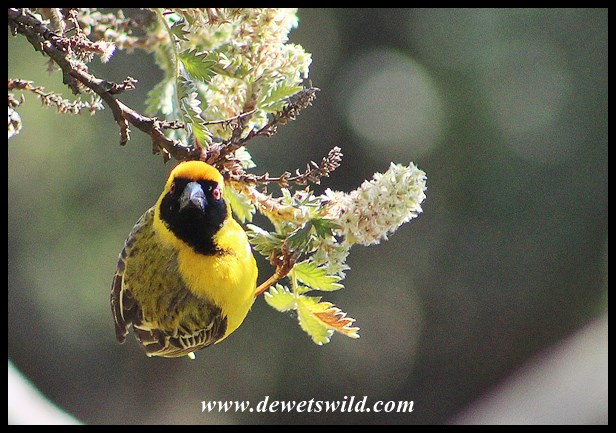
With the spring season now in glorious swing here in South Africa we headed to the Walter Sisulu National Botanical Garden again for a jolly day out in nature this past Sunday. The recently fledged Verreaux’s Eagle chick and its parents were the stars of the show, as always, and yet again we were amazed at the variety of wildlife finding a home here in suburban Johannesburg. The gardens are hugely popular with the citizens of South Africa’s biggest city, and not without reason, as we hope these photos will convince.

Have a look here for all our posts on the Walter Sisulu National Botanical Garden if you’d like to learn more about this fantastic place.

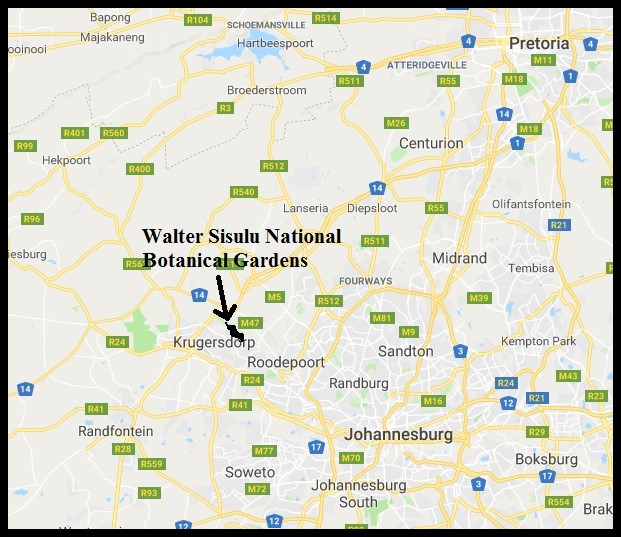
Walter Sisulu National Botanical Gardens is located on the outskirts of Johannesburg on the borders of Krugersdorp and Roodepoort

Collared Sunbird

Hedydipna collaris

Primarily a bird of forest and riparian habitats where it feeds on nectar, fruit and insects, the tiny (8g, 10cm) Collared Sunbird has exquisite, iridescent plumage, especially in the male of the species.

Collared Sunbirds breed mainly during spring and summer, when the female uses dry grass and other fine plant material to position an untidy oval nest with a side entrance in the outer branches of a tree or shrub, often near the hives of bees or wasps. The female is also solely responsible for the incubation of the clutch of 1-4 eggs over a two week period. The male doesn’t take an active role in the feeding of the chicks, which become independent at around 4 weeks old, either.

The Collared Sunbird is listed as being of least concern by the IUCN, although the loss of coastal forest habitats to development is cause for concern. It occurs widely over the more densely vegetated areas of sub-Saharan Africa, and in South Africa occurs along the coast and adjacent interior of the Eastern Cape and Kwazulu-Natal through to the Lowveld and Escarpment of Mpumalanga and Limpopo.

Laughing Dove family tragedies…

During September (2018) we had the opportunity to watch a pair of Laughing Doves incubate a clutch of two eggs and raise their squabs in our backyard.

They started incubating the eggs on the 8th of September, and 12 days later the hatchlings emerged. Sadly one of the chicks only lived for six days, the reason for its demise being unclear, and Marilize had to watch as its mother unceremoniously pushed its body out of the nest.

Five days later even more tragedy struck as both parents abandoned the remaining chick when it was only eleven days old and still incapable of fending for itself. We had no idea what happened to the parents, who up to that point seemed very devoted, and therefore we first opted not to interfere at the nest in the hope that they’d return soon enough to resume caring for their youngster before it got too weak.

Yesterday, with more than 24 hours elapsed since the last time the adults visited the nest and still no sign of them, Marilize and Joubert took the little one to a local veterinarian who will take care of it until it is big enough to release.

Edit: 14 November 2018

Our tragic laughing dove pair were in the family way again. Late in October we saw them cooing around each other at the nest where they tried raising their first family in September. On the 28th of October, we noticed the first egg in the nest and on the morning of the 31st the clutch was complete with a second egg and they started incubating, facing some harsh weather (heat and rain) in the process. The first hatchling made its appearance on the 11th of November, and by the 12th the pair had discarded the second, unhatched, egg. Sadly, on the afternoon of the 13th of November, the little chick also died – it might have choked as we watched it being fed by the mother not long before. Unceremoniously the hen kicked the little body from the nest and flew off.

We sure hope that this Laughing Dove pair will try again and hopefully be successful with their next attempt at rearing a family.

Raucous Toad

Sclerophrys capensis (prev. Bufo rangeri)

The Raucous Toad is a regular inhabitant of South African gardens, especially those with running water fountains, and its duck-like “quacks” will be familiar to many people. Its natural habitat preference is for permanent ponds, wetlands, streams and rivers in fynbos, grasslands, savanna areas and coastal forests, where they feed mainly on insects and other invertebrates. Adults grow to 11cm in length. Raucous Toads breed in the summer months, with males calling repeatedly in groups from the vegetated margins of their watery abodes to attract and mate with the females. The eggs are laid in long strings among aquatic vegetation, and may number over 10,000 per female! Tadpoles take 2 to 3 months from hatching to complete their metamorphosis.

The IUCN considers the Raucous Toad to be of Least Concern. It is a common species but may be declining in parts of its range, which covers much of South Africa, Lesotho and Swaziland.

Bokmakierie

Telophorus zeylonus

The beautiful Bokmakierie is a well known South African bird, easily seen thanks to their conspicuous colours and the vibrant call from which they get their name. They inhabit fynbos, dry scrublands, grassland and to a lesser extent open savannas, often near rocky outcrops, and is commonly found in suburban parks and gardens across their range. They feed mainly on insects and spiders but will also prey on small vertebrates, like lizards and baby birds, and also include eggs and a variety of fruit in their diet.

Bokmakieries nest mostly during spring and summer though attempts have been recorded throughout the year, raising clutches of 2-6 chicks that hatch after being incubated by both parents for a little over 2 weeks. Their nests are cups built of plant material in thick vegetation. The hatchlings leave the nest when they’re about 3 weeks old. Pairs are territorial. Adults measure about 23cm in length and weigh up to 66g.

The IUCN considers the Bokmakierie to be of least concern. They are common in South Africa (except most of Limpopo Province), Namibia and Lesotho, with their distribution extending marginally into Angola, Botswana, Mozambique, Swaziland and Zimbabwe.

Common Fiscal

Lanius collaris

The Common Fiscal, or Southern Fiscal or Fiscal Shrike, is a familiar garden bird in South Africa, usually seen singly or in territorial pairs. Adults weigh about 40g and measure around 22cm in length. They prefer open habitats but are extremely adaptable to both natural and man-made environments. Fiscals feed on a wide variety of vertebrate and invertebrate prey ranging in size from flies, caterpillars and moths to frogs, lizards, snakes, birds and mice (occasionally fruit) and hunt from open perches, usually catching their prey on the ground. Their habit of impaling large prey items on thorns or barbed wire to consume later has earned them the alternative name of “butcher bird”.

Fiscal Shrikes breed throughout the year, with a peak during spring and summer, and pairs may raise as many as three broods in a year. The male defends the pair’s territory while the female does most of the nest-building, using vegetation and other soft materials to fashion a thick-walled cup in a thorny bush or tree. It is also the female that does most of the brooding, with clutches of 1-5 eggs hatching around two weeks after incubation started. The male then helps to feed the hatchlings, which leave the nest when they’re about 3 weeks old but stay in their parents’ territory for about another 3 months more.

The Common Fiscal is considered of least concern  by the IUCN and distributed widely over sub-Saharan Africa. In South Africa they are found in virtually every corner of the country.

Celebrating our natural heritage

It is the Heritage Day long weekend in South Africa, and yesterday we packed the Duster with picnic baskets and grandparents and set out for a most enjoyable morning at our local Rietvlei Nature Reserve. Large sections of the reserve have recently received management burns to clear moribund grass cover (fire being an essential component of Africa’s grassland and savanna landscapes), and the first spring rains have spurred the growth of new grass, attracting a wide range of birds and animals to these areas.


African Snipe

Gallinago nigripennis

The African Snipe is a wading bird closely associated with wetland habitats (seasonal or permanent) with a muddy substrate and flooded vegetation, where they feed on aquatic invertebrates ranging from worms to crabs. Adults grow to about 28cm in length and average 113g in weight.

African Snipes build their grass-platform nests in dense vegetation surrounded by water or wet ground. Pairs are monogamous and build their nests well away from others of their kind, and at any time of year though there appears to be a breeding peak in winter. Clutches of 1-3 eggs are incubated solely by the female but both parents take care of the chicks, which leave the nest when they’re about 3 weeks old. When not breeding they may occur in flocks of around 20 or so.

The African Snipe occurs widely over eastern, central and southern Africa, and is listed as being of least concern by the IUCN, despite their preferred habitats being threatened by exploitation. In South Africa they have a wide if patchy distribution in all provinces except the Northern Cape.

Epauletted Fruit Bats

Epomophorus crypturus,

Epomophorus wahlbergi

In South Africa we have two species of Epauletted Fruit Bat, often occurring together in mixed colonies and indistinguishable from each other in the field. These are Peters’s (E. crypturus) and Wahlberg’s (E. wahlbergi) Epauletted Fruit Bats. They’re distributed in the moist eastern parts of our country, with Wahlberg’s occurring from the Garden Route through to the Lowveld while Peters’s occurs as far south as the Eastern Cape coast. Both species are also found further north into central and east Africa and are considered to be of least concern by the IUCN.

Epauletted Fruit Bats are large bats, weighing around 100g with wingspans of about 50cm. They inhabit forests, riverine woodland and dense savannas in which there’s a preponderance of fruiting trees. Unfortunately their fondness for soft fruit make them a nuisance in orchards.

Epauletted Fruit Bats are mainly nocturnal though they may be seen about on heavily overcast days. They utter a frog-like pinging call, a familiar night sound in many of the wild places we visit and a personal favourite. By day they hang in deep shade in trees or under thatched roofs, often in noisy colonies numbering from a few individuals into the hundreds. They normally search for food singly, although large groups may congregate at fruiting trees. Most babies are born in early summer, with the single baby clinging to its mother’s nipples as she flies around in search of food.

Tawny-flanked Prinia

Prinia subflava

Tawny-flanked Prinias are small birds, weighing less than 10g but (thanks to their long tails) attaining a length of around 13cm. They are usually seen in pairs or small family groups, and inhabit dense grass and shrubbery, often along water courses and in gardens. They feed almost entirely on insects and other invertebrates.

Excluding the harshest parts of winter, Tawny-flanked Prinias breed almost throughout the year. Pairs are monogamous and weave a pear-shaped nest low in a shrub, often over water. The clutch of 2-5 eggs are incubated over a period of 2 weeks by both parents, and the hatchlings leave the nest by the time they’re 2 to 3 weeks old.

With a very wide distribution across most of sub-Saharan Africa, the IUCN considers the Tawny-flanked Prinia to be of least concern. In South Africa this species can be found in the Eastern Cape, Kwazulu-Natal, Gauteng, Mpumalanga, Limpopo and parts of the Free State and North West.