Tag Archives: nature

Little Stint

Calidris minuta

The Little Stint is a migrating shorebird that visits our country in the summer months, arriving from about August and departing back to their breeding grounds in Scandinavia and Siberia by March. While here they’re found at both inland and coastal wetlands with muddy shorelines all across the country, and are highly nomadic, moving around in response to the explosion of populations of invertebrates that follow localised rainfall filling seasonal water bodies.

The IUCN estimates that there’s at least a million Little Stints in the world today and lists the species as being of least concern.

African Marsh-Harrier

Circus ranivorus

The African Marsh-Harrier is an agile raptor that favours wetlands and feeds mainly on rodents, being particularly fond of the diurnal Four-striped Grass Mouse. They’re constantly on the wing, flying low over their wetland patch in search of prey, and it is estimated that they may cover as much as 200km on a single day!

Like many other birds of prey African Marsh-Harriers form monogamous pairs with a very strong bond and defend their territories year round. They may breed at any time of year, though nesting activity peaks through the spring season. They build their nest of sticks, reeds and grass in reed beds in their marshy habitat, often over the water. The female is solely responsible for incubating the clutch of up to 5 eggs for around a month, while the male will bring food to her at the nest during this time. He diligently continues providing food to the family for about the first 3 weeks after the chicks hatched while the female looks after the young at the nest but after that their ever expanding need for food requires that the mother starts helping in the process of hunting. The chicks leave the nest at about 6 weeks of age and become independent of their parents at about 10 to 12 weeks old.

In South Africa the African Marsh-Harrier is found mainly in the wetter parts of the Western and Eastern Cape, Kwazulu-Natal, the Free State, Gauteng and Highveld of Mpumalanga, with occasional sightings from other parts of the country. In the rest of the continent they’re found in a broad band stretching north to Kenya, Uganda and parts of the DRC. Despite a declining population attributed mainly to loss of habitat, which is the reason they’re listed as endangered in this country, overall the IUCN considers the African Marsh-Harrier to be of least concern.

Orange River Mudfish

Labeo capensis

The Orange River Mudfish is endemic to the Orange-Vaal River system, South Africa’s largest freshwater ecosystem and one that is under considerable pressure from both pollution and extraction. It has also been accidentally introduced into the Great Fish River system due to water being pumped from the Orange-Vaal system.

Naturally this streamlined fish prefers the flowing waters of large rivers though they’ve adapted quite well to living in large dams like the Gariep, Vaal and Bloemhof. They feed mainly on algae growing on underwater structures and detritus settling on the river bottom.

In summer Orange River Mudfish congregate in large numbers at rocky rapids to spawn. The eggs hatch within a few days of laying and the fry grow quite quickly. They reach about 50cm in length and weigh around 2kg when fully grown.

Black Sparrowhawk

Accipiter melanoleucus

The Black Sparrowhawk occurs widely over sub-Saharan Africa, and in South Africa is found at least in parts of all our provinces, though they’re very sparsely distributed in the arid central and western parts of the country. They prefer denser habitats, like forests, mature woodland and riverine thickets and have adapted to plantations of exotic trees, which aided an expansion in their range locally.

Black Sparrowhawks feed almost exclusively on a wide variety of birds, usually hunted from a secreted perch. They have a particular liking for doves and pigeons (as in some of the images below), francolins and domestic poultry but even owls, cormorants and egrets have been recorded as prey! Though persecuted by pigeon fanciers and free-range poultry farmers it doesn’t seem to have much of an impact on their population and the IUCN considers the Black Sparrowhawk to be of least concern.

The Black Sparrowhawk usually breeds from late autumn to early summer. Monogamous pairs work together to construct a stick platform densely lined with green leaves in a tall tree to use as a nest. Here the female will incubate a clutch of up to 4 eggs over a 6 week period while the male brings her food. The chicks are brooded by the female for the first 3 weeks after hatching and only then will she start helping the male catch prey for the young ones. The youngsters become independent of their parents at about 4 months of age. At about 900g in weight the female is almost double the size of the adult male.

Berg Adder

Bitis atropos

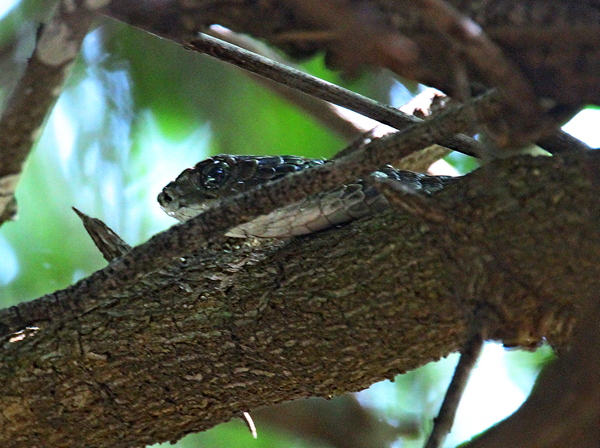
The Berg Adder, or Mountain Adder, is a smallish viper restricted to the mountain ranges of South Africa’s southern coast, the Drakensberg range on the border of Lesotho and Kwazulu-Natal province, the escarpment of Mpumalanga and Limpopo and the mountains on the border between Zimbabwe and Mozambique. They prefer relatively open montane heathland and grassland on mountains in high rainfall areas and may be found from sea level even to the crests of our highest peaks. They feed on a variety of amphibians, reptiles and small mammals and birds.

Usually towards the end of summer female Berg Adders give birth to litters of 4-15 live babies measuring about 13cm in length.

Their small size of only about 30-40cm in length notwithstanding these are rather aggressive snakes that strike easily, with mountaineers often falling victim when they’re climbing and putting their hands on or near one of these snakes basking on a rock. While there’s no record of human fatalities from their neurotoxic venom the effects of a bite may include temporary paralysis of parts of the nervous system, including the senses, and difficulty breathing, requiring hospitalisation to manage the symptoms.

According to the IUCN it is not in any danger of extinction.

Canary Creeper

Senecio tamoides

Another plants that grows naturally in South Africa’s wild places but has become a favourite in gardens the world over is the Canary Creeper with its splendid show of bright yellow flowers borne in summer and into autumn. In the wild it grows on forest edges and clearings along the coast from the Eastern Cape into Kwazulu-Natal and along the escarpment of Mpumalanga and Limpopo, and as its name suggests is a plant that scrambles over shrubs and along tree trunks and branches.

Two-spotted Tyrant Beetle

Anthia homoplata

The Two-spotted Tyrant Beetle is a large carnivorous insect about 5cm in length. They’re active by day and ferocious predators of other insects, using their strong mandibles to great effect. These beetles are found in a wide range of savanna and grassland habitats in all South Africa’s provinces and are also known locally as Oogpisters (“oog” being Afrikaans for eye, and the rest you can probably deduce from context) for their ability, shared with many other members of the genus, to spray a jet of formic acid with great accuracy up to 30cm far, this being potent enough to cause blindness in mammals and birds that attack the beetle.

Sanderling

Calidris alba

The Sanderling is a small wading bird that breeds in the Arctic Tundra, from northern Canada to Siberia, and then spends the non-breeding season along the coastlines of all the continents except Antarctica. They’re common along the South African seaboard between September and April annually. The IUCN estimates their population at about 700,000 and considers the Sanderling to be of least concern.

Sanderlings frequent sandy beaches and the banks of lagoons and wetlands, where they forage in small flocks, feeding on a wide variety of invertebrates in the wet sand and mud. Adult Sanderlings weigh approximately 55g and measure about 21cm in length.

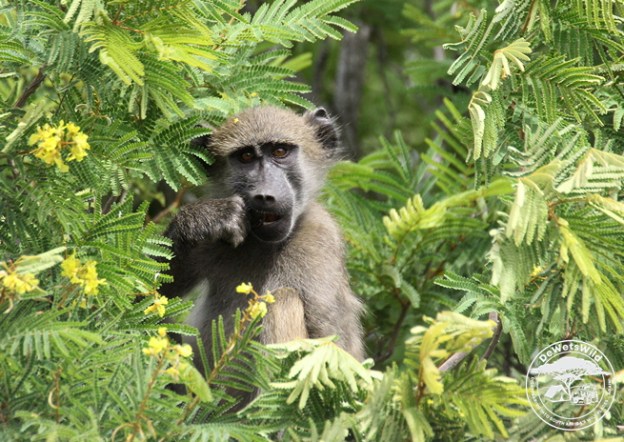
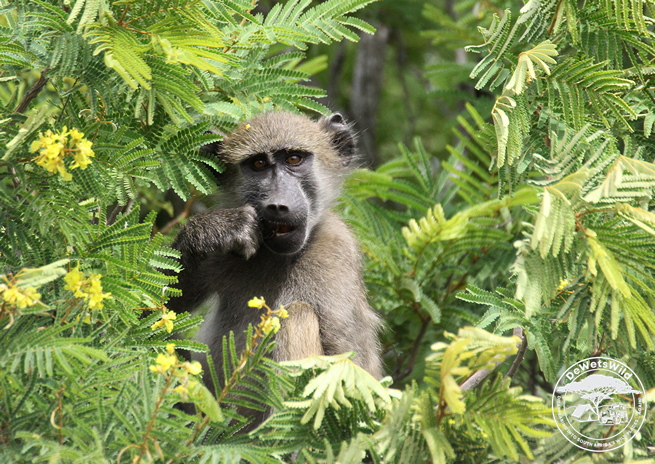
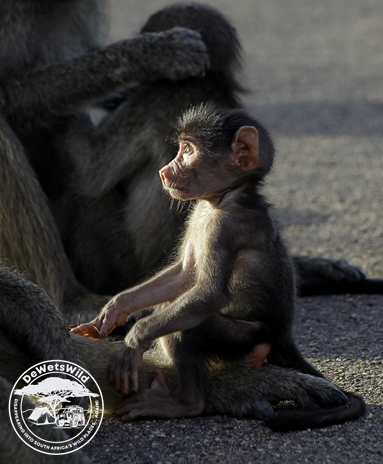
As cute as monkey business can be!

These two baby Vervet Monkeys, seen near Skukuza in the Kruger National Park on a recent tour, were most endearing – it was rather disappointing when their mothers decided it was time to get moving into the bush, as it was great fun watching their antics!

I am a fully accredited and legally registered tour guide (with all the necessary insurance, professional drivers license and first aid certification) – don’t hesitate to reach out if you’d like me to arrange a guided tour of beautiful South Africa and all her natural wonders, like the Kruger National Park, for you as well, or even just to assist with your holiday reservations for our national parks and nature reserves throughout the country.

Greater Honeyguide

Indicator indicator

Famous for its habit of leading humans to beehives – bees, their larvae, honey and wax making up the bulk of its diet – the Greater Honeyguide is one of those birds that people find very interesting. The symbiotic relationship with a mammalian creature that’s brave and strong enough to open up a beehive for it was honed over millennia and is a powerful reminder that humans are supposed to be part of the ecology and not separate from it. The call it uses when leading a human to a beehive is very different to the song it uses to communicate with others of its species. There is a superstition in the bush that, if you’re not going to help the honeyguide get its meal this time next time it will lead you straight to a dangerous predator as punishment.

Greater Honeyguides live in a wide range of habitats, from fynbos to woodland and riverine forests and even plantations of exotic trees. They are brood parasites, meaning that the female sneaks a fertilised egg into the nest of a different species of bird (and destroys any of the host’s eggs in the process) so that they can raise the chick. This usually happens from early spring to mid-summer, during which time the honeyguide female can lay as many as 21 eggs in separate nests, with almost 40 kinds of host birds recorded in southern Africa alone. The honeyguide chicks usually depart their adoptive family at about 2 months of age.

Although they’re not common the Greater Honeyguide has a wide distribution across most of South Africa and beyond our borders inhabit most of sub-Saharan Africa, with the exception of deserts and the equatorial forests. The IUCN considers it to be a species of least concern.